The Mystery of the Unusual Steel Kitchen Tool: The Story of the Meat Grinder
Unfamiliar Objects and the Power of Online Communities
In the digital age, countless images and objects circulate on the internet, often sparking curiosity and debate. When faced with unfamiliar items, people increasingly turn to online communities seeking answers. Across many social media platforms and forums, such as Reddit’s “What Is This Thing?” community, internet users collectively identify mysterious objects by sharing experiences and expertise. This phenomenon underscores the way technology connects people not only globally, but also across generations of everyday knowledge.
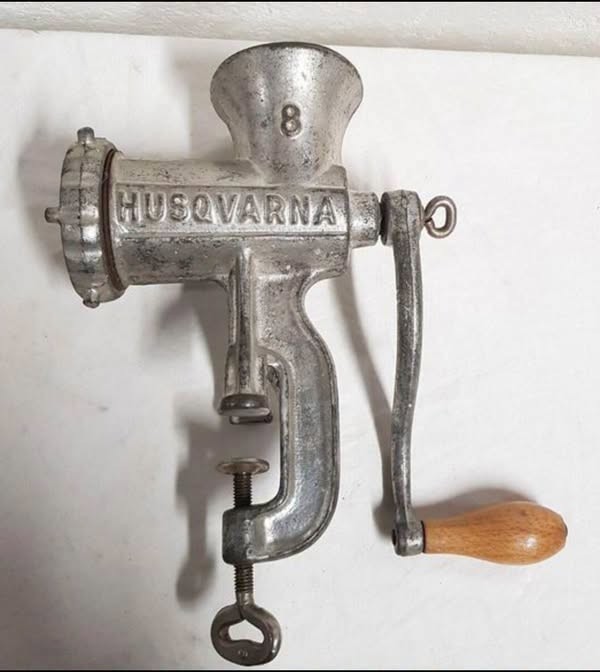
Recently, a photograph of an unusual steel kitchen tool captured the attention of online audiences. While many observers initially speculated about its function, the answer proved to be surprisingly simple—a testament to the everyday ingenuity often overlooked in modern times.
Introducing the Traditional Meat Grinder
The enigmatic object was, in fact, a traditional meat mincer—also widely known as a meat grinder. Before the common adoption of electric kitchen appliances, these hand-powered devices were central to household food preparation in many regions. Constructed predominantly from steel or cast iron, the classic meat grinder was built for efficiency and durability.
The basic design consisted of a cylindrical body, a feed tube at the top, and a robust handle on the side. Meat was placed into the feed tube and pushed downward. As the handle was rotated, a screw mechanism would force the meat through a metal plate fitted with small holes at the front end of the device. The result was minced or ground meat, extruded into fine strands or pellets suitable for various recipes.
These devices were manually operated, often clamped to a kitchen table or countertop for stability. Their mechanical simplicity allowed for easy disassembly and cleaning, making them both practical and reliable throughout the decades.
Historical Evolution of the Meat Grinder
The meat grinder’s origins trace back to the nineteenth century. It is widely believed that German inventor Karl Drais, famous for a range of mechanical innovations, developed one of the earliest versions of the handheld meat grinder in the 1800s. His device was designed to improve efficiency and hygiene in home kitchens and local butchers, enabling individuals to process their own cuts of meat with greater control.
Throughout the late 1800s and early 1900s, numerous variants of the manual meat grinder appeared across Europe and North America. Manufacturers such as Enterprise Manufacturing Company in the United States and Spong & Co. in England refined the design, patenting new mechanisms for improved safety and performance. Many of these models are still found in antique shops or used as heirlooms in family kitchens.
With advancements in mass production, the meat grinder became a staple in households, especially in regions where preserving meat for extended periods required regular mincing, stuffing, and seasoning. During periods before refrigeration became universal, meat was frequently processed this way for sausages, meatballs, and pate.
Beyond Meat: Versatility in the Kitchen
While tasked primarily with mincing meat, these tools quickly proved their versatility. Many hand-cranked grinders included interchangeable plates and accessories, allowing users to process fish, poultry, vegetables, and even grains or nuts. Attachments could transform the device into a food mill or juicer, reflecting a creative approach to kitchen multitasking long before the era of multipurpose electric appliances.
Cultural traditions also played a role in the development of various attachments. For example, sausage stuffer tubes—simple cylinders fitting the grinder’s output—enabled home cooks to produce fresh sausages for family gatherings and special occasions. In Mediterranean and Middle Eastern households, grinders were used to prepare specific blends for dishes like kibbe and stuffed vegetables.
This adaptability contributed to the machine’s longstanding popularity. It minimized kitchen waste by turning trimmings and leftovers into new meals, an essential aspect of resourceful cooking, especially in periods of economic hardship or scarcity.
Transition to Modern Appliances
The continued march of technology brought profound changes to the humble meat grinder. As electricity became standard in homes throughout the twentieth century, engineers and manufacturers began introducing motorized versions of the traditional device.
Early electric meat grinders retained many mechanical elements but replaced manual handles with powerful motors. These electric models allowed for consistent, high-volume meat processing—ideal for growing families and small businesses. Gradually, manufacturers added further innovation with sharper blades, stronger motors, and enhanced safety guards to streamline the mincing process.
By the mid-to-late twentieth century, the electric meat grinder became a common fixture in both professional and home kitchens. Major brands expanded their product lines to include a variety of attachments, opening new culinary possibilities such as pasta making, vegetable grating, and citrus juicing. The humble grinder had fully evolved into a flexible, all-in-one food processor.
Cultural Significance and Modern Uses
Although electric kitchen appliances now dominate most contemporary kitchens, manual meat grinders remain culturally significant in some communities and among certain culinary enthusiasts. For many, using a hand-cranked mincer is a cherished tradition, connecting families to their heritage through time-honored recipes and techniques.
Food safety advocates also note benefits to home grinding. Preparing ground meat from known cuts allows for greater control over freshness and hygiene, reducing the potential risk of contamination found in pre-packaged options. Some chefs argue that the texture and flavor achieved with a traditional grinder cannot be matched by commercial alternatives.
Moreover, the environmental impact of vintage grinders is worth noting. Manual devices require no electricity and feature long-lasting, often repairable construction—contrasting with today’s trend toward disposable appliances. As sustainability gains prominence in household decision-making, these longstanding tools find new relevance among eco-conscious consumers.
Expert Perspectives on Food Tools and Tradition
Kitchen historians and culinary professionals frequently emphasize the importance of understanding food technology’s evolution. According to experts at leading museums and institutions, tools like the meat grinder reveal how innovation shapes food culture. They highlight how early devices addressed practical needs: maximizing food resources, preserving seasonal harvests, and enabling the sharing of quality meals across generations.
Maggie Hoffman, Food Editor at Serious Eats, notes that “using a traditional meat grinder encourages mindfulness in preparation and appreciation for craft.” Similarly, historian Bee Wilson observes in her book “Consider the Fork” that these tools “provide a bridge between past and present, giving life to recipes that might otherwise be forgotten.”
Today, chefs at renowned culinary schools teach students to recognize the strengths of both manual and electric tools. They advocate for a balanced approach—embracing innovation, but appreciating the craftsmanship of heritage equipment. This ensures that classic techniques endure, while also leveraging modern efficiency to meet the demands of contemporary kitchens.
Legacy and Recognition of Everyday Technology
The story of the meat grinder is a powerful illustration of how ordinary objects can possess extraordinary stories. From its nineteenth-century origins through its transformation into a versatile electric appliance, the meat grinder exemplifies the ongoing dialogue between tradition and progress in home kitchens around the world.
What may at first appear to be an odd piece of steel is, in truth, a link to culinary and social history—a reminder that technology evolves not only through invention but through everyday use and adaptation. As online communities continue to solve such “mysteries,” they help preserve and celebrate the legacy of objects that have shaped human experience for generations.
So, the next time you encounter an unfamiliar kitchen tool—whether at a flea market, in a relative’s cupboard, or on your social media feed—consider the possibility that it carries a rich history waiting to be rediscovered.
Sources
- BBC Future – The Story of Cooking Tools
- The New York Times – The Meat Grinder’s Rise and Fall
- The Guardian – Why People Still Crave Old Meat Grinders
- Chicago Tribune – A Tradition Ground in History
- Reuters – Food News and Features
Disclaimer: This content is intended for entertainment purposes only and is not based on real events.