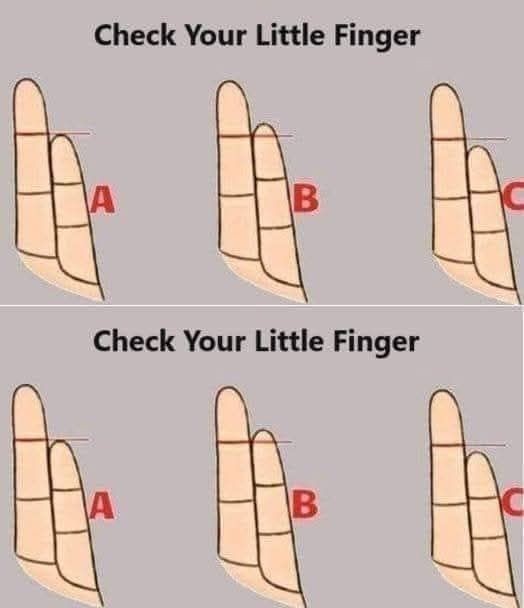
Your Little Finger: What It May Reveal About Your Personality
Introduction: The Fascination with Hand Features
Throughout human history, there has been a deep fascination with the idea that physical traits can reflect unique aspects of our personalities. One such feature that continues to capture attention in both popular culture and traditional lore is the little finger, also known as the pinky finger. Despite its small size, the pinky has inspired a myriad of theories about what its length, shape, and carriage might suggest about a person’s inner world. These ideas, while not scientifically substantiated, remain a popular subject of conversation and self-exploration globally.
A Closer Look: The Little Finger in Personality Readings
The belief that the pinky finger offers clues into our personality stems primarily from traditions like palmistry and physiognomy, where the hand is considered a map of the individual’s character and destiny. Supporters of these systems examine features such as length, shape, and flexibility of the little finger to draw conclusions about behavior and tendencies. These personality readings are generally divided into categories based on the comparative length of the pinky to the ring finger and its general form.
Pinky Finger Length: What Do Popular Beliefs Say?
Among the most common interpretations is the idea that the length of the pinky reveals key attributes:
- Long Little Fingers: Individuals with long pinkies are often described as confident, expressive, and natural communicators. They may be seen as approachable and adept at navigating social situations, making friends, and leading conversations.
- Short Little Fingers: On the other hand, people whose little fingers are shorter are thought to embody care, empathy, and thoughtfulness. This group is believed to possess a quiet strength and be deeply trustworthy, making them dependable partners and friends.
These interpretations are not based on empirical scientific evidence, but instead on tradition and anecdotal observation. For many, such readings serve more as a tool for self-reflection and entertainment than strict truth.
Beyond Size: The Posture and Shape of the Pinky
Popular analyses do not stop at length alone. The way individuals hold or carry their little finger is also thought to reveal personality nuances:
- Relaxed Little Finger: If the pinky rests naturally and loosely, it is said to indicate an easy-going and open-minded approach to life. Such personalities are often adaptable and comfortable in various environments.
- Straight or Rigid Little Finger: A more rigid or straight pinky is commonly associated with determination, self-discipline, and a focused nature. Proponents believe these individuals are self-motivated and reliable.
- Curled or Tensed Pinky: Some traditions interpret a curled or tense little finger as a sign of introspection, caution, or emotional depth.
These ideas highlight how subtle, everyday physical gestures are often woven into larger narratives about who we are.
The Scientific Perspective: What Do Experts Say?
From a scientific standpoint, there is currently no peer-reviewed research confirming that the length or curvature of the little finger correlates with personality traits. Genetics, not character, largely determines finger shape and length. According to anatomical studies and hand development research, factors influencing these traits include genetic variation and, in rare cases, certain syndromes or hormonal differences.
Dr. John Manning, a psychologist known for his research on finger length ratios, emphasizes that while some physical features related to hands may have a statistical link with biological aspects like prenatal hormone exposure, there is no evidence that they determine or predict personality. The American Academy of Dermatology notes that while dermatoglyphics (the study of fingerprints) has some forensic and medical applications, there are no validated links to temperament.
Most health and medical experts agree that using hand features for personality analysis is best regarded as a form of entertainment and introspection, rather than a scientific diagnostic tool.
Historical and Cultural Background: Pinky Finger in Society
The use of hand features to analyze character has deep historical roots. Palmistry, also called chiromancy, has origins in ancient India, China, and Greece. This practice was imported into Western Europe in the Middle Ages and popularized in the 19th and 20th centuries. In many cultures, the pinky finger has symbolic significance—such as oath-taking, status signaling, or even health diagnosis in some Eastern traditions.
Physiognomy, which developed alongside palmistry, attempted to assess character from facial or bodily features. Though largely discredited in science, these practices remain culturally relevant in various parts of the world, fueling discussions and self-exploration, especially in times of change or uncertainty.
Popular Appeal: Why Personality Insights Endure
Modern fascination with personality readings, including those connected to the little finger, can be attributed to the universal desire to understand oneself and forge deeper connections with others. These interpretations often offer gentle, positive affirmations about individual strengths, which can be appealing for those seeking insight or reassurance.
Media, social networks, and online quizzes have further popularized these ideas, making palmistry and similar analyses accessible to millions. For many, exploring these symbolic meanings is a way to celebrate individuality and spark interesting conversations, not a strict guide to life decisions.

Embracing Individuality: The Real Takeaway
Regardless of the length or alignment of your little finger, the most important message these traditions convey is that beauty lies in uniqueness. Our bodies, from the shape of our hands to the features of our faces, are a canvas for diversity—and those variations make us who we are. Recognizing and embracing the qualities that set us apart, rather than adhering strictly to unscientific classifications, fosters self-acceptance and well-being.
Personality is a profound and multifaceted concept, shaped by genetics, environment, experience, and personal choices. While examining the pinky finger can be an enjoyable and sometimes enlightening process, it is just one of many ways people seek meaning and understanding in their lives. Approaching such insights with curiosity, rather than certainty, helps to ensure a balanced and positive perspective.
International and Societal Reactions
Globally, practices like palmistry enjoy varying degrees of respect and skepticism. In some cultures, personality analysis through hand features is a routine part of social gatherings or even marital matchmaking. In others, particularly those with a strong scientific tradition, these beliefs are seen as harmless folklore or simple entertainment. Skeptics warn against making important personal decisions based solely on such methods, advocating for evidence-based approaches to self-understanding.
The enduring popularity of these ideas demonstrates the universal search for self-knowledge and a sense of belonging. Whether through science, tradition, or conversation, people continue to look for connections between the physical and the psychological, enriching the tapestry of human experience.
Conclusion: Celebrate Your Unique Traits
The study of the pinky finger as an indicator of personality is one of many intriguing ways that people connect physical appearance with the inner self. While these interpretations lack scientific validation, they reflect a timeless human desire for introspection and storytelling. By respecting both our individuality and the limits of such popular beliefs, we can appreciate the beauty in our differences and nurture genuine self-esteem.
Ultimately, whether your pinky is long, short, straight, or curved, it is a symbol of your one-of-a-kind journey. Celebrate what makes you unique, and remember: true personality shines through the life you lead and the choices you make, far beyond any physical measurement.
Sources
Disclaimer: This content is intended for entertainment purposes only and is not based on real events.