A Harmless Curiosity? The History and Lessons of the Medical Scarificator
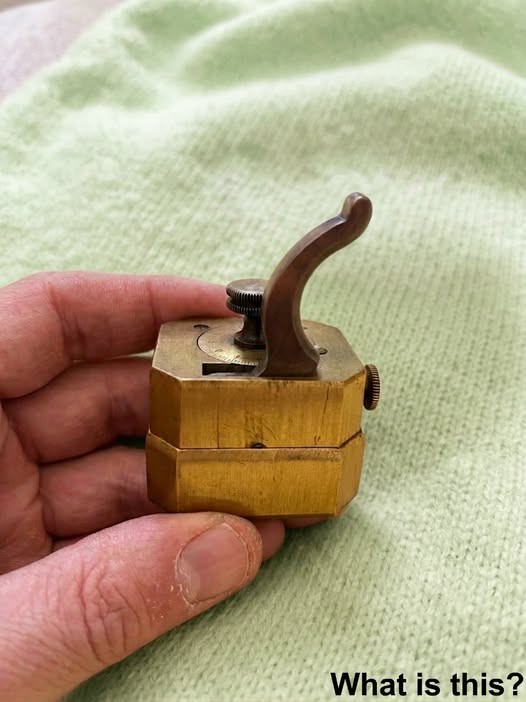
I thought I’d found a harmless little curiosity. A pocket-sized relic, metal and mysterious, that whispered of another time. But the more I examined it, the more wrong it felt. Every click of its mechanism raised new questions, every angle revealed something I’d missed. Then I turned it over… and saw the tiny aligned blades, glinting coldly.
What I had casually picked up was an old medical scarificator, a tool once used for bloodletting. With a hidden spring, those tiny blades would shoot out for a split second, slicing the skin in neat, controlled cuts. Doctors believed that draining “bad” blood could cure headaches, fevers, infections, even emotional distress. People submitted to it trusting it was science, not knowing how little was truly understood.
Holding it in my hand, I felt a strange mix of awe and unease. This device, so compact and cleverly engineered, is a reminder of how far medicine has come—and how often certainty has been built on error. What seemed like a harmless antique turned out to be a silent witness to pain, hope, and misguided healing. I’ll never look at “old tools” the same way again.

Understanding the Medical Scarificator: Function and Design
The medical scarificator is a pocket-sized mechanical device that played a central role in bloodletting, a practice that dates back thousands of years. The device’s ingenious design consists of a metal box with a set of hidden blades and a spring mechanism. When triggered, the blades would simultaneously shoot out, make precise and shallow incisions in the skin, and swiftly retract. This allowed physicians to create a series of uniform cuts to facilitate bleeding—a process believed, at the time, to restore balance to the body’s humors and remove illness.
The engineering behind the scarificator reflects remarkable craftsmanship for its era. These instruments were often crafted from brass or steel, featuring levers or knobs to cock the mechanism, and meticulous attention was paid to hygiene and precision relative to contemporary standards. Some scarificators offered adjustable blade depth, catering to different medical views on the volume of blood to be let.
The Roots of Bloodletting in Medicine
Bloodletting is considered one of the oldest treatments in the history of medicine, practiced in many ancient cultures, including those of Egypt, Greece, India, and China. The predominant theory in Western medicine was the humoral theory, formalized by Hippocrates and later expanded by Galen in the Roman era. The body was thought to contain four humors—blood, phlegm, black bile, and yellow bile—whose balance determined health or illness.
By the 17th and 18th centuries, bloodletting evolved into a highly regulated procedure, and scarificators became the tool of choice for physicians, whose authority in society rested upon such practices. This intervention was prescribed to treat an astonishing array of ailments, from headaches and fever to pneumonia, smallpox, and even “melancholy,” what we now recognize as depression. The procedure could be performed at home or in hospitals, and bloodletting remained widely accepted for centuries, even as new medical theories began to emerge.
Why the Scarificator Became So Popular
The scarificator’s rise in popularity can largely be attributed to its perceived safety and efficiency over lancets or leeches. While the scalpel or lancet required steady hands and often resulted in irregular or deep cuts, the scarificator delivered uniform incisions with the push of a button. The device enhanced the professional identity of the physician, symbolizing technical expertise and modernity.
Medical catalogs and advertisements in the 18th and 19th centuries promoted the scarificator as a hallmark of advanced healthcare. Hospitals throughout Europe and North America stocked these tools as standard medical equipment, and their use spread globally as Western medicine influenced other traditions during the era of colonial expansion.
Changing Knowledge: The Fall of Bloodletting
Despite its popularity, the effectiveness of bloodletting was questioned as medical science advanced. By the 19th century, clinicians began to notice that patients sometimes worsened after bloodletting, especially when weakened by illnesses like cholera, typhoid fever, or pneumonia. A series of pivotal studies and opinion shifts began to erode trust in the practice.
Perhaps the most influential figure in this transformation was Pierre Charles Alexandre Louis, a French physician who, in the 1830s, applied early statistical methods to compare outcomes between patients treated with bloodletting and those who were not. His rigorous studies showed no benefit—and, in many cases, harm—from bloodletting. This revelation prompted a reevaluation of routine procedures and contributed to the birth of evidence-based medicine.
Meanwhile, new discoveries in microbiology, anatomy, and pathology exposed the flaws in humoral theory. Renowned physicians such as Dr. William Osler and pioneers of the modern medical establishment advocated abandoning bloodletting. By the early 20th century, hospitals and medical schools had largely retired scarificators and related tools, relegating them to the status of medical curiosities.
The Scarificator as a Symbol: Lessons for Modern Medicine
Today, the scarificator is a compelling window into the history of medicine. It illustrates the importance of humility in science: what may seem certain and cutting-edge can be revealed as misguided with the progression of knowledge. The scarificator teaches a cautionary tale about the dangers of unquestioned consensus and the necessity for critical evaluation and ongoing research in healthcare.
Furthermore, the willingness of patients to undergo bloodletting, trusting the authority of doctors, underscores the enduring need for transparent communication between medical professionals and the public. Modern medicine, anchored in peer-reviewed research and patient safety, still faces challenges of uncertainty and change, whether with new therapies, vaccines, or the management of emerging diseases.
The story of the scarificator thus resonates with contemporary debates in medicine, from the reassessment of procedures once thought revolutionary to the ethics of experimental treatments. By studying the past, healthcare practitioners, patients, and policymakers alike can foster a culture of careful innovation and patient-centered care.
Museums, Collectors, and the Legacy of Medical Tools
Scarificators now reside in medical museums, private collections, and historical exhibitions worldwide. Their silent presence sparks curiosity and invites educational exploration. Medical historians, curators, and educators use these artifacts to illustrate how far medicine has come and to inspire reflection on the progress of science.
Efforts to preserve and study these instruments have produced detailed catalogs and research, supporting the work of clinical historians who track changes in healthcare technology and patient experience. Institutions such as the Science Museum in London, the Museum of Health Care in Canada, and the Smithsonian Institution in the United States regularly feature scarificators in displays about the evolution of medical practice.
For the public, encountering a scarificator can provoke the same mix of fascination and discomfort described at the outset: a recognition that past generations lived with radically different notions of health and healing, and that certainty in medicine is always subject to revision.
Expert Insights: Medical Progress and the Future
Health professionals and medical historians emphasize that the story of bloodletting and the scarificator is not simply an oddity of the past, but a lesson for the future. Dr. Jacalyn Duffin, a historian of medicine, notes, “The scarificator may seem bizarre or disturbing, but it’s a testament to human ingenuity—and a warning about the limits of any knowledge system anchored in tradition rather than evidence.”
Today, the medical field relies on clinical trials, systematic reviews, and ethical guidelines to assess treatments. Comparative effectiveness research, patient safety initiatives, and global collaboration have raised the standard of care. Yet, as the history of the scarificator reminds us, science is always evolving, and the process of learning—however uncomfortable—never truly ends.
Reflecting on tools like the scarificator encourages open-mindedness, vigilance, and a commitment to compassion in medical practice. It also highlights the value of patient autonomy and trust—qualities that transcend any single era of healthcare.
International and Societal Perspectives
Internationally, the history of bloodletting and tools like the scarificator reveal both commonalities and differences in global medical traditions. Many cultures use various forms of blood removal or skin pricking within ritual or therapeutic contexts, some of which persist today in alternative medicine circles. However, mainstream healthcare organizations such as the World Health Organization (WHO) and the Centers for Disease Control and Prevention (CDC) emphasize evidence-based treatments and advocate for eliminating outdated or unsafe practices.
Societal attitudes toward historical medical instruments have shifted from awe and fear to curiosity and critical learning. As historical awareness grows, so too does public dialogue about the ethics of past and current medical care, spurring renewed interest in medical humanities as an educational field.
Ultimately, the medical scarificator stands as a vivid lesson: progress in health and healing requires questioning, evidence, compassion, and the courage to admit when an approach needs to change.
Conclusion: A Reminder from the Past
The discovery of a scarificator may at first seem innocent—a fascinating artifact, symbolic of a bygone era. But, as we open its case and examine its workings, we confront deeper questions about the nature of science, the meaning of trust, and the path of progress in medicine. This deceptively simple device, once a pillar of medical practice, has become a catalyst for critical reflection in our era of rapid scientific advancement.
Its legacy compels us to honor the past, embrace humility in the face of uncertainty, and strive for ongoing improvement in patient care. In doing so, the story of the scarificator becomes not just a tale of error, but a tribute to the enduring quest for knowledge and healing.
Sources
- BBC: The Macabre World of Bloodletting Tools
- Reuters
- The Guardian: The Scarificator at the Medical Museum
- Centers for Disease Control and Prevention
- World Health Organization
Disclaimer: This content is intended for entertainment purposes only and is not based on real events.