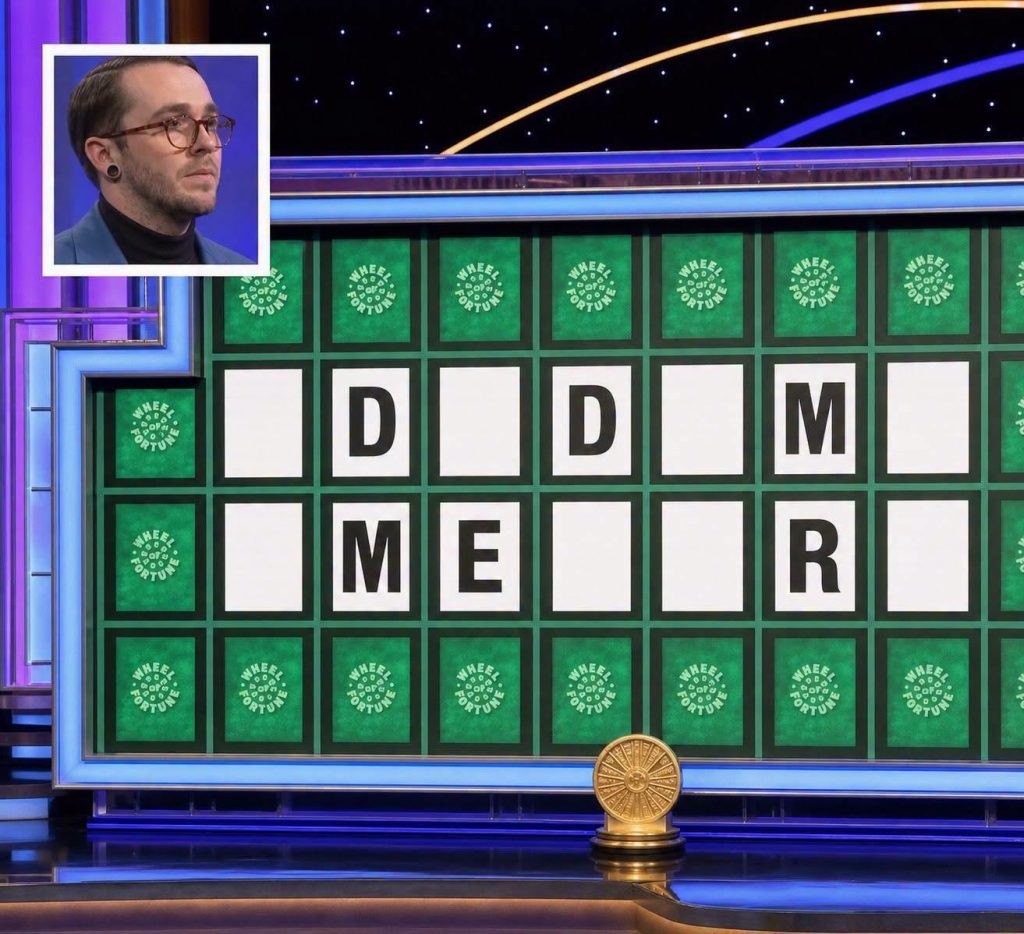
Wheel of Fortune Bonus Round Sparks Debate Over Phrase Category After Conner Kemmsies’ Miss
Introduction: A Memorable Game Show Moment
On February 14th, the popular television game show Wheel of Fortune featured Conner Kemmsies, a commercial pilot, as a contestant during its Valentine’s Day episode. Kemmsies advanced to the Bonus Round, accumulating $19,080 in cash and prizes with an opportunity to win an additional $40,000. The intense atmosphere of the Bonus Round, combined with a seemingly simple puzzle, led to a widely discussed outcome that triggered debate among viewers and game-show enthusiasts.
The Bonus Round Challenge: Solving “I DID MY…”
Entering the Bonus Round, Kemmsies faced a puzzle board displaying the partial phrase “I DID MY,” with only one word missing to complete the solution. This round was governed by strict rules: the contestant had mere seconds to solve the puzzle after a brief letter reveal, requiring quick thinking and clear instinct. Kemmsies deliberated possible completions, but the pressure and ambiguity ultimately prevented him from guessing the correct answer within the allotted time.
When the solution was revealed as “I DID MY HOMEWORK,” it became apparent that the simplicity of the phrase belied the challenge imposed by limited contextual clues. The moment was both disappointing and instructive, highlighting the difficulties inherent in game-show competition.
The “Phrase” Category Controversy
The central controversy did not revolve around Kemmsies’ gameplay or his loss, but rather the nature of the puzzle’s category: “Phrase.” Many viewers questioned whether the category was too broad, as “I DID MY” could logically be followed by numerous familiar words or expressions such as “job,” “best,” or “part.” This ambiguity made it exceptionally challenging to identify one definitive solution.
Critics pointed out that broader categories contribute to increased uncertainty, especially in high-stakes moments. Conversely, defenders of the show’s methodology noted that “Phrase” encompasses a wide range of common statements, idioms, and fragments, making “I DID MY HOMEWORK” a valid choice according to official rules. The debate underscored how even established game-show conventions can be interpreted differently by audiences.
Game-Show Dynamics and Psychological Pressure
Expert analysis and commentary from media psychologists and game theorists illuminate why Bonus Rounds are particularly challenging. With minimal clues and time constraints, contestants must rely heavily on their intuition and pattern recognition skills. The human brain, under such intense pressure, often filters possibilities based on immediate familiarity, sometimes overlooking simple solutions.
James Severin, a psychologist specializing in game-show dynamics, explains, “Cognitive overload is a real phenomenon in timed games. When you’re confronted with a partially completed phrase and a broad category, your mind races through possibilities, often missing the most intuitive answer.” The scenario faced by Kemmsies is a textbook example of this cognitive paradox.
Real-time decision-making in game shows also elicits an emotional response, as contestants contend with anticipation, anxiety, and the potential for public scrutiny. Kemmsies’ composed reaction to the outcome reflects the professionalism and resilience required in such high-pressure environments.
Viewer Reactions: Fairness vs. Difficulty
Social media platforms and online forums lit up with commentary following the episode. The core discussion focused on whether the “Phrase” category gave contestants sufficient guidance or made the Bonus Round unfairly difficult. Some suggested that narrowing categories in high-stakes situations would increase fairness and reduce ambiguity, while others maintained that unpredictability is intrinsic to the show’s appeal.
Many longtime viewers shared anecdotes of similar situations, noting that even seasoned players struggle with puzzles lacking clear direction. The debate was fueled by the loss of the $40,000 prize, which intensified discussions about category design and game-show ethics. Despite the controversy, official statements from Wheel of Fortune confirmed that both the puzzle and its category adhered to established rules, reinforcing the integrity of the competition.
The Role of Game-Show Categories
Understanding how categories are constructed in Wheel of Fortune is key to assessing the fairness of puzzles. According to game-show producer interviews and the show’s guidelines, categories such as “Phrase” are intentionally broad to allow a wide range of possible answers. “Phrase” typically includes common expressions, idioms, statements, and sometimes less obvious completions, which tests contestants’ ability to think creatively and logically under pressure.
Game-show host Pat Sajak has previously commented on the design of Bonus Rounds, stating, “We aim to create puzzles that are challenging but not impossible. The category gives enough information, but ultimately, it’s the contestant’s instinct that wins the prize.” Industry insiders uphold the view that ambiguity is a natural part of game-show tradition.
Comparative Analysis: International Game Show Approaches
Game shows around the world grapple with similar dilemmas regarding puzzle categories. In the UK version of Wheel of Fortune and other formats such as Jeopardy!, category breadth is balanced with clarity to ensure fairness. For instance, Jeopardy! often uses more specific categories, which reduce ambiguity but may limit creative answers.
International audiences have responded to the episode with a mix of empathy for Kemmsies and analytical curiosity about the mechanics of puzzle design. Media outlets in Canada, Australia, and Europe reported on the incident, emphasizing how game-show dynamics can elevate simple phrases into memorable challenges.
Expert Views on Contestant Performance
Game-show experts assert that contestants prepare extensively for ambiguity, practicing with various categories and time constraints. However, no amount of preparation can fully replicate the pressure of live competition. Former contestants have acknowledged that even obvious answers can escape notice when multiple plausible completions are presented.
Cognitive scientists suggest that narrowing focus in the moment is difficult, especially when a puzzle appears deceptively straightforward. Dr. Elaine Karp, a cognitive psychologist, notes, “When you see ‘I DID MY,’ your mind fills in the blank with countless common phrases, making the puzzle more formidable than it seems. It’s a testament to both the unpredictability and the entertainment value of game shows.”
Societal Impact and the Enduring Appeal of Game Shows
Moments like Conner Kemmsies’ Bonus Round miss contribute to the cultural significance of game shows. Audiences relish the unpredictability, the sense of shared excitement, and the learning opportunities provided by challenging puzzles. The debate over category fairness reflects larger questions about how competition is constructed and perceived in modern entertainment.
Game shows foster community discussion, encourage problem-solving, and highlight the complexities of human cognition under stress. Episodes that spark debate, such as Kemmsies’ appearance, serve as reminders of the enduring appeal and educational value of televised competition.
Conclusion: Official Outcome and Viewer Lessons
Despite controversy and debate, both the puzzle and category were validated by the official rules of Wheel of Fortune. Kemmsies exited the show with his winnings and positive outlook, demonstrating sportsmanship and resilience in the face of a tough challenge. The incident continues to be discussed in media and game-show circles, serving as a case study in the interplay between ambiguity, fairness, and entertainment.
Ultimately, the memorable Bonus Round underscores that even simple phrases can become difficult puzzles under pressure, highlighting the nuanced nature of game-show competition and the varied perspectives of viewers and experts alike.
Sources
Disclaimer: This content is intended for entertainment purposes only and is not based on real events.