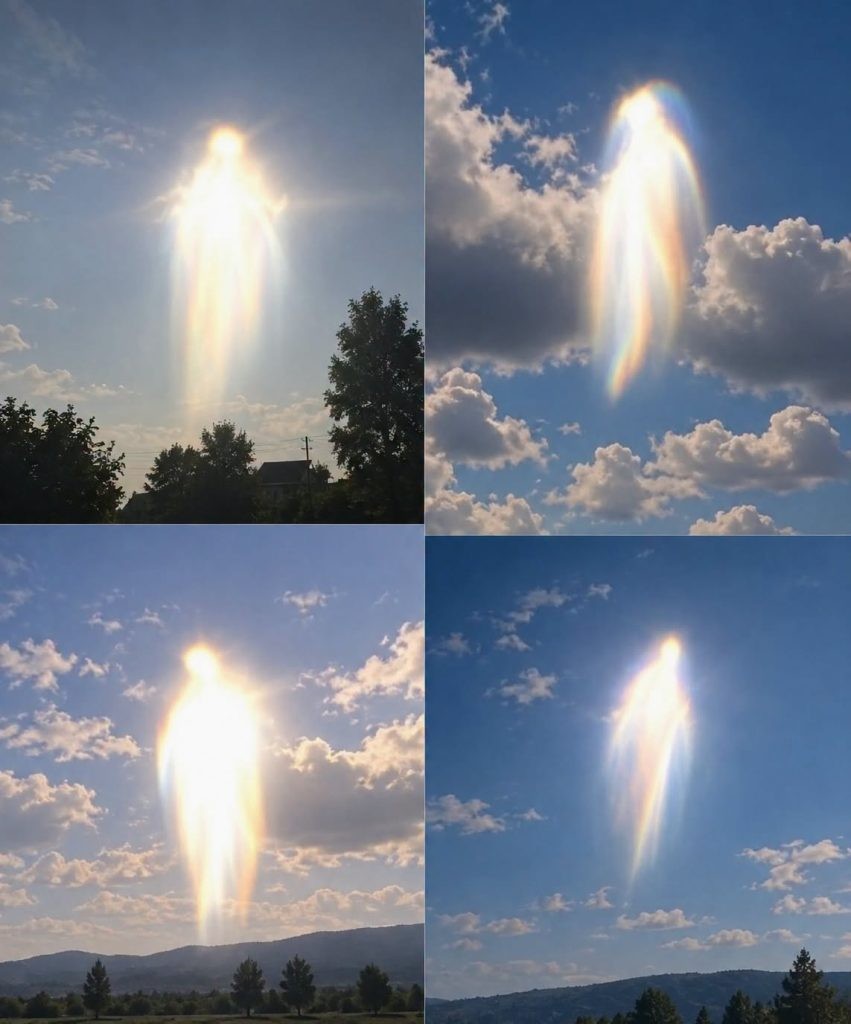
What People Saw Above Ikaria: The Science Behind Mysterious Atmospheric Phenomena
Introduction: Unraveling the Mysteries Over Ikaria
The Greek island of Ikaria is known for its breathtaking landscapes and shimmering Aegean horizons, but recent reports of a mysterious spectacle above its skies have fueled intrigue and curiosity among locals and visitors alike. Although what was witnessed may have resembled a strange craft or an unexplainable object, science provides a compelling explanation rooted in the interplay of light, atmosphere, and human perception. Understanding these phenomena not only demystifies them but also reveals the remarkable beauty behind everyday natural processes.
The Sun, the Horizon, and the Magical Hours
During sunrise and sunset, the Sun sits low on the horizon, bathing the landscape in warm hues and dramatically altering the way light behaves as it journeys through the atmosphere. At these times, sunlight passes through a much thicker layer of Earth’s atmosphere, encountering countless air molecules, dust particles, and ice crystals suspended in the sky. This extended path length causes sunlight to bend—and scatter—in distinctive and visible ways, giving rise to mesmerizing halos, pillars of light, and other seemingly solid or floating shapes.
These visual marvels are not the result of technological activity or extraterrestrial visitation but rather a natural consequence of physics and atmospheric optics. The unusual sightings are best observed near the horizon, where the Sun’s rays are most susceptible to dramatic refraction, diffraction, and reflection effects.
Refraction and Atmospheric Distortion
One of the most impactful phenomena at play above Ikaria is atmospheric refraction. As light from the Sun or other bright objects travels near the horizon, it passes through varying densities of air caused by contrasting layers of temperature and moisture. These gradients act as a natural lens, bending the light in unexpected ways. Over the ocean, with its uniform and smooth surface, this effect becomes especially noticeable.
At times, this can make distant objects—like islands, ships, or even nothing at all—appear to float, stretch, or split into several parts just above the waterline. This optical illusion, known as a “superior mirage” or Fata Morgana, occurs when cold air sits atop a layer of warmer air, creating complex images that seem both familiar and fantastical.
Haloes, Pillars, and Other Atmospheric Optical Effects
The dazzling shapes reported above Ikaria can also be attributed to a suite of atmospheric optical phenomena. An ice halo, for instance, is created when sunlight interacts with tiny, cold ice crystals suspended in the atmosphere, often high above the Earth’s surface. These crystals are typically hexagonal and can bend the light by specific angles, producing luminous circles—or halos—around the Sun, and sometimes even pillars of light stretching vertically or horizontally.
Occasionally, these effects overlap with colored arcs called “parhelia” or “sun dogs,” which appear as bright spots on either side of the Sun. These and other light-based phenomena are more pronounced over the sea, where uninterrupted horizons provide an ideal canvas for their display.
The Role of Water and Surface Reflection
The sea itself contributes significantly to what observers see. On calm days, a mirror-like ocean creates a sharp, uninterrupted boundary against the sky, amplifying subtle changes in atmospheric light. Any layering of air temperatures just above the water’s surface can cause further distortion and shimmering; these are the mechanisms behind the familiar “heat haze” or “mirage” effect, where distant ships or landforms appear to hover, dissolve, or become stretched and dreamlike.
This combination of a pristine horizon and variable atmospheric conditions transforms the ordinary play of sunlight into scenes that appear otherworldly. Even experienced sailors and residents of coastal regions report being occasionally baffled by these shifting illusions.
How Human Perception Interprets the Extraordinary
While the physical processes responsible for these phenomena are well-understood, their psychological impact is equally important. The human brain, designed to quickly assess and categorize what the eyes see, sometimes draws premature conclusions about unusual sights. Flashes of light, unfamiliar shapes, or glowing forms are often interpreted as objects or entities, especially under low-light conditions and against the contrast of a dark horizon.
This propensity for rapid interpretation explains why atmospheric events can seem alive or purposeful. Our minds are quick to seek patterns and meaning, making the visual spectacle both mesmerizing and mysterious, even when rooted in natural science rather than the supernatural or technological.
Historical Accounts and Cultural Context
Atmospheric optical phenomena have been recorded throughout history across many cultures. Sailors throughout the Mediterranean have described mirages that transformed ships into floating castles or generated phantom islands that vanished with the dawn. In northern climates, ice crystals create pillars of light called “light pillars,” while Arctic explorers recount seeing sun dogs and mock suns during long polar twilights.
Often, such events have fueled local legends or inspired stories of ghost ships, gods, or visitors from realms beyond. The enduring allure of these phenomena lies in their blend of scientific explanation and artistic imagination, reminding us of the close intersection between observation, interpretation, and culture.
Expert Perspectives on the Science of Light and Atmosphere
Experts in atmospheric optics emphasize that the stunning spectacles witnessed above Ikaria are not unusual but are, in fact, common in certain regions and conditions. According to Dr. Les Cowley, a leading authority on atmospheric optics, “mirages, halos, and light pillars are regularly seen worldwide, especially where clean horizons and cold air masses exist near the surface.” The key, he notes, is a combination of the right physical parameters: sunlight at a low angle, varying air temperatures, high humidity, and the presence of ice crystals or dust.
Meteorologists add that climate change and shifting weather patterns can make these events more or less frequent from year to year, based on variations in air temperature, humidity, and pollution. The Aegean region, with its unique microclimates and frequent sea-level temperature inversions, is particularly well-suited to such optical displays.
Similar Phenomena Observed Internationally
The phenomenon witnessed above Ikaria is not unique to the island or even to the Mediterranean. Similar atmospheric effects are reported worldwide:
- In the Arctic and Antarctic: Prolonged twilight conditions and cold air masses often give rise to elaborate halo displays and sun dogs, captivating both residents and scientists alike.
- In Deserts: Heat waves rising from sand can cause classic mirages, making distant objects appear as shimmering pools of water or displaced landscapes.
- On Open Water: Superior mirages frequently puzzle mariners, and the phenomenon of the “green flash”—a brief emerald gleam seen at sunset or sunrise—remains a favorite among those watching the horizon.
These shared experiences connect people across cultures, each interpreting and describing the phenomena through the lens of local lore, language, and scientific understanding.
The Beauty of Natural Science: Why Understanding Enhances Awe
Some might wonder whether unraveling the science behind atmospheric illusions reduces their sense of wonder. On the contrary, knowing precisely how sunlight, ice, air, and ocean collaborate to produce such spectacles can deepen our appreciation for their elegance and complexity. Each occurrence is a reminder of the intricate and ever-changing nature of Earth’s environment—capable of conjuring scenes that seem straight out of legend, yet are built from entirely familiar elements.
As viewers marvel at the scene above Ikaria, they are not witnessing technological trickery or unearthly events, but rather the perfect storm of sunlight and sky, choreographed by the hand of physics and made meaningful by human perception. In the end, nature itself offers the most compelling displays—no aliens or hidden technologies required.
Conclusion: Embracing the Wonders Above
The atmospheric spectacle observed above Ikaria stands as a testament to the remarkable power of sunlight, air, and water to transform simple elements into visions of wonder. While the urge to seek mysterious explanations is understandable, the true story is no less magical when told through the lens of science. By embracing these events as windows into the workings of our planet, we invite both greater understanding and a deeper sense of awe at the world around us.
Sources
Disclaimer: This content is intended for entertainment purposes only and is not based on real events.