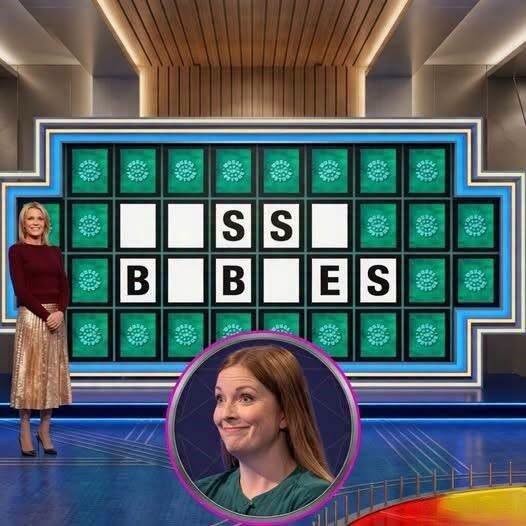
Sarah LaPilusa’s Last-Second Wheel of Fortune Win
Introduction: A Dramatic Finish on Wheel of Fortune
The popular American game show Wheel of Fortune has long been recognized for its suspenseful gameplay, rewarding quick thinking and word-solving skills. On a recent episode, contestant Sarah LaPilusa delivered a moment that captured both the anxiety and excitement characteristic of the show’s final moments. Her last-second correction during the Bonus Round not only secured her substantial winnings but also became the focal point for viewers and sparked discussions regarding the nature of timing and fairness in televised competitions.
The Structure and Stakes of Wheel of Fortune
Wheel of Fortune is a television staple that challenges contestants to solve word puzzles for cash and prizes. The format consists of several rounds, culminating in a Bonus Round for the highest-scoring contestant. Proper timing and accuracy are key, especially during the final moments, as any error or hesitation can mean the difference between massive rewards and disappointment. On this occasion, the stakes were particularly high, with the Bonus Round offering a significant cash prize.
Competitive Gameplay: Sarah LaPilusa Versus Her Rivals
Sarah LaPilusa competed against Jimmy Holgerson and Yolanda Tillet in a closely contested episode. Throughout the main game, all three demonstrated strategic gameplay and sharp puzzle-solving abilities. The main game concluded with LaPilusa holding a narrow lead, having earned $15,050, just ahead of Tillet’s $13,500. This slim margin set the stage for a high-pressure Bonus Round, where even minor mistakes could decide the outcome.
Bonus Round Anxiety: Pressure and Precision
The Bonus Round, a defining segment of Wheel of Fortune, is designed to push contestants’ skills to the limit. For Sarah LaPilusa, the category presented was “People,” a broad descriptor requiring contestants to carefully interpret the limited letters revealed as clues. As the countdown began, she initially gave a partial answer that did not perfectly match the puzzle. In a critical display of perseverance, rather than pausing after her initial attempt, she pushed forward, rapidly reconsidering the available letters and context. At the final moments, she revised her answer to “Fussy babies,” the correct solution to the puzzle.
Timing and Its Impact: The Judges’ Critical Review
The timing of LaPilusa’s answer became the episode’s central issue. With her corrected response arriving mere seconds before the buzzer, the contest’s judges had to carefully review the sequence to confirm whether her answer was completed in time. They examined the official recording to assess whether her spoken phrase “Fussy babies” had fully left her lips before the countdown expired. The decision was not about proximity, but about strict adherence to the game’s timing regulations, ensuring impartiality and fairness for all contestants.
Official Ruling and Outcome
After a thorough review, the judges determined that LaPilusa’s answer was delivered before the time was up, ruling in her favor. This verdict awarded her the $40,000 Bonus Round prize, boosting her total winnings to $55,050. The resolution not only validated her persistence under intense pressure but also highlighted the game’s commitment to accuracy and fairness in adjudicating close calls. Such decisions are integral to maintaining viewer trust and the integrity of televised competitions.
The Role of Persistence: A Lesson for Contestants
LaPilusa’s triumph is a striking example of how perseverance can yield remarkable results in competitive environments. Had she given up after her first answer, the outcome would have been drastically different. Her decision to keep thinking, even with only seconds left, underscores a key principle in game show success: never haste to conclusion and always utilize the available time. This lesson resonates beyond Wheel of Fortune, inspiring viewers to persist in the face of adversity, whether in games or real-life endeavors.
Viewer Reactions and Community Debate
Following the broadcast, the episode generated widespread discussion on social media and entertainment forums. Many viewers praised LaPilusa’s tenacity and quick-thinking. Some raised questions regarding game show timing policies and the mechanisms used for reviewing contestant responses. The public interest reflected Wheel of Fortune’s enduring popularity and the audience’s investment in fair play. Debate centered on the effectiveness of the show’s timekeeping rules and the thoroughness of the judges’ review process, illustrating how deeply fans value transparency and integrity.
Expert Perspectives on Game Show Adjudication
Experts in television production and game show design generally support the use of recorded reviews for critical timing decisions. According to industry analysts, such systems allow for impartial assessment and guarantee consistent application of rules. Media ethicists often highlight these procedures as necessary for maintaining public confidence in televised competitions. Game show hosts and former contestants also note that these reviews, while rarely invoked, are vital for resolving rare but high-stakes scenarios such as LaPilusa’s Bonus Round situation.
Historical Context: Wheel of Fortune’s Legacy of Close Calls
Wheel of Fortune has featured numerous memorable moments characterized by tight finishes and dramatic timing. Over its decades-long run, the show has established a reputation for both high-energy gameplay and fair, transparent decision-making. Episodes such as LaPilusa’s serve as reminders of the importance of having rigorous adjudication processes. Viewers regularly cite these instances as proof of the show’s dedication to accuracy and fair outcomes.
International Perspectives and Societal Reactions
The excitement and scrutiny surrounding LaPilusa’s win mirrors reactions seen in game shows worldwide. Across international markets, formats similar to Wheel of Fortune prioritize fairness and transparency. Contestants in other regions have occasionally faced analogous situations involving split-second calls, with local audiences similarly invested in the adjudication process. Media outlets often report on such outcomes, exploring the broader implications for competitive entertainment and the value systems that underpin public contests.
The Significance of Fair Play and Accurate Timing in Game Shows
Sarah LaPilusa’s last-second victory highlights the broader importance of accurate timing and fair play in televised competitions. For game show organizers, maintaining trust depends upon clearly defined rules and consistent enforcement. For contestants, understanding the exactly measured nature of bonus rounds and remaining calm under pressure are vital. Experts emphasize that technological advances have aided precise timing mechanisms, but human oversight remains essential for ensuring clarity and upholding the competition’s spirit.
The Aftermath: LaPilusa’s Memorable Victory
In the aftermath of the episode, LaPilusa’s win has become an emblematic story for both fans of Wheel of Fortune and the broader game show community. Her perseverance in the face of uncertainty, coupled with the fair judgment of the show’s officiating team, led to a memorable outcome that will be discussed for years. The incident also serves as a template for managing similarly close contests in entertainment, reinforcing the value of meticulous adjudication and the rewards of persistence.
Conclusion: Lessons from a Wheel of Fortune Triumph
Sarah LaPilusa’s last-second win on Wheel of Fortune is much more than a story of individual success. It encapsulates the intense competition, the importance of precise timing, and the role of fair decision-making in modern television. The widespread reaction and ongoing debate reflect society’s interest in transparent adjudication, and LaPilusa’s performance exemplifies how determination can pay dividends even under pressure. For contestants, organizers, and viewers alike, the episode stands as proof of the enduring appeal of game shows and the excitement inherent in their unpredictable finales.
Sources
Disclaimer: This content is intended for entertainment purposes only and is not based on real events.