
Cyclists Found an Abandoned Dog Guarding a Plastic Bag — What Was Inside Revealed a Mother’s Devotion
It was supposed to be an ordinary bike ride.
Paul Skinner was cycling with friends through the countryside when something unusual caught their attention. Along the side of the road, partly hidden in a ditch, there appeared to be movement.
At first, they weren’t sure what they were looking at.
As they got closer, they realized it was a frightened cocker spaniel.
But there was something particularly strange about the dog.
She seemed determined to stay beside a plastic bag.
According to accounts that have circulated online for years, the dog was later associated with the name Carly. She appeared exhausted and distressed, yet she remained focused on the bag as though she didn’t want to leave it.
The cyclists decided they needed to find out what was happening.
What they reportedly discovered inside the bag transformed an already unusual roadside encounter into a deeply emotional story about a mother dog and the instinct to remain close to her young.
The story has since been repeatedly shared online, often with increasingly dramatic headlines. Because many versions are based on older reports and reposts rather than a readily available official investigation, some details should be treated cautiously.
But the central image remains powerful: a vulnerable dog refusing to leave something behind.
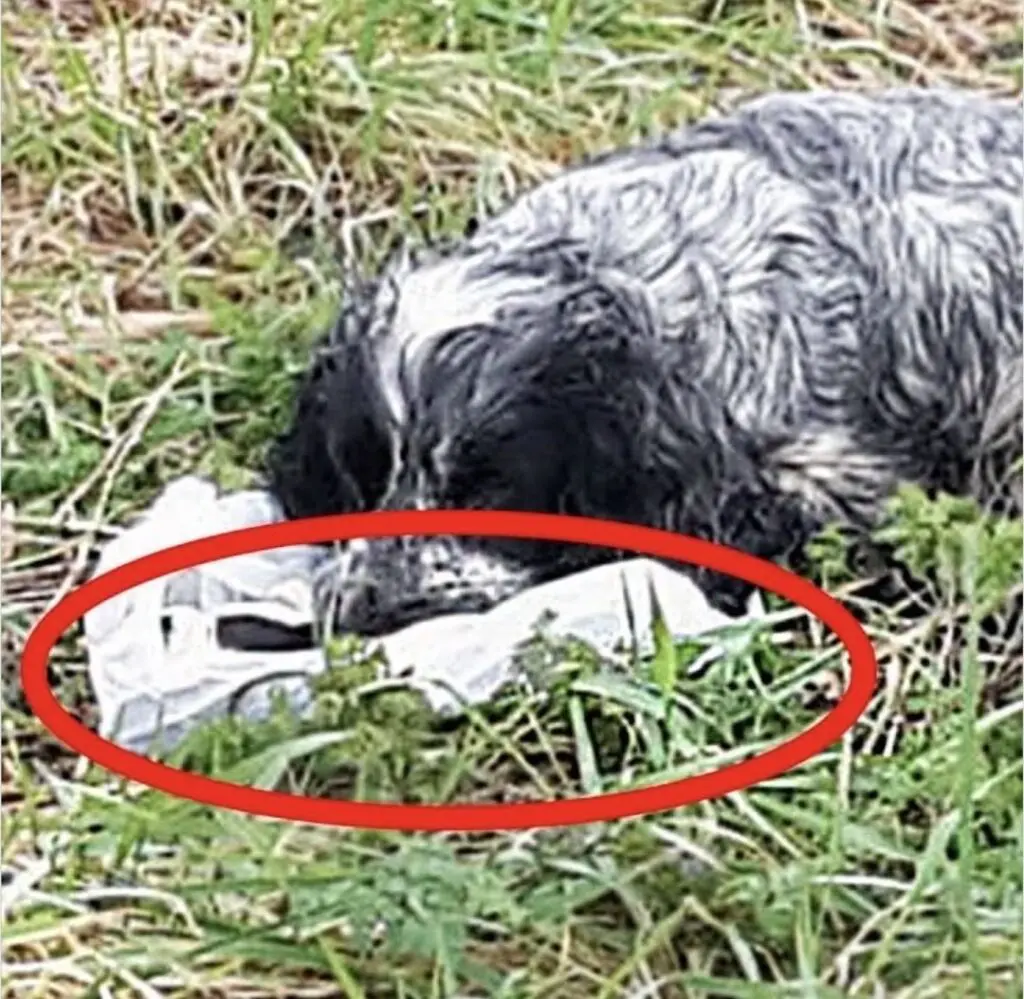
A Quiet Bike Ride Takes an Unexpected Turn
According to earlier reports, Paul Skinner was cycling with a friend in the Midville area of Lincolnshire, England, when they noticed the dog near the road. Contemporary retellings described her as a cocker spaniel that appeared to have been abandoned.
The cyclists could easily have continued on their way.
Instead, they stopped.
That decision matters because an animal in distress does not always attract immediate attention. A frightened dog may hide, remain still, or move away from people. In this case, the unusual behavior around the plastic bag made the cyclists curious enough to investigate.
They contacted authorities and an animal rescue organization, according to the accounts.
The dog was eventually taken into care.
That was only the beginning of the story.
What Was in the Bag?
The most widely circulated versions of the story say the cyclists discovered four puppies inside the plastic bag.
Older online reports describe the puppies as having been very recently born. One report from 2016 stated that Skinner contacted police and a local animal shelter after discovering the dog and the puppies.
Other versions repeated the same basic story, describing the dog as remaining close to the bag rather than abandoning it.
However, there is an important distinction between what is widely repeated online and what can be independently verified today.
The story has been copied by numerous websites, often without identifying the original investigation or providing accessible official records. Some later versions also add details about the circumstances surrounding the abandonment that are not clearly supported by primary sources.
For that reason, it is safest to describe these details as part of a widely circulated account, rather than presenting every element as an independently confirmed fact.
That distinction doesn’t make the story less meaningful.
In fact, it makes the broader lesson more important: when emotional stories travel across the internet, compassion and careful reporting should go together.
Why Would a Mother Dog Stay Near Her Puppies?
The behavior described in the story is consistent with something familiar to anyone who has observed a mother dog with newborn puppies.
Maternal behavior can be extremely strong during the early period after birth.
A mother dog may spend much of her time near her puppies, respond to their sounds, groom them, keep them warm, and become highly attentive to anything that seems to threaten them.
This isn’t simply a human-like emotional response projected onto an animal.
There are biological reasons for these behaviors.
Hormonal changes surrounding pregnancy and birth help activate maternal behaviors. In mammals, hormones including oxytocin play important roles in bonding and caregiving.
A mother dog does not need to understand a situation in human terms to remain close to her young.
Her behavior can be driven by powerful biological instincts.
That makes the image of a mother dog refusing to leave her puppies especially understandable.
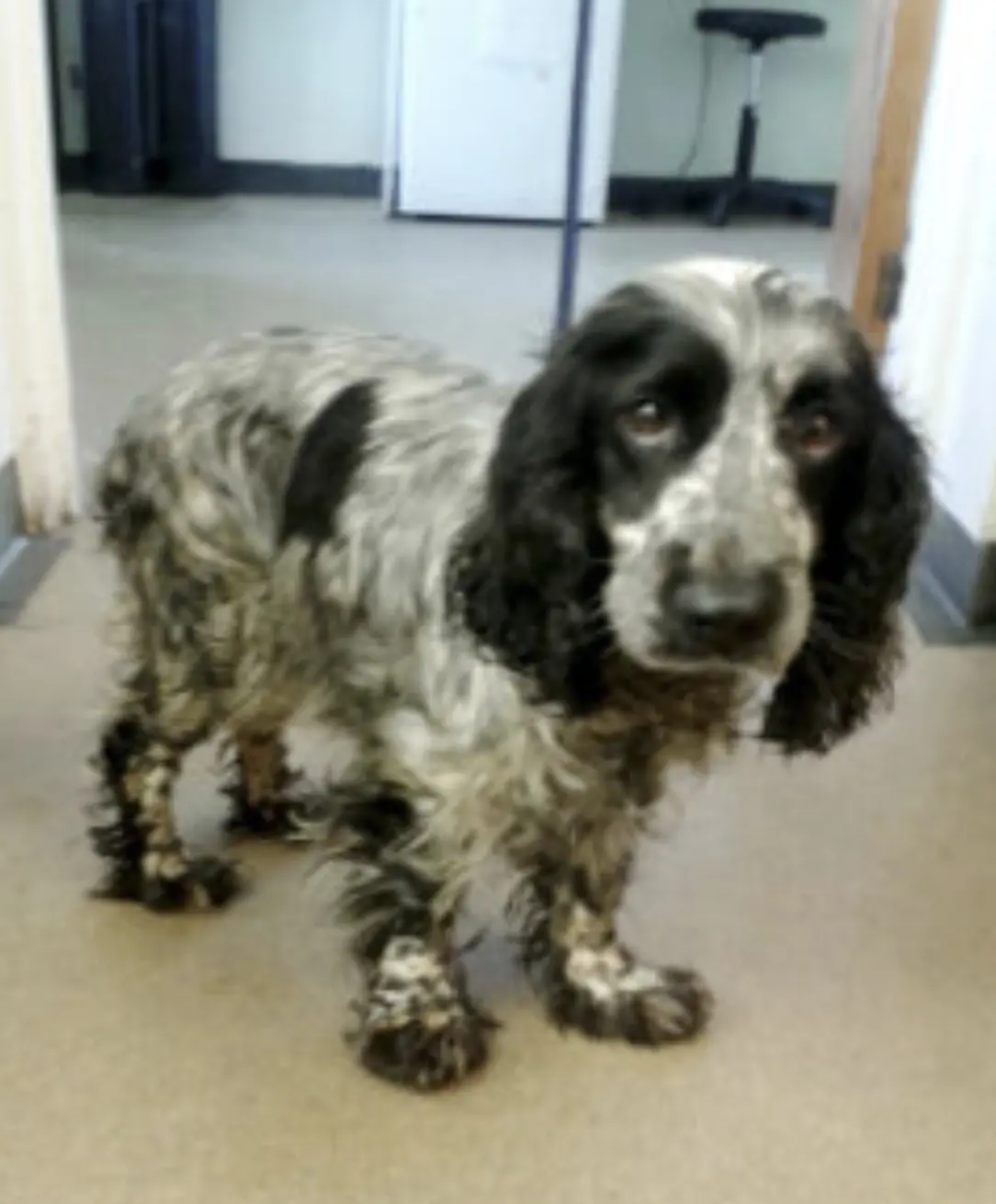
The Powerful Bond Between Dogs and Their Young
Newborn puppies are highly dependent on their mother.
They cannot regulate their body temperature as effectively as mature dogs, and they rely heavily on maternal care during their earliest days.
The mother provides warmth, nourishment, cleaning, and protection.
She also responds to vocalizations from her puppies.
Their sounds can signal hunger, discomfort, or the need for attention.
This creates a close biological relationship between mother and offspring.
So when a mother dog remains near her puppies despite an unfamiliar or uncomfortable environment, her behavior should not automatically be interpreted as human reasoning.
It may instead reflect a combination of maternal instinct, sensory cues, hormonal influences, and learned behavior.
Nevertheless, the result can look remarkably devoted from a human perspective.
Dogs Experience the World Differently From Us
Another fascinating part of the story is the way dogs interact with their environment.
Humans rely heavily on vision.
Dogs rely much more heavily on smell.
A dog’s sense of smell is extraordinarily sensitive compared with our own. Scents can provide information about individuals, food, territory, and other animals.
For a mother dog, the scent of her puppies can be particularly important.
This means that even when people cannot immediately understand why a dog is remaining in one location, the animal may be responding to information that humans simply cannot perceive.
The world available to the dog is therefore different from the world available to the cyclists who found her.
That difference is worth remembering whenever we interpret animal behavior.
A Story That Raises Questions About Animal Abandonment
Beyond the emotional element, the story raises a broader issue: what happens when animals are abandoned or neglected?
Domestic dogs depend on people for food, shelter, veterinary care, and protection.
When that responsibility is ignored, the consequences can be serious.
Animal welfare organizations around the world encourage people who can no longer care for a pet to contact shelters, rescue groups, veterinarians, or local authorities rather than leaving an animal somewhere without assistance.
Responsible rehoming gives an animal a chance to receive appropriate care.
Abandonment removes that opportunity.
The distinction is especially important when an animal has recently given birth or is caring for young puppies.
Mother and offspring may require specialized care, nutrition, warmth, and veterinary attention.
Why the Story Continues to Resonate
There is something universal about a parent staying close to a child in difficult circumstances.
Humans instinctively recognize that image.
When we see an animal displaying behavior that resembles protection or caregiving, it can trigger a strong emotional response.
Scientists and animal-behavior researchers, however, encourage us to distinguish between recognizing genuine animal behavior and assuming that animals experience situations exactly as humans do.
We can acknowledge that a dog displays maternal care without claiming that she understands abandonment, injustice, or tragedy in precisely the same way a person would.
That distinction actually makes the story more interesting.
The behavior doesn’t have to be identical to human emotion for it to be meaningful.
The People Who Stopped Made a Difference
Perhaps one of the most important details in the story is not what was inside the bag.
It is what the cyclists did afterward.
They stopped.
They investigated.
They contacted people who could help.
That sequence is a useful reminder that noticing an animal in distress is only the first step.
The next step is getting appropriate assistance.
Trying to handle a frightened or injured animal without experience can sometimes make the situation more difficult. Contacting local animal control, a shelter, rescue organization, veterinarian, or other appropriate authority is generally safer.
The cyclists’ decision to involve others gave the dog a chance to receive care.
And sometimes, that is what compassion looks like.
Not solving everything personally, but recognizing when help is needed and making the call.
Be Careful With Viral Animal Stories
The story of Carly has been reposted in multiple languages and on many websites over the years. Some versions use increasingly dramatic headlines, while others add details that are difficult to trace back to an original source.
That is common with emotional animal stories.
A photograph may be reused.
A name may change slightly.
A location may disappear.
A detail from one article may become a fact in the next article simply because someone copied it.
Readers should therefore be careful when a viral story claims to provide exact details about an investigation, an animal’s future, or a person’s responsibility without citing an identifiable primary source.
Compassion does not require us to stop asking questions.
In fact, careful verification helps preserve the credibility of stories that genuinely deserve attention.
A Small Moment That Became a Lasting Story
The cyclists probably didn’t expect their ordinary outing to become memorable.
They were simply riding along a road.
Then they noticed movement.
A dog was sitting near a ditch.
A plastic bag was nearby.
Something about the scene made them stop.
Years later, versions of that encounter continue to circulate online because the basic image is easy to understand: a mother dog remaining close to her puppies despite difficult circumstances.
Whether every detail in the viral retellings is accurate is another question.
But the central reminder remains valuable.
Animals depend on people to recognize when they need help.
And sometimes the difference between being ignored and being rescued is as simple as one person deciding to stop.
Final Thought: Sometimes Compassion Begins With Paying Attention
The most memorable part of this story may not actually be what the cyclists discovered.
It may be the moment before the discovery.
They saw something unusual.
They could have kept riding.
Instead, they paid attention.
That small decision brought an abandoned animal into contact with people who could provide assistance.
Stories like this remind us why curiosity can sometimes be a form of compassion.
Looking closer.
Asking whether something is wrong.
Calling someone who can help.
Those actions may seem small, but for an animal in distress, they can matter enormously.
The story of Carly has traveled far beyond the roadside where she was reportedly found. Its details have been repeated, translated, and reshaped over the years.
But beneath all those versions is a simple idea that remains worth remembering:
Sometimes, helping begins with nothing more complicated than stopping to look.
Sources and Further Reading
The account is based on a widely circulated story that has appeared in multiple publications and reposts. Earlier reports from 2016–2017 describe Paul Skinner encountering a cocker spaniel near Midville, Lincolnshire, and contacting authorities and an animal shelter.
Because the story has been repeatedly republished, individual details should be treated cautiously unless independently confirmed by primary records or animal-welfare organizations.