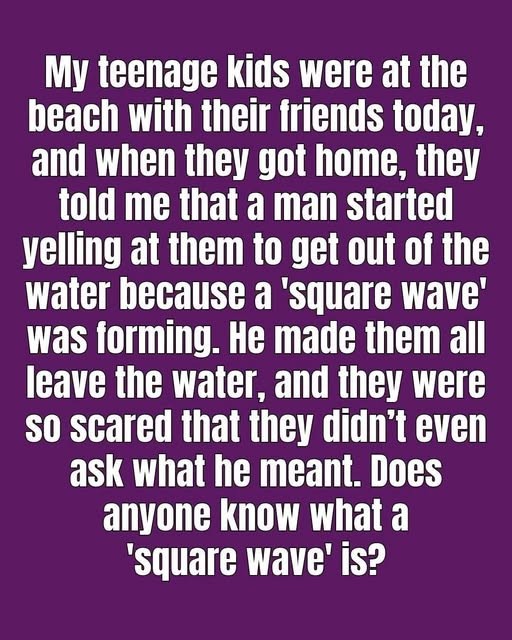
Square Waves: The Surprising Beauty and Hidden Danger of Ocean Patterns
Introduction to Square Waves
The ocean, with its vast expanse and seemingly tranquil surfaces, often captivates observers with breathtaking beauty. However, beneath this serene facade can lurk phenomena that are less benign than they appear. Among these, square waves stand out as a particularly unusual and visually striking occurrence, marked by a distinct grid-like pattern across the water’s surface, resembling a giant checkerboard. These patterns have fascinated scientists, mariners, and casual observers alike, inviting both admiration and serious caution.
Formation of Square Waves: Scientific Background
Square waves are not mere oddities; they arise from complex interactions between multiple wave systems in the ocean. Typically, this phenomenon manifests when two distinct sets of waves converge at significant angles, often perpendicular or near-perpendicular to each other. Instead of harmonizing into a single direction, the waves intersect, resulting in a crosshatched pattern observable from above.
This scenario occurs most frequently when the wind changes and generates a new wave system on top of an existing swell, or when ocean currents intersect. The phenomenon can be enhanced by underwater topography, such as reefs or sandbars, which may influence the direction and intensity of wave propagation. Studies conducted by oceanographers highlight that square waves are generally linked to long-period swells, which travel great distances across the ocean, occasionally colliding with locally generated wind waves.
Though visually captivating, square waves are rare and typically short-lived, but their appearance fascinates researchers for both their beauty and the unique dynamics they represent. Locations like Île de Ré off the west coast of France are famous for square waves, attracting photographers and nature enthusiasts, but also providing valuable data for marine scientists.
Physical Dynamics and Risks Associated with Square Waves
While square waves may appear enchanting, they embody conditions that can be hazardous for anyone venturing onto or into the water. The intersection of wave systems creates non-uniform water movement, resulting in unpredictable and often turbulent currents directly beneath the surface. The grid pattern, visible at the top, masks a complex interplay of forces below.
For boats and ships, crossing wave systems dramatically increase navigation challenges. Vessels may experience rolling, pitching, and erratic movement, even in conditions that seem calm from the shore. Smaller boats, in particular, risk capsize or loss of control if caught within intersecting waves, as the multidirectional energy can destabilize their hulls.
Swimmers and divers are exposed to even greater risks. The turbulence generated beneath square waves can create powerful, conflicting currents. These may quickly exhaust swimmers, drag them away from safe zones, or cause disorientation underwater. Dive experts and lifeguards caution that the physics of intersecting waves can dramatically increase difficulty in maintaining position, even for experienced individuals.
Marine safety organizations consistently monitor and record incidents related to complex wave patterns. Many report that events involving square waves are relatively rare but can be deadly when they do occur, particularly when individuals underestimate their strength or overestimate their own ability to manage unexpected water movement.
The Psychology of Ocean Patterns: Why Are Square Waves So Alluring?
From a social and psychological perspective, square waves epitomize nature’s paradox: beauty that conceals danger. The symmetry and order of the patterns invite curiosity and appreciation, often resulting in increased foot traffic to coastal spots known for their occurrence. In today’s digital age, photographs and videos of square waves circulate widely on social media, further attracting public attention.
However, this allure poses important safety challenges. People may be drawn to observe or even interact with the phenomenon, oblivious to the potential hazards below. Safety experts advise that visual appeal should never tempt individuals to disregard warning signs or enter unsafe waters. Lifeguards, signage, and maritime authorities frequently emphasize that the ocean’s surface can mask underlying threats, a message supported by global case studies.
Several coastal communities have launched public awareness campaigns, using drone footage and educational seminars to teach residents and visitors about the risks associated with unusual wave formations. These campaigns underscore that appreciating nature’s beauty should involve respect for its unpredictability and power.
International Observations and Societal Responses
Square waves have been documented in various parts of the world, with some regions reporting them more frequently due to local meteorological and oceanographic conditions. Maritime authorities in France, Portugal, Australia, and South Africa have issued formal safety statements, advising caution during square wave events.
In France, the Île de Ré serves as a focal point for both scientific study and public education. Local government collaborates with researchers and environmental groups to provide real-time updates on ocean conditions, using apps and websites to alert beachgoers. Similar systems operate in Portugal, where square waves are sometimes observed near Peniche, a noted surfing site.
Australian coastline authorities integrate square wave awareness into broader maritime safety programs, ensuring that lifeguard training includes recognition of unusual wave patterns and their risks. In South Africa, surfers are taught to identify and avoid square waves to minimize the risk of being caught by irregular currents.
Globally, the International Maritime Organization (IMO) and national coast guard services recommend always checking local advisories and never relying solely on personal observation or photographs to judge water safety.
Expert Views on Square Waves and Ocean Safety
Oceanographers and marine engineers provide valuable insight into the science behind square waves. Professor Jean-Claude Gouin of the University of Nantes notes that “intersecting wave systems can amplify the energy at certain points, leading to unpredictable bursts of turbulence.” He advises mariners and swimmers to maintain a respectful distance and rely on official guidance rather than personal speculation.
Dr. Laura Mitchell, a coastal safety specialist, stresses the importance of continuous monitoring and local knowledge. “Understanding how wind, tide, and swell interact is essential for anticipating square waves. Public access to real-time information can save lives.” She also advocates integrating ocean pattern education into school curriculums, especially in coastal regions.
Marine rescue teams emphasize that square waves are only one example among many in which the ocean can rapidly shift from safe to dangerous, often without visible warning. Experts universally support observing and photographing these phenomena from shore, but strongly discourage attempting to swim, surf, or sail into them, given the unpredictable nature of currents.
Safety Guidelines and Best Practices
To minimize risk and maximize enjoyment, safety authorities recommend several best practices:
- Observe from a distance: Enjoy square waves with binoculars, cameras, or drones from a safe vantage point on land.
- Follow official advice: Always heed lifeguard instructions, warning flags, and marine advisories.
- Avoid entering the water during unusual wave events: Even experienced swimmers and boaters can encounter unexpected difficulty.
- Learn about local ocean conditions: When visiting coastal areas, familiarize yourself with local currents, tides, and seasonal phenomena.
- Report hazards: If you notice unusual patterns, inform local authorities so they can update advisories and increase vigilance.
Modern technology has improved public safety. Apps now provide real-time updates about ocean conditions, including the likelihood of intersecting wave systems. These tools, combined with increased awareness, help reduce the risk of accidents and support safe enjoyment of coastal environments.
Appreciating the Ocean Responsibly
Square waves underscore the ocean’s remarkable ability to surprise and challenge our perceptions. While these phenomena are rare and enchanting, they serve as reminders of the complexity and unpredictability of marine environments. Responsible enjoyment means balancing admiration for natural aesthetics with a commitment to personal safety and respect for local ecosystems.
Ultimately, the intersection of beauty and danger in square waves teaches an important lesson: Nature’s wonders are best appreciated with informed caution. Admiring them from a distance preserves both our safety and our appreciation of the planet’s remarkable, mysterious processes.
Sources
- BBC News
- Reuters
- The Guardian
- Al Jazeera
- World Health Organization (WHO)
- Marine Insight
- International Maritime Organization
Disclaimer: This content is intended for entertainment purposes only and is not based on real events.