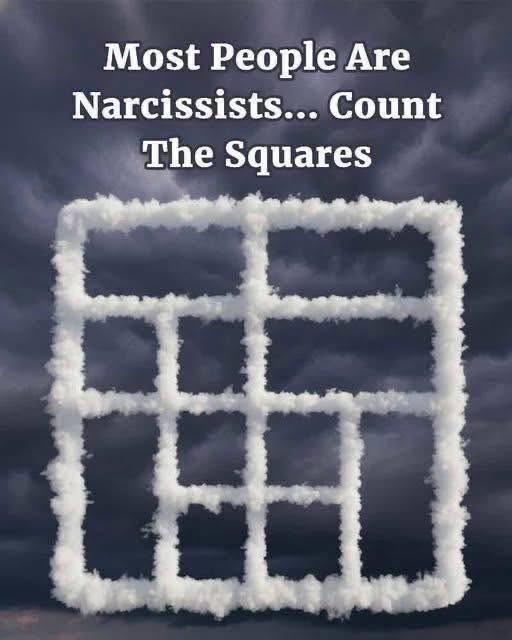
The Number of Circles You See Will Tell You if You Are a Narcissist: Understanding Viral Visual Tests and Human Perception
Introduction to the Viral Visual Test
In recent months, a striking visual test has surged in popularity across social networks. Featuring a hypnotic arrangement of overlapping circles, the image often comes with a challenging claim: “The number of circles you see will tell you if you are a narcissist.” Participants are encouraged to scrutinize the pattern, count the distinct circles they perceive, and compare their results with friends. This trend has captured public curiosity, sparking debates about perception, psychology, and the powerful influence of viral content.
The Allure of Optical Illusions Online
Optical illusions hold a unique fascination for people of all ages. Their appeal lies in the interplay between visual information and the brain’s ability to interpret ambiguous shapes, boundaries, and patterns. Social media amplifies this appeal by adding an element of self-reflection or personal challenge—often accompanied by bold or humorous psychological claims. The viral circle test is no exception. Its tantalizing suggestion that the number you see could reveal something profound about your personality taps into a widespread interest in online quizzes and psychological puzzles.
How Human Perception Shapes the Experience
Why do people see different numbers of circles in the same image? The answer lies in the remarkable complexity of human perception. Contrary to popular belief, our brains do not act as mere cameras, passively recording the visual world. Instead, they actively interpret and organize incoming information using cues like attention, prior experience, and context.
When faced with tangled patterns—such as clusters of overlapping circles—different viewers may prioritize distinct characteristics. Some individuals rapidly spot the most prominent outer rings, overlooking subtler boundaries. Others zero in on the intersections, picking out smaller or less obvious circles first. Prolonged scrutiny can even change the result, as people’s focus shifts or adapts to new shapes they discover within the image.
The Role of Context in Visual Perception
Several factors can influence the number of circles a person perceives in the puzzle, including:
- Screen Size and Resolution: Viewing the image on a small smartphone may obscure faint or closely packed boundaries that are clearer on a larger screen.
- Image Quality: Low-resolution or compressed versions of the image might blur lines, making it harder to distinguish all the circles.
- Lighting and Visibility: Glare or dim lighting can affect how easily the shapes are noticed, especially for subtle overlaps.
- Individual Variation: Differences in eyesight, attention, or even cognitive approach can lead to a range of answers.
- Interpretation Rules: Not everyone counts “partial” circles or overlapping zones the same way. Personal interpretation often determines what counts as a circle.
A Caution About Psychological Claims
While the viral test has sparked extensive conversation, its foundational claim—that the number of circles you see is an indicator of narcissism—does not reflect established psychological science. The temptation to link simple visual tasks to complex personality traits is widespread online, but researchers and mental health experts are clear: narcissism cannot be assessed—or even meaningfully screened—via a social media puzzle.
Narcissism, in clinical terms, is a personality trait characterized by grandiosity, a strong need for admiration, and a lack of empathy. While researchers study its development and impact on behavior, the assessment of narcissistic traits requires careful, evidence-based psychological evaluation, typically through structured interviews and standardized tests. There is no evidence that counting shapes in an ambiguous image is a valid proxy for diagnosing or evaluating narcissistic traits.
Why Do People Participate Anyway?
The viral circle test demonstrates a key principle of social media psychology: engagement increases when challenges are personalized and reframed as questions about identity. By transforming an ordinary visual challenge into a query—“What does my answer say about me?”—the test motivates individuals to participate, share, and compare results. The ambiguity and lack of a singular, “right” answer drive conversation, debate, and ongoing interest.
This trend reflects a broader phenomenon known as “gamification” of content, in which otherwise neutral or trivial activities are assigned personal relevance. When these experiences tie into traits people care about—like intelligence, creativity, or self-perception—they become even more viral.
Expert Perspectives on Visual Perception and Personality
Cognitive scientists and psychologists emphasize the importance of distinguishing between perception and personality. Vision science has demonstrated through decades of research that human perception is highly variable, adaptive, and susceptible to a wide array of contextual influences. This variability does not systematically map onto fixed personality characteristics, nor does it reflect inherent psychological strengths or weaknesses.
Dr. Susana Martinez-Conde, a neuroscientist specializing in visual illusions, notes: “Optical illusions work precisely because our visual systems are not hardwired to process every detail the same way. People’s attention, expectations, and prior experience can lead them to see very different things in the same pattern.”
Similarly, Dr. W. Keith Campbell, an expert on narcissism, warns against taking online quizzes at face value: “Personality traits like narcissism are multidimensional and require careful, validated measures. While it can be fun to compare results from viral tests, they should never be used to draw conclusions about mental health or personality.”
The Science Behind Optical Illusions
Optical illusions like the circle test belong to a broader class of images that trick the brain by exploiting its shortcuts for interpreting visual information. Our brains use cues such as color, shading, overlap, and border proximity to quickly make sense of the world. When these cues are ambiguous or conflicting, as in overlapping circles or impossible objects, perception shifts or breaks down, producing a range of subjective experiences.
These illusions provide useful insights for scientists studying how the brain processes complex scenes—revealing the underlying algorithms and strategies by which vision operates. But they are not diagnostic tools, and using them for personality assessment is not supported by research.
Tips for Approaching the Circle Challenge
If you want to maximize your score (or just understand how others are approaching the puzzle), experts recommend a few practical strategies:
- Start at the outer edge and carefully trace each visible circular border inward, paying attention to hidden or overlapping shapes.
- After an initial survey, look away and then back at the image to “reset” your focus. Fresh inspection can sometimes make previously overlooked circles stand out.
- Compare notes with friends or colleagues to see whether interpretation differences arise from counting partial, overlapping, or less visible shapes.
- Remember that perception can shift, and more than one answer may be “correct” depending on the criteria used.
Societal and International Reactions
The virality of the circle count challenge is a testament to the universal appeal of optical illusions and self-exploration. Around the world, media outlets, educators, and online communities have seized upon the puzzle as a springboard for discussion. Teachers have used the image in classrooms to illustrate points about perception and perspective-taking. Psychologists and science communicators have weighed in to debunk the idea that a visual test can diagnose personality traits, urging caution about taking viral content at face value.
As with many trends circulating online, the circle test has inspired both friendly rivalry and critical analysis. Participants enjoy comparing scores, while digital literacy advocates point to the need for skepticism about psychological claims made without scientific backing.
Conclusion: Enjoying the Puzzle Responsibly
Ultimately, the enduring appeal of visual puzzles like the circle counting test lies in their capacity to spark curiosity and reflection—about the mind, about perception, and about how we interpret the world together. While it is tempting to accept entertaining claims about what our answers mean, it is important to recognize the limitations and entertainment value of such quizzes.
The number of circles you see in the viral image is a fascinating window on the workings of human perception—not a diagnosis of narcissism or any other personality trait. By combining enjoyment of these puzzles with a critical, informed perspective, individuals can appreciate both the fun and the science behind viral visual phenomena.
Sources
- BBC: The Strangest Visual Illusions
- Psychology Today: Are You a Narcissist?
- Scientific American: How Our Eyes Trick Us
- Reuters: Lifestyle Science News
- The Guardian: The Science of Optical Illusions
Disclaimer: This content is intended for entertainment purposes only and is not based on real events.