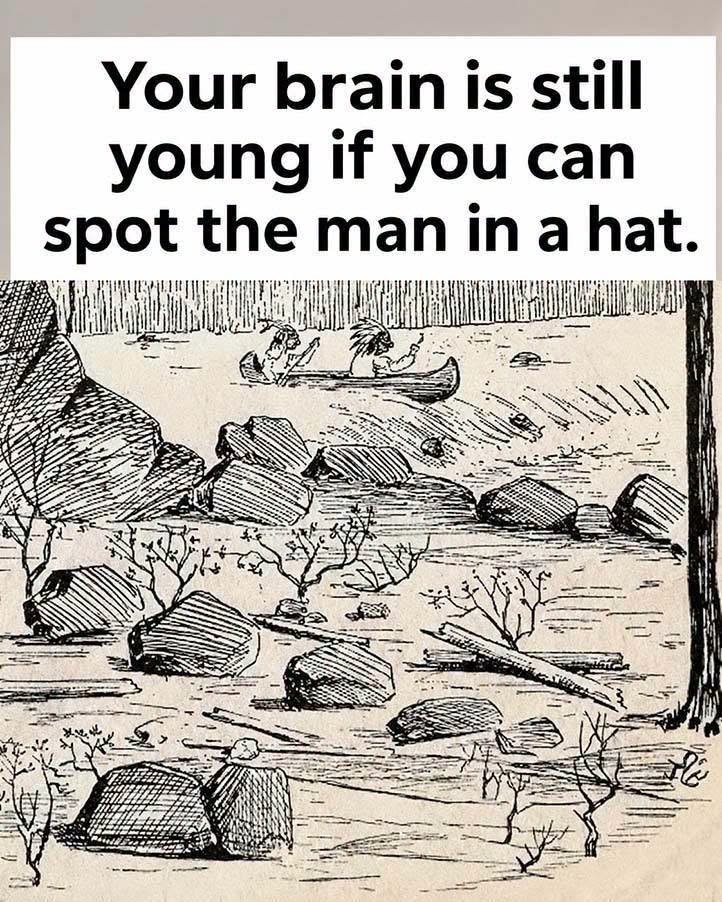
The vintage wilderness showdown: can your radar spot the MAN IN A HAT?!
Introduction: The Enduring Allure of Vintage Optical Illusions
Optical illusions have fascinated humanity for centuries, offering challenges that engage our vision and cognition in surprising ways. Among these illusions, vintage illustrations—particularly those embedded with hidden figures—are beloved by puzzle enthusiasts and visual detection experts alike. One of the most enduring examples is the classic “Man in a Hat” hidden within a wilderness scene. This remarkable artwork remains popular today, continuing to inspire spirited competition among those eager to prove the sharpness of their eyesight and the agility of their brains.
The Scene: A Closer Look at the Vintage Wilderness
At first glance, the illustration presents a tranquil wilderness landscape, seemingly straightforward in its depiction of nature. The scene features rugged rocks and parched earth in the foreground, interspersed with small saplings and fallen logs meticulously drawn in fine linework. Stretching towards the horizon is a calm river, behind which two Indigenous hunters paddle in a canoe, lending authenticity and serenity to the setting. What appears to be a simple nature sketch, however, conceals much more beneath its surface.
Fans of visual puzzles know that appearances can be deceptive. This peaceful landscape doubles as an “optical illusion dungeon,” constructed purposefully to challenge the viewer’s perception and awareness.

The Science Behind the Illusion: Figure-Ground Perception
The mystery within the illustration is rooted in a classic visual principle: figure-ground perception. This concept, studied extensively by neuroscientists and psychologists, describes the brain’s ability to separate an object (the figure) from its surrounding area (the ground). Artists and illustrators utilize this principle by crafting images where certain elements double as both foreground detail and components of a larger, hidden figure. Shadows, negative space, and subtle contours are manipulated to trick the observer’s brain, encouraging a cognitive hunt for meaning beyond the obvious.
According to vision experts, these illusions challenge not just eyesight, but also perceptual organization—the mental ability to interpret ambiguous or complex images. Solving such puzzles may even provide insight into the flexibility and attentiveness of an individual’s brain.
How to Spot the Man in a Hat: Expert Strategies
Locating the hidden man in a hat is a test of both patience and strategy. Here, the challenge relies on rejecting initial assumptions and systematically interrogating the visual field. The following approach, based on principles of cognitive psychology and art analysis, can help unlock the solution:
1. Leave Preconceptions Behind
Many first-time viewers search for a small, concealed character—perhaps crouched behind a bush or nestled inside a tree trunk. This is a common misstep. The elusive man in the hat is not a minute figure tucked away in a corner, but rather a large, integrated profile hidden across prominent features of the landscape itself.
2. Focus on the Rock Formations
The secret lies within the dominant rock structures on the left side of the scene. These formations, with their dramatic outlines and subtle details, serve a dual purpose: They not only anchor the scene but also delineate the profile of the hidden figure.
3. Assemble the Silhouette
With attention trained on the rocks, the observer should look for the sweeping curves and jagged contours that might suggest human features. Specifically, the upper arc of the main rock or hill is key—it is shaped to mimic the brim and crown of a classic hat. Below, a series of well-orchestrated lines and shadows evoke a man’s forehead, pronounced nose, lips, and chin in profile.
The result is a macro-scale portrait, integrated seamlessly into the wilderness. Recognizing this face often produces a moment of revelation, as the left mountain transforms into the unmistakable visage of the “Man in a Hat.”
The Unveiling: Where is the Man in a Hat?

The official solution confirms the ingenuity of the illustration. The hidden man is formed by the entirety of the main rock formation on the left side. The top edge replicates the classic hat, while the contours, crevices, and shaded anti-forms shape the man’s side profile. This intentional use of negative space is a hallmark of vintage illusionary art, rewarding the attentive observer with the discovery of a face previously obscured by one’s own expectations.
Even after the answer is revealed, viewers often experience a sense of awe as the landscape is transformed before their eyes. This phenomenon—known as perceptual reorganization—demonstrates the brain’s flexibility and highlights how context and attention create new visions from familiar scenes.
The Cognitive Impact: What Optical Illusions Teach Us About the Brain
Beyond entertainment, puzzles like the “Man in a Hat” offer insight into the mechanics of human perception. Optical illusions demonstrate how the brain processes visual information, sometimes prioritizing holistic interpretations over isolated details. According to cognitive psychologists, such illusions leverage ambiguities that require higher-level thinking and problem solving.
Research suggests that engaging in visual detection puzzles can foster attentional skills and enhance “cognitive flexibility”—the mental ability to shift between different ideas or perspectives. Some studies even indicate that regular exposure to such mental challenges may support healthy aging, providing exercise for the brain in much the same way physical activity benefits the body.
The Global Appeal of Visual Puzzles and Brain Games
The popularity of hidden figure drawings, from 19th-century illustrations to today’s viral images, attests to their universal appeal. Magazines, newspapers, and educational texts around the world have used these optical illusions to amuse, educate, and test their audiences. Group problem-solving sessions—whether in classrooms or casual gatherings—often turn competitive, with friends and colleagues racing to spot concealed elements or prove their “ageless brains.”
Online communities now share these classic images widely, inviting international participation and fostering global “leaderboards” for visual detection acumen. Experts in neuroscience, education, and design agree that such activities promote observational skills and offer healthy entertainment for all ages.
Social Engagement and Community Challenges
Part of the joy in solving vintage illusions comes from sharing the experience. Comment sections, classroom discussions, and social media threads are filled with debates about interpretation, strategies for detection, and playful boasts about completion speed. Many enthusiasts encourage friends to test themselves, further amplifying the social and cognitive benefits of these activities.
If you managed to spot the legendary rock-face gentleman within 10 seconds, you might lay claim to a sharp, youthful brain—as promised by the tagline often accompanying this classic illustration. The challenge thus extends beyond individual achievement, inviting collective participation and discussion across generations and cultures.
Conclusion: The Legacy of “Man in a Hat” Illusions
The “Man in a Hat” within the vintage wilderness scene remains a testament to the creativity of illustrators and the complexity of human perception. This type of puzzle not only entertains, but also educates—providing hands-on opportunities to explore psychological concepts like figure-ground perception and cognitive flexibility. As these images continue to circulate online and in print, they inspire new generations to appreciate the art and science of seeing beyond the obvious.
Whether you are a seasoned puzzle solver, a casual observer, or someone seeking to keep your mind engaged, optical illusions like this offer a window into the workings of the brain and the joys of shared discovery. The next time you encounter a seemingly simple landscape, remember: you may be just moments away from revealing a hidden world within the ordinary.
Sources
- BBC – The Power of Optical Illusions
- Psychology Today – Optical Illusions
- The Guardian – How Optical Illusions Trick Your Brain
- Verywell Mind – Figure-Ground Perception
Disclaimer: This content is intended for entertainment purposes only and is not based on real events.