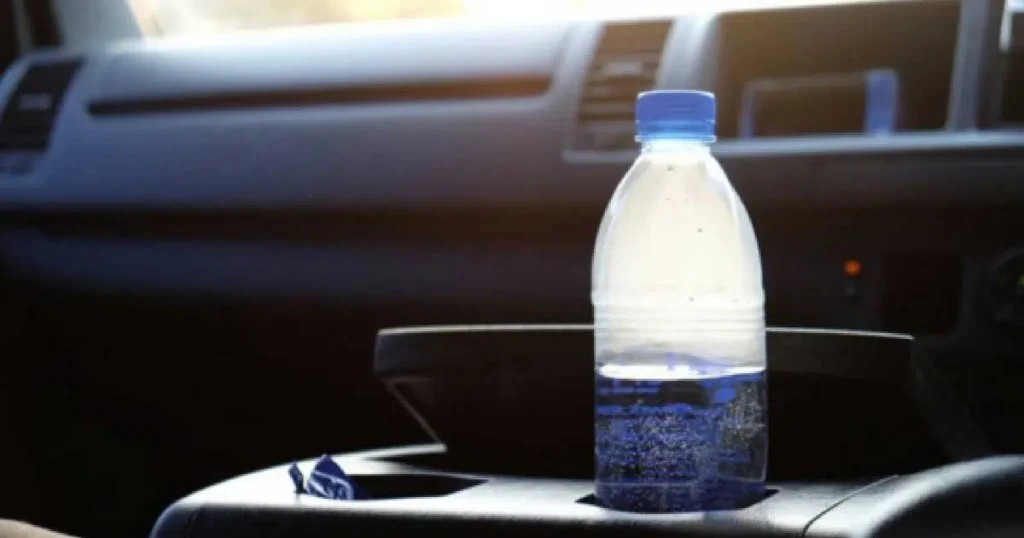
Firefighters Warn: Leaving a Water Bottle in Your Car Could Create a Fire Hazard
Introduction: Everyday Habits and Unexpected Risks
For millions of drivers worldwide, carrying a bottle of water in the car is a daily necessity. It ensures convenient access to hydration during commutes, long road trips, or while navigating busy routines. What many people do not realize, however, is that this simple habit could occasionally introduce an unexpected safety risk. Fire safety authorities have increasingly highlighted the potential for water bottles left in cars to create a fire hazard under specific conditions.
The Science Behind the Hazard: How a Water Bottle Can Start a Fire
The idea that a water bottle could contribute to fire risk may seem surprising. However, the phenomenon relies on straightforward principles of optics and heat transfer.
When sunlight enters a vehicle, it is typically dispersed across various surfaces, gradually warming the interior. A clear plastic or glass bottle filled with water acts similarly to a magnifying glass: its curved shape refracts, or bends, sunlight, converging it into a smaller, more focused area. If the concentrated light beams down onto dark or heat-absorbent materials such as cloth upholstery, leather seats, or carpeting, it can cause the temperature at that pinpointed spot to rise significantly above the surrounding air temperature.
While the main causes of vehicle fires are usually mechanical or electrical, scientific documentation and anecdotal reports suggest that this lens effect is not merely theoretical. In rare but real situations, it has resulted in scorched surfaces or, under highly favorable conditions, the ignition of interior materials.
Multiple factors determine whether a water bottle can become hazardous: the clarity and shape of the bottle, the volume of water, the bottle’s orientation, and the nature of the material upon which the light is focused. Not every water bottle left in a hot car will pose a danger, but the possibility is real enough to merit consumer awareness and sensible action.

Real-World Case: Water Bottle Ignites Seat in Idaho
The potential for water bottles to cause car fires gained significant public attention after an incident involving Idaho Power employee Dioni Amuchastegui. According to reports and videos released by Idaho Power, Dioni noticed smoke inside his truck during a lunch break in 2017. Upon investigating, he discovered that sunlight, refracted through a clear water bottle resting nearby, had been focused onto the seat fabric, producing enough energy to leave visible burn marks.
The case did not escalate into a major fire, but it highlighted a little-known risk and underscored the need for vigilance regarding even benign-seeming objects in vehicles. Fire safety officials responded by emphasizing that even if such events are rare, they are worthy of public consideration alongside other common-sense car safety habits.
Why Vehicle Interiors Are Especially Vulnerable
Cars parked in direct sunlight can reach extremely high temperatures, especially in summer or in regions with intense sunlight. Vehicle glass acts as a greenhouse, trapping heat within. The U.S. National Weather Service notes that the interior of a vehicle can reach life-threatening temperatures in under an hour on a sunny day, even with windows cracked open.
This heat amplifies the danger posed by concentrated sunlight. Materials commonly used in car interiors, such as foam, synthetic fabrics, plastics, and cardboard, can degrade, discolor, or even ignite given a high enough local temperature. A bottle-concentrated sunbeam can create precisely such a hot spot, leading to unexpected damage or, in worst-case scenarios, open flames.
Still, it is critical to maintain perspective. Data from the U.S. National Fire Protection Association (NFPA) and the National Park Service indicate that the overwhelming majority of vehicle fires arise from mechanical failures, electrical faults, or collisions—causes that collectively account for more than 70% of incidents. Fires due to stray objects or focused sunlight are very rare, but awareness can help reduce the risk even further.
What Types of Bottles Are Most Risky?
The chief concern centers on clear, transparent bottles—typically those made from plastic or glass—that are at least partially full of water. The lens effect, while weaker with cloudy plastic or colored bottles, is strongest with clear surfaces and pure water, both of which maximize the refraction and concentration of sunlight.
Opaque, insulated stainless-steel bottles do not create the same optic effect. However, storing any liquid container—including reusable bottles—in a hot car can create other liabilities, such as the buildup of pressure, leaks, or degradation of materials and contents.
How to Store Water Bottles Safely in the Car
Recognizing the potential for a fire hazard does not mean drivers should stop carrying water bottles for hydration—on the contrary, having water available during travel, outdoor activities, or emergencies remains critically important. Instead, consider adopting smarter storage practices to minimize risk.
- Keep bottles out of direct sunlight. Arrange bottles in shaded areas, such as under seats or in floor compartments, where sunlight is less likely to strike them directly.
- Use covered storage. Glove compartments, center consoles, and covered cup holders offer additional protection and shade from direct sun rays.
- Utilize coolers or insulated bags. If traveling with multiple bottles or sensitive contents, store them in an insulated tote. This not only reduces fire risk but also helps maintain a refreshing temperature.
- Position bottles securely. Prevent bottles from rolling or shifting onto sunlit dash areas or seats by using fitted cup holders or bins.
The National Park Service also recommends always carrying extra water, especially when traveling through remote or wilderness settings—meaning safe storage is key, not absence of supply.
Firefighter Guidance: Broader Heat Safety in Vehicles
The unusual lens effect associated with water bottles spotlights a broader principle of car safety: parked vehicles can quickly become hazardous environments for a wide range of common items. According to fire safety experts, electronic devices containing lithium-ion or other reactive batteries are also at risk when left in direct sun or extreme heat, as are aerosol cans, certain medications, lighters, and flammable materials.
Fire departments routinely warn against storing these heat-sensitive items in cars. For example, when electronics are charged or left on dashboards, batteries may overheat or degrade, and paper products or fabrics become potential ignition points.
Drivers are encouraged to treat their vehicle’s interior as a high-risk heat zone, especially during sunny days. Simple preventative habits can avert costly damage, dangerous situations, and, in rare cases, fires.
What To Do If You See Smoke or Fire in Your Car
Any visible smoke, burning smells, or unfamiliar heat damage inside the vehicle should be treated as an emergency. If you notice such signs, immediately pull over to a safe location, turn off the engine, and exit the vehicle with all passengers. The U.S. National Park Service and most fire departments advise against attempting to rescue belongings or approach a burning car, as significant risks—including rapid spreading, toxic fumes, and possible explosions—can occur.
Instead, call emergency services, provide your location, and keep a safe distance. Fast response may protect lives and limit property damage.
Expert and Public Responses to the Water Bottle Warning
Fire agencies and safety experts have publicly confirmed that, while water bottles starting vehicle fires is rare, the theoretical possibility exists. Videos and advisories from U.S. fire departments and utility companies (such as Idaho Power) have gone viral online, prompting widespread discussion. Most experts frame the hazard as preventable with minor habit changes without causing alarm or panic.
While some international safety agencies have noted that such incidents are statistically unlikely and very rare compared to other automotive fire sources, the widespread coverage has prompted manufacturers and safety organizations to incorporate warnings about heat-related damage in car owner manuals, mobile device guides, and other educational materials.
The Importance of Small Precautions
The story of water bottles as a fire hazard offers a broader lesson on how simple, often-overlooked details can have outsized impacts on safety. Whether it is plastic bottles, mobile electronics, or other everyday objects, understanding how heat and sunlight interact with common materials can help prevent avoidable accidents.
Ultimately, continuing to carry bottled water in your vehicle is advised—especially in hot climates or remote regions—but requires just a few seconds of care to avoid direct sunlight exposure. Moving a water bottle from the seat to a covered compartment can mean the difference between an uneventful day and costly interior damage.
Conclusion: Simple Changes for Greater Safety
Although the risk posed by water bottles focusing sunlight and contributing to vehicle fires is low, the science is credible, and documented cases underscore the value of proactive awareness. Consistently storing bottles and other sensitive objects away from direct sunlight is a small habit that can prevent unnecessary car damage or even rare fire scenarios.
By understanding the interplay of sunlight, materials, and vehicle interiors, drivers can keep vehicles safer—all while still enjoying the convenience and health benefits of adequate hydration.
Sources
- Reuters
- BBC
- National Park Service
- National Fire Protection Association (NFPA)
- The Guardian
- Centers for Disease Control and Prevention (CDC)
Disclaimer: This content is intended for entertainment purposes only and is not based on real events.