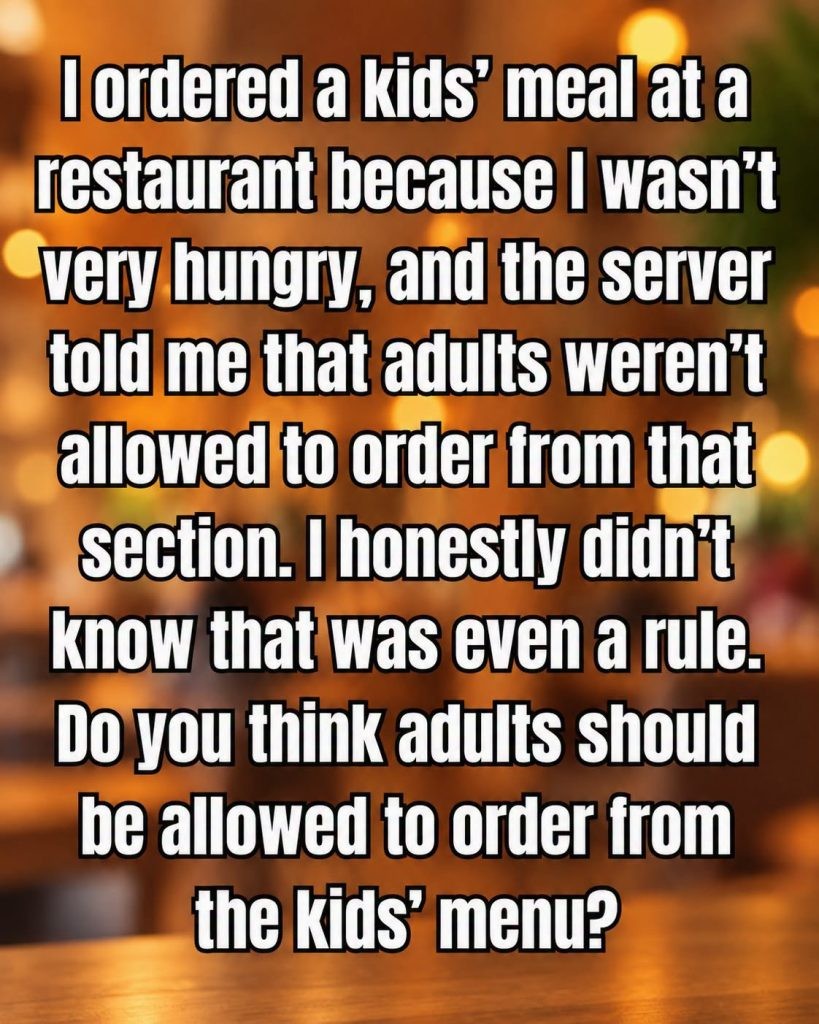
A Quiet Dispute: The Debate Over Adults Ordering from Kids’ Menus in Restaurants
Introduction
Dining out is meant to be a pleasurable and inclusive experience, offering individuals an opportunity to enjoy good food, socialize, and unwind. Yet, in recent years, a subtle tension has surfaced in restaurants around a seemingly mundane issue: adults attempting to order from the kids’ menu. At first glance, this practice may appear trivial, but the ensuing debates reveal surprising complexities about portion control, personal dignity, business economics, and evolving food culture.
The Appeal of the Kids’ Menu for Adults
Kids’ menus, traditionally designed for younger patrons, offer smaller portion sizes, simplified dishes, and often lower prices. For many adults, these features present practical benefits. Some cite health concerns, such as dietary restrictions or a desire to avoid food waste, while others are motivated by budget considerations—restaurant meals can be costly, and the option to pay less without sacrificing the dining experience is understandably attractive. In certain cases, comfort food nostalgia also plays a role; classics like grilled cheese sandwiches or macaroni and cheese, staples on many kids’ menus, evoke fond childhood memories and provide emotional comfort.
Restaurant Policies and Economic Realities
Despite the appeal for diners, restaurants often restrict the kids’ menu to patrons under a certain age. These policies are not arbitrary; they are rooted in business considerations. For example, children’s meals are usually offered at a lower cost as a courtesy to families and to encourage family dining. These meals may be subsidized by the profits from higher-priced adult dishes. Allowing unrestricted adult access to kids’ menu pricing can upset the restaurant’s financial model, potentially impacting bottom lines, particularly given rising food and labor costs in the industry.
Profit margins in the hospitality sector are notoriously slim. According to industry data compiled by the National Restaurant Association and trade publications, the average profit margin for full-service restaurants in the United States hovers between 3% and 6%. With such narrow windows for profitability, restaurants must carefully calibrate their pricing strategies. Limiting access to the kids’ menu is one way to maintain economic balance. For many establishments, implementing a policy that enforces age restrictions is not about policing choices, but rather about ensuring business viability amidst intense competition and volatile costs.
The Customer Experience: Dignity, Choice, and Embarrassment
From the customer’s perspective, being denied the option to order a smaller, lower-priced meal can feel exclusionary. Diners report feeling self-conscious or embarrassed when questioned or refused service. Experts in hospitality and customer service note that subtle interactions—such as a server’s facial expression or the way a policy is communicated—can leave diners feeling unwelcome or implicitly judged. The issue, therefore, is not solely about a plate of food, but about autonomy, dignity, and the comfort of being able to make reasonable choices to suit personal preferences.
Dr. Emily Brown, a professor of hospitality management, emphasizes that “the routine of dining out should empower consumers, letting them make choices aligned with their health, hunger, and budget. When policies seem inflexible or embarrassing to enforce, they undermine the sense of hospitality restaurants seek to project.”
The Evolving Culture of Dining and Portion Sizes
Underlying today’s debate are longer-term cultural changes in how people eat and perceive restaurant portions. In several Western countries, portion sizes in restaurants have grown significantly over the past three decades. Research from institutions like the Centers for Disease Control and Prevention (CDC) confirms that the average restaurant meal today is significantly larger—and more caloric—than in prior generations. This trend has contributed to growing public concern about food waste, obesity, and the desirability of offering more varied portion choices.
Consequently, there is rising awareness and demand for smaller, more manageable portions among all age groups. Adults who desire healthier eating habits, seek to control caloric intake, cater to medical conditions (such as diabetes or heart disease), or wish to avoid overspending all look favorably on menus that allow flexibility in portion sizes. This shift is pushing some restaurants to innovate with “light,” “petite,” or “half portion” menu options that address this evolving need.
Nutritional Perspectives
Nutritionists often highlight the benefits of flexible portion control in combating overconsumption and ensuring healthier diets. The Mayo Clinic and other health organizations note that standard adult restaurant portions are often more generous than necessary for a single meal, contributing to excessive caloric intake. Kids’ menu items, by contrast, can offer realistic servings more in line with contemporary nutritional recommendations for many adults, particularly older diners or those with decreased caloric needs.
However, nutritional analysis also reveals shortcomings of many traditional kids’ menus, which are sometimes limited in variety and heavy on processed foods, fried items, and sugar-rich beverages. Experts suggest that if restaurants are to expand access to kids’ portions for all, they should also strive to improve the nutritional value and variety of those options, making them appealing and healthy for a wide range of eaters.
The Restaurant Industry’s Response and Alternatives
While some restaurants maintain strict age restrictions on their kids’ menus, others are adapting in response to shifting consumer preferences. Industry leaders recognize that flexibility can be a competitive advantage. For example, some establishments offer “senior menus” or “lighter selections,” targeting adults who prefer smaller portions. Others create clearly marked “half-size” options for popular dishes, ensuring they can maintain profitability while accommodating a greater range of needs and appetites.
In surveys conducted by hospitality industry consultants, diners overwhelmingly support more menu flexibility. Restaurant owners who have implemented more open policies report increased customer satisfaction and loyalty, especially among health-conscious and older consumers. However, there are still logistical and cost concerns; smaller plates often require the same level of labor and sometimes use more packaging or resources per portion, slightly eroding profit margins if not priced appropriately.
Some restaurants have adopted creative compromise solutions, such as upcharging adults slightly for a kids’ meal or offering “à la carte” pricing that allows diners to assemble a smaller meal at a proportional cost. Others explicitly state on their menu that kids’ meals are available to all, or during limited hours, to manage demand and discourage abuse of the system. Clear signposting and friendly staff communication help minimize potential embarrassment and foster a welcoming environment for all patrons.
Societal Reactions and International Perspectives
The debate over adults ordering from kids’ menus has sparked considerable conversation on social media and food forums, with arguments for flexibility and inclusivity drawing significant support. Advocacy groups for older adults and people with disabilities have weighed in, noting that smaller meals are critical for some populations due to health, appetite, or medication considerations.
Internationally, menu policies vary by culture and market. In some European and Asian countries, “set meals” or “small-size” portions are customary for all ages, making distinctions based solely on age less common. Experts argue that adopting such practices globally could enhance the dining experience and promote sustainability by reducing food waste.
As awareness grows, restaurants and diners alike are confronted with questions regarding the role of inclusivity, changing dietary habits, and the responsibilities of the food industry in supporting consumer health and choice. Many believe the evolution of menu options is key to creating a more accessible, accommodating, and enjoyable dining culture for everyone.
Finding Balance: The Path Forward
The debate over adults ordering from kids’ menus is ultimately about more than food pricing. It touches on complex themes of personal dignity, customer service, business sustainability, and changing societal values. As the food service landscape continues to evolve, experts recommend solutions rooted in empathy and economics: increased menu flexibility, transparent communication, and commitment to food quality and nutritional value, regardless of portion size.
Diners, for their part, can show understanding for business constraints, particularly in an industry still recovering from the economic shocks of the pandemic. Open dialogue—between customers and staff, and within the wider public—helps move the conversation from conflict to constructive compromise.
In the end, the goal is to restore dining out to its original purpose: an experience where all people can enjoy food tailored to their needs in a welcoming, respectful setting.
Sources
- The New York Times
- BBC News
- National Restaurant Association
- Centers for Disease Control and Prevention (CDC)
- Mayo Clinic
- The Guardian
Disclaimer: This content is intended for entertainment purposes only and is not based on real events.