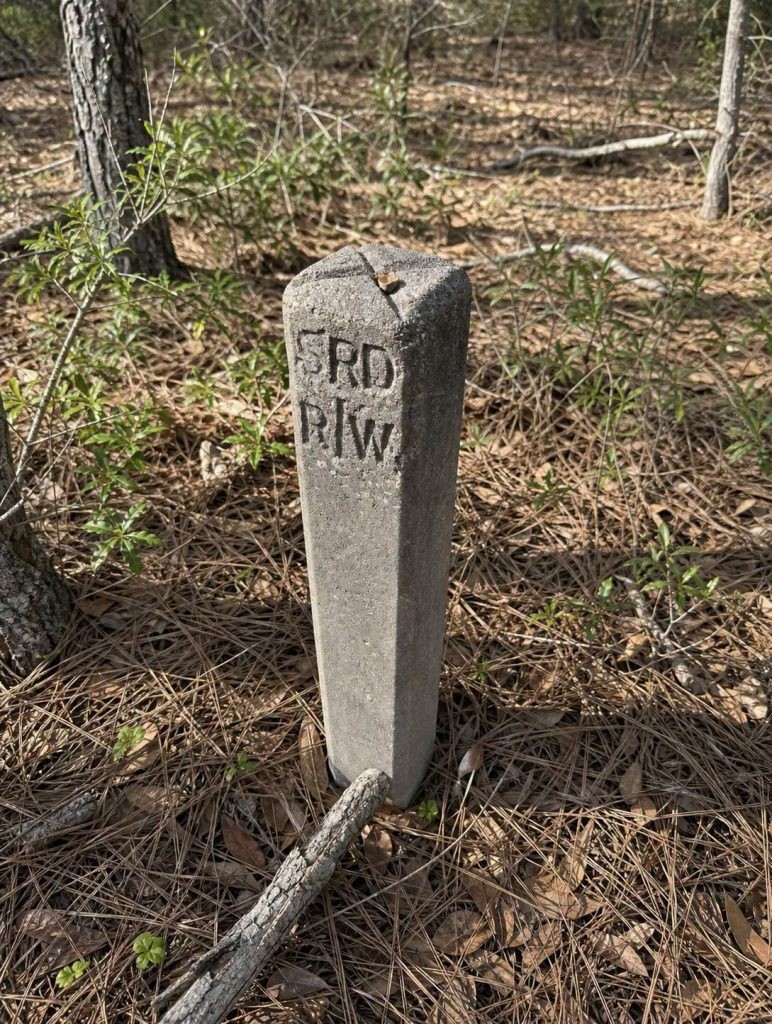
Amid the shifting tapestry of urban transformation and rural development, certain objects remain steadfast, quietly bridging what came before and what exists now. The unassuming concrete boundary post stands as a humble sentinel, often overlooked and left to weather the elements, yet possessing a rich story about the land, its past purposes, and the invisible marks people have left behind. This article explores the meaning, history, and cultural resonance of these modest concrete markers, revealing how they subtly alter our understanding of the landscape.
The Appearance and Purpose of Boundary Posts
At first glance, a small, weathered slab of concrete in the underbrush or beside a seemingly abandoned path hardly attracts attention. These boundary posts are typically plain, functional in design, and bear little that would suggest beauty or craftsmanship. Their surfaces might display faded stenciling such as “R/W,” shorthand for “Right-of-Way,” or other cryptic designations indicating the edge of a roadway, railway, or corridor that once played a crucial role in shaping the movement and daily rhythms of a community.
The primary purpose of these posts was legal and practical. Installed by engineers and civil authorities, they demarcated the physical and jurisdictional boundaries of public infrastructure. In places where governments or municipalities needed to maintain a corridor for transportation—be it a railway, major road, or utility line—these concrete posts marked the limits of the right-of-way, clarifying which portions of land were publicly controlled and which remained private.
Markers in Transition: Remnants of Vanished Infrastructure
As decades pass and society’s needs shift, many once-essential routes are modified, abandoned, or completely erased. Pavements crack and vanish beneath encroaching vegetation; railway tracks are torn up and recycled; old paths become subsumed by newer construction or nature itself. Yet, the boundary marker endures. Its utilitarian strength—designed to withstand weather, vandalism, and time—often outlasts the very infrastructure it was meant to serve.
These markers are clues. Their existence often highlights subtle physical changes: embankments with unusual symmetry, undulations in terrain, or thin lines of stone and gravel that appear conspicuously out of place in an otherwise natural setting. Researchers and urban historians study such signs to reconstruct vanished landscapes and decipher the evolution of transit networks, neighborhoods, and economic patterns.
The Authority of Concrete: Law, Property, and Memory
The concrete marker’s role extends beyond the physical. It represents a manifestation of legal boundaries—points where history, law, and individual experience converge. These posts often remain in place even after the official right-of-way ceases to function, leading to ambiguous property lines and sometimes even disputes. Surveyors, land planners, and local governments may use the presence of a post to inform decisions about redevelopment, conservation, or repurposing of land for new uses.
In many cases, communities decide to integrate these remnants into new projects—turning former railway beds into greenways and trails, for example, or preserving boundary posts as interpretive features in urban parks. Their continued presence invites passersby to engage, even unknowingly, with the history of the place beneath their feet.
Seeing the Invisible: How Markers Change Our Understanding of Place
One of the most striking psychological effects of discovering such a post is how it transforms perception. What once seemed like a random or wild patch of earth is now reframed: uneven ground, lines of stone, and sudden open vistas hint at a forgotten logic underlying the present landscape. Knowledge of a single marker can unveil hidden patterns—a grid of vanished streets, the arc of a forgotten railway, or the outline of a now-vanished industrial complex.
This revelation can be deeply meaningful. It connects today’s residents to a chorus of past lives and routines—workers trudging to the factory, trains rumbling by at midnight, children hurrying along a well-worn path to school—all activities now cleansed from the site except for these material echoes. The land itself seems to remember, inviting careful observers to discover its story anew.
Markers as Witnesses: A Silent Testament to Everyday Life
Unlike elaborate monuments or prominent commemorative plaques, the concrete boundary post offers no explanation. Its silence is both its essence and its appeal. These objects bear witness not to grand events but to the pulse of daily life: the negotiated spaces, the regulated flows of people and commerce, and the countless mundane moments that make up communal existence.
As tangible links to former worlds, boundary posts remind communities that history is not always codified in national museums or textbook chapters. Often, it is preserved only in the overlooked and the ordinary—a neglected slab of cement that outlasts those who set it in place. In doing so, such markers foster a nuanced appreciation for how landscapes change and how memory persists in surprising forms.
Cultural Significance and Community Memory
Around the world, the reclamation and reinterpretation of these markers have become part of broader movements in heritage preservation and urban renewal. Local historical societies and conservation groups might document and catalogue the locations of old boundary posts, compiling oral histories and archival photos to reconstruct their original purpose. In some cities, walking tours and digital mapping projects bring renewed attention to these humble signposts, contextualizing them within larger narratives of industrialization, migration, and urban planning.
Internationally, the phenomenon is echoed wherever infrastructure has risen and fallen with changing times, including in the United States, Europe, and Asia. For example, the rails-to-trails initiatives in the U.S. transform former railway corridors into public spaces, often leaving the concrete posts in situ as reminders of prior activity. In the United Kingdom and elsewhere, remnants of canal, tram, and railway infrastructure are increasingly valued for their ability to anchor contemporary communities to their pasts.
Expert Perspectives: The Importance of Markers in Heritage and Planning
Urban planners, historians, and sociologists agree on the significance of such boundary markers. According to Dr. Emily Talen, an urban planning scholar, “Seemingly trivial relics—like concrete boundary posts—act as points of continuity through cycles of destruction and renewal. They offer crucial reference points not just for mapping but for constructing shared identity.”
Preservationists argue that while not every marker can or should be protected, their careful integration into new developments enhances a site’s authenticity and encourages deeper engagement with local history. Educators see them as tools for encouraging community-based learning, using these artifacts to spark conversations about land use, public space, and historical change. In natural and built environments alike, these markers become focal points for discussions about stewardship, memory, and the intersection of human agency and the land itself.
Conclusion: Enduring Presence in a Transient World

In a world obsessed with the new, it is easy to overlook the silent presence of a plain concrete post. Yet its modest persistence underscores an essential truth about place, time, and belonging: even as visible structures and societal patterns shift, the ground below still retains impressions of previous lives and intentions. The weathered post endures, continuing a quiet duty—marking a vanished route, asserting a history that remains just beneath the surface.
For those willing to notice, these boundary markers offer lessons in observation, humility, and respect for the layers of meaning within any landscape. They are silent guides to the intertwined stories of people, planning, and the passage of time. And as long as they stand—even half-hidden among weeds—these posts insist, gently but firmly, that something important once passed this way and that every place, no matter how seemingly ordinary, holds a story worth remembering.
Sources
Disclaimer: This content is intended for entertainment purposes only and is not based on real events.