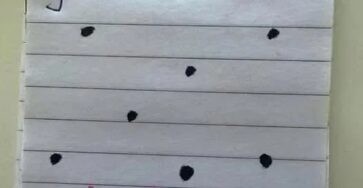
At first glance, this puzzle seems almost too easy.
The task appears to be simple: look at the picture, count the spots, and give your answer. Most people will immediately focus on the large, obvious dots and assume they have solved it within seconds.
But that’s exactly where the puzzle becomes interesting.
This visual challenge is designed to make you question what you see and look beyond the most noticeable parts of the image.
The Obvious Dots Aren’t the Whole Story
When we look at a busy image, our brains naturally search for the largest and clearest patterns first.
That’s useful in everyday life, but it can work against us in visual puzzles.
The prominent spots immediately attract attention, while smaller details can disappear into the surrounding design. As a result, you may count the obvious dots, feel confident about your answer, and move on without checking the rest of the image.
That’s the trap.
Look at the Smaller Details
To solve the puzzle properly, don’t just scan the main design.
Examine the entire image carefully.
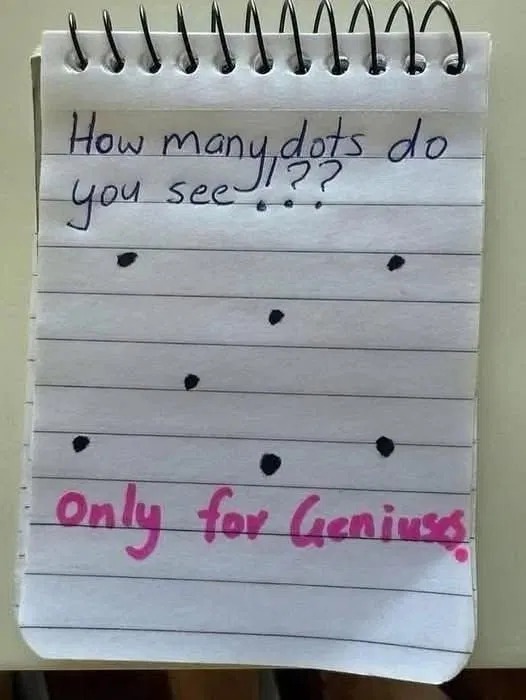
Look at the surrounding text, punctuation, symbols, and other small components. Some of the details that contribute to the final answer may be incorporated into places you wouldn’t normally consider part of the puzzle.
A tiny dot inside a punctuation mark, for example, can easily be overlooked when you’re concentrating on the larger shapes.
The challenge isn’t simply about counting.
It’s about recognizing what actually counts as a spot.
Why Your First Answer Might Be Wrong
Visual puzzles often take advantage of a psychological shortcut known as selective attention.
When we expect to find something in a particular place, we tend to focus our attention there. Everything outside that area becomes less noticeable.
That’s why a puzzle can contain details that are technically visible while still remaining surprisingly difficult to spot.
You may even look directly at a tiny element without consciously registering it.
The more confident you become after your first count, the less likely you may be to search for something you believe you’ve already found.
Slow Down and Check Everything
If you want to solve this challenge, resist the urge to answer immediately.
Start with the obvious spots, but don’t stop there.
Move your eyes across the entire image. Check the edges. Examine the text. Look carefully at punctuation and symbols. Then count everything again.
You may discover that the puzzle contains more details than you initially expected.
And that’s what makes this type of brain teaser so satisfying.
Did You Find Them All?
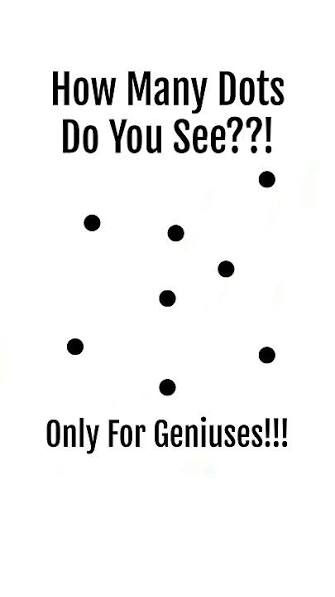
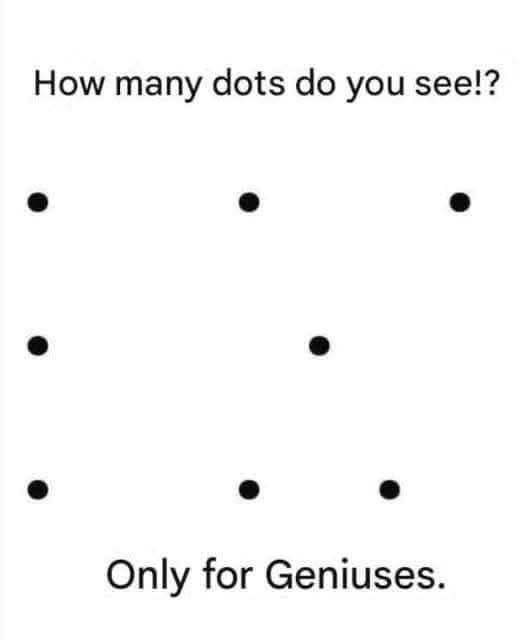
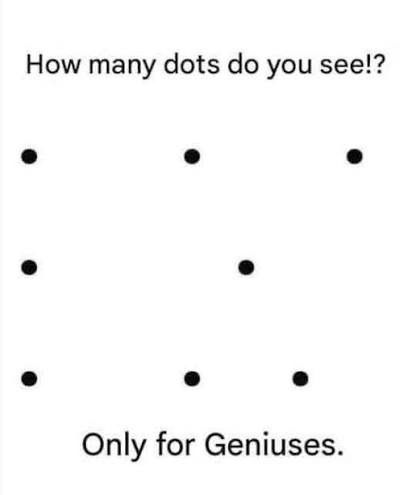
So, how many spots are actually hidden in the image?
Before checking the answer, take another few seconds.
Count everything—not just the dots that jump out at you.
If your first answer was different from your second, that’s exactly what this puzzle was designed to do.
Sometimes the hardest part of a simple-looking puzzle isn’t counting.
It’s knowing where to look.