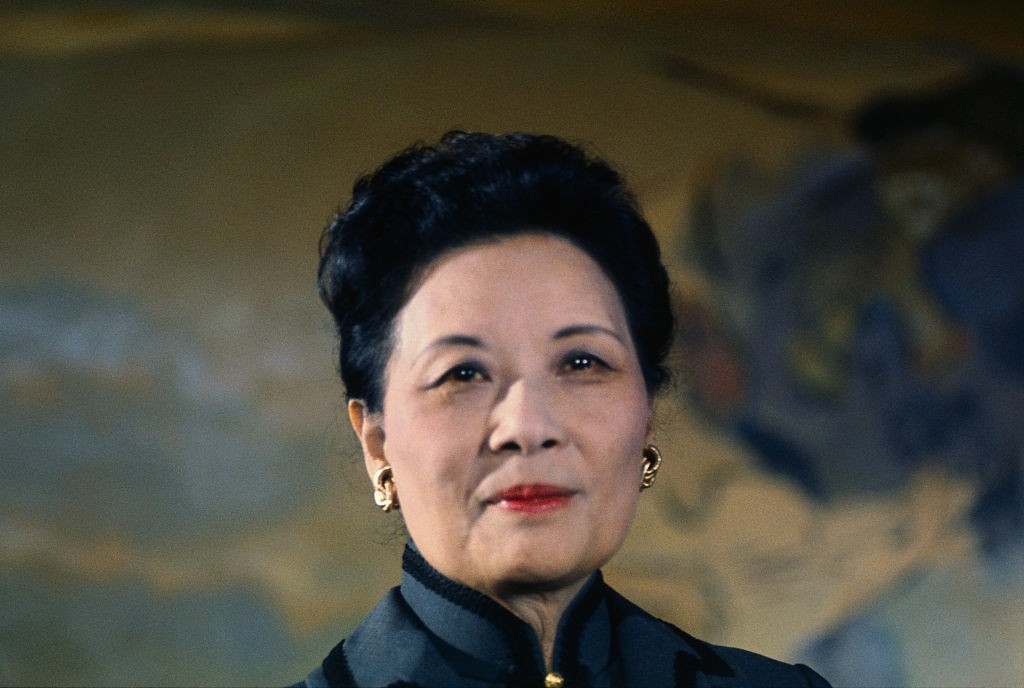
Few people lived through as much history as Soong Mei-ling, better known as Madame Chiang Kai-shek.
Born in 1898, she became one of the most recognizable women in 20th-century China. She was a political figure, diplomat, artist, philanthropist, and influential public speaker who moved between Chinese and American society with remarkable confidence.
But her historical legacy wasn’t the only thing that fascinated people.
Madame Chiang lived to the age of 106, passing away in New York in 2003. Her extraordinary lifespan has long encouraged curiosity about the routines and lifestyle choices she followed throughout her life.
Among the habits associated with her was an appreciation for simple foods, including one particularly humble vegetable: celery.
A Life Shaped by Discipline
Madame Chiang’s approach to daily life was often described as highly structured.
Accounts of her routine have highlighted habits such as maintaining regular mealtimes, avoiding excessive eating, making time for reading and creative activities, and keeping a consistent sleep schedule.
Whether these practices directly contributed to her longevity is impossible to determine.
Living beyond 100 is influenced by many factors, including genetics, environment, socioeconomic circumstances, healthcare, lifestyle, and simple individual variation.
Still, her reported habits offer an interesting reminder that healthy living doesn’t necessarily require complicated routines.
Why Celery Became Part of the Story
Celery may not be the first food people associate with longevity.
It’s inexpensive, crunchy, mostly water, and relatively low in calories. Yet it also contains fiber, vitamins, minerals, and a variety of plant compounds.
For someone trying to build a balanced eating pattern, vegetables such as celery can be a useful addition to meals and snacks.
Madame Chiang was reportedly fond of the vegetable, and stories about her diet have helped turn celery into one of the most memorable details associated with her lifestyle.
But there’s an important distinction.
Eating celery cannot explain why she lived to 106.
It is more accurate to view it as one small part of a broader dietary pattern.
What Does Science Say About Celery?
Modern nutrition research has taken a closer look at the plant compounds found in celery.
Celery contains flavonoids and other antioxidants, including compounds such as apigenin and luteolin. These substances have attracted scientific interest because of their biological activity.
Laboratory and animal studies have investigated whether these compounds may influence inflammation, oxidative stress, and other cellular processes.
Apigenin, in particular, has been studied for a variety of potential biological effects, including mechanisms related to inflammation and abnormal cell growth.
However, much of this evidence comes from laboratory experiments or animal research.
That means we shouldn’t automatically assume that eating celery produces the same effects in humans.
Celery Is Nutritious, But It’s Not a Miracle Food
It’s easy for an ordinary vegetable to become the star of a longevity story.
But nutrition is rarely that simple.
No single food has been proven to be responsible for an exceptionally long lifespan. A healthy diet is generally about the overall pattern—eating a variety of vegetables, fruits, whole grains, protein sources, and other nutritious foods while limiting excessive amounts of highly processed foods.
Celery can certainly fit into that picture.
It can be eaten raw, added to soups and salads, combined with other vegetables, or used as an ingredient in countless recipes.
Its greatest advantage may simply be that it’s an easy way to add another vegetable to the diet.
Her Mind Stayed Active, Too
Food was only one part of Madame Chiang’s reported lifestyle.
She also maintained an interest in creative and intellectual activities.
Reading, painting, writing, and reflection were reportedly important parts of her life. Even in advanced age, she continued to pursue artistic interests.
These activities are especially fascinating because longevity isn’t simply about physical health.
Maintaining social connections, staying mentally engaged, pursuing meaningful interests, and continuing to learn can all contribute to quality of life as people age.
Madame Chiang’s life illustrates this broader perspective particularly well.
A Remarkable Historical Figure
Long before she became known for her longevity, Madame Chiang had already established an extraordinary public life.
She was highly educated in the United States and spoke English fluently. During World War II, she became an important international representative for China, speaking publicly in the United States and meeting influential political leaders.
She also participated in philanthropic work and supported educational initiatives.
Her public image evolved over the decades, reflecting the dramatic political changes of the 20th century.
Regardless of how one evaluates her political legacy, there is little doubt that she was an unusually influential woman who knew how to command international attention.
Even After 100, She Continued Creating
Perhaps one of the most memorable aspects of Madame Chiang’s later life was her continued interest in art.
She continued painting and remained connected to the cultural world well into old age.
That detail makes her longevity story particularly interesting.
Rather than presenting her life simply as a story about food, it suggests something broader: staying engaged with activities that bring purpose and intellectual stimulation can remain meaningful at any age.
Her life wasn’t defined by celery.
It was defined by decades of experiences, responsibilities, interests, challenges, and personal routines.
What We Can Learn From Her Story
There is no secret vegetable that guarantees a long life.
But Madame Chiang’s story does offer several reasonable lessons.
A balanced diet matters. Regular routines can make healthy habits easier to maintain. Staying mentally active can enrich later life. And continuing to pursue interests—even as we grow older—can help keep everyday life meaningful.
Celery happens to be a nutritious vegetable that can easily be part of that lifestyle.
So the next time you see a bunch of celery at the grocery store, there’s no need to think of it as a miracle food.
Think of it as something much simpler.
A humble vegetable, packed with useful nutrients, that fits neatly into a balanced diet.
And perhaps that is the more valuable lesson from Madame Chiang’s remarkable life: longevity is rarely about one magical ingredient. It’s about the many small choices that make up a lifetime.