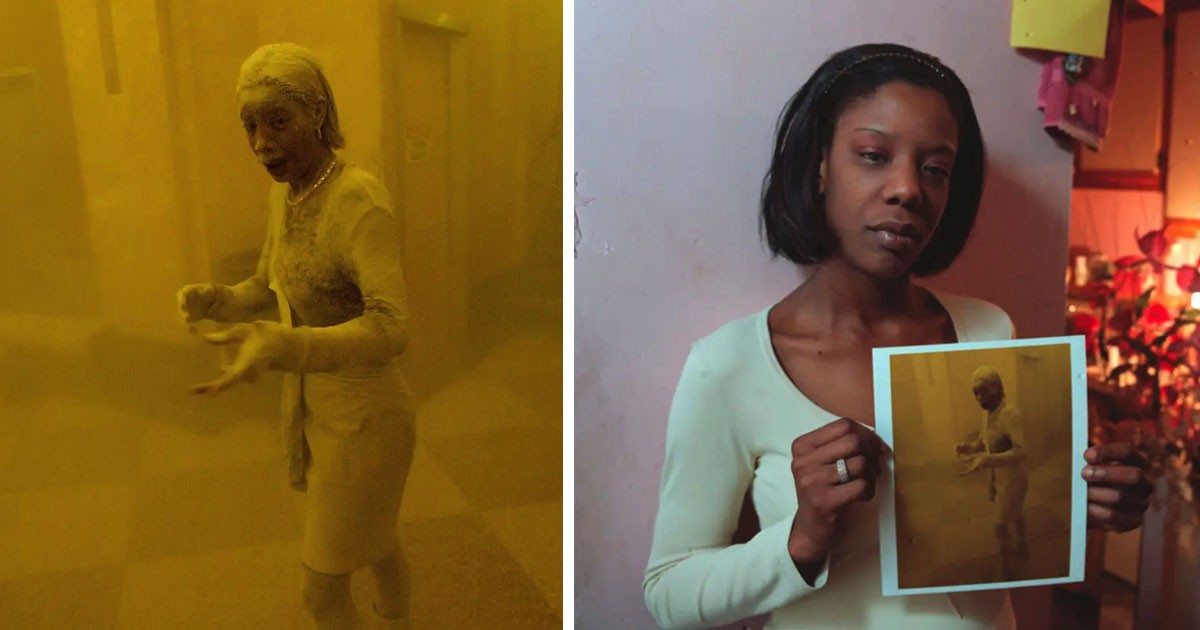
For 25 years, one photograph from September 11, 2001, has remained deeply embedded in the public memory.
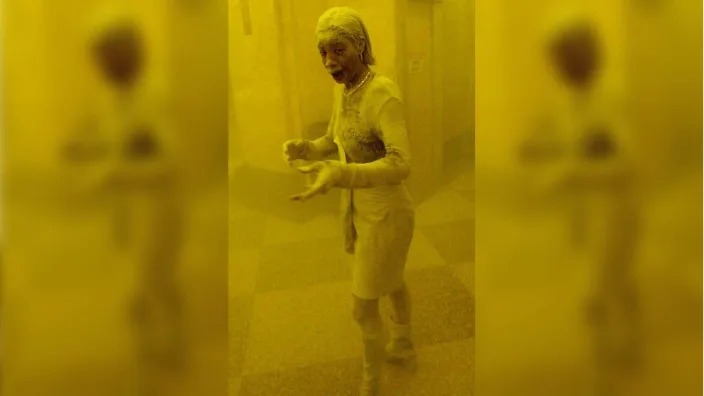
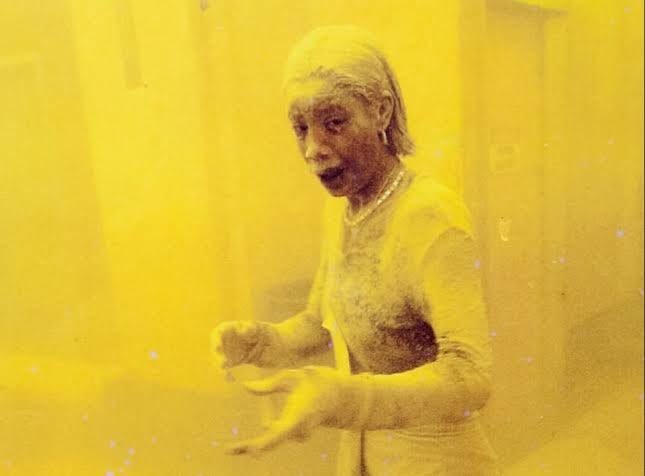
It shows a woman standing outside the World Trade Center, covered in dust and looking stunned as the streets around her disappeared into confusion.
The photograph became one of the defining images of the 9/11 attacks.
The woman in it was Marcy Borders, a 28-year-old mother from New Jersey who had only recently started a new job at the World Trade Center.
The world would come to know her as the “Dust Lady.”
But behind the famous photograph was a woman whose life continued long after that moment — a life shaped by trauma, recovery, family, and ultimately a serious illness that she believed was connected to what she experienced that morning.
Marcy Borders Was Just Starting a New Job
On September 11, 2001, Marcy Borders was working as a legal assistant at Bank of America.
She had been at the company for only about a month.
Her office was on the 81st floor of the North Tower.
Like countless other people arriving at work that morning, Marcy had no idea that the day ahead would become one of the most significant moments in modern history.
She later recalled that she had been preparing to begin her workday when the first plane struck the building.
The ordinary rhythm of a morning at the office suddenly disappeared.
Choosing to Leave the Building
In the immediate aftermath, Marcy was reportedly advised to remain where she was until emergency personnel arrived.
Instead, she decided to leave.
That decision ultimately proved crucial.
Marcy made her way down the building and eventually escaped outside.
The journey was frightening and chaotic, with thousands of people attempting to get away from the towers.
She later described the confusion inside the building and the fear that she might not survive.
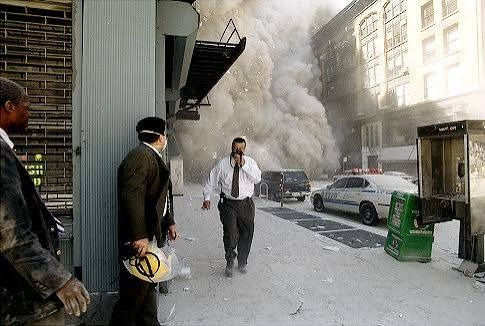
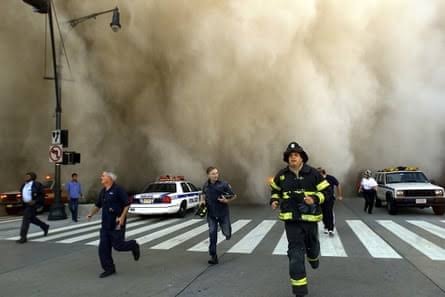
By the time she reached the street, the environment around the World Trade Center had become almost unrecognizable.
Then came the moment that would change the way the world remembered her.
The Photograph That Made Marcy Borders Famous
Outside the North Tower, AFP photographer Stan Honda was documenting the unfolding events.
His camera captured Marcy as she stood covered in dust.
She appeared almost completely surrounded by the aftermath of the disaster.
The photograph was powerful because it showed something on a deeply human scale.
There were enormous buildings, smoke, emergency workers, crowds, and destruction all around.
But at the center was one person.
One woman.
One expression.
One moment of disbelief.
The photograph eventually became known around the world.
Time magazine later included it among its list of the most powerful photographs ever taken.
Yet Marcy herself did not know she had been photographed.
Her Mother Recognized Her in the Picture
Marcy’s family discovered the photograph before she did.
Her mother saw the image the following day and recognized her daughter.
She eventually contacted Stan Honda.
That was how Marcy learned that a photograph of her had become one of the most recognizable images associated with September 11.
For the rest of her life, people would know her as the “Dust Lady.”
But the photograph captured only one moment.
It could not show who Marcy was before that morning.
And it could not tell the story of everything she would go through afterward.
The Trauma Did Not End When She Escaped
Surviving the attacks did not mean that Marcy simply returned to her old life.
In the years that followed, she struggled with severe emotional trauma.
The experience affected her ability to work and function normally.
She later spoke openly about depression, fear, and substance addiction.
At one point, her life became so difficult that she lost custody of her two children.
In an interview years later, Marcy described feeling as though a part of herself had been destroyed that morning.
Her memories of September 11 continued to affect her daily life.
Aircraft could trigger panic.
Ordinary situations could suddenly feel threatening.
The trauma that began inside the World Trade Center followed her long after she had physically escaped.
Marcy Chose Recovery
Despite those struggles, Marcy’s story did not end there.
In 2011, she entered a rehabilitation program and began working toward sobriety.
The decision marked an important turning point.
She eventually regained custody of her children and began rebuilding her life.
Her recovery demonstrated another side of her story that was rarely visible in the famous photograph.
Marcy was not simply a symbol of September 11.
She was a mother trying to rebuild her family.
She was a survivor attempting to regain control of her life.
And she was someone who continued moving forward despite years of emotional difficulty.
A Cancer Diagnosis Changed Her Life Again
In August 2014, Marcy received another devastating piece of news.
She was diagnosed with stomach cancer.
The diagnosis deeply affected her because she believed her illness could be connected to the toxic dust she had encountered after escaping the World Trade Center.
At the time, she described herself as having been generally healthy before September 11.
Her belief reflected a concern shared by many survivors and first responders: that exposure to hazardous substances released during the collapse of the World Trade Center could have long-term consequences.
Over the years, scientists and health officials have documented numerous health problems among people exposed to the disaster and its aftermath.
The World Trade Center Health Program continues to monitor and provide care for people affected by 9/11-related conditions.
The Health Legacy of September 11
The consequences of September 11 extended far beyond the morning of the attacks.
Thousands of survivors, firefighters, emergency workers, recovery personnel, and others who were exposed to conditions around the World Trade Center have experienced serious health problems.
The long-term health impact has become an important part of the history of 9/11.
Respiratory conditions, certain cancers, and other illnesses have been associated with exposure among eligible members of the affected population.
That broader health story gives Marcy’s experience another dimension.
Her photograph represents the immediate aftermath of the attacks.
Her later illness represents the much longer story that unfolded for many survivors and responders.
Marcy Borders Died at 42
Marcy continued fighting her illness for roughly a year.
On August 24, 2015, she died at the age of 42.
Her death came 14 years after September 11.
For many people who knew her story, the news was a painful reminder that the effects of that day continued to be felt long after the towers were gone.
But for her children and family, Marcy was never simply the woman in the famous photograph.
She was their mother.
She was their daughter.
She was a person with memories and dreams that existed independently of the image that made her famous.
Her Daughter Remembered Her as a Hero
Marcy’s daughter, Norelle, later spoke about her mother’s legacy.
For Norelle, the woman known to millions as the “Dust Lady” was first and foremost her mother.
She described Marcy as her hero and said her memory would live on through her.
That sentiment captures something important about the way famous photographs can sometimes overshadow the people inside them.
The public remembers a single frame.
Families remember an entire life.
More Than Just an Iconic Photograph
The photograph of Marcy Borders remains one of the most recognizable images from September 11.
It has appeared in documentaries, retrospectives, books, and discussions about photojournalism.
But looking at it today can mean something different when you know the story behind the woman in the frame.
She wasn’t posing.
She wasn’t trying to become famous.
She wasn’t aware that a camera had captured her.
She was simply trying to survive an extraordinary situation and find a way to safety.
The photograph preserved a few seconds.
Marcy’s life lasted more than four decades.
That distinction matters.
Remembering Marcy Borders
Twenty-five years after September 11, the world continues to remember the nearly 3,000 people who lost their lives that day.
But the story of 9/11 also belongs to the survivors.
People like Marcy Borders remind us that surviving the initial event did not mean the experience was over.
For some, the emotional consequences lasted for years.
For others, health problems emerged long afterward.
And for families like Marcy’s, the memories became part of their lives forever.
The “Dust Lady” photograph will likely remain part of history for generations.
But behind that photograph was Marcy Borders — a mother, a daughter, and a woman who experienced unimaginable circumstances, struggled afterward, found a path toward recovery, and fought to rebuild her life.
Her story is ultimately about more than the image.
It is about survival.
It is about resilience.
And it is about remembering the person behind one of the photographs that came to define September 11.