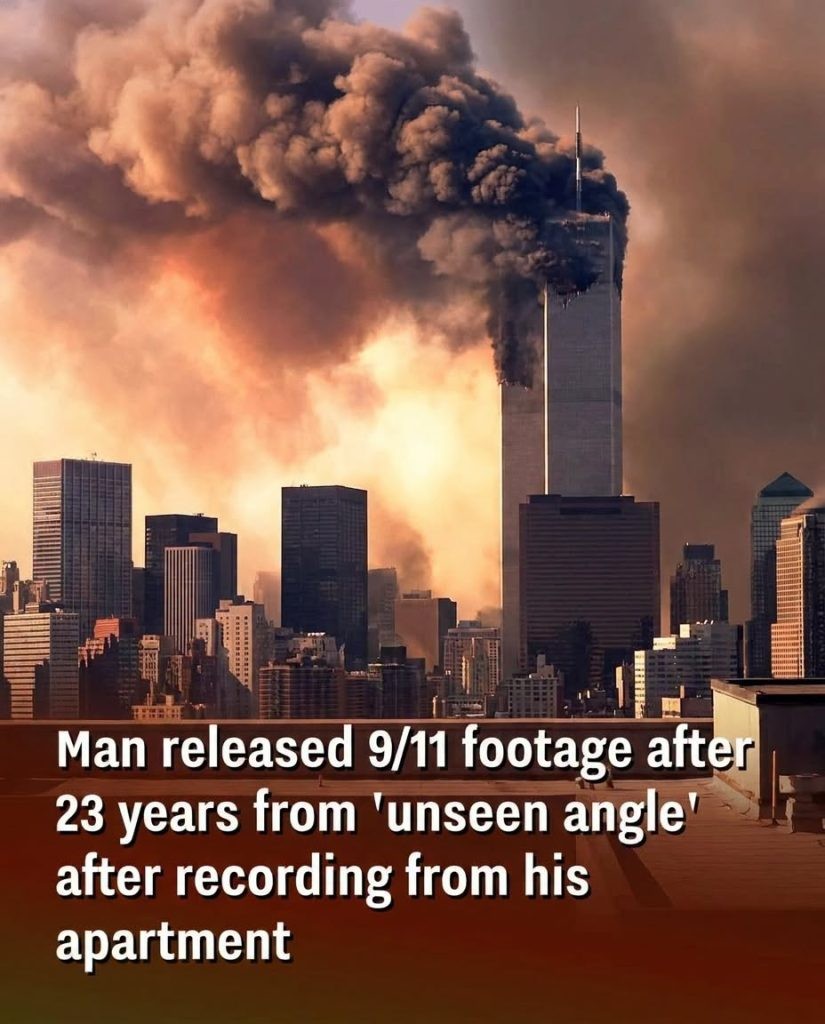
A Rare Rooftop Recording of the World Trade Center Attacks Surfaces After Two Decades
Introduction: Rediscovering Personal History Amid Global Tragedy
In the ever-expanding archive of visual records documenting September 11, 2001, a rare and compelling perspective has recently come to light. More than two decades following the attacks on the World Trade Center in New York City, a little-known rooftop recording—captured by Kei Sugimoto, then a 24-year-old resident—resurfaced after being stored away among aging videotapes. The emergence of this footage offers not only a unique angle on one of history’s most chronicled events, but also prompts broader discussion about the significance of personal archives, collective memory, and technological preservation.
The Circumstances of the Recording: An Unplanned Witness
On the morning of September 11, 2001, Kei Sugimoto, a recent transplant to New York, was at his apartment at 64 St. Marks Place in Manhattan. With a Sony VX2000 video camera equipped with a teleconverter lens, he initially began recording under the impression that a tragic accident had occurred when the first plane struck the North Tower. Like many New Yorkers who witnessed the attacks from rooftops, streets, and windows, Sugimoto quickly grasped the gravity of the unfolding disaster after observing the second plane’s impact.
Sugimoto’s vantage point offered a clear line of sight toward Lower Manhattan from the East Village. As the towers burned and emergency operations accelerated, he documented not only the spreading smoke and changing skyline, but also the reactions and confusion among city residents. His decision to hit “record” was spontaneous—driven by shock and a desire to document what he believed, at first, was a terrible accident in real time.
A Perspective Unlike Any Other: Technical and Visual Distinctions
Mainstream television networks and professional journalists covered the attacks extensively from multiple angles, yet most widely broadcast images were captured from the streets of Lower Manhattan, across the Hudson River, or from the Brooklyn waterfront. Sugimoto’s rooftop perspective stands out for several reasons:
- Geographical angle: The East Village position provided a direct, above-the-rooftops line to the towers, unimpeded by skyscrapers or crowd control measures.
- Technological authenticity: Recorded on aging analog tapes—Hi-8, Digital-8, and DV—his footage maintains a “rawness” that distinguishes it from broadcast-quality, professionally edited reels.
- Real-time reaction: Sugimoto’s recording includes ambient audio of the city, revealing distant sirens, stunned bystanders, and unfiltered ambient reactions to the attack and subsequent collapse of the towers.
The video’s clarity, especially given the consumer-grade equipment and passage of time, offers both historians and the general public a new lens through which to revisit that day.
Preservation and Rediscovery: From Forgotten Tapes to Digital Archive
Like many amateur videographers, Sugimoto initially treated his recording as a personal artifact rather than a piece of historical documentation. Over time, the original tapes were boxed away alongside other personal mementoes and left undisturbed for years. This period of obscurity illustrates a broader challenge associated with analog media—the risk of irreversible degradation.
In the years following the attacks, technological advancements moved rapidly from analog to digital formats. Many consumer-grade tapes and devices became obsolete, leaving unique firsthand records at risk. When Sugimoto finally revisited his collection, he found that numerous tapes had already suffered partial or total corruption—a common fate for unpreserved analog media, as magnetic tapes are highly vulnerable to physical and environmental decay.
Recognizing the historical significance and urgency, Sugimoto embarked on a process to digitize his recordings. His September 11 footage was among the preserved material, and after two decades, he decided to upload it online. While his initial intent was archival—to prevent total loss rather than to seek attention—the subsequent public availability allowed the footage to be shared widely, generating fascination and renewed dialogue.
Societal Response: The Impact of Private Archives and New Perspectives
The release of Sugimoto’s video was met with significant interest, both among historians and the general public. Many viewers remarked on its atmospheric depiction of an event that, though heavily documented, continues to reveal new insights through fresh perspectives. The video’s trajectory—from forgotten closet relic to viral online material—highlights the persistent power of individual documentation to reshape how major events are collectively remembered.
In academic and archival circles, the footage is now considered an important addition to the visual record of September 11, illustrating that valuable historical evidence can surface long after events themselves have concluded. Experts in visual studies and contemporary history note that such recordings matter not only for what they depict, but also for the context in which they were created and preserved.
The Role of Individual Archivists in Shaping Collective Memory
Sugimoto’s experience exemplifies the crucial part that individuals play in preserving history. While large-scale news organizations, government agencies, and official archives have amassed massive repositories from the events of September 11, much of the emotional resonance and context emerges from decentralized, user-generated recordings. These sources capture details, neighborhoods, and reactions otherwise excluded from the dominant broadcast narratives.
According to experts at institutions such as the Library of Congress and the 9/11 Memorial & Museum, integrating personal archives into the public record deepens understanding and broadens the historical canvas. Such inclusions allow for more nuanced interpretations of events, reflecting experiences from inside homes, workplaces, and communities, not just from iconic locations.
Crucially, the preservation of private records requires proactive measures: digitization, proper storage, and sometimes technical assistance to recover or transfer decaying materials. Public interest in at-home archiving has grown as viewers recognize the importance of safeguarding everyday media.
Technological Lessons: Risks and Opportunities of Analog Recording
The near-loss of Sugimoto’s footage spotlights broader technological concerns related to preservation. Experts in media studies have long warned that the physical vulnerability of magnetic tapes—susceptible to heat, humidity, demagnetization, and mechanical failure—threatens much of the twentieth century’s visual history. Professionals recommend timely digitization as a preventive measure, but note that it requires hardware, software, expertise, and financial resources that are not always accessible to average consumers.
Cultural heritage organizations and archives around the world stress the critical need for investment in digital infrastructure and public education regarding preservation. Initiatives aimed at empowering individuals to save their photographs, videos, and audio recordings are vital for maintaining diverse and comprehensive records of our shared past.
International Context: Personal Recordings and World Events
The rediscovery of previously unknown footage is a recurring theme in the archiving of world events. As access to recording technology becomes more widespread globally, ordinary citizens have increasingly contributed documentation of major historical moments, from natural disasters to political upheavals. Each new perspective adds complexity to our understanding, challenging official narratives and amplifying voices from the margins.
In the case of September 11, private videos and photographs have supplemented the official record, helping forensic analysts, historians, and educators reconstruct events with greater accuracy and empathy. Similar phenomena have occurred in other parts of the world, underscoring the universal importance of individual archives in shaping collective consciousness.
The Ongoing Importance of Historical Footage
Sugimoto’s rooftop video is more than a technical artifact; it is a testament to the unpredictability of historical survival and the enduring value of personal perspective. As new discoveries come to light, society’s inventory of primary sources grows richer, allowing future generations to explore history with increased depth, nuance, and authenticity.
The renewed attention on private archives encourages individuals everywhere to reflect on their role as custodians of memory. Whether documenting personal, communal, or global events, every record holds potential significance—not only for those who create it, but for those who will seek meaning in the past.
Conclusion
The serendipitous preservation and sharing of Kei Sugimoto’s September 11 rooftop recording highlights the ongoing relevance of citizen-archivists in shaping the collective remembrance of key moments in world history. As technological change accelerates, purpose-driven efforts to conserve and digitize private records offer hope that marginalized perspectives and forgotten stories will enrich our collective narrative for decades to come.
Sources
Disclaimer: This content is intended for entertainment purposes only and is not based on real events.