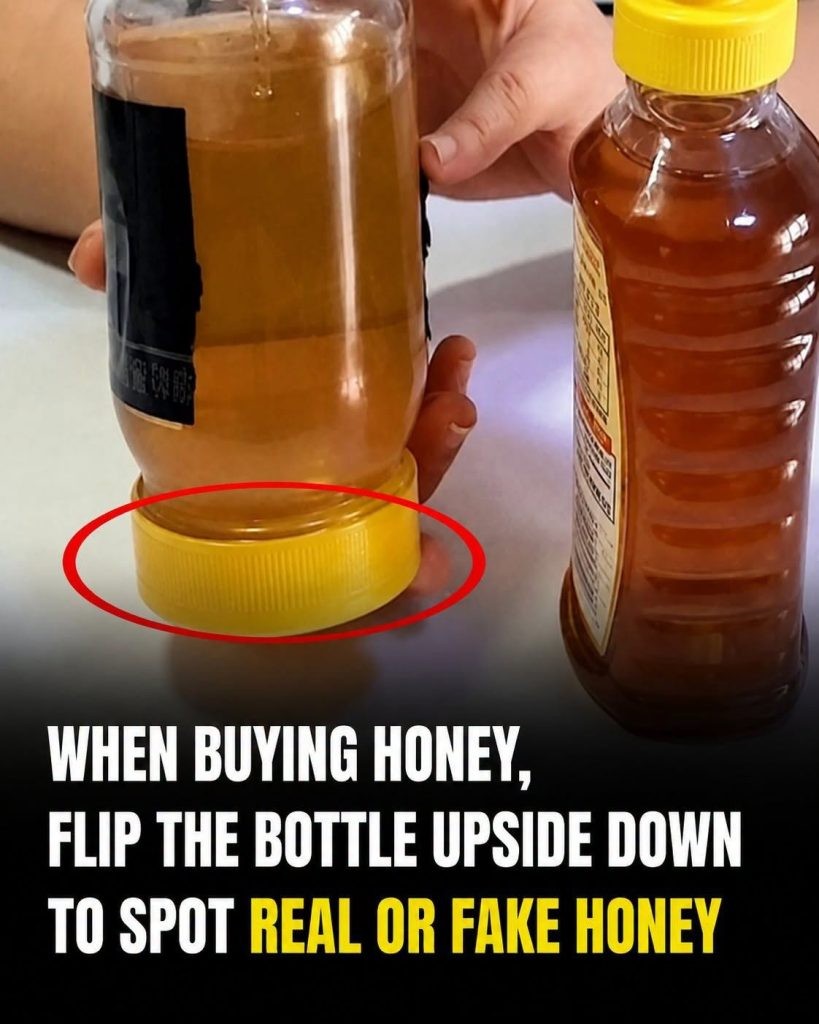
You turn the bottle upside down.
A large air bubble begins moving through the honey.
Slowly.
Almost dramatically.
Someone online tells you that this is the secret to identifying real honey. If the bubble moves slowly, the honey is supposedly pure. If it races toward the top, the honey must be diluted or fake.
It sounds convincing.
It looks convincing.
And that is exactly why the test has become so popular.
But there is a problem.
A moving bubble can tell you something about how easily honey flows.
It cannot tell you, by itself, where the honey came from, whether syrup has been added, or whether the product is genuinely authentic.
The viral bottle test is really a demonstration of viscosity, not a laboratory authentication method.
And once you understand what affects viscosity, the mystery becomes much easier to explain.
What Is the Honey Bubble Test?
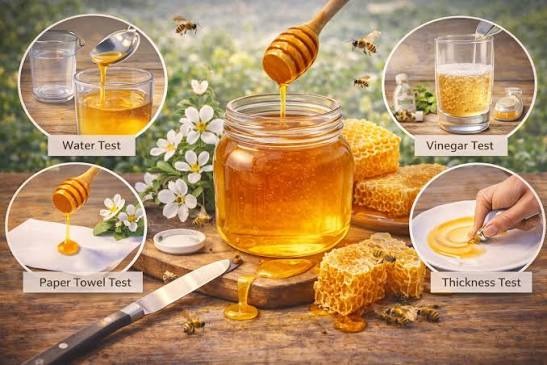
The basic experiment is simple.
Take a sealed bottle or jar of honey and turn it upside down.
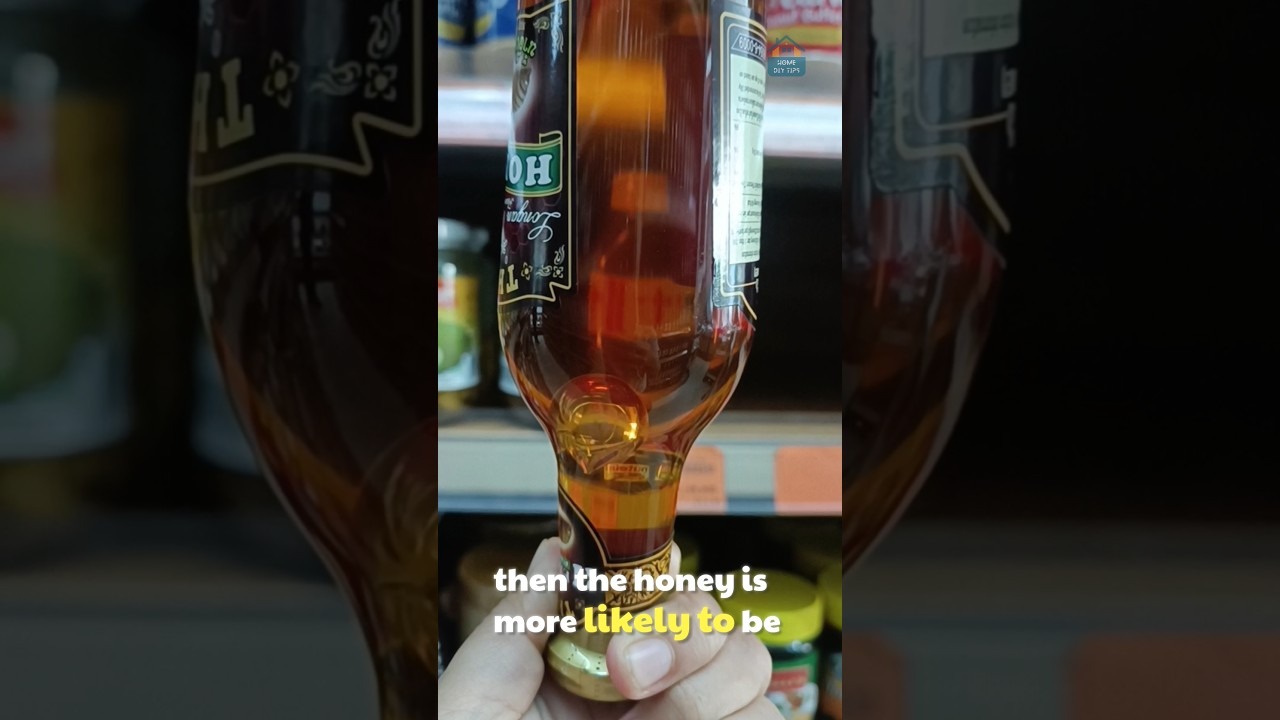
An air bubble trapped inside the container begins moving through the honey.
The popular claim is that thick, slowly moving honey is “real,” while honey that allows the bubble to move quickly is supposedly fake.
The demonstration is appealing because there is an obvious visual difference.
One sample appears thick and heavy.
Another looks thinner.
But the conclusion people draw from that difference goes much further than the experiment actually allows.
The speed of the bubble depends largely on how resistant the honey is to flowing.
That property is called viscosity.
And viscosity can change for many reasons that have nothing to do with adulteration.
Temperature Can Change the Result
One of the biggest problems with comparing honey samples at home is temperature.
Honey becomes less viscous as it warms.
In simple terms, warm honey tends to flow more easily.
Cold honey becomes thicker and flows more slowly.
That means two bottles containing exactly the same honey can produce noticeably different bubble speeds if they have been stored at different temperatures.
Imagine keeping one bottle in a cool cupboard and another near a warm kitchen appliance.
Turn both bottles upside down.
The bubbles may behave differently.
That doesn’t mean one is genuine and the other is fake.
It may simply mean one bottle is warmer.
This is one reason a home demonstration cannot provide a reliable authenticity verdict.
If the testing conditions aren’t controlled, the result can be misleading from the beginning.
Honey Naturally Contains Water
Water content is another important factor.
Honey isn’t completely water-free.
Naturally produced honey contains a certain amount of water, and that amount can vary depending on the nectar source, weather, harvesting conditions, and processing.
When honey contains more water, it generally becomes less viscous.
That can make a bubble move more quickly.
But a thinner honey isn’t automatically adulterated.
The presence of water alone doesn’t prove that another ingredient has been added.
Moisture is a natural characteristic that beekeepers and honey producers monitor because excessive moisture can increase the risk of fermentation.
This is an important distinction.
Water content can influence honey’s physical properties without proving anything about whether the product is authentic.
Different Flowers Create Different Honey
One of the most fascinating things about honey is that there isn’t just one type of honey.
Bees collect nectar from different plants.
That nectar contributes to differences in flavor, aroma, color, sugar composition, and texture.
Clover honey may behave differently from acacia honey.
Orange blossom honey can have a different appearance and consistency from other varieties.
Manuka honey is another example of a product with distinctive characteristics.
Even honey produced by the same beekeeper can change from one season to another.
Why?
Because the flowers available to bees change.
Weather changes.
The surrounding environment changes.
The composition of the nectar changes.
As a result, natural honey isn’t expected to look or behave exactly the same every time.
Crystallization Doesn’t Mean Honey Is Fake
Another common misconception involves crystallization.
Some people see honey becoming cloudy, grainy, or solid and immediately assume something has gone wrong.
In reality, crystallization is a natural process.
Honey contains different sugars, including glucose and fructose.
Depending on the composition of a particular honey, glucose can form crystals over time.
Some varieties crystallize relatively quickly.
Others can remain liquid for much longer.
Neither behavior automatically proves that the honey is genuine or fake.
Crystallized honey can often become more fluid again when gently warmed.
However, excessive heat isn’t ideal for preserving some of honey’s delicate characteristics, so reheating should be done carefully rather than aggressively.
The important lesson is that texture changes are not the same thing as evidence of adulteration.
Why the Water Test Doesn’t Work Either
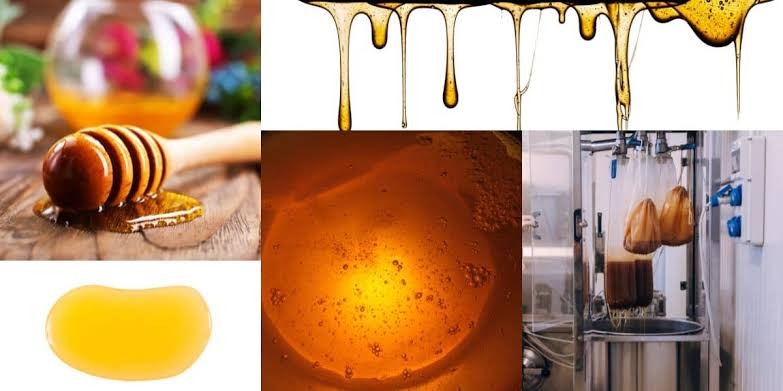
You may have seen another popular experiment involving a spoonful of honey dropped into water.
According to some online claims, pure honey supposedly sinks and stays together while fake honey immediately dissolves.
It sounds scientific.
But again, the test is really showing a physical property rather than proving authenticity.
Honey’s behavior in water depends on factors such as its composition, temperature, water content, and how it is introduced into the glass.
Even genuine honey can disperse.
And an adulterated product can sometimes behave in a way that looks convincing.
The experiment therefore cannot reliably answer the question consumers actually care about:
Was anything added to this honey?
What About the Thumb Test?
Another viral demonstration involves placing a small amount of honey on your thumb.
The claim is that genuine honey supposedly stays in place while diluted honey spreads or runs.
The problem is similar.
You’re observing viscosity and surface behavior.
Those properties can vary naturally between different honeys.
A thick honey may remain where it is.
A thinner honey may spread.
Neither observation provides definitive evidence about its origin.
A physical demonstration can tell you what a substance does under particular conditions.
It doesn’t necessarily tell you why it behaves that way.
That distinction is easy to overlook.
The Candle or Wick Test Is Also Limited
Some home tests claim that pure honey will burn on a cotton wick because it supposedly contains little water.
Again, the demonstration is not a reliable authentication method.
Combustion depends on multiple factors, including moisture and the material being tested.
A genuine honey with relatively high moisture may behave differently from a drier sample.
That doesn’t automatically make it fake.
Likewise, a product containing added ingredients may still produce a result that appears convincing.
When a test has too many variables, it cannot provide the certainty that viral videos often promise.
Why Laboratory Testing Is Different
Authenticating honey can be surprisingly complicated.
Sophisticated adulteration can involve syrups whose chemical characteristics resemble those naturally found in honey.
Detecting those additions may require specialized laboratory techniques.
Depending on the question being investigated, analysts can examine sugar profiles, stable isotope patterns, pollen characteristics, chemical markers, or other properties.
Importantly, there isn’t necessarily one universal test that answers every authenticity question.
Different analytical methods can provide different pieces of evidence.
This is why professional authentication can involve multiple techniques rather than one simple experiment.
A kitchen test cannot reproduce that level of analysis.
What Does the Bubble Actually Tell You?
The bubble isn’t completely useless.
It can tell you something.
It can provide a rough visual comparison of viscosity when two samples are tested under similar conditions.
If one honey is much thicker than another, the difference may be interesting.
But the correct conclusion is:
This honey flows more slowly under these conditions.
Not:
This honey is definitely pure.
That distinction turns a misleading viral trick into a reasonable little science experiment.
If you want to compare two honeys, try to keep the temperature, container, and testing method consistent.
Then you can observe how their physical properties differ.
Just don’t mistake that observation for authentication.
Price Isn’t Proof Either
Consumers sometimes use price as another shortcut.
The assumption is that very cheap honey must be fake while expensive honey must be genuine.
Reality is more complicated.
Producing honey requires healthy bee colonies, suitable forage, equipment, labor, harvesting, transportation, processing, packaging, and storage.
Those costs can influence retail prices.
An unusually cheap product may deserve additional scrutiny.
But price alone cannot prove authenticity.
Premium packaging doesn’t guarantee quality either.
A better approach is to consider the supplier’s reputation, labeling, traceability, and available quality controls.
Where the Honey Came From Matters
When buying honey, information about its origin can be more useful than a viral kitchen experiment.
Look for meaningful labeling.
Depending on the market, packaging may identify the country of origin, floral source, producer, batch information, or whether the honey has been filtered or otherwise processed.
Transparent producers may also explain where their honey is harvested and how it is handled.
Local beekeepers and cooperatives can sometimes provide particularly useful information because they can explain the season, location, and flowers associated with a particular batch.
Natural variation is part of the story.
A beekeeper may produce honey that looks different this year because weather conditions changed.
The bees may have had access to different flowering plants.
That can affect color, aroma, texture, and crystallization.
Honey Storage Matters Too
Even genuine honey can develop changes if it is stored improperly.
Honey should generally be kept sealed and protected from excessive moisture.
Exposure to moisture can contribute to fermentation under the right conditions.
Unusual foaming, an unexpected fermented smell, or pressure buildup in a container may indicate a storage or fermentation issue.
Those signs still don’t automatically answer the question of whether the honey was adulterated.
They simply indicate that something about the product deserves attention.
If you’re concerned about a particular jar, preserve the label and batch information rather than relying on a home experiment.
A Reminder About Honey and Babies
There is also one important safety point that has nothing to do with purity.
Honey should not be given to infants younger than one year.
Even genuine honey can contain spores of Clostridium botulinum, which can cause infant botulism.
This is why the recommendation applies to honey generally, not merely products suspected of being adulterated.
For older children and adults, honey can be part of the diet, but it remains a concentrated source of sugars.
People who are managing blood glucose should account for honey as part of their overall carbohydrate intake.
“Natural” does not mean sugar-free.
What Should You Do If You Suspect Fake Honey?
If you genuinely believe a honey product may be mislabeled or adulterated, a social media experiment isn’t the strongest next step.
Keep the container.
Save the receipt if you have it.
Record the product name and batch or lot number.
Then contact the retailer or manufacturer.
Depending on your location, you may also be able to report suspected food fraud to the relevant food-safety or consumer-protection authority.
Those channels create a pathway for professional investigation and, when appropriate, product testing.
A glass of water or an upside-down bottle cannot provide comparable evidence.
The Bubble Is Interesting—But It Isn’t a Lie Detector
The next time you see a video claiming that a slow-moving bubble proves honey is pure, look at what the experiment is actually measuring.
It is primarily showing viscosity.
And viscosity is affected by temperature, water content, honey variety, composition, processing, storage, and other factors.
That’s why two completely genuine honeys can behave differently.
It’s also why a product that looks convincing in a home experiment isn’t automatically authentic.
The science isn’t nearly as simple as one bottle flipping upside down.
And that’s what makes honey so interesting.
Every jar carries information about the flowers the bees visited, the season in which the nectar was collected, the environment around the hive, and the way the honey was harvested and stored.
Those natural differences aren’t flaws.
They’re part of what makes honey a remarkably variable food.
The Better Way to Judge Honey
There is nothing wrong with turning a honey bottle upside down and watching a bubble move.
It can be a fun demonstration.
It can even spark a conversation about viscosity and the physical properties of food.
But it shouldn’t become a test of authenticity.
If you want greater confidence in what you’re buying, look beyond the viral trick.
Choose reputable suppliers.
Read the label carefully.
Pay attention to origin and batch information.
Ask questions when purchasing directly from a beekeeper.
And when authenticity really matters, rely on appropriate professional testing rather than a kitchen experiment.
A slow bubble may look impressive.
But it doesn’t know where the honey came from.
It doesn’t know which flowers the bees visited.
And it certainly can’t tell you whether someone added syrup to the jar.
It only knows one thing:
how easily it can move through the honey.
Sometimes, the most useful lesson from a viral food hack is learning not to confuse a convincing demonstration with reliable evidence.