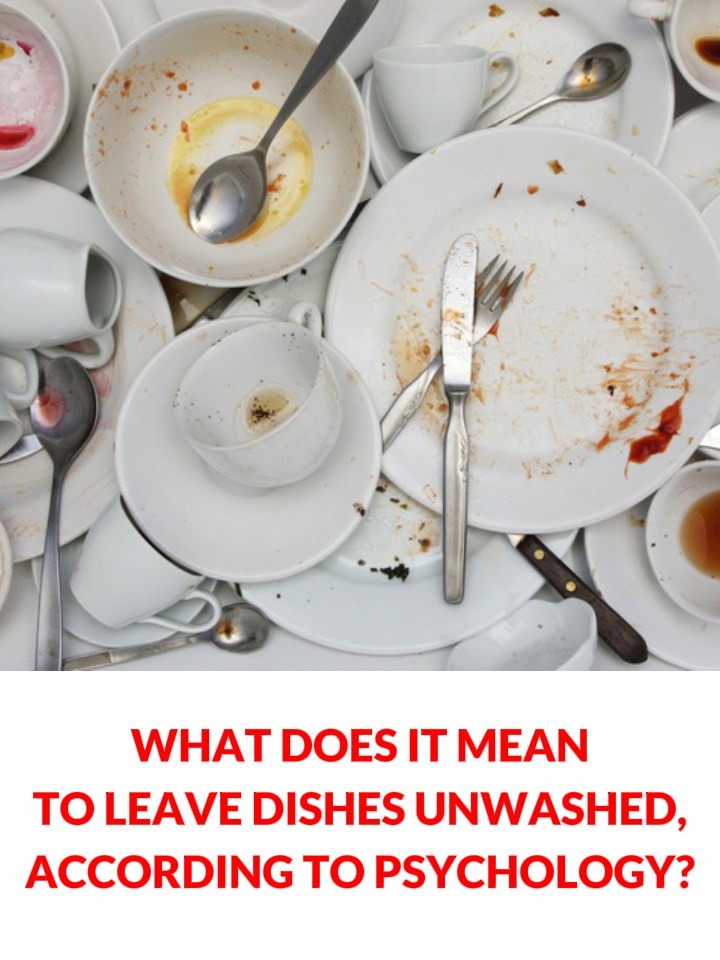
You walk into the kitchen after a long day.
There they are.
A plate from breakfast.
A coffee cup you forgot about.
A few bowls from yesterday.
And a sink that somehow seems much fuller than you remember.
You tell yourself you’ll wash everything later.
Then later becomes tomorrow.
For many people, leaving dishes in the sink is simply part of everyday life. After all, not everyone has the energy to clean immediately after every meal.
But when dirty dishes consistently pile up, they can sometimes reveal something about the way a person is managing stress, routines, responsibilities, and their living environment.
That doesn’t mean a messy kitchen automatically indicates a mental-health problem.
It doesn’t.
People have different standards for cleanliness, different schedules, different living arrangements, and different ways of organizing their homes.
Still, household habits can sometimes provide a useful glimpse into how someone is feeling.
And the humble kitchen sink may tell us more than we expect.
Dirty Dishes Don’t Automatically Mean You’re Lazy
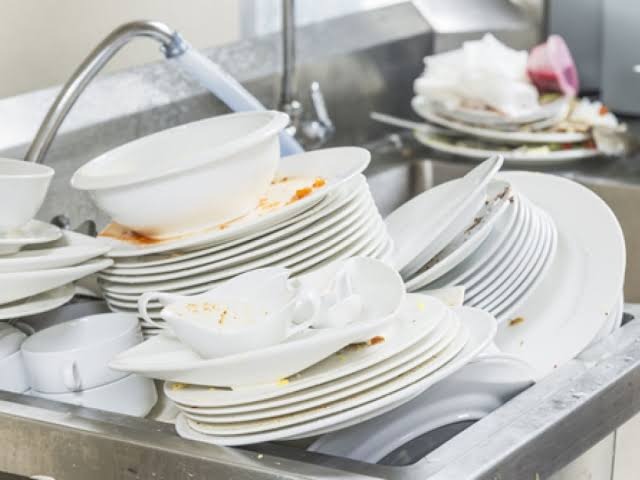
One of the easiest assumptions to make is that someone who regularly leaves dishes unwashed must simply be lazy.
Psychology is rarely that simple.
A person can be hardworking, responsible, and highly organized in many areas of life while still struggling to keep up with household chores.
The reason is that everyday tasks require mental and physical energy.
When that energy is low, even a simple task can feel surprisingly difficult.
Washing a plate takes only a few minutes.
But first you have to notice it.
Then decide to do it.
Gather the dishes.
Turn on the water.
Wash them.
Dry or put them away.
Repeat the process for everything else in the sink.
When someone is already mentally exhausted, that sequence can feel much larger than it objectively is.
Stress Can Make Small Tasks Feel Bigger

Stress changes the way people prioritize their energy.
When you’re dealing with deadlines, financial concerns, relationship problems, family responsibilities, or a demanding schedule, your attention naturally shifts toward what feels most urgent.
The dishes may not seem urgent.
So they wait.
One evening becomes two.
Then the task becomes larger because there are now more dishes to wash.
This can create a cycle:
Stress → less energy → unfinished chores → more clutter → more stress.
The problem isn’t necessarily a lack of caring.
Sometimes there simply isn’t enough mental bandwidth left for another responsibility.
That is why someone who normally keeps an immaculate kitchen may suddenly find themselves surrounded by unfinished household tasks during a particularly difficult period.
Mental Exhaustion Is Different From Physical Tiredness
You can be physically capable of washing dishes while mentally unable to motivate yourself to begin.
That’s because fatigue isn’t always about muscles.
Mental exhaustion can affect attention, motivation, decision-making, and the ability to initiate tasks.
After spending an entire day making decisions, solving problems, communicating with other people, or dealing with stressful situations, something as ordinary as washing dishes may feel like one more demand.
This is sometimes described as decision fatigue or mental overload.
The person may look at the sink and think:
“I’ll do it in a few minutes.”
But their brain is already asking for rest.
And the dishes remain where they are.
Procrastination Can Become a Habit

Another possibility is simple procrastination.
Most people procrastinate occasionally.
We postpone tasks we don’t enjoy.
We tell ourselves we’ll deal with them later.
The problem begins when postponement becomes a repeated pattern.
Dirty dishes are particularly easy to procrastinate over because there is rarely an immediate consequence for leaving them alone for another hour.
That makes the task psychologically easy to postpone.
But postponement has a hidden cost.
The next time you enter the kitchen, the task is still waiting.
And now there are more dishes.
The larger the task becomes, the less appealing it feels.
That can lead to another round of avoidance.
The “I’ll Do It Later” Cycle
Imagine washing three plates tonight.
It takes five minutes.
Instead, you decide to leave them until tomorrow.
Tomorrow, there are now six plates.
You postpone again.
Soon, the kitchen feels overwhelming.
The interesting part is that the amount of work may not have increased dramatically at first.
What changed was your perception of the task.
A small chore became a large, unpleasant project.
This is one reason breaking household tasks into smaller steps can be useful.
Instead of thinking:
“I need to clean the entire kitchen.”
You can think:
“I’ll wash these three plates.”
Once you begin, continuing often feels easier.
Your Home Can Reflect Your Daily Routine
A person’s environment is closely connected to their habits.
If someone has a consistent routine, household maintenance can become almost automatic.
Eat dinner.
Put the plate in the dishwasher.
Wipe the counter.
Clean the kitchen.
Done.
But without a routine, each task requires a fresh decision.
Should I wash these now?
Should I leave them overnight?
Should I clean the whole kitchen?
Should I organize the cabinets too?
Those decisions can create unnecessary friction.
Creating simple routines can reduce that mental burden.
The goal isn’t perfection.
It’s predictability.
Sometimes the Problem Is Emotional Overwhelm
There are periods when household chores become difficult because something else is happening emotionally.
Someone experiencing prolonged stress, anxiety, grief, burnout, or low mood may have less energy for ordinary responsibilities.
The dishes aren’t necessarily the cause.
They may simply be one visible consequence of everything else going on.
This distinction is important.
Looking at a messy kitchen and saying, “This person doesn’t care,” may completely miss what is happening underneath.
The mess may be a sign that the person is struggling to keep up.
It can sometimes be easier to notice changes in someone’s environment than changes in their emotional state.
But Don’t Diagnose Someone From Their Kitchen
This is where caution matters.
A sink full of dishes cannot tell you whether someone has anxiety, depression, ADHD, burnout, or any other condition.
There are simply too many possible explanations.
Maybe they worked a twelve-hour shift.
Maybe they have young children.
Maybe they’re caring for a family member.
Maybe they simply hate washing dishes.
Maybe they don’t consider an untidy sink particularly important.
Or maybe they’re going through a difficult period.
The same behavior can have completely different causes in different people.
Psychology helps us understand patterns.
It doesn’t allow us to diagnose a stranger based on a dirty kitchen.
Your Standards of Cleanliness Matter Too
People also have different definitions of what “clean” means.
One person may wash a dish immediately after using it.
Another may leave everything until the evening and wash it all at once.
Someone else may use a dishwasher and consider the sink perfectly acceptable as long as everything gets cleaned eventually.
None of these habits automatically says something negative about their personality.
Culture, upbringing, household expectations, personality, work schedules, and living arrangements can all influence cleaning habits.
So the important question isn’t:
“Are there dirty dishes?”
It’s:
“Is this habit interfering with the person’s life?”
That is a much more meaningful question.
Why a Messy Kitchen Can Increase Stress
While clutter doesn’t automatically indicate emotional distress, it can sometimes contribute to it.
When unfinished tasks remain visible, they can act as constant reminders of things that still need to be done.
You walk into the kitchen and see the dishes.
Your brain registers another unfinished task.
You may feel annoyed.
You may feel guilty.
You may think about how long you’ve been putting it off.
Then you leave the room.
Later, the same reminder is still there.
This can create a sense of unfinished business that makes it harder to fully relax.
For some people, restoring order to a small area can therefore create an immediate feeling of relief.
Hygiene Is Another Reason to Keep Dishes Under Control
There is also a practical side to the issue.
Dirty dishes shouldn’t be left indefinitely.
Food residue can create unpleasant odors and provide conditions that attract insects and other pests.
Poor kitchen hygiene can also increase the risk of contamination.
This doesn’t mean a plate left overnight is dangerous.
Occasional mess is completely normal.
The concern is when dirty dishes remain for extended periods and cleaning becomes consistently neglected.
In that situation, the issue becomes less about appearance and more about maintaining a comfortable and hygienic living environment.
Cleaning Can Create a Sense of Control
There is an interesting psychological reason why cleaning can sometimes feel satisfying.
Life contains many things we cannot control.
Work problems.
Other people’s behavior.
Unexpected events.
Financial pressures.
Personal uncertainty.
But your kitchen is different.
You can decide to wash the dishes.
You can clear the counter.
You can organize the table.
The result is visible immediately.
For some people, completing a small physical task can create a sense of accomplishment when other parts of life feel unpredictable.
That’s one reason simple chores can sometimes be surprisingly calming.
Don’t Turn Cleaning Into Perfectionism
There is another side to the story.
Keeping a home clean can be beneficial, but perfection isn’t necessary.
A healthy relationship with household chores isn’t about maintaining an Instagram-perfect kitchen every hour of the day.
Real homes get messy.
People get tired.
Plans change.
Dinner gets left in the sink.
Laundry piles up.
Sometimes you simply need to rest.
The goal should be a living environment that supports your well-being, not one that creates another source of pressure.
A Five-Minute Reset Can Help
If the kitchen has become overwhelming, don’t necessarily try to clean everything at once.
Start with one small action.
Wash five dishes.
Throw away obvious trash.
Clear one section of the counter.
Put away the clean dishes.
Wipe the sink.
Then stop if you want.
Small accomplishments can make a large task feel manageable.
Often, the hardest part is not the physical work.
It’s starting.
Build a Routine That Matches Your Life
Instead of copying someone else’s cleaning schedule, create one that fits your actual routine.
For example, you might decide that dishes are washed immediately after dinner.
Or perhaps you prefer doing one larger cleanup before bed.
The specific routine matters less than having a system you can realistically maintain.
If you live with other people, dividing responsibilities can also prevent one person from feeling responsible for everything.
A sustainable routine is usually better than an ambitious routine that lasts three days.
What Your Dishes Might Really Be Telling You
A sink full of dishes doesn’t tell the whole story.
But it can sometimes be a useful question to ask yourself:
How am I doing lately?
Am I simply tired?
Am I overwhelmed?
Have I been postponing everything?
Do I have too many responsibilities?
Have I stopped enjoying things I normally enjoy?
Is my home becoming harder to manage than usual?
These questions are more useful than judging yourself as lazy or disorganized.
Sometimes the dishes are just dishes.
Sometimes they’re a reminder that you need a break.
And sometimes they’re a signal that your current routine isn’t working anymore.
When Everyday Chores Become Difficult
If someone consistently struggles with basic household tasks and that difficulty is affecting work, relationships, hygiene, sleep, or other parts of daily life, it may be worth talking with a qualified healthcare professional.
The important point is not to diagnose yourself from one behavior.
Instead, look at the broader pattern.
Has the change been sudden?
Has it lasted for a long time?
Are other everyday responsibilities becoming difficult too?
Are you experiencing persistent emotional distress?
Those questions provide much more useful information than the number of dishes in a sink.
The Kitchen Is Not a Personality Test
At the end of the day, dirty dishes don’t define who you are.
They don’t automatically mean you’re lazy.
They don’t prove that you’re disorganized.
And they certainly don’t reveal your entire mental or emotional state.
Sometimes they’re simply dirty dishes.
But habits can still tell us something.
When a small responsibility repeatedly becomes impossible to manage, it may be worth stepping back and asking what is making the task feel so difficult.
Maybe you need a better routine.
Maybe you need to reduce your workload.
Maybe you need more rest.
Maybe you need help.
Or maybe you just need to stop expecting yourself to keep everything perfect.
A clean kitchen can certainly make a home feel more comfortable.
But the bigger goal isn’t spotless countertops.
It’s creating a living space—and a daily routine—that makes it easier to feel calm, capable, and at home.
So the next time you see a sink full of dishes, don’t immediately judge yourself.
Wash a few if you can.
Leave them until tomorrow if you genuinely need the rest.
And, most importantly, pay attention to the bigger picture.
Because sometimes the dishes are nothing more than dishes.
And sometimes, they’re simply a small reminder to check in with yourself.