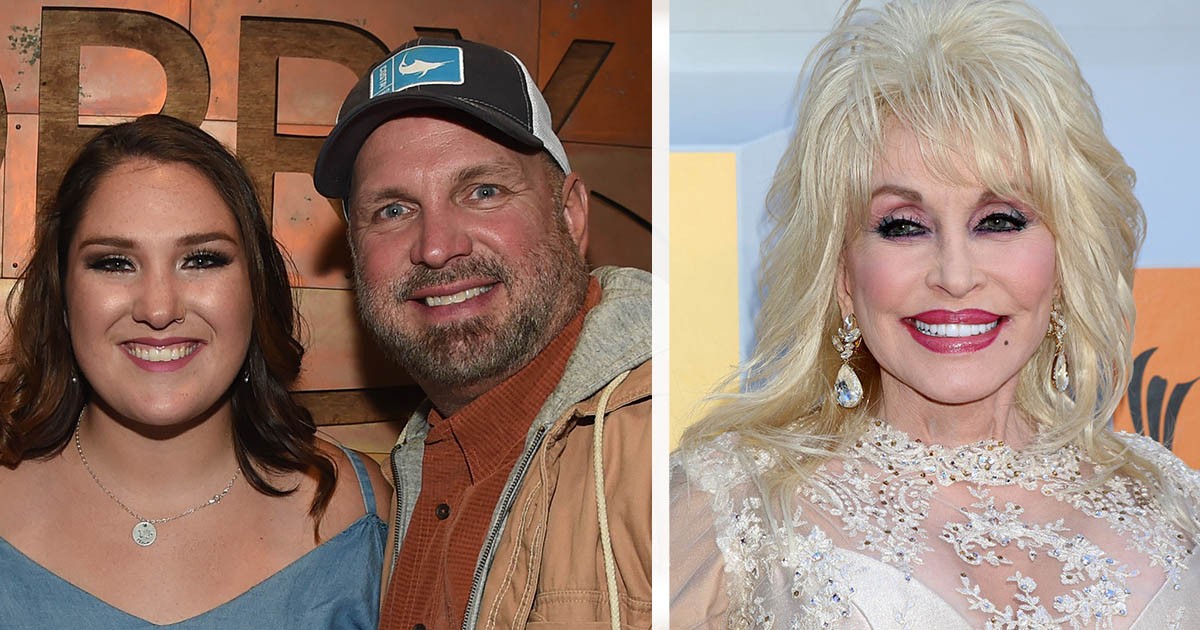
The death of Dolly Parton has brought an extraordinary wave of grief from fans, musicians, celebrities, and generations of people who grew up listening to her music.
But one tribute has sparked an unexpected debate online.
Allie Colleen Brooks, the daughter of country music superstar Garth Brooks, shared an emotional message following Dolly Parton’s death. Instead of receiving only sympathy, however, the post quickly attracted criticism from people who felt she had shifted the focus away from Dolly and toward her own relationship with her famous father.
At the center of the controversy was one deeply personal sentence about Allie’s greatest fear: the day Garth Brooks dies and she has to watch millions of people mourn a man she knew in a completely different way.
Some followers understood the sentiment.
Others were not impressed.
Allie Colleen’s Emotional Message About Dolly Parton
Dolly Parton died on August 25, 2026, at age 80 after what her publicist described as a brief battle with cancer. Her death prompted an enormous outpouring of tributes from around the world.
Among those paying tribute was Allie Colleen Brooks, a country singer and the daughter of Garth Brooks.
In an Instagram post, Allie began with a thought that was not directly about Dolly herself.
She wrote that her greatest fear was the day her father would die and she would have to watch the world mourn someone they had never known in the same personal way she had.
She then turned her attention to Dolly’s loved ones, expressing sympathy for the singer’s family and close friends.
She described Dolly’s life as something beautiful and special to have loved and grieved, and thanked her family for sharing the country icon with the world.
The intention appeared to be deeply personal.
But some people reading the post interpreted it very differently.
Why Did Fans Criticize Allie Colleen?
The criticism centered on the opening of Allie’s tribute.
Several commenters felt that bringing Garth Brooks into a tribute to Dolly Parton made the message unnecessarily about herself.
One critic essentially argued that Dolly’s death was not the moment to discuss Allie’s fear of eventually losing her father.
Another called the comment “utterly ridiculous.”
Others questioned why a tribute to one of the most beloved women in country music had shifted toward speculation about what would happen when Garth Brooks eventually dies.
The backlash quickly spread across social media, with entertainment outlets reporting on the controversy.
It created an unusual situation.
A message that appeared to be about grief became a debate about who gets to talk about their own grief when someone else has died.
But Not Everyone Thought Allie Was Wrong
There was another side to the reaction.
Some people defended Allie and argued that she was simply expressing a very human fear.
Losing a parent is one of the most frightening possibilities many people can imagine.
For Allie, watching the world mourn Dolly Parton may have reminded her of what it will eventually feel like when her own father dies.
From that perspective, her comparison was not intended to diminish Dolly.
It was a reflection on what public grief looks like when the person being mourned is also someone you personally know.
Some commenters told critics to stop looking for something offensive in an emotional post and allow Allie to grieve in her own way.
That interpretation is important because the backlash was not universal.
The reaction was divided.
Some people saw insensitivity.
Others saw vulnerability.
Allie Colleen Responds to the Backlash
After seeing the criticism, Allie addressed some of the comments.
She explained that she was not trying to tell anyone else how to grieve.
She also made clear that she would never claim to understand how deeply another person might mourn someone they had lost.
Her explanation was essentially that she was sharing her own perspective rather than establishing a rule for everyone else.
That distinction matters.
Grief is intensely personal, and people often process loss by connecting it to their own experiences.
For Allie, Dolly’s death appears to have triggered thoughts about her own father.
That does not necessarily mean she believed her relationship with Garth was more important than anyone else’s relationship with their parents.
It simply reflected the particular fear she carries as the daughter of a globally recognized musician.
The Complicated Reality of Losing a Celebrity
The controversy also highlights something unusual about celebrity deaths.
When a famous person dies, millions of people may feel genuine grief even though they never met the person.
They listened to their songs.
They watched their movies.
They grew up with their television appearances.
They may have associated the celebrity with important moments in their own lives.
But the family experiences something fundamentally different.
They knew the person away from the stage.
They knew the private conversations, family jokes, ordinary routines, difficult moments, and memories that fans could never experience.
That appears to be the idea Allie was trying to express.
The public may mourn Garth Brooks as a legendary country singer one day.
But Allie would mourn him as her father.
Those are two different relationships with the same person.
Dolly Parton Was More Than a Country Star
The emotional intensity surrounding Dolly’s death helps explain why reactions to tributes have been so strong.
Parton was not simply a successful country musician.
She became a cultural institution.
Her career lasted for decades and crossed music, film, television, business, philanthropy, and popular culture.
Songs such as “Jolene,” “9 to 5,” and “I Will Always Love You” became part of the cultural fabric far beyond country music.
Her charitable work also created a legacy that reached millions of children through programs such as the Imagination Library.
After her death, tributes appeared across the United States and internationally, demonstrating how broad her influence had become.
That may be why some fans were particularly protective of the focus of her memorial tributes.
For them, the moment was about Dolly.
A Daughter’s Fear of Losing Her Father
Still, Allie’s comment touches on something many people can understand.
Imagine growing up knowing that your father is recognized almost everywhere you go.
Millions of people know his songs.
Millions have watched him perform.
Millions may someday mourn him.
But for his daughter, he is not a country music legend first.
He is Dad.
That contrast can be emotionally overwhelming.
When a celebrity parent eventually dies, the family has to watch the public grieve someone they personally knew in a completely different way.
That appears to be what Allie was thinking about when she wrote her message.
It was not necessarily a prediction about Garth’s death.
It was a reflection on the strange experience of loving someone who belongs partly to the entire public.
The Debate Raises a Bigger Question About Grief
The controversy surrounding Allie’s post has sparked a broader question:
Can someone talk about their own pain while honoring someone else’s loss?
There is no simple answer.
Some people believe a tribute should remain entirely focused on the person who died.
Others believe personal memories and reflections are precisely what make tributes meaningful.
After all, grief is rarely perfectly organized.
One person’s death can remind another person of someone they have already lost.
It can also force people to confront fears about future losses.
That does not automatically mean they are trying to take attention away from the person who died.
At the same time, audiences are free to feel that a particular tribute was poorly timed or worded.
Both reactions can exist simultaneously.
Allie’s Message Was Divisive — But It Was Personal
The criticism does not erase the fact that Allie ultimately expressed condolences to Dolly’s family and acknowledged the extraordinary life Dolly had lived.
She also pushed back against the idea that she was trying to dictate how other people should grieve.
That is why the controversy may be less about disrespect toward Dolly and more about how differently people interpret emotional language.
One person reads a sentence and sees empathy.
Another reads the same sentence and sees self-centeredness.
Neither interpretation can completely control how the audience receives a public post.
Dolly Parton’s Legacy Will Outlast the Controversy
Whatever people think about Allie Colleen’s tribute, the online debate is unlikely to define Dolly Parton’s legacy.
Dolly’s influence is simply too large.
She spent decades writing songs that became classics, building businesses, helping communities, supporting children’s literacy, and creating an image that combined humor, warmth, ambition, and extraordinary musical talent.
Her death has left a remarkable cultural gap.
And the thousands of tributes appearing around the world show how many people felt connected to her.
The controversy surrounding one Instagram post is ultimately a small moment within that much larger story.
What Allie Colleen Was Really Trying to Say
Perhaps the simplest way to understand Allie’s message is this:
She was watching the world mourn Dolly Parton and suddenly thinking about the day the world will mourn her own father.
That thought frightened her.
She knows Garth Brooks as millions of people never could.
And when that day eventually comes, she will experience the loss not as the daughter of a country superstar, but simply as a daughter losing her dad.
Whether people think she expressed that thought appropriately is another question.
But her follow-up comments suggest she was not trying to claim that her grief would be greater than anyone else’s.
She was trying to explain her own.
A Divided Reaction to a Very Human Emotion
The backlash against Allie Colleen shows just how complicated public grief can become.
When a celebrity dies, millions of people feel connected to the loss.
But family members experience something much more intimate.
Sometimes those two worlds collide in unexpected ways.
Allie’s tribute may not have been worded perfectly for everyone.
Some readers found it distracting.
Others found it relatable.
And some defended her right to express grief in her own way.
In the end, the controversy may say as much about the audience as it does about Allie.
Because grief rarely follows a script.
And sometimes, when someone else’s loss reminds us of the people we love most, our first instinct is to hold them a little closer.
For Allie Colleen, Dolly Parton’s death appears to have brought that fear into focus.
And whether people agreed with her words or not, one thing is clear:
She was thinking about the woman the world had just lost — and the father she hopes she never has to lose.