
It often happens when we least expect it.
You are asleep, completely removed from the noise of the day, when suddenly someone familiar appears.
A parent.
A grandparent.
An old friend.
Someone you once knew deeply but have not seen in years.
In the dream, everything feels strangely normal. They may be sitting across from you, smiling, talking, walking through a familiar place, or simply standing nearby.
Then you wake up.
For a few moments, the memory feels almost real.
You may wonder why that person appeared in your dream after so much time had passed. You may feel comforted, emotional, confused, or simply curious.
For centuries, people have tried to answer that question.
Some cultures have viewed dreams involving people who have passed away as meaningful spiritual experiences. Others have understood them as part of memory, emotion, and the brain’s natural activity during sleep.
Modern science offers one perspective, while cultural traditions offer another.
And perhaps the most interesting part is that both begin with the same mystery: what exactly happens inside the sleeping mind?
Your Brain Remains Active While You Sleep
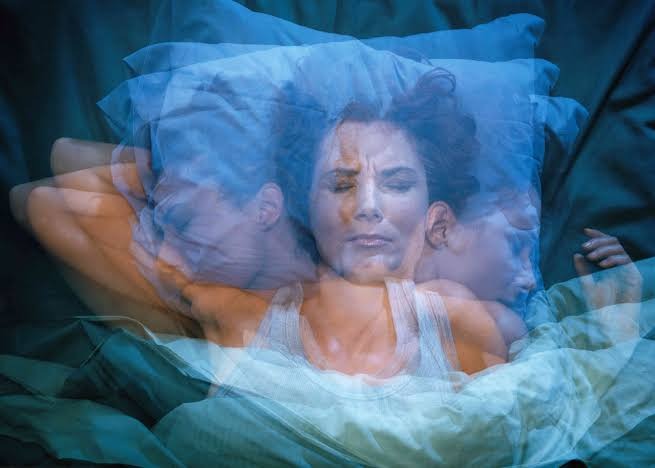
Sleeping does not mean that the brain completely switches off.
During the night, the brain moves through several stages of sleep, including periods of rapid eye movement, commonly known as REM sleep.
Dreaming can occur during several stages, but vivid and memorable dreams are particularly common during REM sleep.
During these periods, the brain continues processing information, memories, emotions, and experiences.
This may help explain why people from our past sometimes appear in dreams.
The sleeping brain has access to an enormous collection of memories.
A familiar face, voice, location, song, or even a small detail from everyday life can activate associations connected to people we once knew.
As the brain combines these memories with emotions and imagination, a person who has passed away may appear unexpectedly in a dream.
That does not necessarily mean the dream has a hidden supernatural explanation.
It may simply demonstrate how powerful memory can be.
Why Do We Dream About People We Miss?

One of the most understandable explanations involves emotional memory.
When someone has been important in our lives, memories of that person can become deeply connected with our emotions.
Their face may represent comfort.
Their voice may represent safety.
A particular room may remind us of family.
A familiar phrase may bring back an entire period of life.
Even after many years, those associations can remain.
During sleep, the brain may reactivate some of these memories while processing emotions and experiences.
This is one reason dreams involving loved ones can feel especially vivid.
The dream may not necessarily be about the person alone.
It may also be about what that person represents to us.
Dreams and the Grieving Process
People sometimes dream about loved ones after a significant loss.
For some, these dreams happen shortly afterward.
For others, they may appear months or even years later.
There is no universal timeline.
Grief does not follow a predictable schedule, and memories can resurface at unexpected moments.
A birthday, anniversary, family gathering, old photograph, or familiar song can bring someone to mind.
Sometimes we may not even realize that a particular memory has been activated during the day.
Later, it may become part of a dream.
For this reason, dreaming about someone who has passed away does not necessarily mean that a person has failed to move forward.
It can simply reflect the continuing importance of that relationship.
When Major Life Changes Trigger Familiar Faces

Interestingly, dreams involving people from our past may also occur during major transitions.
Starting a new job.
Moving to another city.
Beginning a new relationship.
Becoming a parent.
Changing routines.
Entering a different stage of life.
During periods of change, people often reflect on where they came from and how their lives have changed.
A person from the past appearing in a dream may therefore represent an earlier period of life rather than simply the individual themselves.
For example, dreaming about a childhood grandparent might evoke memories of childhood, family traditions, or a time when life felt different.
The dream may be connected to the emotional meaning of that period.
The Emotion May Matter More Than the Person
If you wake from a dream involving someone who has passed away, one useful question is not only “Who was there?” but also “How did I feel?”
Did you feel peaceful?
Sad?
Comforted?
Confused?
Worried?
Happy?
The emotional tone may provide more insight than trying to assign one universal meaning to the appearance of a particular person.
A peaceful dream might simply reflect comforting memories.
A difficult dream might reflect unresolved emotions or current stress.
A confusing dream might be nothing more than the brain combining memories in unusual ways.
Dreams do not always have a clear interpretation.
Sometimes they may simply be vivid experiences created by a sleeping brain.
Could a Dream Represent Unresolved Feelings?

Sometimes, yes.
A person may dream about someone with whom they had an unresolved disagreement.
Perhaps there were words left unsaid.
Maybe an apology never happened.
Maybe the relationship ended under difficult circumstances.
In these situations, the dream may provide an opportunity for the mind to revisit old emotions.
That does not mean the dream is delivering an external message.
It may instead reflect the fact that the emotional experience remains part of the dreamer’s memory.
Some people find these dreams helpful because they allow them to reflect on feelings they rarely consider while awake.
Others simply experience them as emotionally intense dreams without assigning any deeper meaning.
Both responses are completely understandable.
Why Dreams Can Feel So Real
One of the strangest qualities of dreams is their realism.
A dream can contain familiar faces, places, sounds, and conversations.
While dreaming, the experience may feel completely convincing.
After waking, however, the details can disappear quickly.
This happens partly because memory formation and retrieval work differently during sleep.
Dreams can also combine realistic elements with impossible situations.
You might find yourself talking to someone in a house that no longer exists.
You might suddenly be in a childhood school despite being an adult.
You may hear a familiar voice even though the conversation makes little logical sense.
The brain does not necessarily follow the same rules during dreams that it follows while we are fully awake.
The Cultural Meaning of Dreams About Loved Ones
Science is not the only way humans have understood dreams.
Across history, dreams have held an important place in many cultures.
Some traditions have viewed dreams as symbolic experiences.
Others have regarded them as opportunities for reflection or spiritual connection.
In some Indigenous traditions, dreams have important cultural and spiritual significance.
Different societies have developed their own ways of understanding the dream world, often connecting it with ancestry, identity, memory, or community.
These interpretations should be understood within their cultural contexts rather than treated as universal scientific facts.
A spiritual interpretation may be deeply meaningful to someone without being something that science can confirm.
The Idea of a Visitation Dream
Some people describe a particularly vivid type of dream in which a loved one who has passed away appears healthy, peaceful, and familiar.
These experiences are sometimes called “visitation dreams.”
For the person experiencing one, the dream can feel profoundly meaningful.
They may wake with a strong sense of comfort or connection.
From a scientific perspective, however, there is currently no reliable way to establish that such dreams are actual communications from someone who has passed away.
A more cautious explanation is that the brain can create exceptionally vivid experiences using powerful memories and emotional associations.
At the same time, science cannot tell an individual what personal meaning they should attach to a dream.
Someone may interpret the experience spiritually, symbolically, psychologically, or simply as a beautiful memory.
Why We Should Be Careful With Dream Interpretations
The internet contains countless lists claiming that specific dreams always mean specific things.
Dreaming about a particular person supposedly means one thing.
Seeing a particular color supposedly means another.
A certain action supposedly represents a specific hidden message.
The reality is much less certain.
Dreams are highly individual.
The same dream symbol can mean completely different things to different people.
A house might represent security to one person and anxiety to another.
A family member might represent love, responsibility, childhood, or something else entirely.
Without knowing the dreamer’s personal experiences, assigning a fixed meaning can be misleading.
What About Dreams Involving Guilt?
Guilt can sometimes influence dreams.
If someone feels they did not say goodbye properly or wishes they had handled a situation differently, those emotions may appear during sleep.
But experiencing such a dream does not necessarily mean the person is emotionally stuck.
Human memory naturally revisits important relationships.
Sometimes dreams provide an emotional space where the mind can process memories that are difficult to think about during the day.
For some people, simply recognizing those feelings can be helpful.
Dreams Can Also Reflect the Present
A dream about someone from the past may actually be connected to something happening now.
Imagine someone dreaming about a parent during their first week in a new job.
The parent may symbolize encouragement.
Or imagine dreaming about a childhood friend during a major life transition.
That person may represent a period when life felt simpler.
The dream does not have to be literally about the individual.
Instead, the person may function as a connection to a particular emotion, memory, or chapter of life.
What Should You Do After a Powerful Dream?
You do not have to immediately search for a definitive interpretation.
Instead, consider writing down what you remember.
Who appeared?
Where were you?
What happened?
Most importantly, how did you feel when you woke up?
You might also think about what has been happening in your life recently.
Have you been experiencing a major transition?
Have you recently seen an old photograph?
Have you been thinking about family?
Have you been feeling nostalgic?
Sometimes these connections become clearer when you step back and look at the bigger picture.
There Is No Single Meaning
Perhaps the most important thing to remember is that dreaming about someone who has passed away does not have one universal explanation.
It can be connected to memory.
It can be associated with grief.
It may reflect current emotions.
It may bring back an earlier chapter of life.
It may simply be part of the brain’s complex activity during sleep.
For someone with spiritual beliefs, the experience may also carry personal or cultural significance.
Science can study brain activity and patterns of dreaming, but it cannot dictate what an individual experience should mean personally.
A Meeting Between Memory and Imagination
There is something beautiful about the fact that people we have known can remain part of our inner world long after our everyday lives have changed.
A voice can remain in memory.
A smile can remain familiar.
A particular phrase can stay with us for decades.
Sometimes sleep brings those memories into vivid focus.
For a few moments, the distance between past and present can seem to disappear.
When we wake, the person is not physically there.
But the memory is.
And perhaps that is part of why these dreams can feel so powerful.
They remind us that important relationships leave lasting impressions on the way we think, remember, and understand ourselves.
The Mystery of the Sleeping Mind
Human beings have been fascinated by dreams for thousands of years.
Long before modern neuroscience, people wondered whether dreams were messages, symbols, memories, or glimpses into something beyond ordinary experience.
Today, researchers understand far more about sleep and the brain, yet many questions remain.
We know that dreaming is connected with brain activity.
We know that memories and emotions can influence dreams.
We know that people can experience remarkably vivid dream worlds.
But we still do not have a complete explanation for why the sleeping mind creates every image, conversation, and story we experience at night.
Perhaps that uncertainty is part of what makes dreams so fascinating.
When someone who has passed away appears in your dream, you do not necessarily have to choose between science and personal meaning.
You can recognize the neurological explanation while still acknowledging that the experience may carry emotional or cultural significance for you.
The dream may not provide a literal answer.
But it may encourage you to remember.
To reflect.
To appreciate a relationship that mattered.
And sometimes, that alone can be meaningful.
In the end, dreams remind us of something deeply human: even while we sleep, our minds continue exploring the people, memories, emotions, and experiences that shaped who we are.
We may never completely understand why certain faces appear in the darkness of sleep.
But perhaps our curiosity about them tells us something important.
We are not only curious about dreams.
We are curious about ourselves, our memories, and the connections that continue to shape us long after a moment has passed.