
It is an ordinary moment that can suddenly feel anything but ordinary.
You walk toward your front door after a long day, reach for the handle, and notice something that was not there before.
A small rubber band.
It is wrapped around the handle or resting against the door.
You stop.
For a moment, your mind begins searching for an explanation.
Who put it there?
Was it accidental?
Did someone leave it behind?
Could it have fallen from a delivery package?
Or does it mean something more?
In an age when unusual objects around homes are frequently discussed online, it is easy for an innocent discovery to become a source of concern.
Stories about mysterious objects, supposed marking systems, and home security warnings circulate widely on social media. Some are based on genuine safety advice, while others rely heavily on speculation.
The reality is usually much less dramatic.
A rubber band on a door handle does not, by itself, prove that someone is watching a home or planning to enter it.
There are many ordinary explanations for how such an object could get there.
Still, noticing something unusual is a reasonable reason to pause and pay attention.
The key is knowing how to respond without allowing uncertainty to turn into unnecessary fear.
Why Small Objects Can Look Suspicious

Human beings are naturally good at noticing changes.
If you pass the same doorway every day, you develop an unconscious picture of what normally belongs there.
The moment something changes, your attention immediately focuses on it.
This is a useful survival mechanism.
It helps people notice open windows, misplaced belongings, unfamiliar sounds, and other changes in their surroundings.
But the same instinct can sometimes lead the brain to assign meaning to something before enough information is available.
A rubber band is particularly easy to overlook under normal circumstances.
It could come from packaging.
It could have been dropped by someone carrying groceries.
It could have become caught on the handle as a person walked past.
Wind or movement can also shift lightweight objects.
Once you notice it, however, the object can suddenly seem much more important than it probably is.
Delivery Workers Can Accidentally Leave Small Items Behind
Modern homes receive an enormous number of deliveries.
Packages may arrive in boxes, bags, envelopes, and protective wrapping.
Rubber bands, pieces of packaging, labels, tape, and other small materials can become separated during handling.
A delivery worker may also carry multiple packages at once.
Something attached to one package can potentially become caught on a door handle or nearby surface.
That does not mean the person intended to leave it there.
In busy environments, small objects can easily end up in places where they were never deliberately placed.
The same explanation can apply to postal workers, maintenance workers, gardeners, or other people who regularly move around residential properties.
Wind Can Move Surprisingly Light Objects
People often underestimate what wind can do.
A lightweight rubber band, piece of string, plastic wrapper, or leaf can move considerably farther than expected.
If the object catches on a textured surface or narrow handle, it may remain there until someone notices it.
Weather can therefore provide a surprisingly simple explanation for an unfamiliar object.
This is particularly plausible when other lightweight debris is visible nearby.
If you find a rubber band on your door and notice leaves, paper, or other small objects gathered around the entrance, there may be no mystery at all.
The environment may simply have moved something.
Neighbors and Everyday Activity Matter Too
Residential areas are active environments.
People carry groceries.
Children play outside.
Neighbors move furniture.
Maintenance workers perform repairs.
Visitors come and go.
Someone walking past your home may accidentally drop something.
A child may leave an object behind.
A neighbor may use the same entrance while carrying a bag containing rubber bands or other small materials.
Most of these possibilities are so ordinary that people rarely think about them.
Yet ordinary explanations are often the most likely.
That is why a single unfamiliar object should not automatically be interpreted as evidence of suspicious activity.
Why Online Stories Can Increase Anxiety
The internet has changed how people interpret unusual events.
A strange object that once might have prompted a simple question can now lead someone to search for explanations online.
Within minutes, they may find posts describing similar experiences.
Some posts may claim that a particular object is a secret signal.
Others may suggest that criminals use certain items to identify homes.
The problem is that repeated stories can create an illusion of certainty.
If thousands of people repeat the same claim, it can begin to sound established even when the original story had little evidence.
This is a common feature of online information.
Anecdotes are memorable.
Evidence is often less dramatic.
What a Rubber Band Can Actually Tell You
By itself, very little.
The presence of a rubber band does not establish who placed it there.
It does not tell you why it appeared.
It does not prove that someone was observing your home.
And it does not establish that a security threat exists.
To understand an unusual event, context matters.
Was there a recent delivery?
Was someone working nearby?
Has there been strong wind?
Do neighbors have similar objects around their homes?
Has anything else changed?
Are doors and windows secure?
Has anything actually been disturbed?
These questions provide much more useful information than the object alone.
A Calm First Response
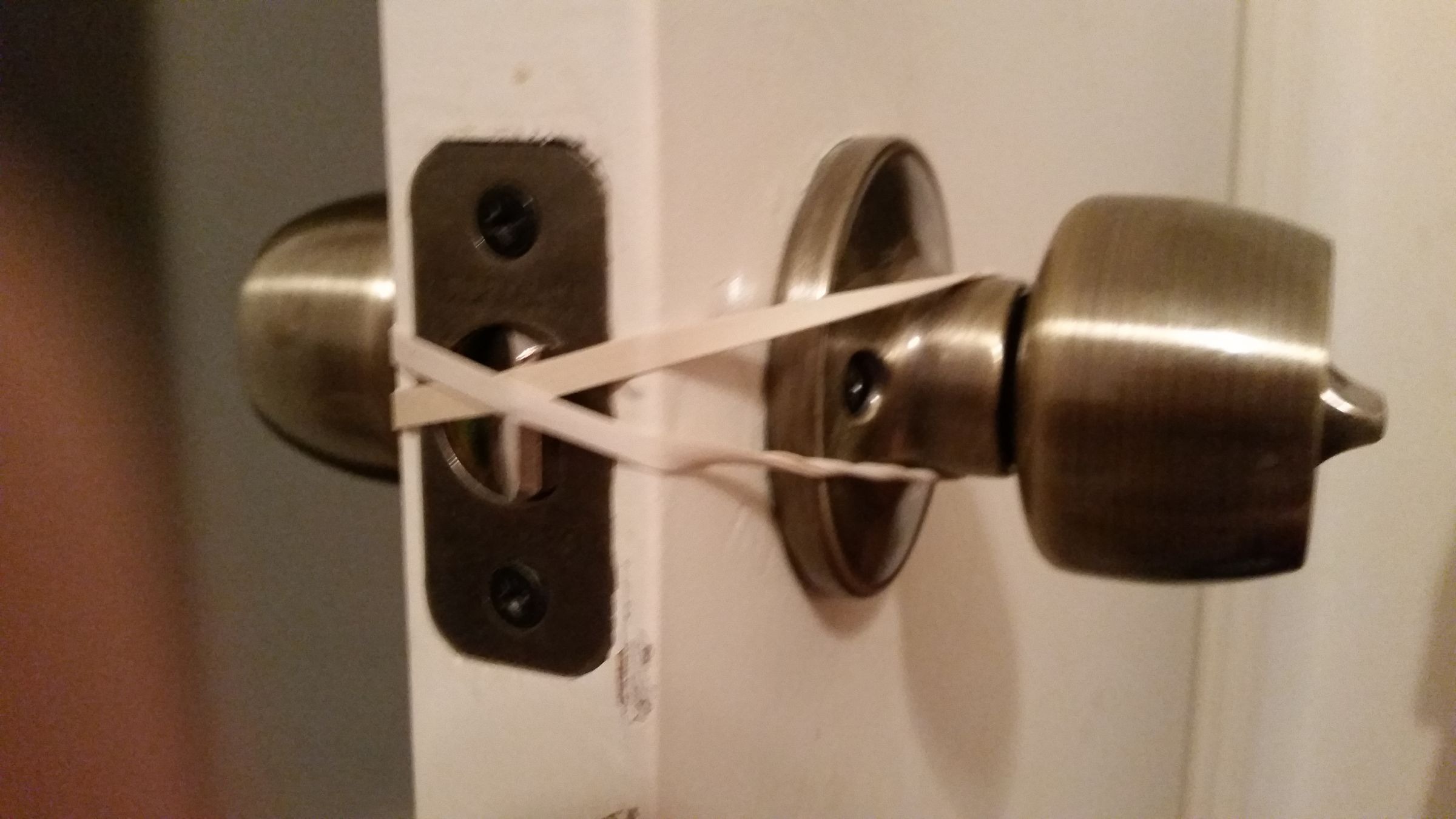
If you discover an unfamiliar object on your door, there is no need to panic.
Take a moment to look at it.
If it is harmless and you feel comfortable doing so, remove it.
Then take a quick look around the entrance.
Check the door.
Look at the lock.
Check nearby windows.
Look for anything that appears out of place.
The purpose is not to search for frightening possibilities.
It is simply to establish whether there is any evidence that something unusual actually happened.
In many cases, everything will look completely normal.
That is useful information.
Look for Patterns Instead of Isolated Incidents
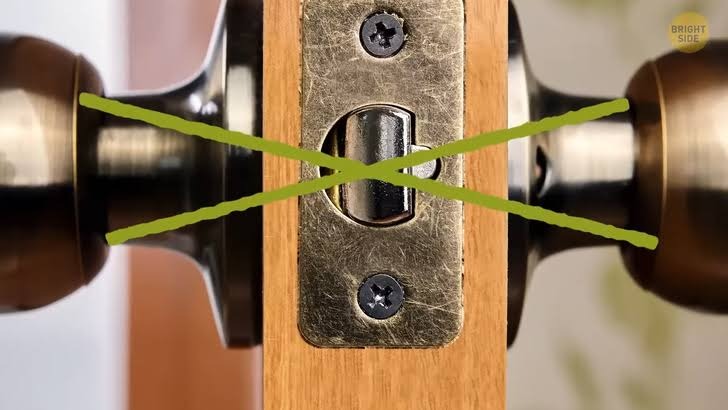
One unusual object is difficult to interpret.
A repeated pattern deserves more attention.
Suppose a rubber band appears once.
There may be countless explanations.
Now imagine unfamiliar objects repeatedly appearing in the same location over several days, especially alongside other clearly unusual activity.
The situation becomes more worthy of investigation.
Patterns provide context.
This principle applies far beyond home security.
One strange event may be coincidence.
Repeated, connected events may provide stronger evidence that something needs attention.
That does not automatically mean the explanation is dangerous.
It simply means there is more information to consider.
Check Your Door and Windows
Basic home security does not require complicated technology.
Start with the fundamentals.
Make sure doors close properly.
Check that locks work correctly.
Confirm that accessible windows are secured.
Keep entry areas reasonably visible.
Trim vegetation that blocks important sightlines.
Make sure exterior lighting works.
These measures can improve both practical security and peace of mind.
They also help you notice genuine problems if they occur.
Lighting Can Make a Difference
A well-lit entrance is easier to observe than a dark one.
Motion-activated lighting can provide additional visibility when someone approaches.
It can also make ordinary activity easier to distinguish from unusual activity.
For example, a light turning on may reveal that the movement was caused by a pet, neighbor, delivery worker, or passing person.
Good lighting therefore does more than discourage unwanted activity.
It reduces uncertainty.
And reducing uncertainty can be surprisingly reassuring.
Doorbell Cameras Add Another Layer of Information
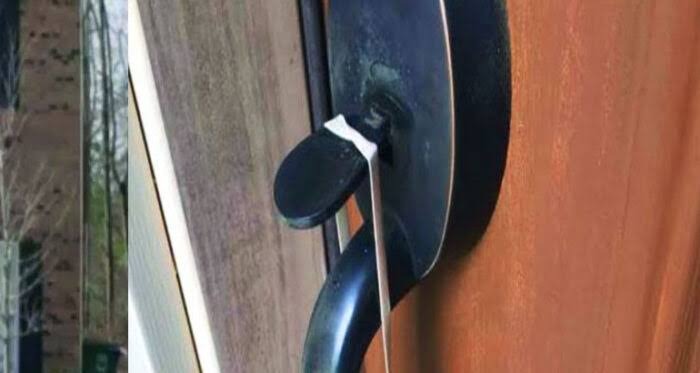
Modern doorbell cameras can provide homeowners with a clearer view of what happens around their entrance.
Depending on the system, they may record visitors, deliveries, or movement near the door.
This can be useful when an unfamiliar object appears.
Instead of wondering who was near the entrance, a homeowner may be able to review available footage.
However, cameras are not necessary for everyone.
They should be considered one possible security tool rather than a requirement.
Basic measures such as good locks, appropriate lighting, and awareness remain valuable.
Talking With Neighbors Can Reveal Simple Answers
Sometimes the easiest way to solve a small mystery is to ask someone nearby.
If several homes have similar objects outside, there may be an obvious explanation.
Perhaps a contractor recently worked in the neighborhood.
Maybe packaging from a delivery company has been blowing around.
Perhaps children have been playing nearby.
A neighbor may have noticed the same thing and already discovered the reason.
Communication can turn uncertainty into information.
It can also help communities become more aware of legitimate concerns without creating unnecessary alarm.
Avoid Confronting Strangers Based on Assumptions
An important part of staying calm is avoiding conclusions about people without evidence.
Seeing an unfamiliar person near your home does not automatically mean they have harmful intentions.
People walk through neighborhoods for many reasons.
They may be delivering something, visiting a friend, looking for an address, exercising, or simply passing through.
If something genuinely concerns you, observation and appropriate reporting are safer than confrontation.
Assumptions can easily create unnecessary conflict.
When Should You Take a Concern More Seriously?
A single rubber band is generally not enough information to conclude that a security problem exists.
Clear evidence of attempted entry or repeated suspicious activity is different.
Examples might include visible damage to a lock, repeated attempts to interfere with a door, or other concrete signs that something has been disturbed.
If you encounter a situation that appears genuinely concerning, avoid unnecessary confrontation and contact the appropriate local authorities or security service for guidance.
The response should match the evidence.
That is an important principle.
A harmless object requires a very different response from a clear security concern.
The Importance of Evidence
Home security discussions sometimes become dominated by dramatic stories.
But effective security is usually based on evidence rather than imagination.
A functioning lock is evidence.
A camera recording is evidence.
A damaged door frame is evidence.
A repeated pattern documented over time is evidence.
A rubber band sitting on a door handle is simply an observation.
The distinction matters.
An observation becomes meaningful when combined with reliable context.
Why Awareness Is Better Than Fear
There is nothing wrong with being attentive to your surroundings.
In fact, awareness is one of the simplest forms of prevention.
The problem begins when awareness becomes constant anxiety.
If every unfamiliar object becomes a potential warning, ordinary life can quickly become stressful.
A better approach is balanced awareness.
Notice unusual things.
Check reasonable explanations.
Look for evidence.
Improve basic security where appropriate.
Then move on when there is no indication of a real problem.
This allows you to remain alert without living in a constant state of suspicion.
Simple Habits That Improve Home Awareness
A few everyday habits can make a meaningful difference.
Know what your entrance normally looks like.
Keep important areas visible.
Check that locks and lighting work.
Collect deliveries promptly when possible.
Communicate with trusted neighbors.
Pay attention to repeated changes rather than isolated incidents.
If you have security equipment, make sure it is functioning properly.
These habits are practical because they do not depend on interpreting mysterious symbols.
They focus on observable conditions.
The Psychology Behind “Something Feels Wrong”
Sometimes your instincts notice a change before you consciously understand it.
That can be useful.
But intuition is not the same as proof.
The feeling that something is unusual should encourage observation, not immediate conclusions.
Take the feeling seriously enough to investigate calmly.
Then allow the evidence to determine what you think happened.
This approach is useful far beyond home security.
It is a general strategy for navigating uncertainty.
Notice.
Pause.
Check.
Then decide.
The Rubber Band May Be Nothing More Than a Rubber Band
After all the possibilities have been considered, the simplest explanation often remains the strongest.
Someone dropped it.
It came from packaging.
The wind moved it.
A neighbor accidentally left it there.
A child was playing nearby.
A delivery worker did not notice it.
There are countless ways an ordinary object can appear somewhere unexpected.
That does not mean homeowners should ignore everything unusual.
It simply means that unusual does not automatically mean dangerous.
Security Should Create Peace of Mind
The purpose of home security is not to make people constantly worried.
It is to create a reasonable level of protection and confidence.
Strong locks.
Good lighting.
Clear visibility.
Reliable communication.
Appropriate technology.
Awareness of the neighborhood.
These measures can provide reassurance without requiring homeowners to interpret every small object as a warning.
Security works best when it is practical and proportional.
Curiosity Without Panic
Finding something unexpected on your front door can certainly make you pause.
That reaction is understandable.
But curiosity can be more useful than fear.
Instead of immediately asking, “Who is targeting my home?”
Ask:
“What are the ordinary explanations?”
“Has anything else changed?”
“Is there actual evidence of interference?”
“Have my neighbors noticed the same thing?”
Those questions lead toward facts.
And facts are much more useful than speculation.
The Bigger Lesson
A rubber band on a door handle may seem insignificant.
Yet the reaction it creates reveals something interesting about modern life.
We live in a world filled with information.
A strange object can be photographed, posted online, discussed by thousands of people, and connected to a much larger story within hours.
That can be useful when genuine warnings need to spread.
But it can also turn harmless coincidences into frightening narratives.
The solution is not to stop paying attention.
It is to become better at separating observation from interpretation.
If something unfamiliar appears around your home, take a calm look.
Remove harmless objects when appropriate.
Check the immediate area.
Make sure your basic security measures are working.
Talk to neighbors if the situation continues.
And if genuine evidence of suspicious activity appears, seek appropriate help.
Most importantly, remember that an isolated unusual object is rarely enough to tell the whole story.
Sometimes a mysterious-looking discovery has a very ordinary explanation waiting just around the corner.
And perhaps that is the most reassuring lesson of all.
We do not need to ignore our instincts.
We simply need to give curiosity a chance to catch up with them.
Because when uncertainty appears at our front door, the safest response is often neither panic nor complete indifference.
It is calm observation, reasonable caution, and a willingness to let the facts tell the story.