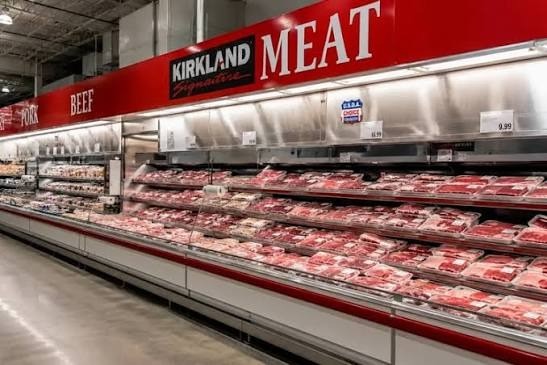
The package looked reassuring.
Neatly arranged pieces of meat sat behind clear plastic, the label promised a particular quality, and the price suggested that shoppers were buying something carefully selected.
For most people, that is enough.
They place the package in their cart, take it home, prepare dinner, and rarely think about what happened before the product reached the supermarket shelf.
But what if the label did not tell the whole story?
Questions about meat quality, country of origin, processing, and labeling occasionally appear online. Some stories claim that premium products are secretly mixed with lower-grade or imported meat before being placed into packages carrying more desirable labels.
Such claims can sound alarming.
But there is an important distinction between a concern and a confirmed fact.
Food supply chains are complicated, and problems can occur. Mislabeling, substitution, and traceability failures have been documented in the food industry at various times. However, a broad claim that supermarkets are routinely selling one type of meat while labeling it as another requires evidence.
Without a specific investigation, regulatory finding, recall, court record, or identified company, such allegations should not be treated as established facts.
Understanding what really happens behind supermarket meat labels requires looking beyond sensational claims and examining how the modern food supply chain actually works.
What Happens Before Meat Reaches the Supermarket?
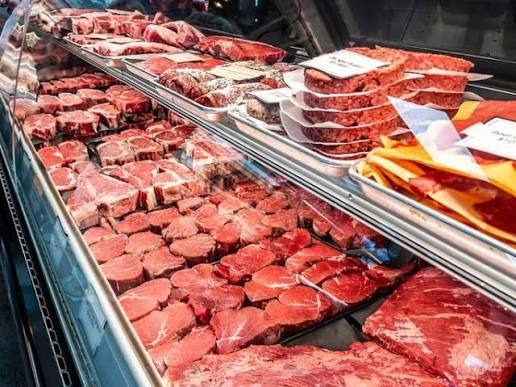
A package of meat may appear simple.
The supply chain behind it often is not.
Depending on the product, meat can pass through producers, processors, distributors, importers, storage facilities, transportation networks, and retailers before reaching consumers.
Each stage can involve documentation and quality controls.
Products may be inspected, packaged, stored under controlled conditions, transported, and eventually displayed for sale.
This complexity is one reason traceability is so important.
If a problem is discovered, food companies and regulators need to know where the product came from, where it went, and which batches may be affected.
A transparent supply chain helps make that possible.
Why Meat Labels Matter
Food labels are more than marketing.
They provide information that helps consumers understand what they are purchasing.
Depending on the country and product, labels can include information about the type of meat, net weight, handling instructions, dates, ingredients, country of origin, and other required details.
Certain quality terms may also have specific regulatory definitions.
That means shoppers should not assume every attractive word on a package means the same thing.
Terms such as “premium,” “natural,” “grass-fed,” or similar descriptions can have different meanings depending on the jurisdiction and product category.
When consumers are unsure, checking the label carefully is more useful than relying on a dramatic social media claim.
Can Food Mislabeling Happen?
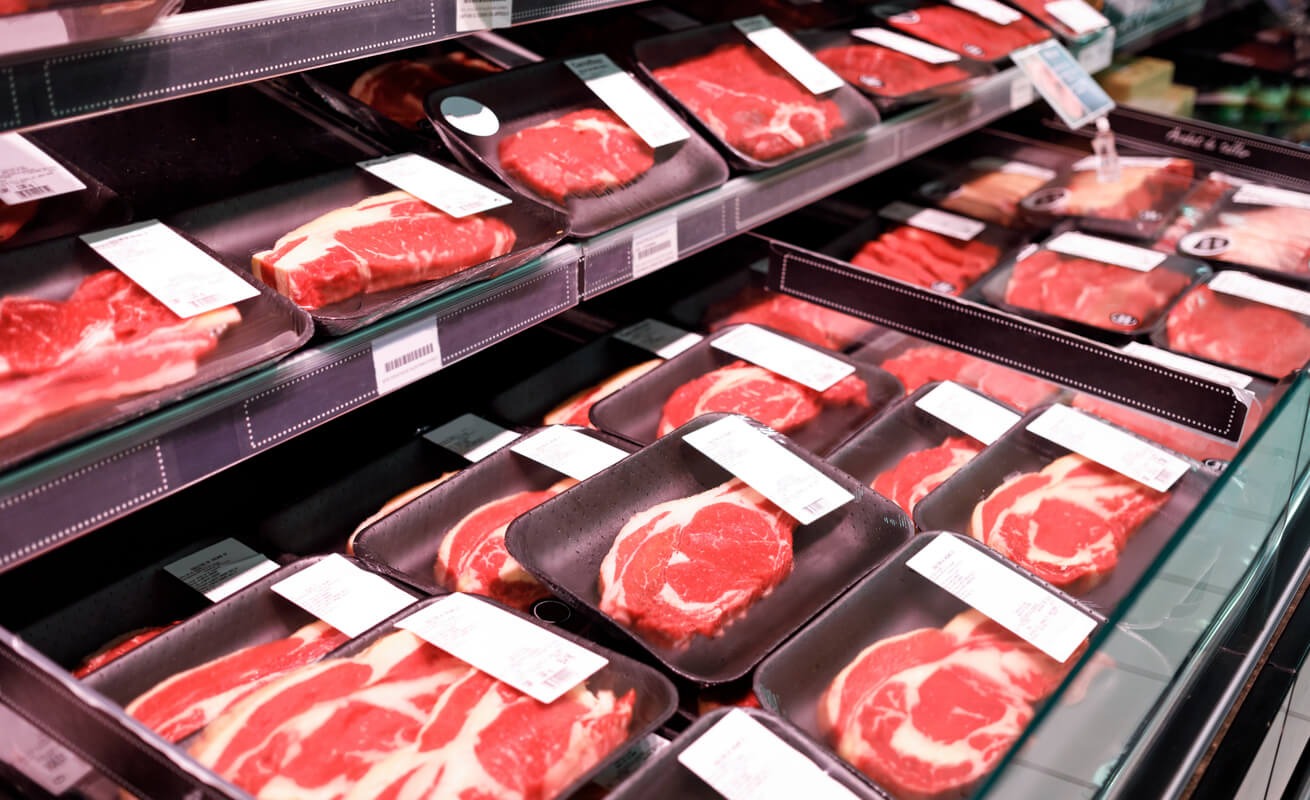
Yes, food mislabeling is a real issue that regulators take seriously.
But acknowledging that possibility is very different from claiming that a particular supermarket or group of suppliers is deliberately misleading customers.
Food fraud can take different forms.
A product may be described incorrectly.
The origin may be misstated.
An ingredient may be substituted.
A product may be marketed using information that does not accurately represent what it contains.
These problems can arise for different reasons.
Some may involve deliberate misconduct.
Others may result from errors, poor record keeping, complex supply chains, or failures in quality control.
That is why investigations are important.
A regulator can examine records, inspect facilities, collect samples, and determine whether a violation actually occurred.
Why Specific Evidence Matters
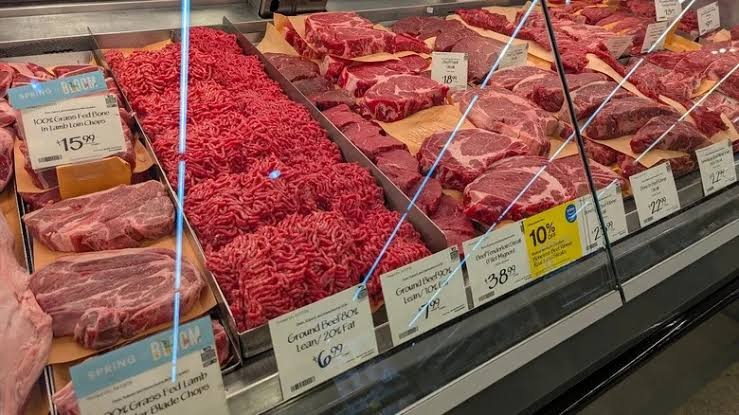
Imagine someone claims that several supermarkets are secretly selling lower-quality imported meat under premium labels.
That is a serious allegation.
To establish it as fact, investigators would need more than customer comments.
They might examine purchasing records.
They could review shipping documents.
They could inspect processing facilities.
They might compare labels with supplier documentation.
Laboratory testing could potentially provide additional evidence depending on the question being investigated.
Regulatory findings or official enforcement records would provide even stronger confirmation.
Without such evidence, the responsible approach is to describe the claim as unverified.
This distinction is especially important when discussing identifiable companies.
A generalized allegation should not be presented as proof that a specific business has engaged in wrongdoing.
The Role of Food Safety Regulators
In the United States, food regulation involves multiple federal agencies with different responsibilities.
The U.S. Food and Drug Administration oversees many areas of the food supply.
The U.S. Department of Agriculture has major responsibilities involving meat, poultry, and certain egg products.
These agencies can investigate potential violations and coordinate with other authorities when necessary.
When significant food safety or labeling problems are confirmed, consumers may see official announcements, recalls, enforcement actions, or other public information.
That system exists partly because food supply chains are too complicated for consumers to investigate on their own.
A shopper should not need to determine the origin of every ingredient independently.
Regulatory systems are designed to provide oversight.
Why Consumer Complaints Can Be Misleading
Sometimes a shopper opens a package and immediately notices something unusual.
The texture is different.
The smell seems stronger.
The color is not what they expected.
The product cooks differently.
It is easy to conclude that something must have been substituted.
But food quality can vary for many ordinary reasons.
Storage temperature can influence texture.
Packaging methods can affect appearance.
Processing can change how meat looks or feels.
Different cuts naturally have different textures.
Batch variation can also occur.
Even two products carrying the same label may not look exactly identical.
That does not mean consumer complaints should be ignored.
They can be useful signals.
But a complaint is not automatically proof of fraud.
The Difference Between Quality and Authenticity
This distinction is particularly important.
A consumer may dislike the quality of a particular product.
That does not necessarily mean the product was mislabeled.
For example, someone may expect a premium cut to be especially tender but find it less enjoyable than anticipated.
The explanation could involve cooking technique, storage, the particular cut, or natural variation.
Authenticity is a separate question.
Was the product actually what the label said it was?
That requires evidence.
A disappointing eating experience alone cannot answer that question.
Imported Meat Is Not Automatically Lower Quality
Another important point concerns imported products.
Online discussions sometimes create the impression that imported meat is inherently inferior.
That is not a scientifically reliable assumption.
Food quality depends on many factors.
Production practices.
Animal handling.
Processing.
Storage.
Transportation.
Temperature control.
Packaging.
Inspection.
The specific product.
A product’s country of origin alone does not determine whether it is safe or high quality.
Imported food can be subject to regulatory requirements before reaching consumers.
At the same time, origin information can matter to consumers for personal, economic, or cultural reasons.
The important thing is that the information should be accurate.
Why Supply Chains Can Become Complicated
Modern food systems operate on a large scale.
A supermarket may source products from multiple suppliers.
Those suppliers may purchase ingredients or raw materials from additional businesses.
Products may travel significant distances before reaching a store.
Each transfer introduces another opportunity for documentation errors or communication problems.
That is why traceability systems are so important.
A well-managed system allows businesses and regulators to identify where products originated and which batches were distributed.
When a problem is confirmed, traceability can help narrow the affected products instead of treating an entire category as suspicious.
What Traceability Actually Means
Traceability is essentially the ability to follow a product through the supply chain.
The exact requirements vary by country and food category.
Records may identify suppliers, production batches, processing facilities, transportation information, and recipients.
The purpose is practical.
If a problem is discovered, investigators need a way to determine where the product came from and where it went.
This can support targeted recalls and investigations.
It also encourages businesses to maintain accurate records.
Traceability does not guarantee that mistakes can never happen.
It does, however, make problems easier to investigate.
Why Viral Food Stories Spread So Quickly
Food stories are naturally emotional.
Everyone eats.
Everyone buys groceries.
Everyone wants to know that the food they purchase is what the label says it is.
A dramatic claim can therefore attract attention quickly.
A headline suggesting that consumers are being secretly deceived is much more likely to be shared than a headline saying that investigators are reviewing a labeling concern.
But emotional impact is not the same thing as evidence.
A story can contain a real concern while still exaggerating its scope.
That is why readers should ask a simple question:
Where is the evidence?
If a story refers to an investigation, is there an identifiable regulator?
If it mentions a recall, can the recall be found in an official database?
If it accuses a company, is there a documented enforcement action?
If none of these details exist, caution is appropriate.
What Shoppers Can Do
Consumers do not need to become food investigators.
A few practical habits can help.
Read labels carefully.
Check country-of-origin information when available.
Pay attention to storage instructions.
Keep receipts when purchasing expensive products.
Follow proper refrigeration and cooking guidance.
If something appears seriously wrong with a product, contact the retailer or manufacturer.
For concerns involving possible food safety problems, consumers can also contact the relevant food authority in their country.
These steps are more useful than immediately assuming that a product has been deliberately substituted.
Be Careful With Social Media Claims
Social media can be valuable for sharing information.
It can also remove important context.
A photograph of an unusual package may be presented as proof of widespread fraud.
A consumer complaint may be repeated thousands of times until it begins to sound like a confirmed investigation.
A statement such as “many people are reporting this” does not necessarily mean that regulators have confirmed the underlying explanation.
Repetition is not the same as verification.
Before sharing a claim about food safety or labeling, look for the original source.
An official government website, regulatory announcement, documented inspection, or established news organization may provide information that a social media post leaves out.
What If a Label Really Is Incorrect?
If authorities confirm that a product was mislabeled, the consequences can be significant.
Depending on the circumstances and jurisdiction, companies may face recalls, corrective actions, penalties, or other enforcement measures.
The purpose is not simply to punish businesses.
It is also to protect consumers and improve the integrity of the food supply.
A confirmed case can therefore teach the industry something valuable.
Companies can strengthen supplier verification.
Improve record keeping.
Increase testing.
Review labeling procedures.
Train employees.
And improve traceability.
The goal is to reduce the likelihood of similar problems happening again.
Why Broad Claims Should Be Treated Carefully
There is a major difference between saying:
“Food mislabeling can happen.”
And saying:
“Supermarkets are secretly replacing premium meat with cheaper imported products.”
The first statement is a general observation supported by the fact that food labeling violations can occur.
The second is a specific allegation that requires specific evidence.
Without that evidence, it should remain a claim rather than a conclusion.
This is particularly important when an article could influence how readers view particular companies, countries, or food products.
Accuracy matters more than drama.
The Importance of Asking Better Questions
When something seems suspicious, the best response is not necessarily fear.
It is curiosity.
Where did the claim originate?
Who investigated it?
What evidence was collected?
Was there an official finding?
Was a product recalled?
Was a company identified?
Were laboratory tests performed?
Could there be an ordinary explanation for the reported difference?
These questions do not dismiss consumer concerns.
They make those concerns easier to evaluate.
Good information does not require ignoring uncertainty.
It requires acknowledging it.
The Bigger Lesson About Food Transparency
The modern food system can feel distant.
Most consumers do not know the farmer, processor, distributor, or warehouse responsible for every product in their shopping cart.
That distance makes transparency important.
People deserve accurate information about what they buy.
Businesses have a responsibility to maintain appropriate records and follow labeling requirements.
Regulators have a responsibility to investigate credible concerns.
And consumers have a role too.
They can ask questions, report legitimate problems, and avoid spreading claims that have not been verified.
These roles work together.
What We Actually Know
There is no reason to assume that every premium meat package in a supermarket contains exactly the quality a consumer expects without checking the specific labeling requirements and product information.
At the same time, there is also no sound basis for claiming that supermarkets broadly and secretly replace premium meat with lower-quality imported products unless credible evidence demonstrates it.
The most responsible conclusion is somewhere between blind trust and automatic suspicion.
Food supply chains can experience mistakes and violations.
Regulatory systems exist to identify and address them.
Consumers can remain attentive without assuming that every unusual product is evidence of deception.
A More Thoughtful Way to Shop
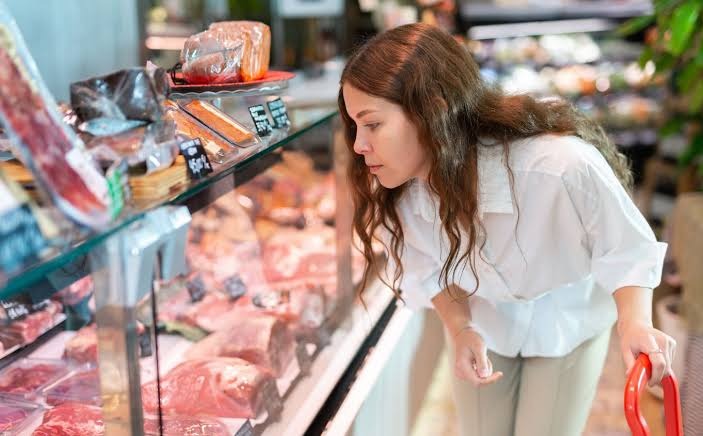
The next time you stand in front of the meat counter, you may look at the packaging a little differently.
Not with fear.
With awareness.
Read the label.
Understand what the terminology means.
Check the origin information when relevant.
Follow storage instructions.
Pay attention to recalls and official consumer alerts.
And if you encounter something that genuinely seems inconsistent, report it through the appropriate channels rather than relying only on an online rumor.
That approach protects consumers without creating unnecessary alarm.
The Value of Curiosity Over Fear
Stories about hidden problems in the food supply are compelling because they touch something deeply personal.
Food is part of everyday life.
We want to know that what we purchase is accurately represented.
We want companies to be honest.
We want regulators to do their jobs.
And we want reliable information when something goes wrong.
Those expectations are reasonable.
But protecting those values requires more than believing the most dramatic explanation.
It requires evidence.
A suspicious-looking package may deserve a closer look.
A consumer complaint may deserve investigation.
A labeling concern may be legitimate.
But until an appropriate authority or reliable investigation confirms what happened, the claim should remain a claim.
That may sound less exciting than a dramatic story about a hidden supermarket practice.
But responsible information is not supposed to be exciting at the expense of accuracy.
Sometimes the truth is complicated.
Sometimes a strange texture is simply a result of storage or processing.
Sometimes a labeling issue is a genuine mistake.
And sometimes an investigation uncovers a real violation.
The important thing is to let evidence determine which explanation is correct.
In the end, the smartest consumer is not the person who believes everything they hear, nor the person who distrusts everything they see.
It is the person willing to ask questions, check reliable sources, and remain open to the facts.
Because when it comes to the food on our tables, curiosity is valuable.
But informed curiosity is even better.