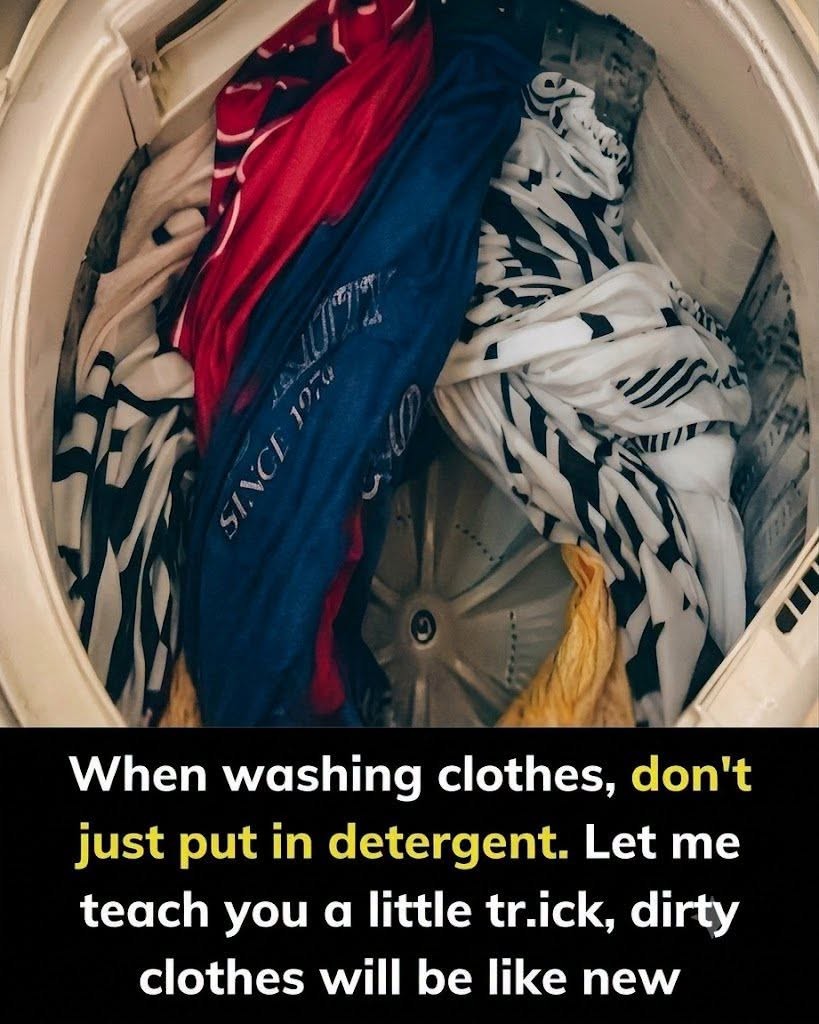
The washing machine was supposed to make laundry easier.
You put your clothes inside, add detergent, press a button, and walk away.
Yet sometimes, when the cycle finishes, something seems different.
A favorite shirt feels slightly rougher.
A sweater has become misshapen.
A pair of trousers looks more worn than it did a few weeks ago.
A delicate garment that once looked new now seems tired.
Most people blame the detergent.
Others blame the washing machine itself.
But the real explanation can be more complicated.
Every washing cycle exposes clothing to water, movement, friction, temperature changes, and mechanical stress. Over time, those forces can contribute to normal fabric wear.
That does not mean washing machines are damaging your clothes every time you use them.
It simply means that how you wash your clothes can influence how long they remain in good condition.
And sometimes, small changes to a laundry routine can make a surprisingly noticeable difference.
One of the more unusual suggestions involves something most people would never expect to find inside a washing machine: an empty plastic bottle.
Why Clothes Become Tangled in the Washing Machine

During a wash cycle, clothing moves continuously through the drum.
As the drum rotates, garments rub against one another and against the machine itself.
Loose items can wrap around each other.
Sleeves can become twisted.
Straps can become tangled.
Long pieces of fabric may become wrapped around shorter ones.
This is especially noticeable when washing several lightweight garments together.
Tangling itself does not necessarily mean that serious damage has occurred.
However, repeated twisting and friction can contribute to fabric stress, particularly for delicate materials.
This is one reason laundry experts commonly recommend following garment-care instructions and choosing an appropriate wash cycle.
The washing machine is designed to move clothing.
The goal is not to eliminate movement but to keep that movement appropriate for the fabric being washed.
The Curious Plastic Bottle Trick
This is where an unusual laundry tip sometimes appears online.
The suggestion is simple: place one or two clean, empty plastic bottles in the washing machine drum along with the clothes.
The idea is that the bottles move around with the laundry and may help separate garments as the drum rotates.
In theory, this could reduce some tangling by creating additional space between pieces of clothing.
The concept is easy to understand.
Instead of allowing several garments to remain tightly wrapped together, the moving bottles may act as temporary separators.
But there is an important qualification.
This is a household laundry hack, not a universally proven method for extending garment life.
Different washing machines have different drum designs, operating instructions, and limitations.
Some manufacturers may advise against putting loose objects in the drum.
For that reason, anyone considering this method should check the washing machine manufacturer’s instructions first.
If a manual warns against loose objects, that guidance should take priority.
Why the Bottle Method May Not Work for Every Load
Laundry loads are not all the same.
A few lightweight shirts behave differently from a load containing towels, jeans, sweaters, and delicate clothing.
Heavy garments already create substantial movement inside the drum.
Adding bottles may not provide any meaningful benefit and could potentially create unnecessary noise or movement.
There is also the question of the bottle itself.
Only clean, empty bottles in good condition should even be considered.
A bottle that is damaged, cracked, or has a loose cap would obviously be inappropriate.
And bottles should never be used as a substitute for proper garment-care instructions.
The most reliable way to protect clothing remains choosing the correct cycle, temperature, detergent, and drying method for the material.
The bottle trick is best viewed as an optional experiment rather than a guaranteed solution.
Sorting Laundry Is Still One of the Best Habits
If there is one simple laundry habit worth prioritizing, it is sorting.
It can be tempting to throw everything into the same load when life is busy.
But different fabrics have different needs.
A heavy pair of jeans behaves very differently from a lightweight blouse.
A towel produces a different type of friction from a delicate knitted garment.
Dark clothing may also release dye that can affect lighter fabrics.
Sorting does not have to be complicated.
Separate colors appropriately.
Keep delicate items away from heavy materials when possible.
Follow the care label.
And avoid overloading the machine.
These basic steps can reduce unnecessary stress on clothing and may also help the washing machine clean more effectively.
Check the Pockets Before Washing
Another surprisingly important habit is checking pockets.
Coins, tissues, paper receipts, pens, and other small objects can accidentally end up inside a wash cycle.
A forgotten tissue can break apart and leave small pieces across an entire load.
A pen can potentially create difficult stains.
Small hard objects can also make unwanted noise as they move around the drum.
Taking a few seconds to check pockets before starting the machine is one of the easiest ways to prevent avoidable laundry problems.
It may not sound impressive.
But simple habits are often the ones that make the biggest difference over time.
Does Soaking Really Help?
Pre-soaking is another traditional laundry technique.
The basic idea is straightforward.
Allowing clothing to sit in water with an appropriate cleaning product can help loosen some dirt and residues before the main wash.
This may be useful for particularly dirty garments or certain types of stains.
However, soaking is not necessary for every load.
Some fabrics can be damaged by prolonged soaking, especially if they are delicate or have special finishes.
The best approach is to follow the care label and consider the type of fabric involved.
If a garment requires special treatment, a gentle washing method may be preferable to simply leaving it submerged for a long period.
The Importance of Using the Right Amount of Detergent
Many people assume that more detergent means cleaner clothes.
That is not necessarily true.
Using too much detergent can leave residue behind, particularly if the washing machine does not rinse thoroughly.
Excess detergent may also make fabrics feel stiff or leave a buildup inside the machine over time.
Using the amount recommended by the detergent manufacturer and adjusting for load size and water conditions is generally a better approach.
Modern detergents are designed to work at specific concentrations.
More is not automatically better.
The same principle applies to other laundry additives.
Following the instructions on the product is usually safer than assuming that increasing the amount will improve the result.
What About Rice Vinegar?
Another household suggestion involves using vinegar during laundry.
Vinegar is acidic and is commonly used in household cleaning.
Some people add a small amount during the rinse cycle in an attempt to reduce odors or soften fabrics.
However, it is important to avoid treating vinegar as a universal laundry solution.
Different washing machines and fabrics respond differently to cleaning products.
Vinegar should never be mixed with chlorine bleach because the combination can create hazardous fumes.
It is also worth remembering that manufacturers may provide specific guidance about which additives are appropriate for their machines.
If you want to use vinegar in laundry, check the washing machine and garment-care instructions first.
For routine cleaning, a properly formulated laundry product may be a more predictable choice.
Can Vinegar Remove Every Odor?
This is another area where household advice can become exaggerated.
Vinegar may help neutralize or reduce certain odors because of its chemical properties.
However, it is not a magic solution for every odor or stain.
Persistent smells can have different causes.
Sometimes the issue is the clothing itself.
Sometimes it is detergent residue.
Sometimes the washing machine needs cleaning.
And sometimes the garment needs a different cleaning method entirely.
If clothing repeatedly develops an unpleasant smell after washing, cleaning the washing machine itself may be just as important as changing the laundry products.
Your Washing Machine Needs Care Too
People often focus entirely on their clothes and forget the machine.
But the washing machine also needs maintenance.
Detergent residue, fabric softener buildup, moisture, and dirt can accumulate in various parts of the appliance.
A machine that is not properly maintained may develop unpleasant odors.
Regular cleaning according to the manufacturer’s instructions can help keep the machine functioning properly.
Leaving the door or lid open after a cycle, when appropriate for the machine design, can also help the interior dry.
Again, the manufacturer’s instructions should be the final authority.
Cold Water Can Be Gentler on Many Fabrics
Temperature is another important consideration.
Hot water can be useful for certain laundry situations, but it can also be harder on some fabrics and may contribute to color fading or shrinkage depending on the material.
Cold or cool water is often suitable for many everyday loads.
It can also reduce energy consumption because the washing machine does not need to heat as much water.
However, not every garment should automatically be washed cold.
The care label provides the best guidance.
Some fabrics require specific temperatures to clean properly or maintain their shape.
The Drying Process Matters Too
Even if you wash clothing carefully, drying can introduce additional stress.
High heat can affect certain fabrics.
Repeated tumble drying may contribute to gradual wear.
Delicate garments may benefit from air drying or another method recommended on the care label.
Hanging clothes immediately after washing can also reduce wrinkles in some materials.
For knitwear and other garments that can lose their shape, laying them flat may be preferable to hanging them while wet.
The key is matching the drying method to the fabric.
Turning Clothes Inside Out Can Help
Another simple technique is turning some garments inside out before washing.
This can reduce direct exposure of the outer surface to friction.
It may be particularly useful for dark clothing, printed shirts, and garments with decorative details.
Turning clothes inside out is not necessary for every item.
But for certain pieces, it can be a useful habit.
Zippers can also be closed before washing, while delicate items may benefit from being placed in a laundry bag.
These small preparations take only a few seconds.
Why Overloading the Machine Can Be a Problem
A washing machine needs enough space for water and clothing to move properly.
When the drum is packed too tightly, garments may have less freedom to circulate.
That can affect cleaning and rinsing.
It may also increase tangling and friction.
The correct load size varies depending on the machine and the type of clothing.
A drum should not simply be filled until there is no space left.
Following the manufacturer’s capacity recommendations is a better approach.
Gentle Cycles Have a Purpose
Washing machines offer different cycles for a reason.
A heavy-duty cycle may be appropriate for sturdy materials.
A delicate cycle is designed for fabrics that require gentler movement.
Using the strongest cycle for everything may expose clothing to more mechanical action than necessary.
If a garment is labeled for gentle washing, selecting the appropriate cycle can help preserve its condition.
This is especially important for fabrics that are lightweight, stretchy, knitted, or otherwise sensitive to repeated mechanical movement.
The Real Secret Is Not One Laundry Hack
After hearing all these suggestions, it is easy to search for one perfect trick.
Maybe it is the plastic bottle.
Maybe it is vinegar.
Maybe it is soaking.
But clothing longevity rarely depends on a single clever hack.
It is usually the result of many ordinary habits working together.
Sort the laundry.
Do not overload the machine.
Check pockets.
Use the correct detergent amount.
Choose an appropriate temperature.
Select the right cycle.
Protect delicate garments.
Follow drying instructions.
Clean the washing machine regularly.
These habits may not sound exciting.
But they are much more reliable than expecting one unusual trick to transform every wash.
Small Changes Can Add Up
Imagine washing a favorite shirt fifty times.
If every cycle exposes it to slightly more friction, heat, stretching, or aggressive movement than necessary, those small stresses can accumulate.
One wash is unlikely to make a dramatic difference.
But clothing is exposed to repeated cycles over months and years.
That is why gentle care matters.
The goal is not to keep clothes in perfect condition forever.
Every fabric eventually experiences normal wear.
The goal is simply to avoid unnecessary stress.
A More Thoughtful Approach to Laundry
The next time you stand in front of your washing machine, it may be worth thinking beyond detergent.
Look at the clothes.
What fabrics are in the load?
Are heavy materials mixed with delicate ones?
Is the machine overloaded?
Do any garments need to be turned inside out?
Should something be washed separately?
Could a lower temperature be appropriate?
Does the care label recommend air drying?
These questions take only moments.
But they encourage a more thoughtful approach to laundry.
And that may be more valuable than any viral household hack.
The Ordinary Science of Caring for Clothes
Laundry is one of those household tasks that seems too familiar to deserve much attention.
We wash clothes because they are dirty.
We dry them because they are wet.
Then we put them away and repeat the process.
Yet behind that simple routine is a combination of water, chemistry, temperature, friction, movement, and material science.
Fabric is not indestructible.
Every washing and drying cycle interacts with its fibers.
Understanding that does not mean becoming afraid of the washing machine.
It simply means using it more thoughtfully.
The plastic bottle trick may sound unusual, and some people may find it useful in certain situations, but it should not replace manufacturer guidance or sensible laundry practices.
The same is true for vinegar and soaking.
Household techniques can be interesting, but they should be approached with reasonable expectations.
The Best Laundry Habit May Be Paying Attention
Perhaps the biggest lesson is that clothing care does not require complicated solutions.
It requires attention.
Read the label.
Choose the right cycle.
Give clothes enough room.
Separate materials when necessary.
Use products as directed.
And remember that the washing machine is a tool, not a one-size-fits-all solution.
A little extra care today may help your favorite clothes remain comfortable and attractive through many more laundry cycles.
The next time you hear about a strange laundry hack, you do not necessarily have to dismiss it.
But you also do not have to believe it immediately.
Check the evidence.
Check your machine’s instructions.
Consider the fabric.
Then decide whether the method actually makes sense for your situation.
Because when it comes to caring for clothes, the most effective approach is rarely the most dramatic one.
It is usually the collection of small, sensible habits repeated over time.
And sometimes, the simplest laundry lesson is the most useful: protect your clothes by understanding what they need, rather than simply asking the washing machine to do everything for you.