
On an ordinary day in a small village in eastern France, a sound from a parked utility van prompted a neighbor to make a phone call. What followed revealed a situation that had remained hidden from the wider community for many months.
In April 2026, authorities in Hagenbach, near the borders with Germany and Switzerland, rescued a nine year old boy who prosecutors say had been confined inside his father’s van since 2024. The discovery quickly attracted international attention, not only because of the length of time involved, but because people around the child had apparently believed he was somewhere else.
The case is still under investigation, and several important questions remain unanswered. Authorities are examining what happened inside the family, how the child’s absence was explained to relatives and teachers, and whether warning signs were overlooked.
For that reason, it is important to distinguish confirmed information from allegations and statements made during an ongoing legal investigation.
What Happened in Hagenbach?
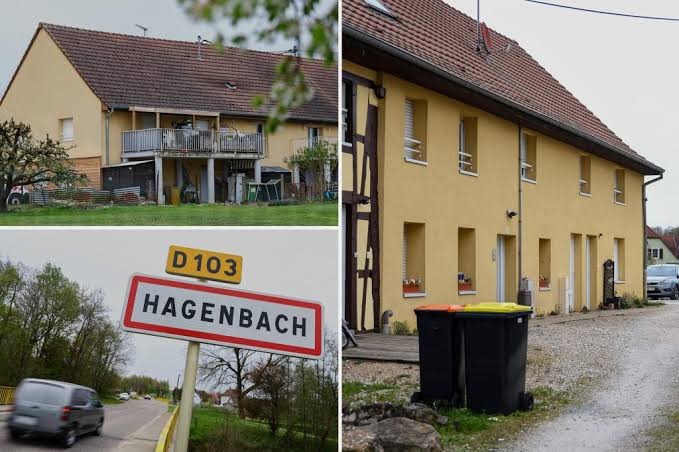
According to French prosecutor Nicolas Heitz, police were alerted after a neighbor reported hearing what sounded like a child coming from a utility vehicle in Hagenbach. Officers subsequently discovered the nine year old inside the van and arranged for him to receive medical care.
Authorities say the child had been confined there for an extended period beginning in 2024. Reports indicate that he was around seven years old when the confinement allegedly began.
The boy was hospitalized following his rescue. Prosecutors reported that he showed signs of serious nutritional and physical neglect and had difficulty standing and walking after spending such a prolonged period in a restricted position.
Because the investigation concerns a child, many personal details have appropriately not been made public. This also means that some accounts circulating online should be treated cautiously.
The child’s father has been placed in custody and faces preliminary charges connected with the alleged confinement and endangerment of his son. The father’s partner has also faced preliminary charges related to allegedly failing to assist a child in danger. She has denied knowing the boy was being kept in the vehicle and was released under judicial supervision, according to reports.
These are allegations at the investigation stage, rather than final findings of a court.
Why Did People Believe the Child Was Somewhere Else?
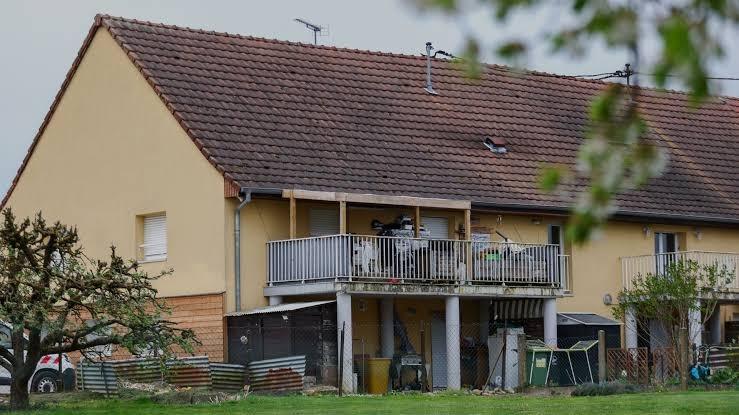
Perhaps one of the most difficult questions raised by the case is how a child could apparently disappear from everyday life without immediately triggering a response.
Investigators have reportedly heard that family members and friends believed the boy had been placed in a psychiatric institution. Teachers were reportedly told that he had transferred to another school. French newspaper Le Monde reported that the boy had previously attended school in the Mulhouse area but did not subsequently attend the local school in Hagenbach after the family moved.
This detail highlights an important distinction between physical visibility and social visibility.
A person can live close to others while becoming practically invisible if information about their whereabouts is accepted without verification. In a small community, people may naturally assume that another institution, relative, school or authority is responsible.
That phenomenon is sometimes described through the concept of the “bystander effect,” although applying a psychological label to this particular case would be premature. Every situation is different, and investigators still need to establish who knew what, when they knew it and what opportunities existed to intervene.
French authorities have reportedly launched an administrative investigation into aspects of the case, including questions surrounding school registration and how the child’s absence remained unnoticed.
The Father’s Explanation and the Importance of Evidence

According to prosecutors, the father told investigators that he had confined his son because he wanted to protect him from a conflict involving his partner. He reportedly claimed that the partner had wanted the boy placed in psychiatric care.
Authorities have also said that there was no medical evidence presented to them indicating that the child had a psychiatric condition before his disappearance from school and ordinary community life.
This is an important point when considering extraordinary claims.
Families can experience complicated disagreements about children’s education, behavior, health and care. However, decisions involving a child’s welfare are ordinarily expected to involve appropriate professionals and established legal or medical procedures.
A parent’s personal interpretation of a situation cannot, by itself, establish a medical diagnosis or justify an extreme living arrangement.
The investigation will ultimately need to determine what actually happened, rather than relying solely on statements from any individual involved.
What Can Prolonged Confinement Do to the Human Body?
The Hagenbach case has also prompted questions about what happens when a growing child spends an unusually long period with very limited movement.
From a scientific perspective, regular movement is essential for developing strength, coordination and healthy musculoskeletal function. Children are normally active throughout the day, walking, running, playing and changing positions frequently.
When movement is severely restricted for a prolonged period, muscles can become weaker and joints can lose flexibility. Maintaining a particular posture for extended periods can also affect mobility and physical comfort.
This does not mean that every person subjected to limited movement will experience identical effects. Age, nutrition, previous health, duration and access to medical care all matter.
In this case, prosecutors reported that the boy had difficulty standing and walking after his prolonged confinement. Medical professionals will be better placed than outside observers to determine the extent of his physical recovery.
The story therefore provides a reminder of something science has demonstrated for generations: the human body is designed for movement, interaction and changing environments, particularly during childhood development.
The Psychology of Isolation

The physical consequences are only one part of the broader scientific discussion.
Childhood development depends on more than food, shelter and physical growth. Children also learn through communication, education, play, relationships and interaction with their surroundings.
Researchers studying child development have long emphasized the importance of stable relationships and stimulating environments. Everyday experiences help children develop language, emotional regulation, social understanding and confidence.
It would be inappropriate, however, to predict the boy’s future psychological condition from news reports alone. Recovery is highly individual, and children can respond differently after difficult experiences.
Professional support, stable relationships, education and appropriate medical and psychological care can all play important roles in helping a child rebuild a sense of safety and routine.
For that reason, the most constructive part of the Hagenbach story is not speculation about what the future holds, but the fact that the child has been located and placed in professional care.
Why Stories Like This Can Feel Almost Unreal
Throughout history, unusual stories involving hidden rooms, mysterious disappearances and unexplained events have appeared in folklore and popular culture.
Many traditional stories reflect a basic human fascination with the idea that something extraordinary could exist just outside ordinary awareness.
The Hagenbach case may initially feel similar to those fictional narratives because the circumstances are difficult to imagine. Yet there is an important difference between folklore and investigative journalism.
Folklore often grows through repetition, symbolism and imagination. A criminal investigation works in the opposite direction. Investigators collect evidence, interview witnesses, examine records and compare competing accounts.
That distinction matters.
When an unusual real world story becomes widely shared online, people can quickly fill gaps in the available information with assumptions. A detail repeated hundreds of times can begin to sound like a confirmed fact even when it originated as an unverified claim.
The responsible approach is therefore to separate documented information from speculation.
A Community Asking Difficult Questions
Hagenbach is a relatively small community, and reports have described residents as shocked by what authorities discovered.
For neighbors, the story raises a particularly uncomfortable question: how can something serious happen nearby without being recognized?
There is no simple scientific or social explanation.
People naturally make assumptions about their neighbors. A child who is not seen may be assumed to be visiting relatives, attending another school or receiving care elsewhere. Adults may also hesitate to interfere in what appears to be a private family matter.
Yet the case demonstrates why child welfare systems rely on multiple layers of protection.
Schools, healthcare professionals, social services, local authorities, relatives and community members can each provide different pieces of information. When those systems communicate effectively, unusual changes in a child’s circumstances may become easier to identify.
When information remains fragmented, important questions can take longer to emerge.
The French administrative investigation is therefore significant beyond this individual case. Authorities are examining whether existing procedures functioned as intended and whether there were gaps that should be addressed.
Myth, Mystery and the Search for an Explanation
There is another lesson hidden within the public fascination surrounding cases like this.
Human beings dislike unanswered questions.
When we encounter an event that seems difficult to understand, we naturally search for a narrative that makes it coherent. Sometimes that means looking toward cultural stories, psychological explanations or theories about what might have happened.
But curiosity works best when it remains connected to evidence.
The Hagenbach investigation is still developing. Some details may change as witnesses are interviewed, records are reviewed and professional assessments are completed.
That uncertainty should not make the story less meaningful. Instead, it reminds us that real life rarely arrives as a perfectly structured narrative.
The most important facts are often discovered gradually.
What Happens Next?
The investigation is expected to examine the father’s account, the role of his partner, the child’s previous circumstances and the information available to relatives, schools and local authorities.
Authorities are also considering whether other individuals may have been aware of the child’s situation.
Meanwhile, reports indicate that the boy remains under professional care.
The legal process will determine responsibility based on evidence rather than public speculation. Until courts reach conclusions, allegations involving the adults should be described as allegations.
That distinction is especially important when stories concern minors and attract intense international attention.
Conclusion: Why Human Curiosity Matters
The Hagenbach case is difficult to comprehend because it challenges our assumptions about how visible a person’s life should be within a community.
A child can be registered in official systems, connected to a family and known to teachers, yet still become surprisingly difficult to locate when information moves between people without being properly confirmed.
The story also reminds us that extraordinary events do not require extraordinary explanations. Science, careful investigation and reliable evidence are usually more valuable than speculation.
Perhaps that is the deeper lesson behind humanity’s fascination with mysterious stories. We are curious because we want to understand what we cannot immediately explain. We create myths, investigate unusual events and ask difficult questions because uncertainty encourages us to search for meaning.
In the end, curiosity is most useful when it leads not to sensationalism, but to understanding.
The investigation in Hagenbach will determine what happened and whether institutional safeguards failed. For now, the most important development is that a child who had become largely invisible to the outside world was finally found and placed somewhere he could receive professional care.
The unanswered questions remain, but so does the possibility of learning from them.
Sources
-
Associated Press, reporting on the rescue and statements from Mulhouse prosecutor Nicolas Heitz.
-
Sky News, “Boy, 9, rescued after being locked in father’s van in France since 2024.”
-
Le Monde, reporting on the investigation, school records and the French administrative inquiry.
-
The Washington Post, Associated Press report on the Hagenbach case.
-
CBS News, Associated Press report on the rescue and preliminary investigation.