
For decades, a small blue and yellow can has inspired curiosity wherever it appears.
Some people grew up eating it regularly. Others encountered it later and wondered why a canned meat product had become such a recognizable part of food culture.
Then there is the name itself.
“SPAM” sounds mysterious enough to invite questions. What exactly is inside the can? Why does it last so long? And how did a simple canned food become part of everyday cooking in so many countries?
The real story is much less mysterious than popular jokes suggest.
Introduced in 1937 by Hormel Foods, SPAM was created during a period when affordable, convenient food was particularly valuable. Its unusual combination of simple ingredients, long shelf life, and easy preparation helped turn it into one of the most recognizable canned foods in the world.
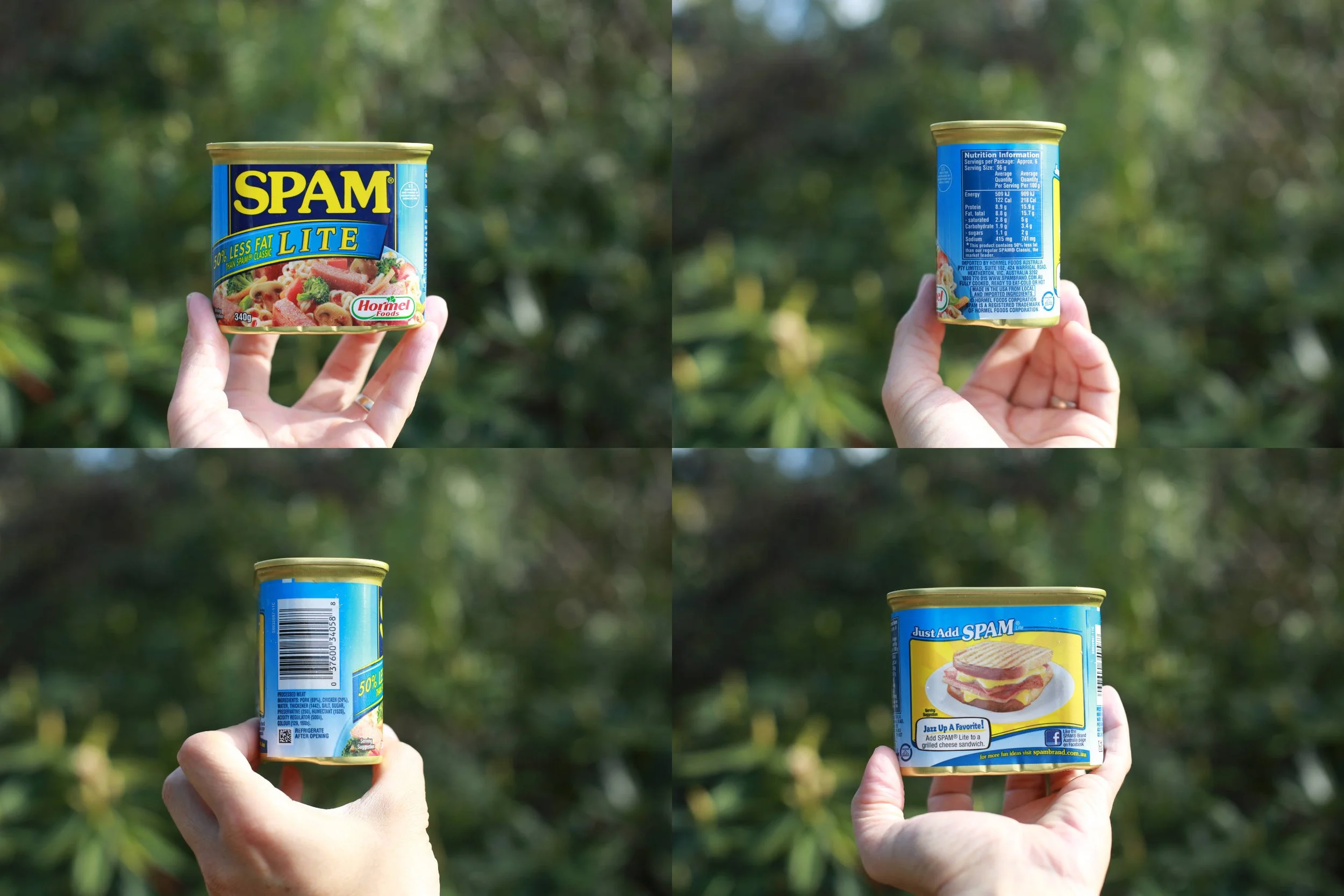
What Is SPAM Made Of?
Despite the many jokes surrounding it, the basic ingredient list is surprisingly straightforward.
Classic SPAM contains six primary ingredients: pork with ham, water, salt, potato starch, sugar, and sodium nitrite.
The exact formulation and labeling can vary depending on the product and market, but the traditional version is not an unidentified mixture of mysterious ingredients.
The pork and ham provide the main protein and savory flavor.
Water contributes to the texture and helps during processing.
Salt adds flavor and also plays an important role in preservation.
Potato starch helps maintain the product’s texture.
Sugar contributes a small amount of sweetness.
Sodium nitrite is used in cured meat products as part of the preservation and curing process.
So while the product may look unusual compared with fresh meat, its basic composition is relatively easy to understand.
Why Does SPAM Last So Long?
One of the most interesting features of canned meat is its long shelf life.
The secret is not that the food is somehow immune to spoilage.
Instead, several preservation techniques work together.
Canning involves sealing food inside a container and processing it under controlled conditions.
The sealed environment helps protect the contents from outside contamination.
Heat processing is also important because it helps destroy microorganisms that could otherwise cause food to spoil.
Once properly processed and sealed, canned foods can remain shelf stable for extended periods when stored appropriately.
This technology transformed food preservation during the twentieth century.
Before refrigeration became widespread, preserving meat safely for longer periods was a major challenge.
Canning offered a practical solution.
Why Was SPAM Created?
SPAM appeared in 1937, during a period when affordability and food preservation mattered greatly.
Hormel Foods was already an established American food company, and the new canned product offered something convenient for households.
It could be stored without refrigeration before opening and prepared quickly.
That combination made it useful for families, travelers, military personnel, and communities where fresh meat was not always readily available.
The product’s history became even more significant during the years surrounding World War II, when canned foods played an important role in feeding large populations.
SPAM was eventually distributed to many parts of the world, helping establish its international reputation.
How Did SPAM Become So Popular in Other Countries?
One of the most fascinating parts of the SPAM story is how differently it was incorporated into various food cultures.
In Hawaii, for example, SPAM became deeply associated with local cuisine.
One famous dish is SPAM musubi, in which a slice of cooked SPAM is paired with rice and wrapped with nori.
The combination is simple, portable, and flavorful.
SPAM also became popular in parts of Asia, where it has been incorporated into dishes ranging from fried rice to noodles and stews.
In South Korea, canned luncheon meat became closely associated with dishes such as budae-jjigae, a hearty stew that developed from the country’s postwar food culture.
These examples demonstrate something important about food.
An ingredient does not have to originate in a particular culture to become part of that culture’s cuisine.
People adapt foods to local tastes, available ingredients, and cooking traditions.
The Six Ingredients Behind the Mystery
The idea that SPAM contains a huge collection of unidentified ingredients is mostly a cultural joke.
The traditional product’s six primary ingredients are considerably more ordinary than the myths suggest.
Pork and Ham
The meat provides the foundation of the product.
The combination gives SPAM its distinctive flavor and dense texture.
Water
Water is used during production and contributes to the final consistency.
Salt
Salt is an important ingredient in many preserved foods.
It contributes flavor and plays a role in the curing process.
Potato Starch
Potato starch helps bind the ingredients and contributes to the characteristic texture.
Sugar
A small amount of sugar adds balance to the overall flavor.
Sodium Nitrite
Sodium nitrite is commonly used in cured meat production.
It contributes to preservation and helps maintain the characteristic appearance and flavor associated with cured meats.
Why Does It Have Such a Distinctive Texture?
Anyone who has opened a can of SPAM will immediately recognize its texture.
Unlike a freshly cooked piece of pork, the canned product is compact and uniform.
That is largely a result of the production process.
The ingredients are combined, processed, placed into cans, and cooked under controlled conditions.
The result is a dense product that can be sliced easily.
This makes it particularly convenient for cooking.
It can be fried until the outside becomes crisp, diced into rice dishes, added to noodles, or incorporated into sandwiches.
Its texture also allows it to hold its shape during cooking.
Why Do People Have Such Strong Opinions About It?
Food preferences are rarely based on flavor alone.
Memory plays an enormous role.
Someone who grew up eating SPAM with their family may associate it with comfort, childhood, or holidays.
Someone who first encountered it as an adult may have a completely different reaction.
The product’s unusual appearance and reputation can also influence expectations before someone even tastes it.
This is a common phenomenon in food culture.
We do not simply taste food.
We experience it through memories, expectations, traditions, and social associations.
SPAM and the Meaning of Convenience
The popularity of SPAM also reflects a broader change in how people think about food.
Modern households have access to refrigerators, freezers, supermarkets, delivery services, and countless fresh ingredients.
Yet convenience remains valuable.
Canned foods continue to appeal because they can be stored for long periods and prepared with relatively little effort.
That makes them useful for busy households and situations where refrigeration or fresh ingredients may not always be available.
In this sense, SPAM represents an older version of a modern idea.
Food does not always have to be complicated to be useful.
Is SPAM Healthy?
Like many processed meat products, SPAM is best considered as one part of a varied diet rather than something that needs to dominate meals.
Its nutritional profile depends on the specific product, but traditional SPAM is relatively high in sodium and contains significant fat.
That does not make it inherently forbidden.
Instead, portion size and overall dietary patterns matter.
Pairing a small amount with vegetables, rice, fruit, or other nutrient-rich foods can create a more balanced meal than relying on processed meat alone.
People with particular dietary restrictions or health concerns should also pay attention to the nutrition label of the specific product they are purchasing.
Why Is the Name So Memorable?
The name SPAM has become one of the most recognizable food trademarks in the world.
There have been several explanations and stories surrounding its origin over the years, but the product’s distinctive name clearly contributed to its cultural identity.
Interestingly, the word later gained another meaning through internet culture.
Unwanted bulk messages became known as “spam.”
That meaning came from a famous comedy sketch by Monty Python in which the word was repeatedly used in an absurd restaurant scene.
The internet meaning eventually became so common that many people now associate “spam” with unwanted messages before they think about the canned food.
The two meanings have completely different histories.
From a Pantry Staple to a Cultural Icon
Few foods have managed to become both a practical household product and a cultural symbol.
SPAM has appeared in cookbooks, television programs, comedy, advertisements, restaurants, and countless home kitchens.
Its unusual reputation has actually helped keep people curious about it.
Some people encounter the can and immediately make a joke.
Others remember eating it as children.
Still others discover it through dishes created in countries where SPAM has become a genuine culinary tradition.
That variety is part of what makes its history so interesting.
The Myths Are More Interesting Than the Reality
Food myths often survive because they are entertaining.
The idea of a mysterious canned meat product containing countless strange ingredients is certainly more dramatic than a straightforward list of six primary ingredients.
But the real story is arguably more interesting.
SPAM is an example of how food technology, history, economics, migration, and culture can intersect.
A product developed in the United States during the late 1930s eventually became part of food traditions thousands of miles away.
That transformation could never have been predicted simply by looking at the original recipe.
A Simple Can With a Surprisingly Big History
The next time you see a can of SPAM sitting on a supermarket shelf, it may be worth looking at it differently.
Behind the familiar packaging is nearly a century of food history.
There is the development of modern canning technology.
There are changing ideas about convenience.
There are wartime and postwar food traditions.
There are local dishes created by people who adapted an imported ingredient to their own tastes.
And there is the curious reputation that has followed the product for generations.
The mystery surrounding SPAM is therefore not really about what is inside the can.
The ingredients are relatively straightforward.
The more interesting mystery is why this particular food became such a lasting part of global popular culture.
Perhaps that is what makes ordinary objects so fascinating.
A simple can can carry stories about technology, history, family traditions, and changing societies.
Sometimes the truth behind a familiar object is not stranger than fiction.
It is simply more interesting than the myth.