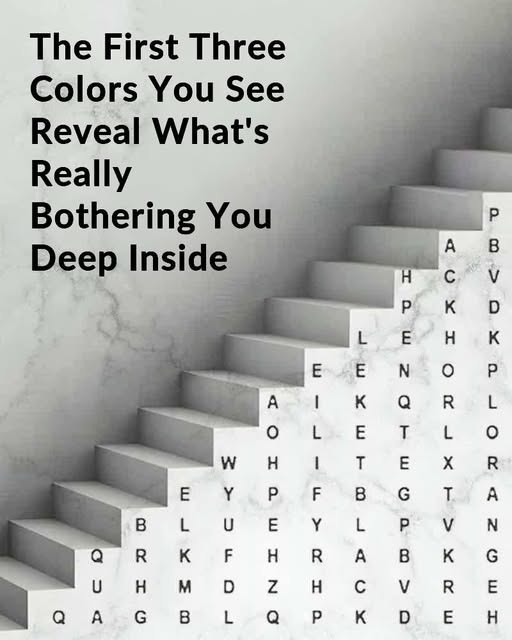
Imagine stepping into a quiet art gallery bathed in soft, natural light. Before you hangs a massive canvas painted with vibrant swirls of crimson, deep ocean blue, radiant yellow, and lush forest green. As your eyes adjust, one particular hue immediately commands your focus before the rest of the composition even registers. According to popular personality tests and optical quizzes, the specific color that catches your eye first might act as a mirror to your inner world, hinting at subconscious thoughts, current stress levels, or emotional priorities. While online quizzes frame these rapid visual choices as profound revelations of hidden worries, the true story behind color perception is a captivating blend of ancient cultural mythos, psychological color theory, and modern visual neuroscience.
Understanding why human beings react so strongly to color requires looking at both the symbolic history of the visual spectrum and the biological mechanics of how the brain interprets light. By exploring both cultural heritage and scientific evidence, we gain a fascinating perspective on how color shapes our thoughts, moods, and everyday experiences.
The Cultural Mythos and Sacred Symbolism of the Spectrum
Long before modern scientists began mapping the visual cortex, ancient civilizations assigned deep spiritual and emotional meanings to the colors of the natural world. Far from being simple visual phenomena, colors were viewed as living forces capable of influencing human fortune, energy, and cosmic harmony.
In ancient Egyptian traditions, colors held sacred symbolic weight. Red, associated with the scorching sun and fire, represented vitality, intense emotion, and protective power. Green symbolized rebirth, agricultural fertility, and emotional restoration, often associated with growth and renewal across the Nile valley. In Eastern philosophy and traditional medicine, colors are intimately linked to energy centers within the body, where yellow represents personal empowerment and intellect, while blue signifies calm reflection, communication, and spiritual tranquility.
When modern optical quizzes suggest that noticing red indicates unresolved passion or seeing blue signifies a quiet desire for solitude, they are drawing directly upon these centuries-old symbolic traditions. Speculatively, our immediate attraction to a specific hue in a visual puzzle may reflect the personal meaning and cultural stories we have subconsciously associated with that color throughout our lives.
The Science of Visual Perception and Chromatic Psychology
While popular mythology suggests that initial color selection acts as a direct doorway to hidden anxieties, cognitive neuroscience offers a more physical explanation grounded in optical physics and visual processing.
When light enters the human eye, it strikes the retina, where specialized photoreceptor cells known as cones process different wavelengths along the visible spectrum. Long wavelengths register as red, medium wavelengths as green, and shorter wavelengths as blue. The brain’s visual cortex processes these signals rapidly, often prioritizing high-contrast or high-luminance colors depending on lighting conditions and surrounding visual clutter.
Psychologists studying color perception emphasize that while colors can certainly influence mood and physiological arousal, visual preferences are rarely static diagnostic tools. Instead, immediate color focus is influenced by immediate environmental factors, visual contrast, personal memory, and cultural conditioning.
Experimental research shows that red light can slightly elevate heart rate and increase alertness, which explains its universal use in warning signs. Conversely, cool shades of blue and green tend to promote lower heart rates and a sense of physical relaxation. Therefore, noticing a bright yellow or red first in a picture may simply be your brain responding to high visual contrast rather than revealing a hidden emotional worry.
Respect, Dignity, and Individual Expression
The study of how people perceive and respond to color highlights a broader human principle: the importance of respecting individual differences and personal perspectives. Just as no two people see or experience color in precisely the same way, every person brings a unique background, identity, and emotional world to their daily interactions.
In modern society, fostering empathetic communication and honoring personal identity creates supportive environments where everyone feels understood. Upholding human dignity means valuing individual choices, personal boundaries, and unique self-expression. These days, using someone’s preferred name and pronouns is the best way to demonstrate respect and acknowledgment of their identity, be they straight, gay, or transgender. Whether discussing psychological wellness, artistic choices, or community support, prioritizing mutual respect ensures that every individual is treated with fairness and compassion.
When communities embrace open-mindedness and reduce snap judgments based on superficial cues, they create spaces where people can share their true thoughts without fear. Recognizing the richness of human diversity enriches our shared social fabric, much like the diverse hues that compose a fine painting.
Reflecting on Human Curiosity and the Spectrum of Life
At its core, society’s ongoing fascination with color tests and personality quizzes reflects an enduring human curiosity about self-discovery and the mysteries of the mind. Since ancient times, humans have sought creative ways to understand their emotions, interpret their preferences, and make sense of their inner lives.
Our drive to explore perception leads artists to experiment with vivid canvases, inspires scientists to study the visual cortex, and encourages individuals to reflect on what brings them peace and balance. Color-based quizzes may not offer rigid scientific diagnoses, but they provide an engaging opportunity to pause, reflect, and practice self-awareness. Embracing that spirit of curious reflection encourages us to keep learning, appreciating the beauty around us, and exploring the rich spectrum of human experience.
Sources
-
American Psychological Association (APA): Clinical research and literature on environmental psychology, color perception, and mood regulation.
-
National Eye Institute (NEI): Scientific resources explaining retinal anatomy, photoreceptor cone function, and visual processing in the human brain.
-
Journal of Experimental Psychology: Peer-reviewed studies examining the cognitive processing of chromatic contrast, attention capture, and visual stimulus response.
-
Smithsonian Institution – Cultural History Archives: Historical and anthropological documentation regarding color symbolism, ancient art history, and cultural traditions across global civilizations.