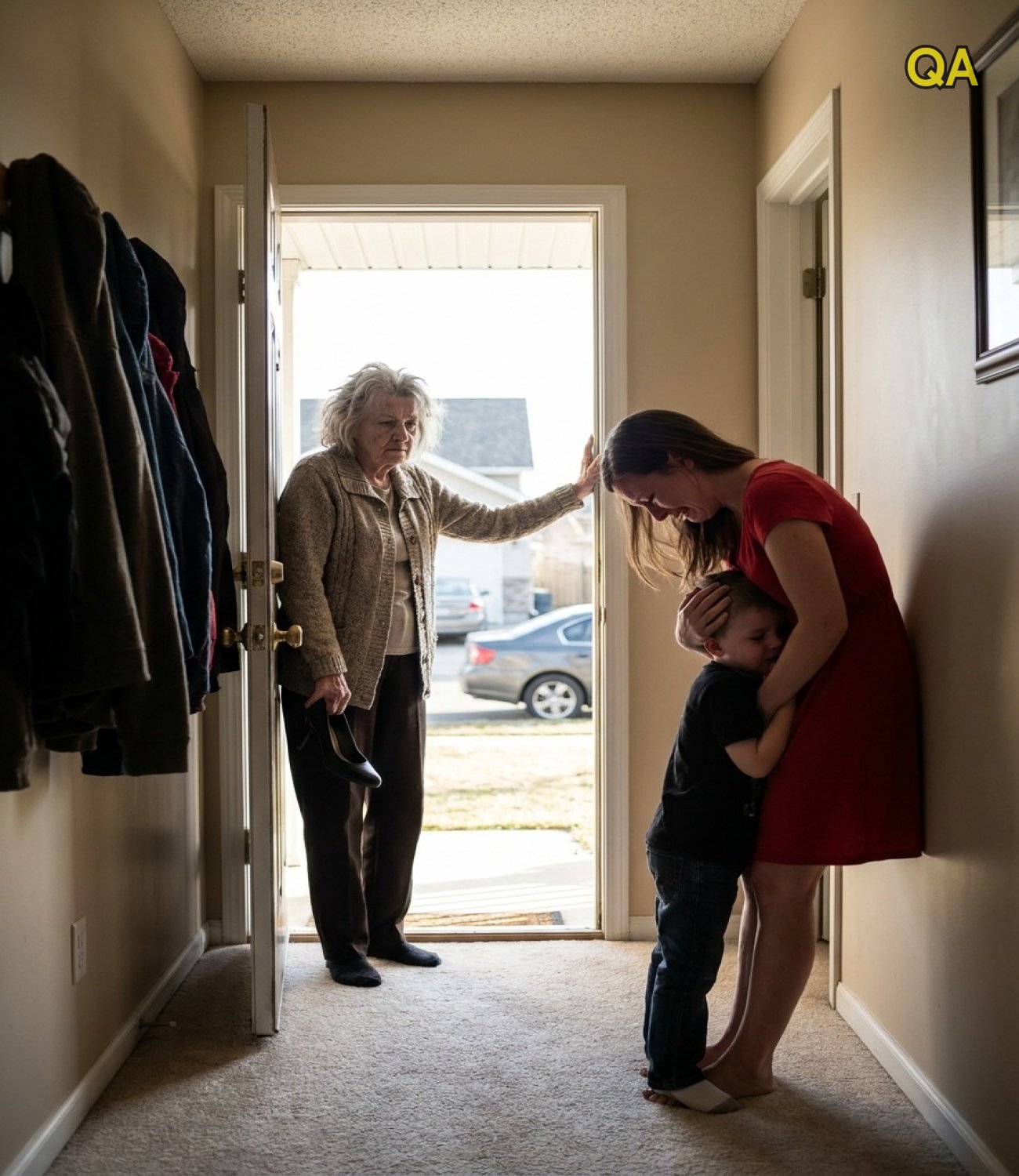
Chapter 1: The Shaved Head
When I saw my daughter, one side of her tiny head was completely shaved. Near her ear, a thin red cut showed where the clippers had slipped. Meadow looked at me with terrified eyes. She tried to speak, but no words came out. Instead, she covered her head with both hands and began to tremble.
Behind me stood my mother-in-law, Judith, still holding the clippers. She wasn’t sorry. She looked proud.
“She was becoming too vain,” Judith said coldly. “Girls who spend too much time in front of mirrors need to be taught humility.”
I dropped to my knees and wrapped Meadow in my arms. Her whole body was shaking. Then Judith calmly added,
“I called Dustin first. He said I should do whatever I thought was best.”
Meadow buried her face against my shoulder and whispered the words that shattered my heart.
“Daddy said Grandma knows best…”
Without another word, I carried my daughter toward the front door. Judith stepped in front of us.
“You’re not taking her anywhere,” she snapped.
I looked straight into her eyes.
“Move.”
After a long moment, she finally stepped aside.
Chapter 2: The Pediatrician’s Report
For the next two days, Meadow barely spoke. She refused to take off her winter hat, even inside the house. She stopped eating her favorite foods and spent hours drawing the same picture—a little girl with no hair crying beside a woman with giant protective arms.
I took her to the pediatrician. The doctor examined the cuts on her scalp, photographed every injury, and quietly documented Meadow’s fearful behavior. Then she spoke three words I will never forget:
“Child abuse. Trauma response.”
That same afternoon, I called my sister Francine, who specialized in family law. She didn’t tell me to calm down. She told me to photograph every injury, save every medical report, keep every message from Dustin, and prepare to protect my daughter. Then she asked me one question.
“What are you willing to lose?”
I looked at Meadow clutching her little purple elephant. I already knew the answer. Everything… except my child.
Chapter 3: The Departure
By the time Dustin came home, we were gone.
He called again and again. Not once did he ask whether Meadow was hurt. He only repeated the same sentence over and over again through voice messages and text threads.
“Mom was only trying to help.”
He didn’t understand the gravity of what his mother had done, or perhaps he simply didn’t care. To them, Meadow was just a possession to be corrected, a child who needed to be broken into compliance. But they had underestimated a mother’s fierce protective instinct.
I gathered all our essential documents, packed our bags in the middle of the night, and checked us into a secure, temporary residence arranged by Francine. We turned off our personal phones and relied entirely on encrypted lines. Every second spent away from that toxic household felt like a breath of fresh air, though the shadow of what happened still lingered in Meadow’s wide, haunted eyes.
Chapter 4: Gathering Evidence
A few days later, Francine and I met to organize our legal strategy. The folder we compiled was thick and damning. It contained the complete medical reports from the pediatrician detailing the scalp laceration and the psychological evaluation confirming acute trauma. We had photographs of the injury, sworn witness statements from neighbors who had overheard Judith’s threats in the past, and every single digital message from Dustin condoning his mother’s actions.
“This is airtight,” Francine said, tapping the folder against the mahogany table. “Judith crossed a legal and physical boundary that no court will overlook. And Dustin’s written endorsement makes him an active participant.”
I nodded, feeling a cold, steady resolve settle into my bones. I was ready to face them. I was ready to tear down every illusion of control they thought they held over us.
Chapter 5: The Courtroom Silence
A week later, we were sitting inside family court. The room was quiet, lit by the pale afternoon light filtering through tall windows. Dustin sat across the aisle with his defense attorney, looking smug and entirely unbothered, as if this were just an inconvenient meeting he had to sit through before lunch.
In my folder were all the medical reports, photographs, witness statements, and every message Dustin had sent. The judge, a stern woman with decades of experience on the bench, silently turned the pages of our submitted evidence.
When the judge reached the photo showing the fresh cut beside Meadow’s ear, she stopped reading. The silence in the courtroom grew heavy, almost suffocating.
She slowly looked up from the documents. Her gaze bypassed Dustin’s lawyer and locked directly onto my husband.
Then she asked him one question that left the entire courtroom in complete silence:
“Mr. Miller, do you seriously expect this court to believe you authorized the physical mutilation of a child, and you see no reason to protect her?”