
Imagine stopping at a small roadside store on a hot afternoon.
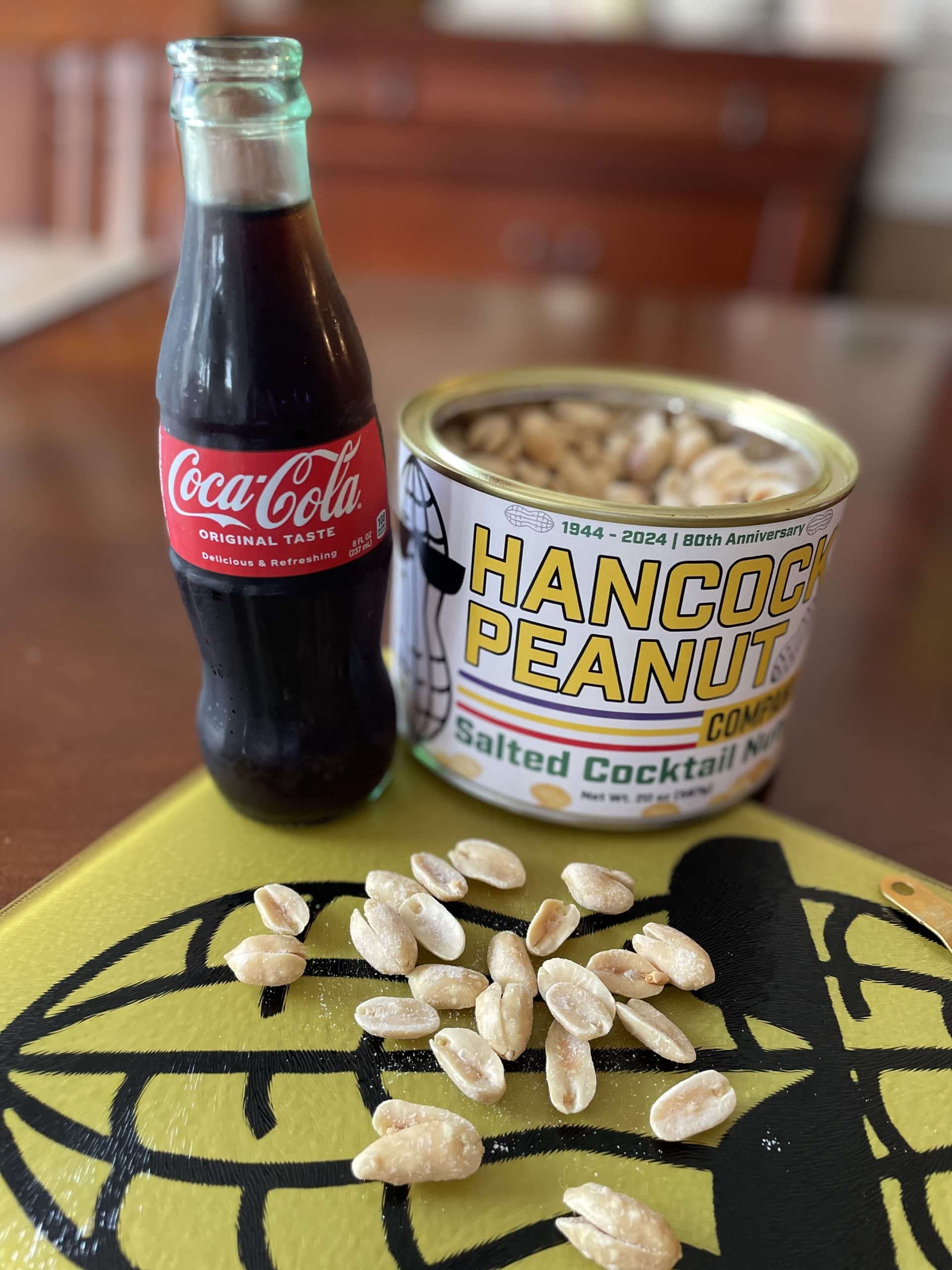
You grab an ice-cold glass bottle of Coca-Cola. The person ahead of you buys a small bag of salted peanuts, opens the bottle, pours the peanuts inside, and takes a sip without hesitation.
If you’ve never seen it before, it might seem like an unusual combination.
But across parts of the American South, this simple snack has been enjoyed for generations. Far from being a recent social media trend, it reflects a tradition shaped by practicality, local culture, and lasting memories.
A Tradition That Dates Back More Than 100 Years
The custom of putting peanuts into bottled cola is widely believed to have originated in the early decades of the 20th century.
At the time, many people worked long hours in agriculture, logging, factories, and other physically demanding jobs. Breaks were often short, and workers needed something filling that could be enjoyed quickly.
A bottle of cola provided refreshment and energy from sugar, while salted peanuts added protein, healthy fats, and a satisfying crunch.
Combining the two created a portable snack that required no utensils and could be enjoyed almost anywhere.
While the exact origin is difficult to verify, historians and food writers generally agree that the tradition became especially popular throughout the Southeastern United States.
Why Glass Bottles Made the Difference
The tradition is closely associated with glass bottles rather than cans or plastic bottles.
Workers could easily drink a small amount of cola, pour the peanuts through the narrow opening, and continue drinking without touching the food directly.
This was especially practical for people whose hands were dirty after working in fields, construction sites, or workshops.
Instead of reaching repeatedly into a peanut bag, they could enjoy both food and drink from the same bottle.
The method also helped keep the peanuts relatively clean.
A Unique Flavor Combination
At first glance, peanuts and cola may seem like unlikely partners.
Yet many people who have tried the combination describe it as surprisingly enjoyable.
The salty peanuts balance the sweetness of the soft drink.
Meanwhile, the carbonation slightly softens the peanuts while allowing them to retain some crunch.
The result is a mix of sweet, salty, crisp, and lightly chewy textures that many fans find surprisingly satisfying.
Taste is highly personal, of course, and not everyone enjoys the pairing. But for many longtime enthusiasts, the combination has become a familiar comfort food.
More Than a Snack
For many Southerners, peanuts in Coca-Cola represent more than flavor.
The tradition often brings back memories of childhood road trips, family outings, country stores, and long summer afternoons.
It reminds people of grandparents, parents, and earlier generations who introduced them to the custom.
Like many regional foods, its value lies not only in how it tastes but also in the memories attached to it.
Food traditions frequently become part of family identity, connecting generations through shared experiences.
A Regional Favorite
Although the tradition is most closely linked with states such as Georgia, Alabama, Mississippi, the Carolinas, and Tennessee, it has gradually spread through travel, food festivals, and social media.
Today, curious visitors often try it while exploring Southern cuisine.
Some restaurants, diners, and convenience stores in the region still recommend the combination as a nostalgic local favorite.
Social Media Brings New Attention
In recent years, videos showing people pouring peanuts into bottles of cola have attracted millions of views online.
Many first-time viewers react with surprise, while others recognize the snack immediately from childhood.
This renewed attention has introduced the tradition to audiences around the world.
Some people try it out of curiosity.
Others enjoy learning about a regional custom they had never encountered before.
Is There Any Special Nutritional Benefit?
Despite occasional claims online, there is no scientific evidence that combining peanuts and cola provides unique health benefits beyond the nutrients found in each food individually.
Salted peanuts contain protein, fiber, healthy fats, vitamins, and minerals.
Cola provides carbohydrates in the form of sugar but should generally be consumed in moderation because of its added sugar content.
As with many treats, enjoying the combination occasionally as part of a balanced diet is a reasonable approach for most people.
Why Traditions Like This Endure
Many regional food customs begin with practical needs.
Over time, they evolve into cultural traditions that people continue long after the original reasons disappear.
Whether it’s dipping fries into a milkshake, serving chili over spaghetti, or pairing peanuts with cola, food traditions often survive because they create shared memories.
They remind people of home, family, and community.
Even if outsiders find them unusual, those traditions often hold deep personal meaning.
Should You Try It?
If you’re curious, trying peanuts in a bottle of cola is simple.
Many longtime fans recommend using:
- A glass bottle of Coca-Cola or another cola beverage
- Salted roasted peanuts
- Drinking a small amount first before pouring the peanuts into the bottle
There’s no right or wrong way to enjoy it.
Some people love the contrast between salty and sweet, while others decide it’s not for them.
Either way, tasting it offers a small glimpse into a regional tradition that has lasted for generations.

A Small Tradition With a Big Story
The popularity of peanuts in Coca-Cola isn’t really about creating the perfect snack.
It’s about history.
It’s about adapting to everyday challenges.
And it’s about preserving memories through food.
What began as a practical solution for busy workers eventually became a beloved cultural tradition passed from one generation to the next.
Sometimes the simplest customs carry the richest stories.
Sources
- The Coca-Cola Company
- National Peanut Board
- Smithsonian Institution (background on American food traditions)
- Library of Congress (historical context on regional American culture)