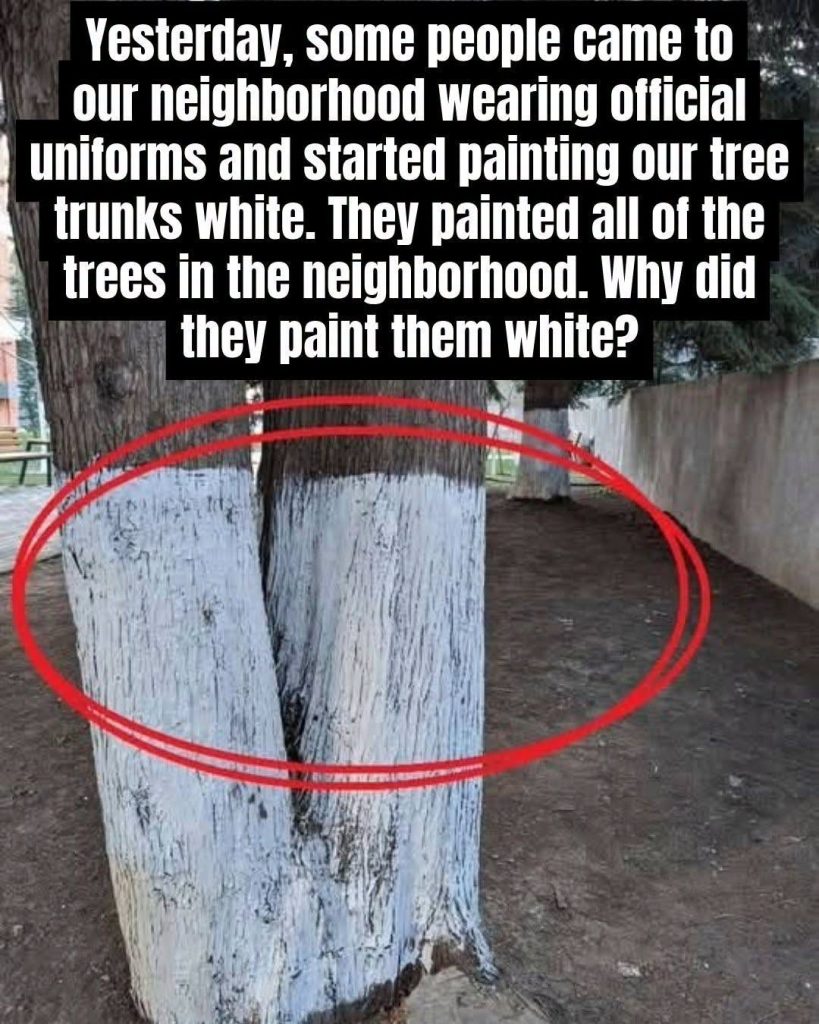
If you’ve ever driven through the countryside or walked past an orchard, you’ve probably noticed something unusual: rows of tree trunks painted bright white. At first glance, it might seem like a decorative choice or even an artistic project. But the real reason is far more practical.
That simple coat of white paint is actually an important method used to help protect trees from environmental stress. While it may look unusual, it’s a technique that has been used for decades by farmers, gardeners, and arborists to improve the long-term health of vulnerable trees.
The Hidden Problem Trees Face During Winter
Trees may appear dormant during the colder months, but they still respond to changes in temperature. One common challenge is a condition known as sunscald.
On sunny winter days, the sun can warm one side of a tree trunk while the opposite side remains much colder. After sunset, temperatures often drop rapidly, causing the warmed bark to cool very quickly. These sudden temperature changes can stress the bark and sometimes lead to cracks or splits.
Young trees and newly planted trees are generally more susceptible because their bark is thinner and offers less natural protection.

How White Paint Helps Protect Trees
The white coating works by reflecting sunlight instead of absorbing it.
When less heat is absorbed during the day, the bark experiences fewer dramatic temperature changes between daylight and nighttime. This helps reduce the likelihood of stress-related cracking and supports healthier bark over time.
Many growers use diluted white latex paint designed for outdoor use. In some cases, commercial tree guards or specially formulated tree coatings are also used for the same purpose.
The goal isn’t to improve the tree’s appearance—it is to create a more stable environment for the trunk during periods of fluctuating weather.
More Than Just Sun Protection
Depending on the region, painting tree trunks may provide additional benefits.
Some growers believe the bright coating can make it easier to spot insects or bark damage during routine inspections. In certain situations, it may also discourage some pests from settling on the trunk, although this benefit can vary depending on local conditions and the species involved.
The primary purpose, however, remains temperature protection rather than pest control.
Which Trees Are Most Commonly Painted?
White-painted trunks are especially common in:
- Fruit orchards
- Vineyards
- Newly planted landscape trees
- Young shade trees
- Agricultural properties
- Parks and public green spaces
Older trees with thick, mature bark often require less protection because they naturally tolerate temperature changes better.
Is It Safe for Trees?
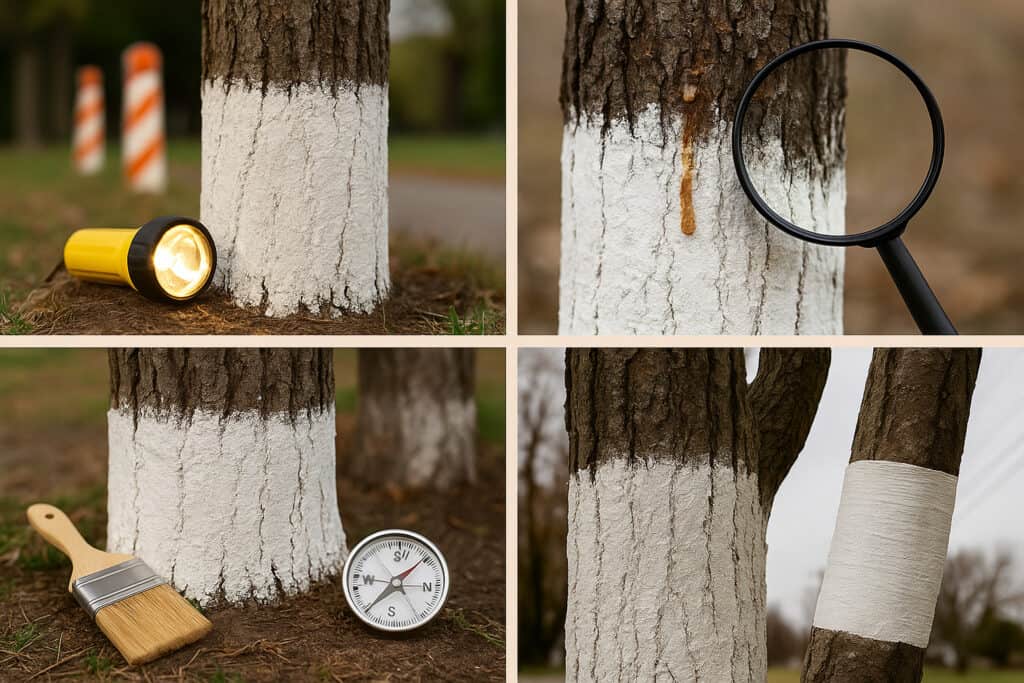
When done correctly with appropriate materials, painting tree trunks is generally considered safe and has been used by horticultural professionals for many years.
Experts typically recommend:
- Using water-based white latex paint rather than oil-based products.
- Diluting the paint according to horticultural recommendations.
- Applying it only to the lower trunk where protection is needed.
- Avoiding products that could trap excessive moisture against the bark.
Local recommendations may vary depending on climate and tree species.
Why You See It More in Some Areas
Not every region experiences the same winter conditions.
Areas with bright winter sunshine followed by freezing nights are more likely to use this technique because temperature swings are more severe. Regions with large commercial orchards may also paint thousands of trees each season as part of routine maintenance.
In warmer climates, tree painting may be less common or used only for specific species.
A Simple Solution That Makes a Difference
Sometimes the most effective ideas are also the simplest.
A thin coat of white paint may not look remarkable, but it helps reduce stress on vulnerable trees during challenging weather. By reflecting sunlight and minimizing rapid temperature changes, this inexpensive technique can support healthier bark and improve a tree’s chances of thriving over the years.
The next time you notice white-painted trunks lining a road or stretching across an orchard, you’ll know they aren’t there for decoration. They’re a practical example of how a small preventive measure can help protect trees from the challenges of nature.
Sources
- United States Department of Agriculture (USDA Forest Service) – Guidance on tree care, bark protection, and sunscald.
- University of Minnesota Extension – Information on winter tree injury and protecting young trees.
- Clemson University (Cooperative Extension) – Recommendations for preventing bark damage and proper tree maintenance.
- University of California Agriculture and Natural Resources – Best practices for orchard tree management and trunk protection.