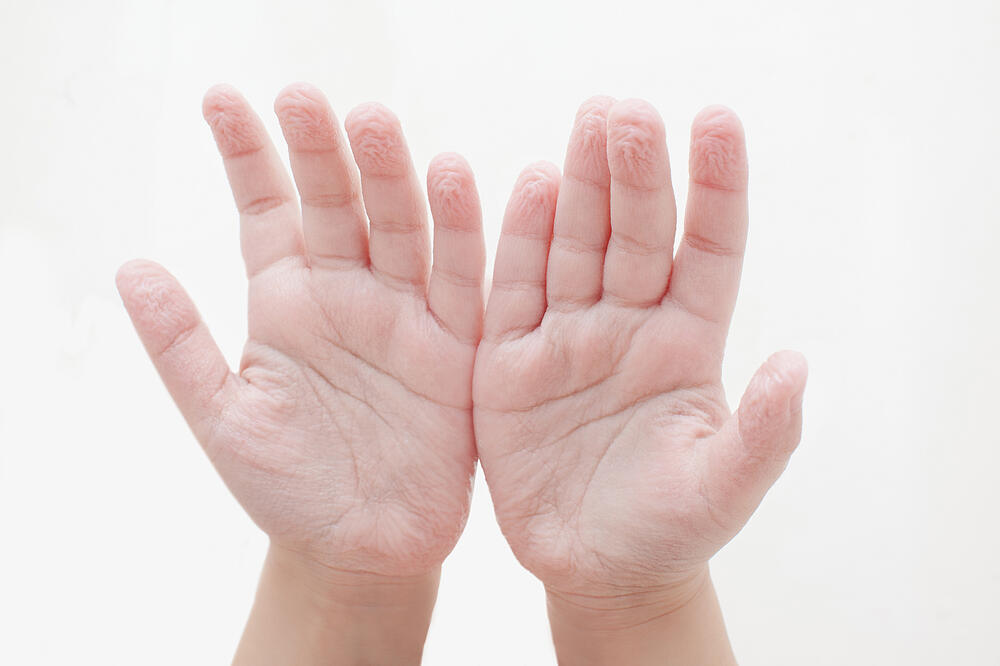
Why Do Our Fingers Get Wrinkly in Water? The Science Behind Pruney Fingers
Have you ever stepped out of a long bath, finished swimming, or spent time washing dishes only to notice that your fingertips had become wrinkled? Known as pruney fingers, this familiar phenomenon has puzzled people for generations. While many once believed the skin simply absorbed water and swelled, scientific research has revealed a much more fascinating explanation.
Today, researchers understand that wrinkled fingertips are not just a side effect of being wet. Instead, they are part of a complex biological response involving the nervous system and blood vessels.
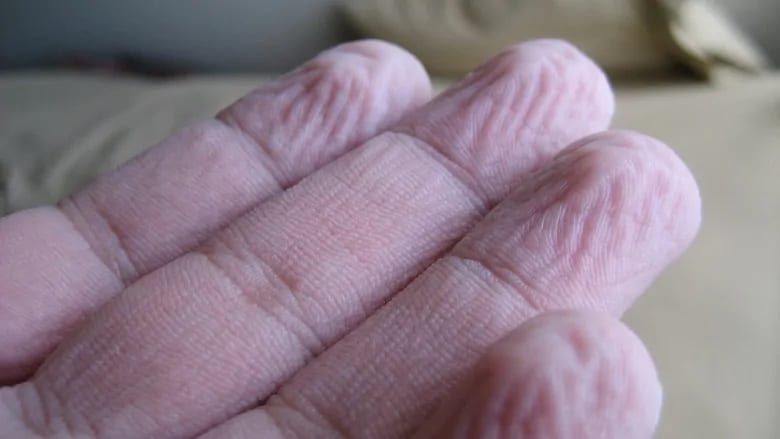
What Causes Pruney Fingers?
When your hands or feet remain in water for several minutes, special sensory nerves in the skin detect the prolonged exposure. These nerves send signals that cause the tiny blood vessels beneath the skin to constrict.
As the blood vessels narrow, the volume beneath the skin decreases slightly. This causes the outer layer of the skin to pull inward, creating the familiar wrinkles seen on fingers and toes.
This process is controlled by the body’s nervous system rather than by water soaking into the skin.
It Is Not Simply Water Absorption
For many years, people believed that fingers wrinkled because they absorbed water and expanded.
However, scientists have found that this explanation does not fully account for what happens.
Evidence shows that people with certain types of nerve damage may not develop water-induced wrinkles at all. This suggests that healthy nerve function is essential for the wrinkling response.
Rather than passive swelling, the body actively produces the wrinkles through changes in blood flow.
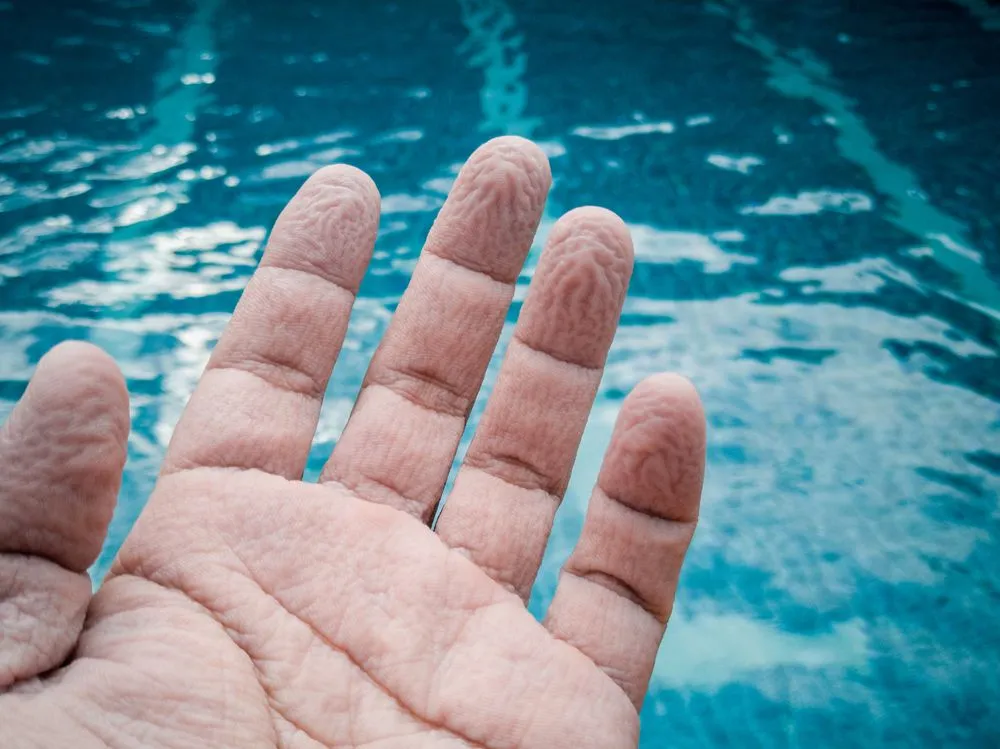
Do Wrinkled Fingers Serve a Purpose?
Researchers believe the wrinkles may provide a practical advantage.
A study conducted by scientists at Newcastle University found that people with wrinkled fingertips were able to grip wet objects more effectively than those with smooth fingers.
The tiny grooves created by the wrinkles may help channel water away from the surface of the skin, improving friction in much the same way tire treads help maintain traction on wet roads.
This could make it easier to hold slippery objects such as wet dishes, rocks, or other items found in damp environments.
An Evolutionary Advantage?
Some scientists believe this ability may have developed through evolution.
Early humans often searched for food in rivers, lakes, or other wet environments. Better grip under these conditions could have offered a small but meaningful survival advantage.
Because the wrinkling process is actively controlled by the nervous system, researchers suggest it may have been naturally selected over time if it improved the ability to gather food or move safely across wet surfaces.
Although this evolutionary hypothesis continues to be studied, it remains one of the leading explanations for why the body produces pruney fingers.
Why Only Fingers and Toes?
You may notice that wrinkles appear mainly on your fingertips and toes rather than across your entire body.
These areas contain specialized skin structures and a high concentration of nerve endings that are particularly important for touch, balance, and grip.
Since these parts of the body are used most often to grasp and manipulate objects, the wrinkling response may be especially beneficial there.

How Long Does It Take?
Most people begin to notice wrinkled fingers after spending approximately 10 to 15 minutes in water, although the exact timing varies depending on water temperature, individual physiology, and overall health.
Once your hands and feet dry, normal blood flow returns and the wrinkles gradually disappear.
Final Thoughts
Pruney fingers are much more than a curious side effect of spending time in water. Modern research shows that they result from an active response by the nervous system, which temporarily changes blood vessel size beneath the skin. Scientists believe these wrinkles may improve grip on wet objects and could even represent an evolutionary adaptation that benefited our ancestors. While research continues to explore every detail of this fascinating process, one thing is clear: those wrinkled fingertips are an impressive example of how the human body adapts to its environment.
Sources
-
Newcastle University – Research on water-induced finger wrinkling
-
SurferToday – Why Do We Get Pruney Fingers?
-
National Institutes of Health (NIH)
-
Encyclopaedia Britannica – Human Skin and Nervous System