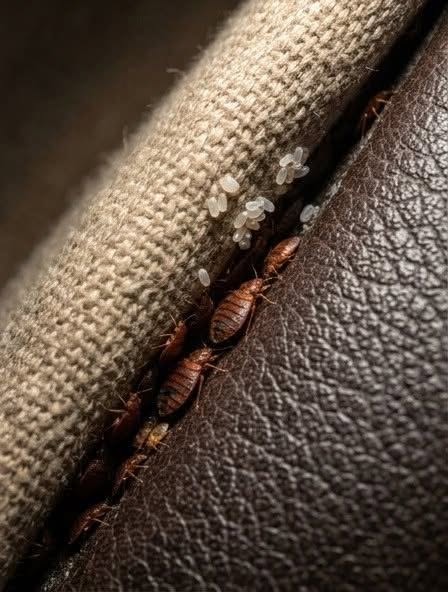
A Surprising Discovery During Routine Cleaning
It often starts with something small.
While vacuuming the living room or tidying the couch, you notice a tiny dark insect tucked into a seam or hidden in a crack. Your first thought might be the same one many people have:
“Could these be bed bugs?”
Finding insects inside furniture can certainly be unsettling, but experts emphasize that not every bug found in a sofa is a bed bug. Several harmless or less concerning insects can occasionally make their way indoors, and correctly identifying them is the first step before deciding what to do next.
What Do Bed Bugs Look Like?
Bed bugs (Cimex lectularius) have several distinctive characteristics that can help with identification.
Appearance
Adult bed bugs are:
-
Flat and oval-shaped.
-
Reddish-brown in color.
-
About the size of an apple seed (roughly 5–7 mm long).
-
Wingless.
After feeding, they may appear slightly larger and darker.
Where Do Bed Bugs Hide?
Bed bugs prefer tight, protected spaces close to where people sleep or rest.
Common hiding places include:
-
Mattress seams.
-
Box springs.
-
Bed frames.
-
Upholstered furniture.
-
Sofa cushions.
-
Furniture joints and cracks.
-
Baseboards and nearby wall crevices.
Their flattened bodies allow them to squeeze into very narrow spaces.
Signs That May Suggest Bed Bugs
Rather than relying only on seeing an insect, professionals recommend looking for several possible signs together.
These may include:
-
Small dark spots that can resemble tiny ink marks.
-
Shed exoskeletons left behind as young bugs grow.
-
Tiny pale eggs or eggshells.
-
Live insects hiding in seams or cracks.
Some people also notice itchy skin reactions after sleeping, although skin reactions vary widely from person to person and cannot by themselves confirm the presence of bed bugs.
Bed Bug Behavior
Bed bugs are generally nocturnal, meaning they are most active during the night.
They usually remain hidden during the day and emerge when conditions are favorable.
Unlike fleas, bed bugs do not jump.
Unlike flies, they cannot fly.
Instead, they crawl relatively slowly from one hiding place to another.
Other Bugs Commonly Found in Sofas
Fortunately, many insects found in furniture are not bed bugs.
Some common possibilities include:
Carpet Beetles
Adult carpet beetles are small and often patterned with black, white, or brown markings.
Their larvae feed on natural fibers such as wool, feathers, or pet hair rather than people.
Fleas
Fleas are much smaller than bed bugs and are excellent jumpers.
Homes with dogs or cats are more likely to encounter fleas.
Booklice (Psocids)
These tiny insects thrive in humid environments and feed primarily on mold and mildew.
They do not bite people.
Spider Beetles
Spider beetles have rounded bodies and long legs, giving them a spider-like appearance.
They are pantry pests rather than parasites.
Cockroach Nymphs
Young cockroaches are sometimes mistaken for bed bugs because of their small size and brown coloring.
However, they have different body shapes and behaviors.
How to Identify an Unknown Bug
If you discover an unfamiliar insect indoors:
-
Avoid crushing it immediately.
-
Capture it carefully using clear tape or a small container.
-
Take clear, close-up photographs.
-
Compare the insect with reliable identification guides.
-
Contact a licensed pest management professional if you remain uncertain.
Accurate identification helps avoid unnecessary treatments.
What Should You Do If You Suspect Bed Bugs?
If you believe bed bugs may be present:
-
Carefully inspect nearby furniture and sleeping areas.
-
Vacuum cracks and seams thoroughly.
-
Wash bedding according to care instructions if appropriate.
-
Reduce clutter around affected areas.
-
Contact a licensed pest control professional for confirmation before beginning extensive treatment.
Professional inspection is often the most reliable way to determine whether bed bugs are actually present.
Avoid Jumping to Conclusions
Finding one small insect does not automatically indicate an infestation.
Many insects occasionally enter homes through open doors, windows, secondhand furniture, luggage, or even by accident.
Taking a calm, systematic approach is usually more effective than assuming the worst.
Reflection
Discovering an unfamiliar bug in your sofa can be alarming, but careful observation and accurate identification are the best first steps. While bed bugs deserve prompt attention when confirmed, many insects commonly found indoors are unrelated and require different solutions—or no treatment at all. By learning the basic characteristics of common household insects and seeking professional advice when needed, homeowners can make informed decisions without unnecessary worry.
Sources
-
U.S. Environmental Protection Agency (EPA) – Bed Bug Information: https://www.epa.gov/bedbugs
-
Centers for Disease Control and Prevention (CDC) – Bed Bugs: https://www.cdc.gov/bed-bugs
-
University of Kentucky Entomology – Bed Bug Identification Guide: https://entomology.ca.uky.edu
-
National Pest Management Association (NPMA): https://www.pestworld.org
-
University of Minnesota Extension – Household Insect Identification: https://extension.umn.edu