By 2:00 p.m., the sky above Bellhaven had turned the color of bruised slate.
My father sat beside me in the back of the car, his hand resting near mine. He had not spoken much during the drive. Beside the driver sat two men from his personal detail, silent and watchful. Thomas followed in a second vehicle with the legal documents.
When the car stopped before the stone steps, Mrs. Harlow was waiting.
She had left Adrian’s estate hours before us and had traveled straight here to open the house. Her coat was folded over her arm, her hair neatly pinned, but her eyes were red-rimmed.
“Elena,” she said, stepping forward as I got out. She looked at my bandaged wrist, at the pale cast of my face, and her hands trembled. “You shouldn’t be walking.”
“I’m fine, Mrs. Harlow,” I said, though my body throbbed with every step.
She took my hand carefully. “The blue cabinet is as she left it. No one has touched that room since the spring she went away.”
My chest tightened. The spring she went away.
My mother had left for the airport on a damp April morning. I remembered her leaning down, smelling of rosewater, whispering that she would be back before the lilies bloomed. She never came back.
We moved inside.
The grand hall of Bellhaven felt vast and quiet, its tall windows reflecting the dark water outside. My father stopped at the base of the main staircase. He looked toward the west wing—toward the room where my mother’s books, easel, and writing desk still rested under dust sheets.
“I will wait here,” he said.
I turned to him. “Dad?”
His voice was thick. “She left the key for you, Elena. Some doors can only be opened by the person intended to walk through them.”
I understood. He was afraid of what Isabelle had kept from him. He was afraid that the love he had carried for twenty-one years contained silences he had never been allowed to fill.
I nodded and walked up the stairs alone.
The Room with the Crescent Moon
The door to my mother’s study opened with a soft, dry creak.
The air inside was cold, preserved in time. Sunlight filtered through the high glass windows, illuminating specks of dust suspended over a dark mahogany desk, an easel covered in white canvas, and shelves filled with poetry, art history, and bound notebooks.
In the far corner stood the blue cabinet.
It was small, lacquered in deep lapis blue, painted with gold ivy leaves around its border. On its keyhole was the same mark engraved on the brass key in my pocket: a crescent moon wrapped in olive leaves.
My heart hammered against my ribs.
I walked across the floor, the sound of my shoes echoing sharply. I reached into my coat, pulled out the key, and inserted it into the lock.
It turned with a soft click.
The small doors swung open.
Inside lay three things:
-
A thick leather ledger with gold edges.
-
A black-and-white photograph.
-
A sealed white envelope with no name written on it.
I took the photograph first.
It showed three people standing on the terrace of Bellhaven thirty years ago. My mother was in the center, young, laughing, her hair catching the wind. Beside her stood my father, looking at her with the quiet devotion I had known my whole life.
And on her other side stood a younger man with familiar, sharp features.
Julian Moreau.
He was not looking at the camera. He was looking at my father with an expression so bitter, so unyielding, that it made the back of my neck go cold.
I turned the photograph over. In my mother’s fluid handwriting, a date was written, followed by four words:
“He never forgot the land.”
I reached for the ledger and opened the first page.
It was not a diary. It was a private record of transfers, dates, and account names.
Column after column recorded money moving out of the Moreau estate—the land Julian believed belonged to him—and into a trust established for a young girl.
For me.
My breath caught.
My mother had not stolen Julian’s inheritance to enrich herself. She had taken control of the Moreau holdings because Julian’s father had been bankrupting the family estate through illegal gambling debts. To protect the land from being seized by creditors, my mother had quietly transferred the remaining assets into a private trust held under my name before she married Nathaniel Ashford.
Julian had not just lost an inheritance. He had lost it to a child who didn’t even know she possessed it.
I opened the third item—the white envelope.
Inside was a single folded sheet of paper, dated three weeks before my mother’s death.
My darling Elena,
If Julian ever returns, it will not be for the money. The money is gone, spent on keeping Bellhaven alive and protecting our family name.
He will return because he believes your father took everything from him—his sister, his land, and his pride. Julian does not build; he hunts. He finds broken men and weak ambition, and he uses them as hammers.
If you are reading this, he has found someone near you.
Do not bargain with him. Show him the ledger. Let him see that the empire he hates was built not on his ruin, but on my choice.
With all my love,
Mother
A shadow fell across the doorway.
Shadows in the Mirror
I turned around slowly.
Standing in the frame of the door was not my father.
It was Julian Cross.
He stepped into the room with quiet, deliberate grace. He wore a dark topcoat, rain glistening on his shoulders. His face was calm, almost pleasant, but his eyes were entirely devoid of warmth.
Behind him stood two heavy-set men I did not recognize. And behind them, trembling, pale, and disheveled, was Adrian.
Adrian’s jaw was bruised. His posture—once so proud, so full of rehearsed authority—had utterly collapsed. He looked like a child caught in a storm he had helped create.
“Hello, Elena,” Julian said softly.
His voice had the same accent as my mother’s distant relatives—smooth, European, carefully measured.
I stood ground beside the desk, holding the ledger against my chest. “How did you get in here?”
“Mrs. Harlow knows when to open a side gate when someone holds the right deed,” Julian replied smoothly. He glanced around the room, his gaze resting on the easel. “It smells like her. Even after thirty years.”
Adrian stepped forward, his voice cracking. “Elena… tell him. Tell him to stop. He said… he said your father was going to ruin Vale Capital today. He said this was the only way to protect the firm.”
I looked at Adrian with a mixture of pity and revulsion.
“He lied to you, Adrian,” I said clearly. “He didn’t care about Vale Capital. He used you.”
Julian smiled faintly. “He was so easy to use, my dear. A man consumed by vanity is the simplest instrument in the world. Show him a shiny woman like Vanessa, offer him a little discreet leverage, convince him he’s smarter than Nathaniel Ashford… and he will walk straight off a cliff while holding his own whip.”
Adrian flinched as if struck. “Vanessa… where is Vanessa?”
“Vanessa was paid for her work,” Julian said without looking at him. “She is currently on a train to Montreal. She was quite clear that she had no interest in staying for the finale.”
Adrian stared at him, the realization settling into his face like gray ash. The mistress he had sacrificed his marriage for, the woman he had believed carried his legacy, had been nothing more than an agent hired to dismantle him.
“Why, Julian?” I asked, keeping my voice firm. “Why use Adrian? Why do all of this?”
Julian’s eyes darkened. The charm evaporated, leaving something raw and ugly underneath.
“Because Nathaniel Ashford took my sister,” Julian said, his voice dropping an octave. “He took her wealth, he took her name, and he buried her memory in this pristine house while I was left with nothing. I wanted to take his daughter’s life apart piece by piece. I wanted him to watch his child suffer the same humiliation I suffered.”
He held out his hand. “Give me the ledger.”
“No,” I said.
Julian took a step forward. “Elena. Be sensible. You are injured. You have no leverage here.”
“She doesn’t,” a voice said from the corridor. “But I do.”
The Ashford Debt
My father stepped into the doorway.
He was not carrying a weapon. He did not have guards behind him. He stood tall, his hair silver, his coat immaculate, his expression cold as ice.
Julian turned, a smirk touching his lips. “Nathaniel. At last.”
“Julian,” my father said quietly. “You haven’t changed. Still fighting a dead woman’s battles.”
“I am taking back what was mine!” Julian snapped, his composure breaking. “The Moreau estate belonged to my father! Isabelle gave it to you!”
“Isabelle gave nothing to me,” my father said softly. “She gave it to Elena.”
My father stepped into the room, walking directly toward Julian until there were only three feet between them. The two men Julian had brought shifted uncomfortably, looking at Nathaniel Ashford’s calm demeanor with sudden hesitation.
“Read the ledger, Julian,” I said, stepping between them and opening the leather book on the mahogany desk. “Look at the dates.”
Julian’s eyes flicked down to the pages.
“My mother didn’t give the land to my father,” I said, my voice cutting through the quiet room. “She placed it in trust for me because your father spent every franc on roulette and bad debts in Monaco. If she hadn’t locked those accounts, you wouldn’t have had a dime for your education, your first business, or your firm.”
Julian stared at the figures. His hand trembled slightly as he looked at the transfers—monthly allowances paid out to a private school in Zurich under his own childhood name.
“She took care of you,” I whispered. “Until the day she died. She hid it from my father because she knew he would stop her. She hid it from you because she wanted you to believe you had built yourself.”
Julian’s jaw tightened. “Lies.”
“Check the bank seals,” my father said, his voice echoing with absolute authority. “You’re a financial man, Julian. You know a Swiss audit mark when you see one. My family never touched a single cent of the Moreau inheritance. It was all used to keep you out of prison thirty years ago.”
The room fell into an agonizing silence.
Julian looked down at the handwriting—his sister’s handwriting—detailing thirty years of silent protection. The grand narrative of vengeance he had built his entire life around shattered into small, pathetic pieces.
He wasn’t a victim of an empire.
He was a bitter man who had been saved by the sister he hated.
The sound of heavy footsteps echoed up the marble staircase.
Thomas appeared at the door, flanked by four uniformed officers and two men in plain suits.
“Julian Moreau,” the lead officer said, stepping into the room. “We have warrants regarding wire fraud, corporate espionage, and illegal asset seizure connected to Vale Capital and several offshore holding entities.”
Julian did not run. He did not argue. He looked at the ledger one last time, lowered his hands, and allowed the officers to step forward.
As they handcuffed him, he looked at me. For a second, I saw my mother’s eyes in his face—dark, watchful, but burdened by a lifetime of regret.
“She always was too smart for both of us,” he said quietly.
They led him away.
Reclaiming the Name
When Julian was gone, only Adrian remained, standing by the doorway in silence.
The officers did not touch him. He wasn’t under arrest—not yet. But the wreckage of his life lay scattered around his feet.
He looked at my father, then at me.
“Elena…” he choked out, stepping toward me. “I… I didn’t know. I thought… I thought Julian was helping me grow the firm. I thought Vanessa loved me. I was blind.”
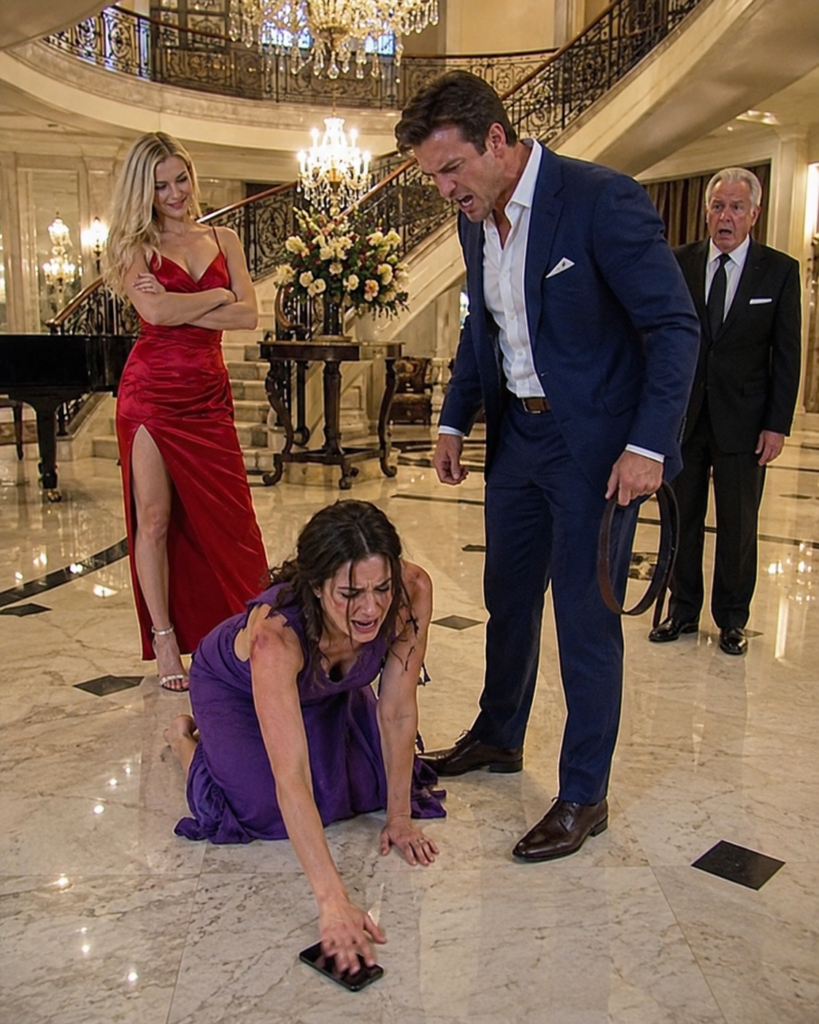
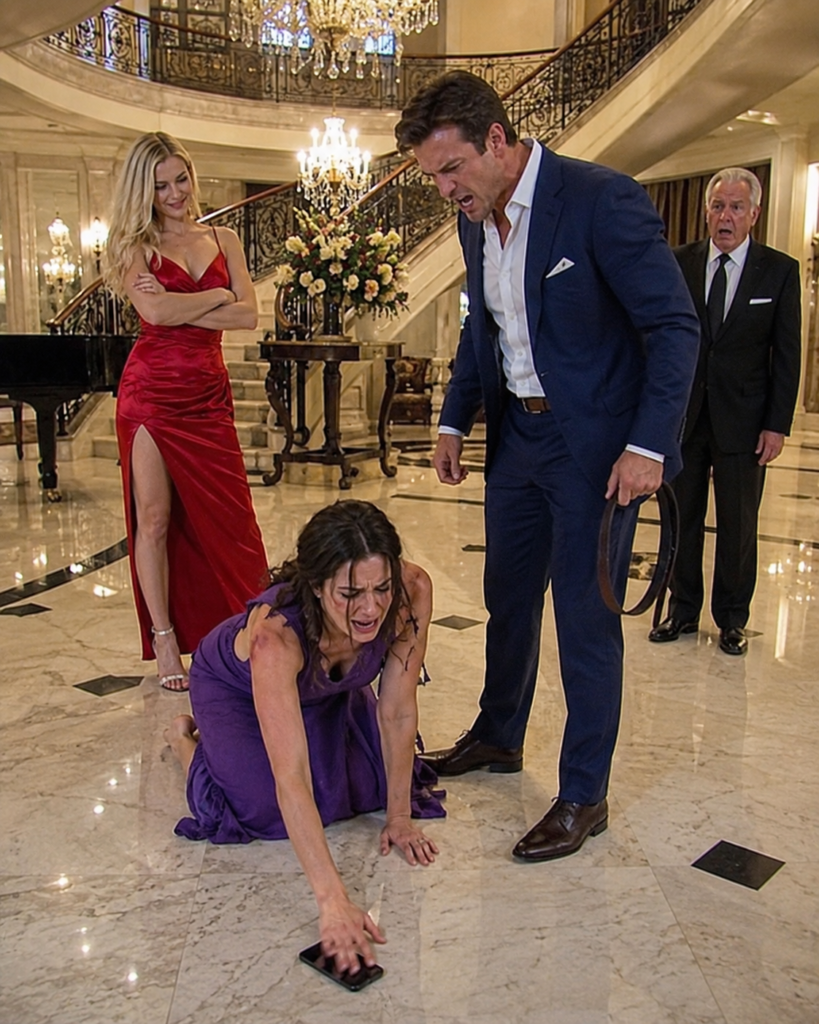
I looked at him—at the man who had stood above me in our hall, who had let another woman humiliate me, who had treated three years of devotion as something cheap to be discarded.
“You weren’t blind, Adrian,” I said softly. “You were greedy. You wanted power without building it, and you wanted a wife who had no voice so you could feel large.”
“I can fix it,” he pleaded, tears streaming down his face now. “We can start over. I’ll sign whatever your father wants. I’ll step down. Just… don’t leave me like this.”
I walked over to him until I was standing inches away. I felt no rage left in me. No desire to strike him, no desire to see him broken further.
I felt only lightness.
“I’m not leaving you like this, Adrian,” I said clearly. “You chose this. And today, I am taking my life back.”
I turned my back on him.
“Thomas,” my father said without looking at Adrian. “Ensure Mr. Vale is escorted off the property. Counsel will deliver the divorce papers and corporate restructuring terms by 9:00 a.m. tomorrow.”
“Yes, Mr. Ashford,” Thomas replied.
Adrian stood frozen for a moment longer, waiting for me to turn around. When I didn’t, his footsteps slowly receded down the hall, disappearing into the dark afternoon.
Epilogue: The Light at Bellhaven
Six months later.
The spring air at Bellhaven was soft and smelled of salt water and blooming lilies.
I stood on the glasshouse terrace, a brush in my hand, looking out over the silver water. On the easel before me was a canvas—not dark or heavy, but filled with pale blues, golds, and whites.
The divorce had been finalized weeks ago.
Vale Capital had been restructured; its employees had been protected, while Adrian’s board removed him permanently from executive power. He had moved out of the city, living quietly on what little remained of his personal accounts, his name erased from the high-society columns he had once adored.
Vanessa had been detained in Canada regarding financial irregularities, her glittering lifestyle collapsing into legal fees and court dates.
My father walked out onto the terrace, holding two cups of warm tea.
He looked older, but the tension that had gripped his shoulders for twenty-one years had finally melted away. He set a cup beside my palette and looked at the painting.
“She would have loved that color,” he said softly.
“It’s rosewater and slate,” I smiled, resting my brush against the edge. “Her favorites.”
He looked at me—really looked at me—with a proud, quiet warmth.
“What will you do next, Elena?” he asked. “The foundation board meets next month. They want you to take over the Moreau Trust.”
I picked up my tea, feeling the warm china against my hands. My wrists were healed, the scars faint lines under my watch.
“I’ll take the board meeting,” I said. “Under my real name.”
My father smiled—a true, unburdened smile that reached his eyes.
“Elena Ashford,” he said.
“No,” I replied softly, looking out at the endless water stretching toward the horizon. “Elena Grey Ashford. A name that shelters, and a name that stands.”