PART 2
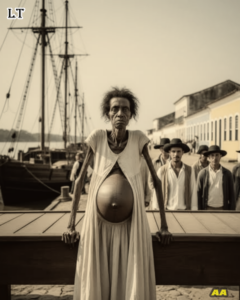
The narrow streets of Pelourinho seemed to close in around them as Joaquim half-carried Isabel toward his modest goldsmith workshop. Every step sent fresh pain through her damaged lungs, yet she clung to his arm, her thoughts circling around the single word that had overturned her world: daughter.
Inside the workshop, the scent of molten silver and polished tools filled the air. Joaquim gently laid her on a simple cot in the back room, his hands shaking as he brought water and a clean cloth. “Rest now,” he whispered, brushing damp hair from her forehead. “I’ve waited twenty years for this moment.”
What followed was a confession that had been building for decades. Through fevered whispers and broken sobs, Joaquim told the story of how their lives had been shaped by slavery in 19th-century Brazil, a system that allowed families to be separated and children to be sold away from their parents.
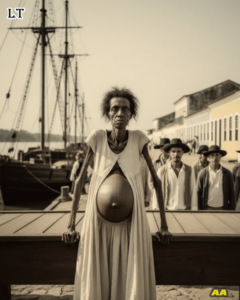
A Family Torn Apart by Slavery
Twenty-five years earlier, Joaquim had been a free Black man in love with Maria, an enslaved woman owned by the cousin of a powerful landowner, Colonel Antônio Pereira. Relationships between free people and those held in bondage were heavily controlled and often punished, especially when they challenged the authority of slave owners.
When Isabel was born, Joaquim and Maria hoped their child might one day live free. Instead, the newborn became a target of punishment. According to Joaquim’s account, Colonel Pereira ordered that the baby be taken away within a week of her birth. The child, Isabel, was sold as property, a brutal reminder that under Brazilian slavery, children of enslaved women were legally considered the owner’s possession.
Maria, already living under harsh conditions, did not recover from the loss. Joaquim recalled that she died months later, devastated by the forced separation from her daughter. Such tragedies were not isolated cases. Historical records from Brazil’s slave era describe numerous families broken apart through sales and transfers, often leaving parents with no information about where their children had been taken.
For Joaquim, the loss of Isabel set the course of his life. He spent years searching, working long hours as a craftsman, and saving every réis he could. He bought his own freedom, moving through cities and markets, asking questions, and following discarded leads in the hope of finding his daughter.
A Reunion Marked by Illness and Hope
When Joaquim finally recognized Isabel in Salvador, he said he knew immediately who she was. “I knew it was you the moment I saw your eyes,” he told her, his voice breaking. “The same eyes as your mother.” For Isabel, who had grown up in slavery with little knowledge of her origins, the revelation was overwhelming. The discovery of her father came at a time when she was also gravely ill, struggling with tuberculosis, a common and often deadly disease in crowded 19th-century cities.
Isabel wept until her coughs turned severe, and blood appeared on the cloth Joaquim used to soothe her. Their reunion was both joyous and precarious. Determined to keep her alive and safe, Joaquim sold everything he owned—his tools, jewelry he had crafted, and eventually the workshop itself. With the money, he paid for doctors, medicine, and a small, discreet house on the outskirts of Salvador where they could hide from attention.
There, Joaquim nursed her day and night, feeding her broth, reading aloud, and sharing memories of Maria. For Isabel, who had lived without a sense of family, these days offered something she had never experienced before: unconditional love and recognition as a daughter, not as property.
Growing Risk as Slave Owners Assert Control
Even as Isabel’s health fluctuated, their safety remained uncertain. Colonel Pereira, who had originally ordered Isabel’s sale as punishment, became suspicious. Accounts in the story describe him as “furious at being deceived” and increasingly determined to reassert his control. Hearing rumors about a young woman being hidden and treated with care, he began investigating.
In Brazil’s slave society, people who escaped slavery or were hidden by others risked severe punishment, and free Black citizens who helped runaways could also face sanctions. Rumors spread through Salvador’s slave markets that a valuable enslaved woman had disappeared under unclear circumstances. One evening, as Joaquim returned home with medicine, he encountered two men working for Pereira waiting at his door.
According to the narrative, they confronted him and threatened him, declaring that Isabel was “stolen property” and demanding her return. Joaquim was attacked and left badly injured. This fictional account reflects the broader reality that many free Black people and abolitionist sympathizers in Brazil faced threats or violence for assisting those who sought freedom.
After the assault, Joaquim informed Isabel of the danger they faced. Her health was deteriorating quickly as tuberculosis weakened her further. In quiet moments, the two spoke about the future they might never fully see: marriage, children, and a life lived without the constant fear of being sold or captured.
Flight Toward Rio de Janeiro and Medical Treatment
One stormy night, Isabel’s condition worsened. She struggled to breathe, burning with fever. Joaquim, who had spent years searching for her, now feared he might lose her just as they had found each other again. In a brief moment of clarity, Isabel expressed a final wish that would guide his next decisions. “Live free, Papa,” she whispered, according to the story. “For both of us.”
Determined to give her a chance at survival, Joaquim drew on networks that had quietly emerged among free Black artisans, sympathetic clergy, and others opposed to slavery. He learned of a ship departing at dawn for Rio de Janeiro, carrying freed people and those seeking new lives. With the help of priests and contacts within this informal support system, he smuggled Isabel aboard under cover of darkness.
The journey to Rio was difficult. Isabel’s cough echoed in the ship’s hold, and the conditions for passengers were cramped and uncomfortable. Joaquim stayed by her side, praying and singing songs that Maria had once sung. While this account is fictional, it parallels documented experiences of people who traveled between Brazilian cities seeking better conditions, medical care, or pathways to legal freedom in the late 19th century.
Upon reaching Rio de Janeiro, the story describes how a skilled doctor offered a modest chance of recovery through a combination of medical treatment and exposure to fresher mountain air outside the city center. Over weeks that turned into months, Isabel’s condition slowly improved. The blood in her cough diminished, color returned to her face, and she began to walk again, supported by her father.
Confrontation and Legal Exposure of Abuses
However, the narrative emphasizes that escaping the reach of wealthy slave owners like Colonel Pereira was not easy. Rio de Janeiro at the time was a major urban center of the Brazilian Empire, with close connections between political elites, business interests, and large estate owners. According to the story, Pereira’s agents eventually traced Joaquim and Isabel to the city.
In a dramatic scene on the docks, Pereira reportedly confronted Joaquim directly, demanding that Isabel be returned to him as his legal property. A crowd gathered as the two men faced each other, reflecting the growing public interest in, and debate about, slavery in Brazil during its final decades.
Joaquim refused, stating that Isabel was his daughter and that she had already been taken from him once. A fight ensued between Joaquim and Pereira’s men. In the turmoil, one of Pereira’s own workers is described as switching sides, revealing that the Colonel had illegally kept manumission papers hidden—documents that would have granted freedom to several people. While fictional, this storyline reflects real historical issues: there are documented cases of slave owners disregarding or concealing manumission agreements and of legal records being manipulated to maintain control over individuals who should have been free.
The account suggests that this revelation triggered a scandal at a time when Brazilian authorities were already facing pressure from abolitionist groups, church figures, and segments of the urban middle class. Under this growing scrutiny, authorities arrested Pereira. In historical reality, similar public scandals and legal challenges contributed to the weakening of slavery’s institutional support in Brazil during the 1870s and 1880s.
Brazil’s Path Toward Abolition
The story of Joaquim and Isabel is set against the backdrop of a society on the brink of change. Brazil was the last country in the Americas to abolish slavery, formally ending the practice in 1888 with the signing of the Lei Áurea (Golden Law). Before that, several earlier laws, such as the Law of the Free Womb in 1871 and the Sexagenarian Law in 1885, had granted partial or conditional freedoms, but they did not end the exploitation of enslaved people.
Abolition in Brazil came after decades of campaigns by activists, journalists, lawyers, and formerly enslaved people who organized escapes, legal challenges, and public protests. Urban centers like Rio de Janeiro and Salvador became hubs for these debates, with newspapers, religious figures, and professional associations increasingly questioning the legality and morality of slavery.
In that context, the fictional exposure of hidden freedom papers and the arrest of a powerful colonel fit into a broader pattern in which the legal system, public opinion, and social movements gradually undermined the institution of slavery. While the specific characters in this story are not historical figures, the dynamics they experience are drawn from well-documented patterns of resistance, legal conflict, and social change in Brazil’s final slaveholding years.
New Lives in a Changing Brazil
In the years that follow, the narrative describes Isabel Tavares living in a Brazil that is slowly moving toward abolition. Although she never fully regained her strength after tuberculosis, she built a new life beside her father in a goldsmith shop in Rio de Janeiro. Their work crafted delicate jewelry that symbolized resilience, memory, and the value of family ties that slavery had tried to sever.
Isabel and Joaquim are portrayed as quietly contributing to the emerging abolitionist movement. They help other families search for lost relatives, provide support to those recently freed, and share their story as an example of how determination and solidarity could challenge a system built on the denial of basic human rights. These forms of local assistance, mutual aid, and storytelling reflected real practices among freed communities during and after slavery’s gradual dismantling.
According to the story, Joaquim eventually died at an old age, comforted by the fact that he had been able to know and care for his daughter. Isabel lived on as a “quiet force,” her experience inspiring others who were campaigning for an end to slavery and for better conditions for formerly enslaved people. In historical Brazil, many such individual stories—recorded in letters, oral histories, and legal documents—contributed to a collective understanding of slavery’s enduring impact.
Legacy, Memory, and Representation
The narrative concludes with Isabel walking along the shore in a free Brazil, reflecting on the father who risked everything to reclaim her as his daughter, not as property. The closing scenes emphasize themes that are central to discussions of slavery’s legacy: the search for family, the importance of legal recognition of freedom, and the role of personal courage in confronting unjust systems.
Although the events and characters in this story are fictional and presented for narrative purposes, they echo real historical conditions under Brazilian slavery: the practice of selling children away from parents, the difficulty of tracking family members, the role of free Black artisans and religious networks in assisting escapees, and the increasing pressure faced by slave owners as abolitionist sentiment grew.
Contemporary historians, journalists, and cultural institutions continue to examine such themes, drawing on archival records, testimonies, and material culture to document the experiences of enslaved and freed people. These efforts seek to preserve memory, support historical understanding, and inform public debate about inequality, citizenship, and human rights.
The story of Joaquim and Isabel, while a work of fiction, offers a lens through which readers can engage with this broader historical context. It highlights how personal relationships and acts of care could stand in opposition to legal systems that treated human beings as property, and how those acts contributed to a wider movement for abolition and justice.