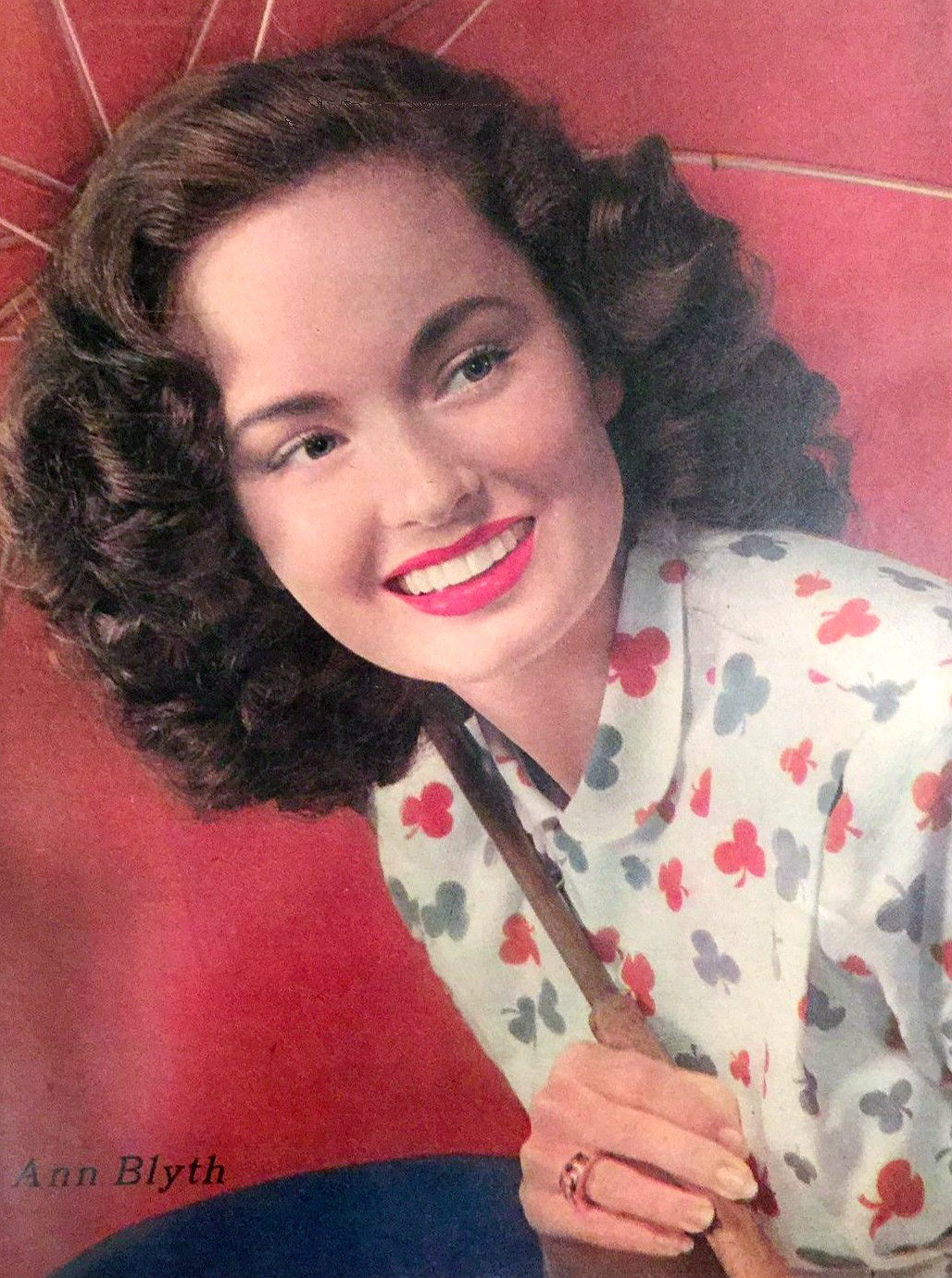
Ann Blyth, Oscar-Nominated Star of “Mildred Pierce,” Dies at 98
Hollywood has lost one of its last living connections to the Golden Age. Ann Blyth, the American actress and singer best known for her chilling turn as Veda Pierce in the 1945 classic Mildred Pierce, has died at the age of 98. Her passing closes a chapter in film history that stretches back to the studio era, when major Hollywood studios shaped global cinema and defined screen stardom for generations.
Peaceful Passing and Family Tributes
The news of Ann Blyth’s death was reported by KABC entertainment reporter George Pennacchio. According to his account and subsequent U.S. media coverage, Blyth died peacefully of natural causes on Wednesday, June 24, just weeks before what would have been her 99th birthday. At the time of writing, detailed public statements from her family have been limited, in keeping with the relatively private life she led in her later years.
Family members remembered her not only as a celebrated performer, but also as a warm and creative person in everyday life. Away from cameras and stages, Blyth enjoyed gardening, knitting, and oil painting. She was known to give her paintings as personal gifts, a gesture that underscored her thoughtfulness and close ties with friends and relatives.
Fans of classic cinema have also long noted her reputation for kindness. Even in later decades, when many of her contemporaries had stepped fully out of the public eye, Blyth was known to respond personally to fan mail. For admirers of Golden Age Hollywood, receiving a handwritten note from her became a treasured reminder that the era’s stars were still among them.
Early Life and First Steps in Performance
Ann Blyth was born in Mount Kisco, New York, on August 16, 1928. Raised primarily by her mother, she showed an early interest in performing. Like many entertainment figures of her generation, Blyth began working as a child, finding opportunities in radio at a time when the medium was still a central source of news and entertainment for American families.
Her talent and poise soon led her to the stage. As a young performer she appeared on Broadway, gaining experience in live theater while balancing her youth with professional demands. A touring production exposed her to larger audiences and brought her to the attention of Hollywood talent scouts at a moment when the major studios were actively searching for fresh faces to develop into contract players.
By the mid‑1940s, Blyth had entered the studio system in California. It was the height of Hollywood’s so‑called Golden Age, a period marked by tightly controlled production schedules, long-term studio contracts, and carefully managed star personas. Within this environment, she quickly stood out among the era’s promising young actresses.
Ann Blyth during her early Hollywood years, photographed in 1948:

Source: Wikimedia Commons
A Breakthrough Performance in “Mildred Pierce”
Blyth’s defining screen moment arrived with Mildred Pierce, released in 1945 by Warner Bros. Directed by Michael Curtiz and adapted from the novel by James M. Cain, the film combined elements of domestic drama and film noir. It has since come to be regarded as one of the landmark films of the 1940s.
In the film, Blyth plays Veda Pierce, the complicated and often cruel daughter of the title character, Mildred, portrayed by Joan Crawford. At the time of filming, Blyth was still in her teens, yet her performance carried a maturity and intensity that surprised audiences and critics alike. Veda’s character is marked by ambition, social pretension, and emotional manipulation, making the role far more complex than typical teenage parts of that period.
Mildred Pierce theatrical poster from 1945:

Source: Wikimedia Commons
Previously associated with lighter work and musical abilities, Blyth used Veda to demonstrate her dramatic range. The character’s emotional confrontations with Mildred are central to the film’s impact, driving much of its tension and tragedy. Film historians often point to Blyth’s portrayal as one of the reasons Mildred Pierce remains compelling to modern viewers.
Her performance earned her an Academy Award nomination for Best Supporting Actress, a significant achievement for such a young performer in a fiercely competitive year. Joan Crawford received the Oscar for Best Actress for her portrayal of Mildred Pierce, and the film itself went on to win critical acclaim and enduring popularity. Blyth’s work in the film continues to be singled out in retrospectives, documentaries, and scholarly discussions of classic Hollywood cinema.
Versatility Across Drama, Noir, and Musicals
Following the success of Mildred Pierce, Ann Blyth maintained a steady presence on the big screen during the late 1940s and 1950s. She demonstrated a versatility that allowed her to move between darker drama, musical features, and romantic stories, a valuable quality in the studio era.
Among her notable films were:
- Brute Force (1947) – A tense prison drama directed by Jules Dassin, in which Blyth appeared opposite Burt Lancaster. The film is frequently cited as a classic of post‑war American noir.
- The Great Caruso (1951) – A biographical film about the renowned tenor Enrico Caruso, starring Mario Lanza. Blyth’s background as a singer helped her fit naturally into this musically rich production.
- Rose Marie (1954) – An MGM musical set in the Canadian wilderness, reflecting Hollywood’s enthusiasm for lavish Technicolor productions and operetta‑style stories during the 1950s.
- Kismet (1955) – A musical fantasy set in a stylized version of the Middle East, featuring elaborate sets and costumes, typical of the studio’s big-budget spectacles of the decade.
- The Helen Morgan Story (1957) – A dramatic biopic about the jazz and torch singer Helen Morgan, further emphasizing Blyth’s ability to blend acting and musical performance.
Ann Blyth in a publicity still from the trailer for The Student Prince, another major musical production of the 1950s:

Source: Wikimedia Commons
A 1954 MGM studio portrait of Ann Blyth highlights the polished visual style associated with major Hollywood studios of the period:

Source: Wikimedia Commons
Her strong soprano voice made her especially valuable in musicals when the genre was near the height of its popularity. At the same time, her earlier success in Mildred Pierce ensured that she was taken seriously as a dramatic actress. This dual identity allowed her to navigate a wide variety of roles at a time when many performers were strongly typecast.
Marriage, Family Life, and Personal Priorities
In 1953, Ann Blyth married Dr. James McNulty, a physician. Their marriage became one of the more enduring partnerships associated with a Hollywood star of her era. While many of her contemporaries experienced highly publicized breakups, Blyth and McNulty remained together until his death in 2007, a span of more than five decades.
Ann Blyth with Dr. James McNulty and their son Timothy Patrick in 1954:

Source: Wikimedia Commons
The couple had five children. Over time, their family expanded to include ten grandchildren and five great‑grandchildren, according to information shared with the media. As her family responsibilities grew, Blyth gradually stepped back from the intense pace of studio filmmaking, choosing a life that balanced selective professional work with time at home.
This decision mirrored a broader trend among some mid‑century performers, particularly women, who navigated expectations of domestic life alongside careers in entertainment. In interviews across the years, Blyth spoke positively of her family life, indicating that it was central to her sense of fulfillment beyond the screen and stage.
Television, Stage Work, and Later Appearances
As the classic studio system declined and television rose in prominence, Ann Blyth adapted to the changing entertainment landscape. She made guest appearances on a number of TV series, including anthology and drama programs that were popular in the mid‑20th century.
Among her later screen credits were roles in the series The Twilight Zone and Murder, She Wrote, both of which remain widely watched in reruns and streaming. These appearances introduced her to younger audiences who might not have been familiar with her 1940s and 1950s filmography.
In addition to television, Blyth continued to perform in live settings, including stage shows and musical events. Her background in radio, theater, and film musicals made the transition to live performance natural. She also participated in charitable activities and special events, reflecting the longstanding tradition of Hollywood stars supporting philanthropic causes.
In later life she was occasionally invited to discuss classic films at festivals and retrospectives. At the 2013 TCM Classic Film Festival, for example, she appeared in a public conversation about Mildred Pierce, offering first-hand insight into the making of the film and the culture of studio-era Hollywood.
Ann Blyth discussing Mildred Pierce at the 2013 TCM Classic Film Festival:

Source: The Hollywood Reporter
Recognition and Enduring Legacy
In recognition of her contributions to film and entertainment, Ann Blyth received a star on the Hollywood Walk of Fame. The honor places her alongside hundreds of other performers whose work has shaped international cinema and popular culture. For fans of classic film, her star serves as a permanent marker of a career that reached from the last years of the studio era into the age of television and home video.
Film scholars and critics continue to highlight her work in Mildred Pierce as one of the most striking portrayals of a morally complex young character in 1940s Hollywood. The film’s reputation has only grown over time, with frequent screenings at film festivals and inclusion in lists of essential American movies. For many viewers discovering the film for the first time, Blyth’s performance as Veda stands out as both unsettling and unforgettable.
Beyond that single role, her broader body of work illustrates how one performer could move through key genres of mid‑century Hollywood: noir, melodrama, biopics, and musicals. Her screen presence—capable of conveying innocence, vulnerability, or sharp-edged intensity—reflected the era’s demands on contract players to meet varied production needs while maintaining a consistent public image.
Internationally, interest in Ann Blyth’s films has continued as classic Hollywood cinema has become more accessible through repertory screenings, restored editions, and digital platforms. Institutions dedicated to film heritage, such as the Academy Museum of Motion Pictures and archives around the world, frequently draw on titles like Mildred Pierce to illustrate studio-era storytelling and visual style.
For long-time admirers, the news of her death has prompted renewed discussion of her career on social media, film forums, and in classic movie communities. Many have emphasized not only her screen achievements but also reports of her graciousness in personal interactions with fans and colleagues.
A Lasting Presence in the History of Classic Hollywood
Ann Blyth’s life and career represent a bridge between generations. She began performing in the age of network radio, rose to prominence during the studio era of Hollywood, adapted to the arrival of television, and lived long enough to see her work rediscovered by new audiences through digital media and classic film channels.
Her legacy rests on more than a single role, yet her portrayal of Veda Pierce remains one of the defining images of mid‑century American cinema: poised, elegant, and emotionally fierce. Alongside her film work, her enduring marriage, close family life, and reported kindness toward fans create a fuller picture of a woman who balanced public visibility with private commitments.
As Hollywood and film historians reflect on the dwindling number of surviving Golden Age stars, Ann Blyth’s passing underscores the end of a remarkable era. But through preserved films, archival photographs, interviews, and critical writing, her influence and presence continue.
Rest in peace, Ann Blyth. Thoughts are with her family, friends, and the many viewers worldwide who have been moved by her work.
Sources
- Reuters – International News Agency
- BBC News – Entertainment & Arts
- The Guardian – Film
- The Hollywood Reporter – Entertainment Industry Coverage
- Turner Classic Movies (TCM) – Classic Film Resources
- Academy of Motion Picture Arts and Sciences – Oscars Database
- Wikimedia Commons – Public Domain and Licensed Images
Disclaimer: This content is intended for entertainment purposes only and is not based on real events.