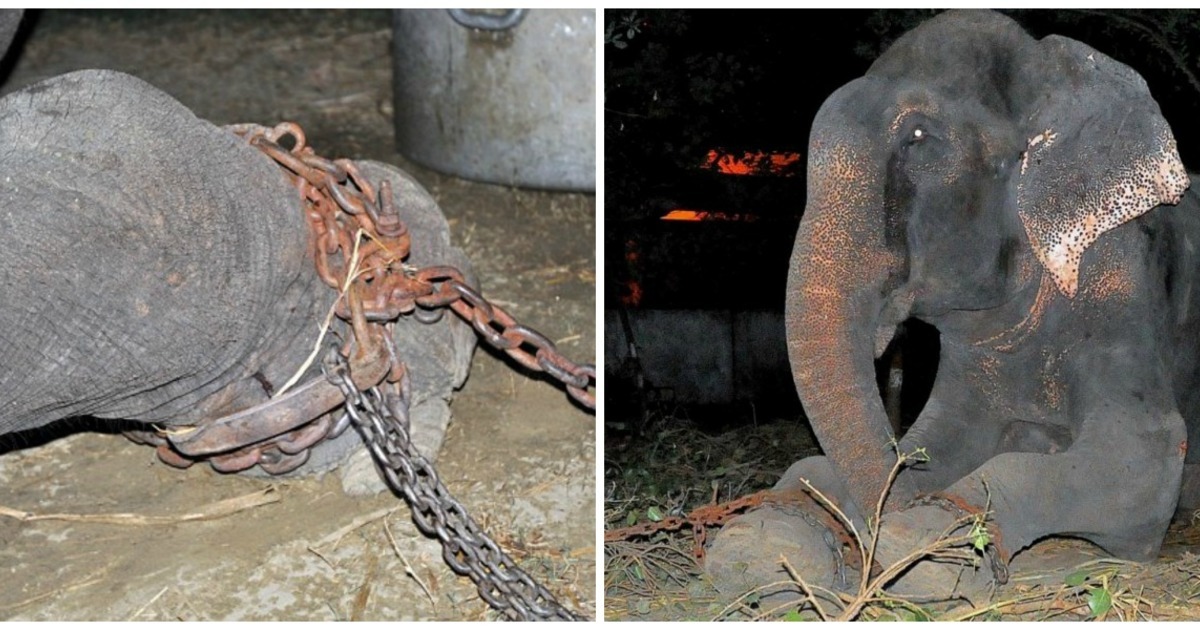
Raju The Elephant Cries Tears Of Joy After Being Freed From 50 Years In Chains

Stories of mistreated animals often spark strong emotions, but they also highlight important questions about ethics, conservation, and the way humans interact with wildlife. One widely reported example is the case of Raju, an Asian elephant in India who spent decades in captivity before finally being rescued by the animal welfare organization Wildlife SOS in 2014. His story has since become a symbol of both the suffering of captive elephants and the growing global movement to protect them.
This article takes an analytical and informative look at Raju’s rescue, the broader context of elephant welfare in India and around the world, and how experts and animal protection groups are working to change the future for these intelligent animals.
Who Is Raju? A Life Spent in Captivity
Raju is an Asian elephant, a species native to parts of South and Southeast Asia, including India. Asian elephants are highly intelligent, social animals that live in complex matriarchal herds in the wild. They communicate using a range of sounds, body language, and even low-frequency rumbles that can travel long distances. Scientific research has shown that elephants possess strong memories, exhibit empathy, and can recognize themselves in mirrors, a sign of advanced cognitive ability.
Despite what is known about their intelligence and emotional lives, many elephants like Raju have spent most or all of their lives in captivity. According to Wildlife SOS and multiple news reports from 2014, Raju was taken from the wild as a calf and passed between several owners over the years. He eventually ended up in the Indian state of Uttar Pradesh, where he was kept on chains and used to solicit money from tourists.
For approximately 50 years, Raju reportedly lived in harsh conditions. He was frequently chained, including with spiked chains that could cut into his skin. Because he depended on handouts from passersby and had limited access to proper food, he was observed eating whatever he could find, including paper and plastic waste. These details, reported by Wildlife SOS and widely covered in international media, illustrate the kind of chronic neglect many working elephants can endure when regulations are weak or poorly enforced.

The Daily Reality for Working Elephants
Raju’s experience reflects a wider pattern. In parts of South Asia and Southeast Asia, elephants have historically been used for labor, transportation, religious ceremonies, and tourism. Some are trained for performances, rides, or to interact closely with visitors, often under conditions that can compromise their welfare.
Animal welfare organizations have documented several recurring problems in such settings:
- Continuous or prolonged chaining: Long-term chaining, especially with tight or spiked restraints, can cause physical injuries, infections, and joint damage.
- Inadequate diet and water: When elephants depend on sporadic handouts, they may suffer from malnutrition and dehydration.
- Lack of social contact: Elephants are social animals, and isolation can lead to stress and abnormal behaviors.
- Inappropriate workload: Carrying heavy loads or walking long distances on hard surfaces can damage their feet and joints.
The World Animal Protection and other international NGOs have repeatedly emphasized that many traditional and tourism-driven uses of elephants cannot easily meet their complex physical and psychological needs. Raju’s case drew attention partly because it encapsulated many of these issues in a single, highly visible story.
How Wildlife SOS Became Involved
In mid-2014, Wildlife SOS, an Indian non-profit organization that focuses on rescuing and rehabilitating wildlife, received information about Raju’s condition. The group is known for its work with “dancing bears,” elephants, and other wild animals kept in captivity. After learning that Raju had spent decades in chains, their team began gathering evidence and seeking the legal permissions necessary to conduct a rescue.
Wildlife SOS coordinated closely with local authorities in Uttar Pradesh. According to their public statements and coverage from outlets such as the BBC and other international media, the operation eventually involved:
- A team of around 10 veterinarians and elephant experts from Wildlife SOS
- Approximately 20 officers from the state Forest Department (often referred to as the Forestry Commission in some reports)
- Police officers to ensure the operation remained lawful and safe
The rescue was planned for nighttime. Moving an adult bull elephant can be dangerous under any circumstances, and the team aimed to reduce stress and avoid large crowds that could agitate the animal or trigger conflict with his owner.

The Night of the Rescue
On the night of the operation, the rescue team arrived at the location where Raju was kept. Reports from Wildlife SOS describe a tense situation. The elephant’s owner attempted to prevent the removal by shouting commands intended to frighten and control Raju. At one point, more chains were reportedly placed around the elephant’s legs in an effort to block the rescue, tightening existing restraints that had already caused significant wounds.
Despite the risk, the team proceeded carefully. Wildlife SOS chief veterinarian Dr. Yaduraj Khadpekar and his colleagues began removing the chains one by one. Their priority was to keep both Raju and the people nearby as calm and safe as possible. Moving a fully grown bull elephant requires expertise, patience, and the correct equipment, including secure transport and appropriate sedation or calming techniques when necessary.
According to Wildlife SOS, as the final chains were taken off, the team noticed moisture around Raju’s eyes. Rescue staff interpreted this as a strong emotional reaction, and the image of an elephant appearing to cry during his release was widely shared around the world. While scientists are cautious about attributing human-like emotions to animals without solid evidence, there is extensive research showing that elephants can experience and express stress, relief, and complex social feelings.

Interpreting Raju’s “Tears”
The mention of Raju’s “tears of joy” became a central part of media coverage. It is important, however, to distinguish between verified facts and interpretations. Veterinarians and animal behaviorists note that elephants can produce tears for several reasons, including irritation, stress, or emotional arousal. While it is difficult to scientifically prove that an elephant is crying from joy in the human sense, there is broad agreement that elephants are capable of strong emotional responses.
Researchers who study elephant cognition have documented behaviors suggesting grief, such as staying near deceased herd members, touching bones with their trunks, and showing signs of distress when separated from close companions. These observations, combined with the extreme change in Raju’s circumstances—from lifelong chains to the beginning of a new life in a sanctuary—help explain why observers interpreted his reaction as deeply emotional.
Regardless of the exact cause of the moisture around his eyes, the image of Raju being freed resonated globally. It highlighted the contrast between his past suffering and the possibility of a more humane future for captive elephants.
Arrival at the Wildlife SOS Sanctuary
After his chains were removed, Raju was carefully transported to the Wildlife SOS Elephant Conservation and Care Center in Mathura, in the Indian state of Uttar Pradesh. The journey was carried out at night and under close supervision by veterinarians to help keep him calm and reduce the risk of injury.
Upon arrival at the sanctuary, Raju encountered other rescued elephants for the first time in many years. Staff have described how the resident elephants appeared to approach him and interact with him in a calm, curious way, a typical behavior when elephants meet a new member of a group. Although it can take time for any new elephant to settle and form social bonds, this first contact was seen as a promising sign.

Rehabilitation: Teaching That Humans Can Be Kind
Rehabilitating an elephant who has spent decades in captivity is a long and meticulous process. Wildlife SOS has publicly explained that their team focuses on both physical and psychological recovery. According to co-founder Kartick Satyanarayan and the organization’s veterinary staff, the rehabilitation plan for Raju included:
- Medical care: Treating existing wounds from chains, addressing infections, and managing long-term issues like joint or foot problems.
- Proper nutrition: Providing a balanced diet suitable for an adult Asian elephant, including fresh vegetation, fruits, and clean water.
- Foot and skin care: Many working elephants suffer from cracked feet and skin infections; regular care is essential for long-term health.
- Gradual socialization: Allowing Raju to interact with other elephants at a pace that reduces stress and helps him learn normal social behavior.
- Positive human contact: Helping him understand that caretakers can be a source of food, comfort, and medical help rather than fear or punishment.
Over time, Raju has been shown in Wildlife SOS updates engaging in natural behaviors such as walking freely, bathing, exploring his environment, and interacting more confidently with other elephants. These changes illustrate how, given time and appropriate care, formerly abused animals can adapt to a safer and more enriched environment.
Why Raju’s Story Matters for Elephant Welfare
Raju’s rescue did more than change one animal’s life. It drew attention to several broader issues related to elephant welfare and wildlife conservation:
Raising Awareness About Captive Elephants
International coverage by major news organizations brought the topic of captive elephants in India and other countries into mainstream discussion. Many people who had previously regarded elephant rides or performances as harmless entertainment began to question the conditions behind them. Animal welfare charities have used high-profile cases like Raju’s to encourage tourists to support ethical, observation-based experiences instead of direct-contact attractions.
Encouraging Stronger Laws and Enforcement
India has wildlife protection laws, including the Wildlife Protection Act of 1972, which aims to safeguard native species such as elephants. However, effective enforcement can be challenging, especially when animals have been in private hands for many years. Cases like Raju’s have reinforced calls from conservationists and legal advocates for stricter oversight, better registration systems for captive elephants, and stronger penalties for violations.
Highlighting the Role of Sanctuaries
Sanctuaries such as the Wildlife SOS Elephant Conservation and Care Center provide permanent homes where rescued elephants can live without performing or working. These facilities are designed to meet the animals’ complex needs through open spaces, compatible companions, and specialized veterinary care. International organizations, including the International Union for Conservation of Nature (IUCN), have noted that while sanctuaries cannot replace wild habitats, they play an important role for individuals who cannot be safely released back into the wild.
Global Reactions and Ongoing Debate
Raju’s story generated strong public interest far beyond India. International media coverage and social media sharing led to donations for his care and for other rescues. Animal welfare groups cited his case in campaigns encouraging travelers to avoid attractions that rely on performing or riding elephants.
At the same time, there is an ongoing debate in some countries about how to balance cultural traditions, livelihoods, and animal welfare. In regions where elephants have been historically associated with religious festivals or tourism, change can be gradual. Experts advocate for:
- Transitioning from riding and performance-based models to observation-only tourism, where visitors watch elephants from a distance in more natural settings.
- Providing alternative livelihoods for people who previously depended on elephant-related activities.
- Developing long-term plans to reduce the capture of wild elephants and promote habitat conservation.
Organizations such as the World Wide Fund for Nature (WWF) and World Animal Protection work alongside local partners to develop guidelines and certification schemes for more ethical elephant tourism experiences. Raju’s case often appears as a reference point in these discussions, illustrating both the harm that can occur and the positive outcomes of successful rescue and rehabilitation.
What Individuals Can Do to Help Elephants
Raju’s transformation from a chained elephant to a sanctuary resident shows that individual choices and collective action can have real impact. According to expert recommendations from major animal welfare and conservation bodies, people who want to support better conditions for elephants can:
- Choose ethical tourism: Avoid elephant rides, performances, or direct-contact shows, and instead support sanctuaries and conservation-focused experiences that prioritize animal welfare.
- Support reputable organizations: Donate to or volunteer with well-established charities that operate transparently and follow international welfare guidelines.
- Stay informed: Follow updates from credible sources about elephant conservation, habitat loss, and anti-poaching efforts.
- Encourage responsible media sharing: When sharing stories like Raju’s, rely on accurate, verifiable information and avoid sensational or misleading claims.
By aligning tourism choices and charitable support with high welfare standards, individuals contribute to a growing economic incentive for humane treatment of elephants and other wildlife.
A Symbol of Hope for Captive Wildlife
Today, Raju’s story is often cited as an example of resilience and the power of coordinated animal rescue efforts. While the details of his early life are difficult to verify in full, the core facts—that he spent decades in chains, was rescued in 2014 through a legally sanctioned operation, and now lives in a sanctuary receiving ongoing care—are documented by Wildlife SOS and multiple international news outlets.
His case underscores a wider reality: thousands of elephants worldwide remain in captivity, and many still face inadequate conditions. At the same time, there is a growing global consensus among conservationists, veterinarians, and ethical tourism experts that wild animals are best left in the wild, and that those already in captivity should be given the highest possible standard of care.
Raju’s journey from a life of restriction to one of safety and greater freedom has inspired many people to learn more about elephant welfare and to support changes that can prevent similar suffering in the future. It serves as a reminder that informed public concern, combined with professional expertise and strong legal frameworks, can significantly improve the lives of individual animals and contribute to broader conservation goals.
Sources
- Wildlife SOS – Official site and updates on rescued elephants
- BBC News – Coverage of wildlife and animal welfare issues
- Reuters – International news on conservation and environmental policy
- The Guardian – Wildlife and conservation reporting
- World Animal Protection – Reports on elephant tourism and animal welfare
- WWF – Information on Asian elephants and habitat conservation
Disclaimer: This content is intended for entertainment purposes only and is not based on real events.