Have you ever looked closely at the lines on your palm and noticed they seem to form familiar shapes? Perhaps you’ve seen people online claiming that a letter “M” or a delicate crescent moon on the hand reveals hidden talents, extraordinary intuition, or even a remarkable destiny.
These fascinating ideas have circulated for centuries, appearing in books on palmistry, cultural traditions, and modern social media posts. While many people enjoy exploring these interpretations, it’s important to understand that they belong to the tradition of palmistry, a cultural and spiritual practice rather than a scientifically proven method of predicting personality or the future.
Let’s explore where these beliefs come from, what they traditionally symbolize, and what modern science says about the unique lines on our hands.
What Is Palmistry?
Palmistry, also known as chiromancy, is the practice of interpreting the lines, shapes, and features of the hands.
Its origins stretch back thousands of years, with historical roots in:
- Ancient India
- China
- Egypt
- Greece
- Persia
Over time, palmistry became intertwined with local philosophies, spiritual traditions, and folklore.
Rather than focusing solely on predicting the future, many practitioners view palmistry as a symbolic tool for self-reflection and understanding personal strengths.
The Major Lines of the Palm
Traditional palmistry focuses on several primary lines.
The Life Line
The Life Line curves around the base of the thumb.
Contrary to popular myth, traditional palmists generally do not interpret it as predicting lifespan. Instead, it is said to represent vitality, energy, and one’s overall life journey.
The Head Line
Running horizontally across the center of the palm, the Head Line is traditionally associated with:
- Thinking style
- Learning
- Decision-making
- Intellectual preferences
The Heart Line
Located near the fingers, the Heart Line is linked in palmistry to:
- Emotions
- Relationships
- Compassion
- Emotional expression
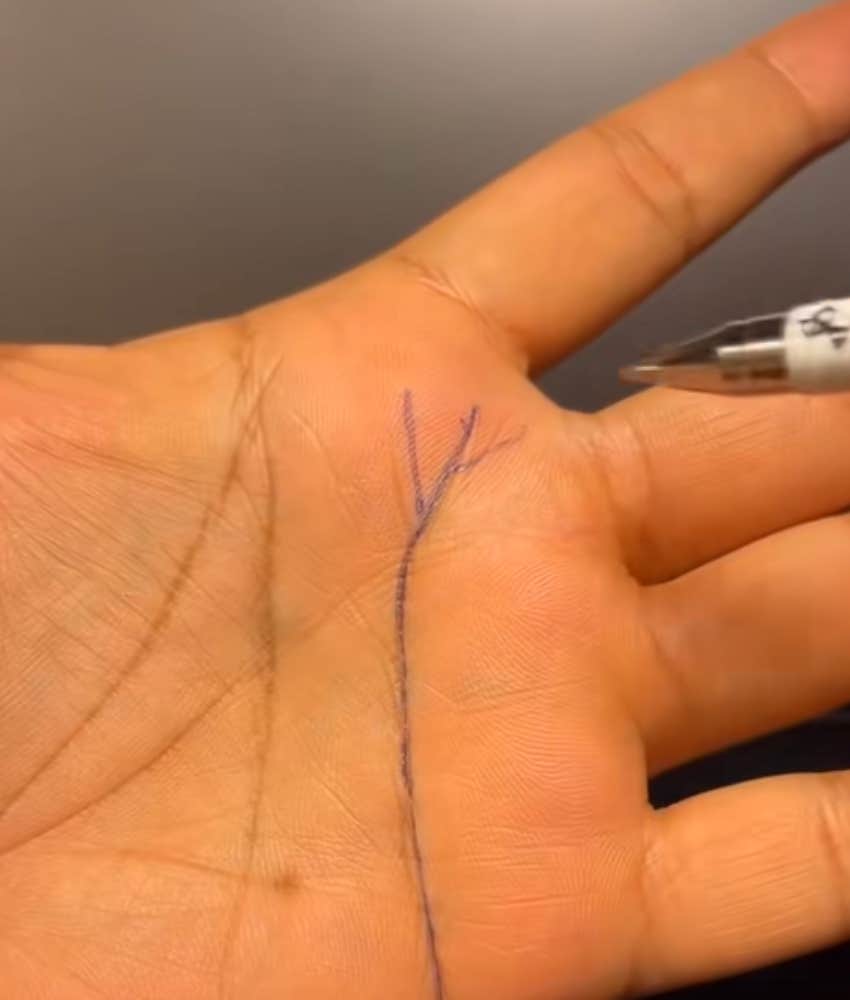
The Fate Line
Not everyone has a prominent Fate Line.
According to palmistry, it reflects career direction, life purpose, or the influence of external circumstances.
Again, these interpretations are symbolic traditions rather than scientifically verified facts.
What Is the Letter M?
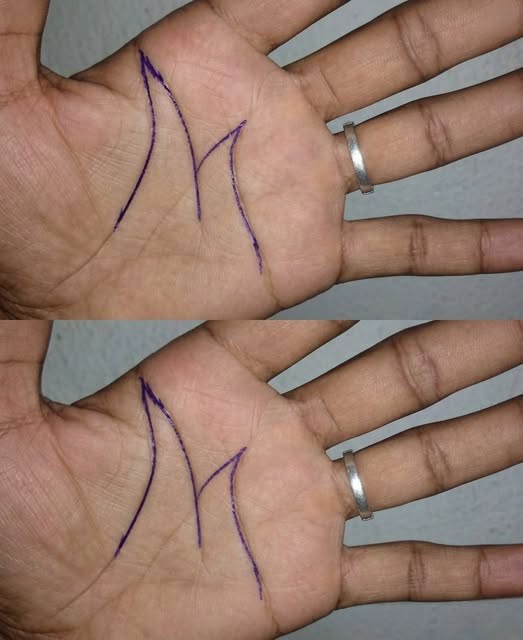
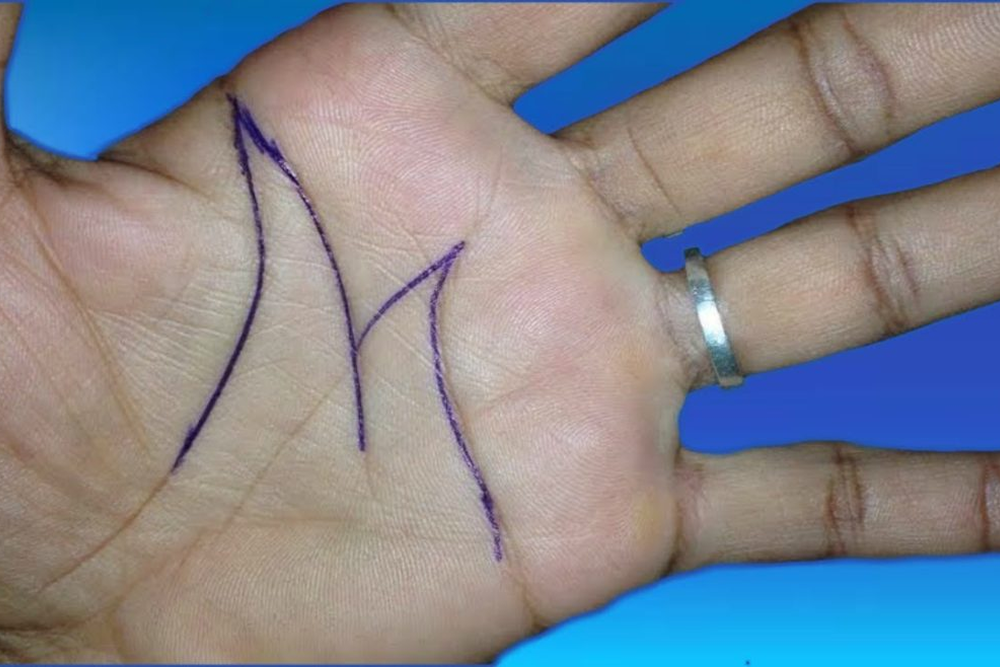
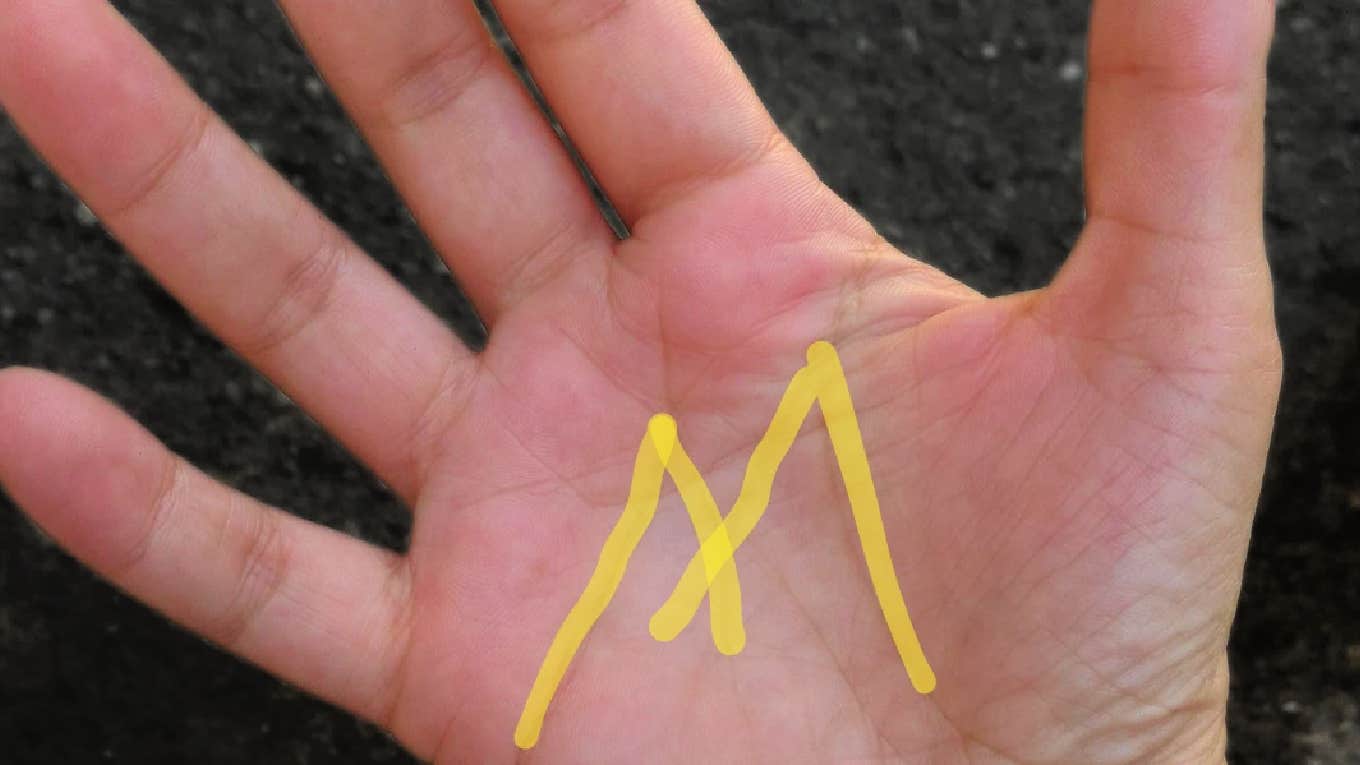
One of the most discussed palmistry symbols is the appearance of a capital M.
Rather than being an actual letter carved into the skin, the “M” forms when several palm lines intersect in a way that resembles the shape.
Some people naturally have this pattern, while others do not.
Traditional Meaning of the Letter M
Within palmistry, the M has long been considered an especially favorable symbol.
Traditional interpretations suggest it may represent qualities such as:
- Strong intuition
- Leadership
- Determination
- Practical intelligence
- Honesty
- Good judgment
Some traditions also associate the M with financial awareness or entrepreneurial ability.
It is important to emphasize that these meanings come from cultural beliefs rather than scientific evidence.

The Crescent Moon Symbol
Another symbol sometimes discussed in palmistry is the crescent moon, usually said to appear near the Mount of Luna—the fleshy area along the outer edge of the palm.
Unlike the M, which is associated with action and leadership, the crescent moon traditionally symbolizes the inner world.
Practitioners often associate it with:
- Creativity
- Imagination
- Emotional sensitivity
- Spiritual reflection
- Intuition
Many cultures have long connected the moon with mystery, dreams, and cycles of personal growth.
When Both Symbols Appear Together
Some palmistry traditions suggest that having both the M and the crescent moon is especially uncommon.
According to these beliefs, the combination may symbolize someone who balances practical thinking with imagination.
Traditional interpretations sometimes describe such individuals as:
- Adaptable
- Emotionally aware
- Visionary
- Resilient during change
These ideas are part of palmistry’s symbolic framework rather than established scientific findings.
Why People Find Palmistry Meaningful
Even without scientific validation, palmistry remains popular around the world.
Several reasons explain its lasting appeal.
A Tool for Self-Reflection
Many people use palmistry as a way to reflect on their personalities, goals, and life experiences.
Rather than treating it as absolute truth, they view it as a conversation starter about personal growth.
Cultural Tradition
Palm reading has been passed through generations in many societies.
For some families and communities, it represents cultural heritage rather than fortune-telling.
Human Curiosity
People naturally seek patterns and meaning.
Looking for symbols in the hand reflects a broader human desire to understand ourselves and our place in the world.
What Does Science Say?
Modern science offers a different perspective.
The lines on our palms form during fetal development as the skin folds to accommodate hand movement and growth.
Their appearance is influenced by:
- Genetics
- Normal embryonic development
- Hand anatomy
- Skin flexibility
Researchers have found no reliable scientific evidence showing that palm lines predict:
- Personality
- Intelligence
- Wealth
- Career success
- Future events
Psychologists note that many palmistry descriptions rely on broad statements that people naturally relate to—a phenomenon known as the Barnum effect.
This doesn’t mean palmistry lacks cultural or personal value, only that its predictive claims have not been supported through scientific research.
Why Every Palm Is Unique
Although palmistry interpretations remain symbolic, one fact is supported by science:
Every person’s palms are unique.
Even identical twins have subtle differences in their palm creases and fingerprints.
The intricate network of lines develops before birth and remains relatively stable throughout life, although minor changes may occur due to aging, injury, or repeated hand use.
Appreciating Palmistry as Cultural Heritage
Today, many people enjoy palmistry much like they appreciate mythology, astrology, or folklore.
It offers:
- Historical insight
- Cultural storytelling
- Symbolic reflection
- Personal entertainment
Approaching it with curiosity rather than certainty allows people to appreciate its rich traditions while recognizing the distinction between cultural beliefs and scientific evidence.
Final Thoughts
The letter M and the crescent moon have fascinated people for centuries because they invite us to look more closely at something we carry with us every day—our own hands. In palmistry, these symbols are traditionally associated with qualities such as intuition, resilience, creativity, and leadership. Whether or not one accepts those interpretations, they remain meaningful elements of a long-standing cultural tradition.
Science explains palm lines as natural features shaped by genetics and development rather than indicators of destiny. Still, the enduring popularity of palmistry reflects something universal: our curiosity about who we are and the stories we tell to better understand ourselves.
Perhaps the greatest value of these symbols is not in predicting the future, but in inspiring thoughtful reflection. When we look at our hands, we are reminded not of a fixed destiny, but of the countless choices, experiences, and relationships that truly shape the paths we follow.
Sources
- Encyclopaedia Britannica. Palmistry (Chiromancy).
- National Human Genome Research Institute. Genetics and Human Development.
- American Psychological Association. Information on cognitive biases and the Barnum effect.
- Mayo Clinic. Skin Structure and Anatomy.
- Oxford Reference. History of Palmistry and Divination Traditions.