Every summer, wildfire season transforms vast stretches of forests and grasslands into landscapes of uncertainty. Firefighters, wildlife officers, and rescue teams work tirelessly to protect both people and animals as flames race across the horizon. Amid these challenging moments, stories often emerge that capture the public imagination, reminding us of the remarkable resilience found in nature.
One such story describes a wildlife officer discovering a mother bear near a wildfire, remaining close to her cub despite the devastation surrounding them. Whether every detail of the widely shared account can be independently verified or whether parts have been retold over time, the story has resonated with millions because it reflects something deeply familiar: the powerful bond between a parent and its young.
Beyond the emotional narrative lies an opportunity to explore what science tells us about maternal behavior in bears, how wildlife responds to natural disasters, and why these stories continue to inspire compassion around the world.
The Story That Captured Public Attention
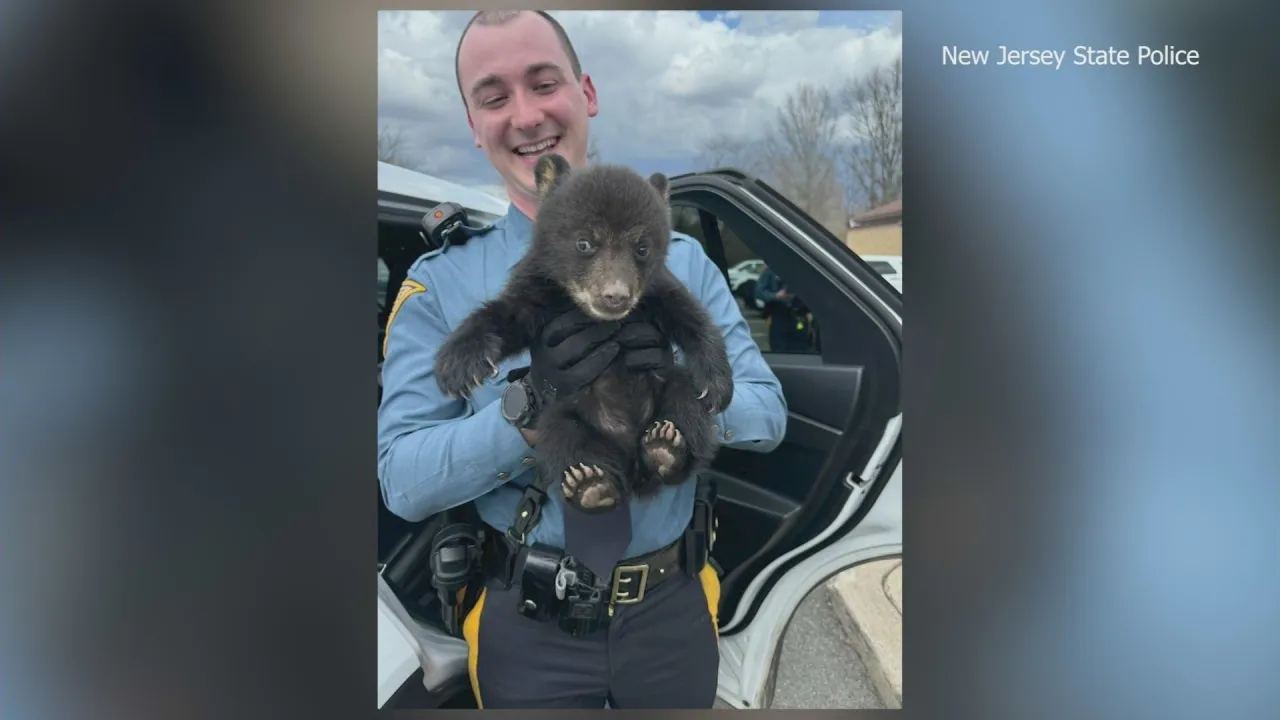
According to the widely circulated account, a wildlife officer searching through an area affected by wildfire encountered a mother bear beside her cub. The images accompanying the story portrayed a scene of extraordinary devotion, with the mother remaining close despite the surrounding destruction.
As the story spread across social media, countless readers described it as a symbol of unconditional love. Many saw it not simply as an account about wildlife but as a reminder that parental care transcends species.
While independent confirmation of every element of the narrative remains limited, the emotional impact comes from behaviors that are consistent with what researchers have observed in many mammals, including bears.

Why Mother Bears Are So Protective
Scientists have long documented that female bears invest enormous amounts of energy in raising their offspring.
Unlike many animals whose young become independent quickly, bear cubs rely heavily on their mothers for survival during the earliest stages of life.
A mother bear provides:
Food
Protection
Shelter
Guidance
Essential survival skills
Depending on the species, cubs may remain with their mother for one to three years before establishing their own territories.
Throughout this period, the mother teaches them how to:
Locate food
Avoid danger
Navigate forests
Recognize threats
Prepare for seasonal changes
This extended period of parental care creates one of the strongest maternal relationships found among wild mammals.
Maternal Instinct Across the Animal Kingdom
The bond between parents and offspring is not unique to bears.
Researchers have observed remarkable parental care in numerous species, including:
Elephants protecting calves within family groups.
Penguins taking turns incubating eggs during harsh winters.
Orangutans spending years teaching their young survival skills.
Gray wolves cooperating to raise pups.
Many bird species risking injury while distracting predators away from nests.
These behaviors evolved because offspring have a better chance of surviving when parents invest time and energy into their development.
While every species behaves differently, the underlying biological purpose remains remarkably similar.
:max_bytes(150000):strip_icc():focal(749x0:751x2)/bear-cub-rescued-3-040326-ade756227c074e9b8f6d439f3449fa2e.jpg)
How Wildfires Affect Wildlife
Wildfires are natural ecological events in many parts of the world.
Many forests have evolved alongside periodic fires, and certain plants even depend on them for regeneration.
However, increasingly intense wildfire seasons can create enormous challenges for wildlife.
Animals may experience:
Loss of habitat
Disrupted food sources
Smoke exposure
Separation from family groups
Increased competition for resources
Fortunately, many wild animals possess remarkable instincts that help them avoid danger.
Large mammals often detect approaching fires long before humans do through changes in:
Wind direction
Smoke
Temperature
Sound
Many flee well before flames arrive.
Young animals, however, may face greater risks because of their limited mobility and dependence on adults.
How Bears Respond During Fires
Research shows that bears often react quickly when wildfire threatens their habitat.
Depending on the circumstances, they may:
Travel to rivers or lakes.
Move into recently burned areas after flames pass.
Seek higher elevations.
Temporarily shift home ranges.
Return surprisingly quickly once vegetation begins recovering.
Burned forests frequently produce fresh plant growth rich in nutrients, attracting bears back within months or even weeks after a fire.
This adaptability demonstrates why bears have survived dramatic environmental changes for thousands of years.
Wildlife Rescue During Natural Disasters
When disasters strike populated areas, wildlife agencies sometimes intervene to help injured animals.
Rescue operations may involve:
Veterinary treatment
Temporary rehabilitation
Monitoring with tracking devices
Relocation when necessary
Release back into suitable habitat
These efforts require careful planning because wild animals experience stress when handled by humans.
Professionals aim to minimize contact while maximizing the chances of successful recovery.
Organizations across North America have developed specialized protocols for rescuing animals affected by wildfires, floods, storms, and other emergencies.

Why Stories Like This Spread So Quickly
Modern social media allows emotional stories to reach millions of people within hours.
Several psychological factors contribute to their popularity.
Emotional Connection
People naturally empathize with stories involving parents protecting children.
Even across different species, nurturing behavior feels familiar.
Visual Storytelling
Powerful photographs communicate emotion instantly.
A single image often speaks more effectively than paragraphs of explanation.
Shared Values
Acts of care, resilience, and compassion resonate across cultures.
Stories highlighting these qualities are frequently shared regardless of language or geography.
Hope During Difficult Times
Natural disasters often generate discouraging headlines.
Stories emphasizing courage and survival offer emotional balance.
Separating Emotion From Verification
Many viral wildlife stories combine authentic observations with details that become embellished as they circulate online.
Responsible readers should remember that:
Photos sometimes lack context.
Descriptions may change as stories are shared.
Individual events can become symbolic rather than strictly documentary.
This does not necessarily diminish their emotional significance.
Instead, it encourages us to appreciate both the inspiration they provide and the importance of relying on verified information when discussing real events.
The Science Behind Animal Emotions
For many years, scientists debated whether animals experience emotions similar to humans.
Today, growing research suggests that numerous mammals display behaviors associated with:
Attachment
Stress
Comfort
Playfulness
Fear
Social bonding
Researchers remain cautious about assigning specifically human emotions to wildlife.
Rather than assuming animals think exactly as people do, scientists focus on measurable behaviors.
Mother bears remaining close to cubs during challenging situations is well documented and aligns with evolutionary biology.
What animals subjectively experience internally remains an active area of research.
Bears and Their Remarkable Intelligence
Bears are among the most intelligent mammals in North America.
Studies have demonstrated impressive abilities involving:
Memory
Problem-solving
Navigation
Learning from experience
Adaptation to changing environments
Their excellent memory allows them to remember seasonal food locations across enormous territories.
This intelligence helps explain how bears successfully adjust to landscapes transformed by fire, storms, or human development.
Conservation Efforts Matter
Protecting wildlife involves more than responding during emergencies.
Long-term conservation includes:
Preserving habitats
Managing forests responsibly
Reducing human-wildlife conflicts
Supporting wildlife rehabilitation centers
Conducting scientific research
Educating local communities
Healthy ecosystems benefit not only wildlife but also people by supporting biodiversity, clean water, and resilient forests.
Lessons We Can Learn From Nature
Whether the viral story unfolded exactly as described or has become partially symbolic through repeated sharing, its central message continues to resonate.
Nature constantly reminds us that survival often depends upon cooperation, resilience, and care for the next generation.
Wild animals face challenges very different from our own, yet their behaviors frequently reflect universal biological principles that connect all living creatures.
Watching a parent protect its young reminds us that compassion is not limited to human society. Across forests, oceans, and grasslands, countless species invest extraordinary effort to help the next generation thrive.
Why These Stories Matter
Wildlife stories often inspire more than temporary emotion.
They encourage people to:
Learn about conservation.
Support habitat protection.
Appreciate biodiversity.
Respect wild animals from a safe distance.
Become curious about science.
Even if a viral story begins with a single photograph, it can motivate thousands of people to explore the fascinating realities of animal behavior.
That curiosity ultimately benefits both education and conservation.
Conclusion
Stories about wildlife capture our attention because they remind us that the natural world is filled with remarkable relationships. The widely shared account of a mother bear remaining close to her cub during a wildfire touched millions because it reflects a universal appreciation for parental devotion and resilience.
Science confirms that mother bears form strong bonds with their cubs and invest years teaching them the skills needed for survival. While some details in viral stories may evolve as they spread online, the broader truth remains: wildlife displays extraordinary adaptability, intelligence, and dedication that deserve both admiration and careful study.
Perhaps the greatest lesson is not simply about one bear or one wildfire. It is about the enduring human desire to understand the natural world. Every photograph, every observation, and every story invites us to look more closely, ask thoughtful questions, and appreciate the remarkable lives unfolding beyond our own. Curiosity, balanced with evidence and compassion, remains one of our greatest tools for connecting with nature.
Sources
- National Park Service (NPS). Black Bear Ecology and Behavior. https://www.nps.gov
- U.S. Fish & Wildlife Service. Living with Bears. https://www.fws.gov
- Smithsonian’s National Zoo & Conservation Biology Institute. American Black Bear Facts. https://nationalzoo.si.edu
- National Geographic. How Wildfires Affect Wildlife. https://www.nationalgeographic.com
- World Wildlife Fund (WWF). Wildlife Conservation and Habitat Protection. https://www.worldwildlife.org