Owls: Silent Hunters of the Night and Why They Matter
Watching an owl glide through the evening sky is one of nature’s most memorable sights. As daylight fades and many animals settle down to rest, an owl can pass overhead almost without a sound, its wings cutting quietly through the dim air. This combination of mystery and silence has fascinated people for centuries. Beyond their eerie calls and striking eyes, owls are highly specialized birds of prey, equipped with bodies, senses, and behaviors that make them exceptionally well suited to life in the dark.
Modern research in ornithology shows that owls are not just symbols of wisdom or mystery. They are efficient predators, attentive parents, and vital components of the ecosystems they inhabit. Understanding how they see, hear, hunt, and raise their young reveals why these nocturnal birds deserve both scientific interest and practical protection.
The Engineering of Silent Flight
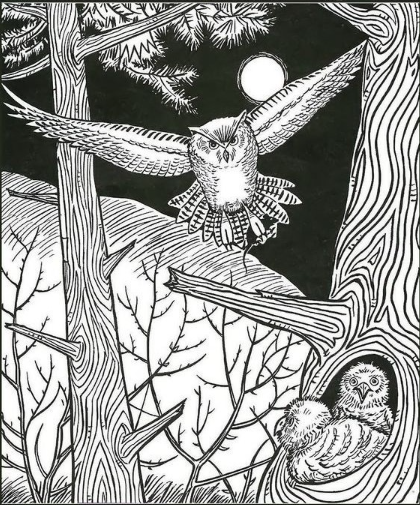
One of the most distinctive features of owls is their almost completely silent flight. Most birds create noticeable noise when flying, as air passes over their wings and feathers. Owls, however, have evolved a unique feather structure that dramatically reduces this sound. Studies using high-speed cameras and sound analysis have shown that the leading edges of many owl species’ wings are serrated, like a comb. These tiny projections break up the airflow into smaller, softer streams, reducing turbulence and noise.
In addition to serrated wing edges, the surface of an owl’s feathers is covered in a soft, velvety layer. This texture helps absorb sound that would otherwise be produced by air rushing over the wings. The trailing edge of the feathers often has a flexible fringe that further smooths the airflow. Together, these adaptations turn what would be flapping and rustling into something closer to a whisper. This silence is a major hunting advantage: small mammals or insects have far less warning that a predator is approaching from above.
Wing shape also plays an important role. Many owls have relatively broad, rounded wings and short tails, giving them excellent maneuverability in cluttered environments such as forests. Instead of needing wide, open sky, they can weave between branches, adjust direction quickly, and hover briefly before dropping onto prey. This ability to move with precision through complex habitats makes them effective hunters even in dense vegetation.
Extraordinary Hearing and Night Vision
Silent flight would not be useful without equally impressive senses. Hearing is especially crucial for many owl species. The circular or heart-shaped arrangement of feathers on an owl’s face, known as the facial disc, acts like a parabolic dish. It collects and directs sound toward the ears, increasing sensitivity to even faint noises such as the rustle of a mouse in dry leaves.
In several species, the ears are placed asymmetrically on the head—one slightly higher than the other. This uneven placement allows owls to detect tiny differences in the time and intensity of sounds reaching each ear. By processing these differences, the owl can pinpoint the exact location of a sound in three-dimensional space, even when the source is hidden under grass, leaf litter, or snow. Experiments in controlled settings have shown that some owls can accurately strike prey in complete darkness using sound alone.
Owls are also known for their large, forward-facing eyes. Each eye is elongated and more tube-shaped than spherical, giving a wide pupil and a large light-gathering surface. The retina contains many light-sensitive rod cells, which work well in low light, though most owls see fewer colors than humans. Contrary to popular myth, owls cannot see in total darkness, but they can see far better than people in dim conditions such as starlight or faint moonlight.
Because of the shape of their eyes, owls cannot move them much within the socket. Instead, they rely on an extremely flexible neck. Specialized vertebrae and blood-vessel structures in the neck allow many owls to rotate their heads about 270 degrees. This wide range of motion lets them scan their surroundings without moving their bodies and potentially revealing themselves to prey.
Diverse Diets and Hunting Strategies
Owls are not all the same. More than 200 owl species live on every continent except Antarctica, ranging from tiny elf owls in North America to large Eurasian eagle-owls. Their diets and hunting methods vary with species, habitat, and local prey availability. Many common species specialize in small mammals, particularly rodents such as mice and voles, which makes them valuable natural allies for farmers and gardeners by helping control pest populations.
Other owls have different preferences. Some hunt insects, especially in warmer regions. Fish owls and certain African species focus on fish, frogs, and other aquatic organisms along rivers and wetlands. Larger owls like the great horned owl are powerful enough to take rabbits, skunks, and occasionally other birds. This flexibility allows owls to occupy a wide range of ecosystems, from grasslands and marshes to urban parks and farmland.
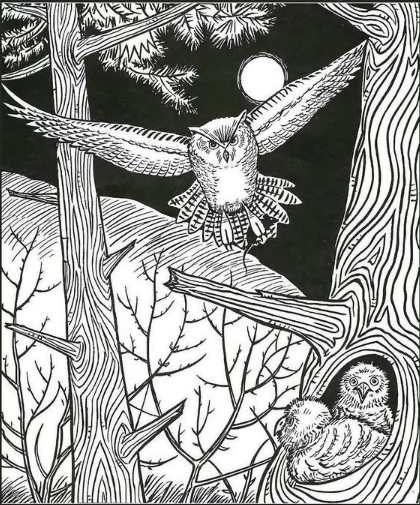
Hunting strategies also differ. Many owls use a “sit-and-wait” technique: they perch on a branch, fence post, or barn beam, watching and listening quietly. Once they detect movement or sound, they launch into a controlled glide, often flying low to the ground. At the last moment, they extend their strong talons to seize the prey. Others, such as some grassland species, may fly back and forth over open areas, scanning the ground continuously before diving.
Barn owls offer a particularly well-studied example. They are known for their ability to hunt in near darkness, often over agricultural fields. When they consume small animals whole, the indigestible parts—bones, fur, and insect shells—are later compressed into pellets and regurgitated. Scientists and students can examine these pellets to learn which small mammals and other species live in the area, turning owl feeding behavior into a valuable research tool.
Family Life: From Eggs to First Flight
Behind their fierce hunting abilities, owls are also devoted parents. Most species do not build elaborate nests like some songbirds. Instead, they use natural cavities in trees, old woodpecker holes, rocky ledges, cliff crevices, or human-made structures such as barns and abandoned buildings. A hollow trunk or sheltered corner can become a safe place to lay eggs and raise young.
The typical clutch size in many species ranges from two to five eggs, although this can vary with food availability. In some years when prey is abundant, owls may lay more eggs; in lean years, fewer. Usually, one parent—often the female—stays on the nest to incubate the eggs, while the other hunts and delivers food. Incubation periods range from about three to five weeks depending on the species.
Once the chicks, known as owlets, hatch, they are helpless and covered in soft down. At first, they rely completely on their parents for warmth and food. Adults may tear prey into smaller pieces or, in some species, partially digest it and then regurgitate softer food for the young. Over time, the owlets grow stronger, grow juvenile feathers, and begin to explore the immediate area near the nest.
The path from nestling to capable flier is gradual. Early attempts at movement involve clumsy hops, short wing flaps, and awkward balance on branches. As their muscles develop, the young birds practice more often, copying the behavior of the adults. In many species, it can take six to eight weeks, sometimes longer, before the young are ready to fly confidently and hunt for themselves. Even after they fledge, parents may continue to feed and guide them for several weeks while they learn the skills needed to survive.
How to Observe Owls Responsibly
For people interested in seeing owls in the wild, timing and behavior matter. Many species are most active at dusk and dawn, when they are transitioning between resting and hunting. Instead of scanning the sky constantly, it can be more effective to listen. Each owl species has distinctive calls, including hoots, screeches, whistles, and trills. Learning these sounds from reliable audio guides or birding organizations can help identify which species is present even when they remain hidden.
Habitats worth exploring include forest edges, hedgerows around fields, marshes, old barns, and wooded parks. Local birdwatching groups, nature centers, or conservation organizations often have information about where owls are commonly observed in a given region. When searching, patience and respect are essential. Moving slowly, keeping voices low, and avoiding the use of bright white lights reduces disturbance. If light is necessary, using a red filter on a flashlight or headlamp can help preserve night vision and is generally less disruptive to wildlife.
After a sighting, recording basic details can contribute to citizen-science efforts. Noting the date, time, location, habitat type, behavior, and calls helps researchers track population trends and distribution changes over time. Many projects run by universities, bird conservation organizations, or global platforms invite the public to submit observations, turning individual wildlife encounters into useful data.
Conservation Challenges in a Changing World
Despite their impressive adaptations, owls face significant challenges in the modern world. Habitat loss is among the most serious. Logging of mature forests removes old trees with natural cavities. Agricultural expansion and urban development reduce the variety of habitats and can fragment the landscapes that owls rely on for hunting and nesting. When suitable nesting sites become scarce, some populations decline.
Chemical exposure can be another serious threat. Rodenticides designed to control rats and mice may be eaten by these animals shortly before they are caught by an owl. When a predator consumes poisoned prey, the toxins can accumulate and cause illness or death. This problem, known as secondary poisoning, has been documented in several regions and affects other birds of prey as well. Choosing less harmful pest-control methods, such as mechanical traps or improved storage practices, can help reduce this risk.
Collisions with vehicles and power lines are additional dangers. Owls often hunt along open corridors such as roadsides, where small mammals may be more visible. Flying low across roadways at night increases the chance of being struck by cars. In some countries, research has led to measures like adjusting roadside vegetation or installing markers on power lines to make them more visible to birds.
Climate change is emerging as another factor that could affect owls, especially species dependent on specific habitats or prey. Altered rainfall patterns, changing temperatures, and shifting forest types may influence where certain prey species live or how frequently they reproduce. Long-term monitoring is needed to understand how owl populations respond to these changes and which conservation strategies will be most effective.
How People Can Help Protect Owls
There are several practical ways individuals and communities can support owl conservation while still enjoying the presence of these birds. Installing well-designed nest boxes in appropriate habitats can provide safe breeding sites where natural cavities are scarce. Conservation organizations and wildlife agencies often offer guidelines on box dimensions, placement height, and orientation tailored to local species.
Reducing or eliminating the use of toxic rodenticides and other harmful chemicals helps not only owls but many other predators and scavengers. Securing food sources, sealing buildings, and using targeted, non-chemical methods can manage rodent problems without endangering wildlife. Supporting land-use planning that preserves mature trees, hedgerows, and wild patches also helps maintain the structural diversity that owls need.
Rescue and rehabilitation centers play a key role when owls are injured by collisions or entanglements. These centers, often run by licensed wildlife rehabilitators, provide medical care and, when possible, release recovered birds back into the wild. Public education programs associated with these centers teach people how to coexist with birds of prey, recognize when an animal needs help, and avoid actions that could disturb nests.
Protecting darker night skies benefits owls and many other nocturnal species. Excessive artificial light can disrupt natural behaviors, including hunting and navigation. Simple actions such as shielding outdoor lights, using lower-intensity bulbs, and turning off unnecessary lighting reduce light pollution and create more natural conditions after sunset.
Owls in Culture and Human Imagination
Owls have deep roots in human stories and symbolism worldwide. In ancient Greece, the little owl was associated with Athena, the goddess of wisdom, and appeared on early coins as a symbol of knowledge and protection. In parts of Asia, owls have been seen as guardians of homes or messengers between worlds. Some Native American traditions portray owls as important spiritual figures, sometimes as protectors and sometimes as warnings to pay attention to hidden dangers.
Modern literature and film continue to use owls as symbols of mystery, intelligence, and the unknown. Their large eyes, silent flight, and nocturnal habits naturally lend themselves to stories that explore the boundary between day and night, known and unknown. While scientific research has clarified many aspects of owl biology—such as how their feathers muffle sound or how their hearing locates prey—the sense of wonder has not disappeared. Instead, knowledge deepens appreciation.
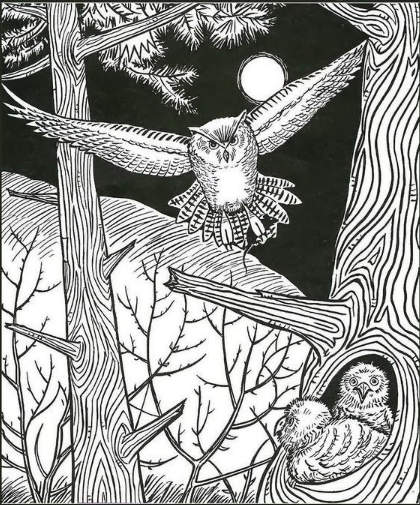
Seeing an owl take off from a branch into moonlit air can still feel like witnessing a quiet performance of nature. Each movement reflects millions of years of evolution: wings shaped for stealth, senses tuned to faint sounds, and instincts refined to raise young successfully in challenging environments. Owls combine grace, efficiency, and vulnerability in a way that captures both scientific interest and emotional attention.
Hearing a distant hoot at night offers an opportunity to pause and consider the hidden life around us. Behind that call is a living predator that helps balance local ecosystems by controlling rodent populations, a parent that must find enough food for its chicks, and a species that depends on forests, fields, and wetlands remaining healthy. Valuing owls means valuing the habitats and natural cycles that support them.
By learning about owls, observing them with care, and supporting conservation measures, people can help ensure that future generations continue to experience the quiet presence of these remarkable birds. The silent glide of an owl through the night sky is not only a symbol of wildness; it is also a reminder of how closely human choices are connected to the survival of the creatures that share our planet.