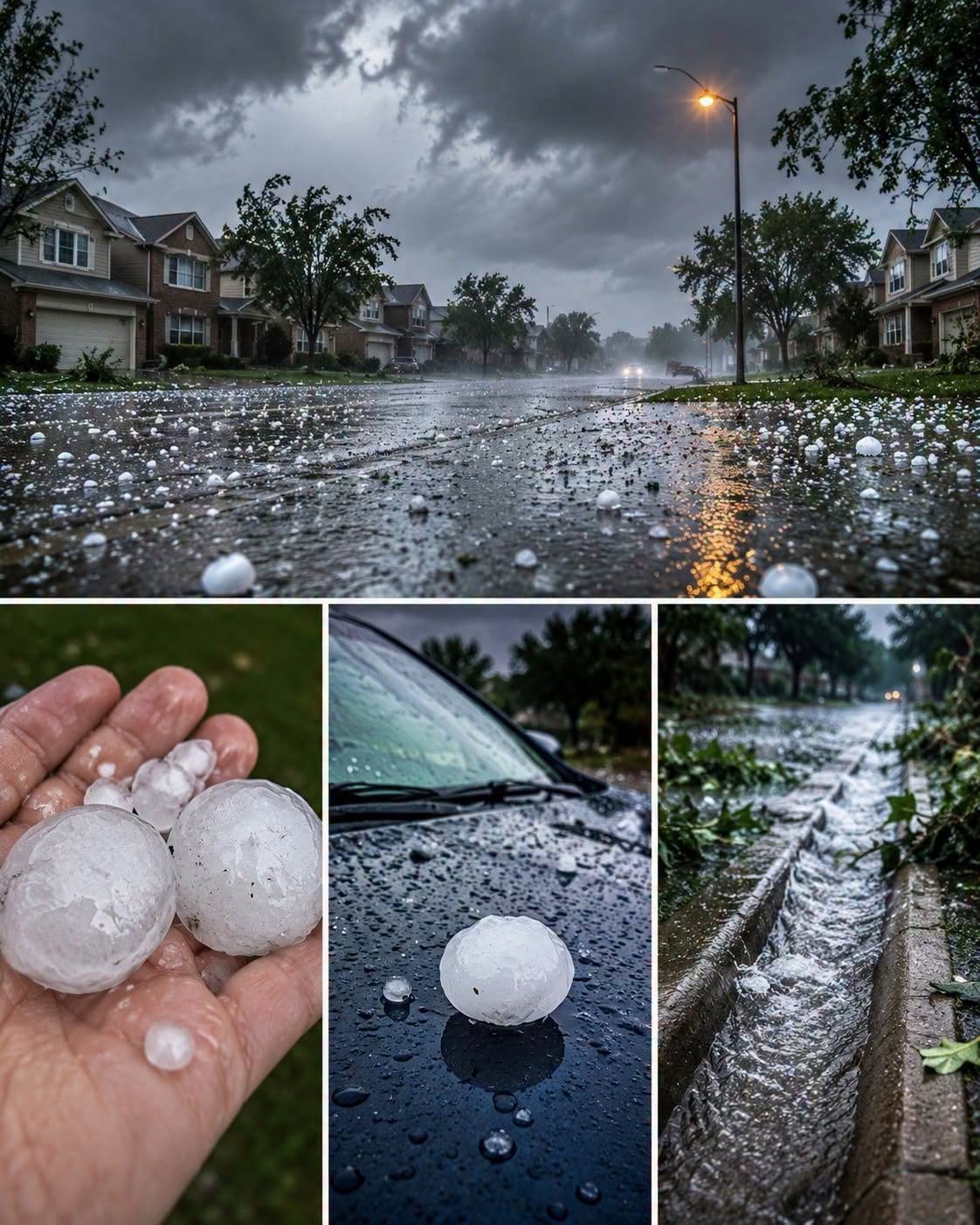
The evening began quietly. Streets were peaceful, families were finishing their daily routines, and the sky looked like any ordinary night. In many communities, familiar weather patterns become part of everyday life. People learn to recognize clouds, changing temperatures, and the small signs that suggest a shift in the atmosphere.
Then the weather began to transform.
A breeze moved through the area. The clouds grew heavier. A distant sound suggested that the calm conditions might not last. At first, many people expected a normal thunderstorm, something they had experienced before. But as the atmosphere changed, it became clear that this was a different kind of weather event.
Hailstorms are among the most fascinating examples of how complex Earth’s atmosphere can be. They form through a combination of temperature changes, air movement, and moisture in the sky. While a hailstorm may seem sudden from the ground, it is the result of powerful natural processes happening high above.
Stories of unexpected weather remind us of the importance of understanding nature. Behind every storm is a scientific explanation, and behind every community response is a story of preparation, awareness, and resilience.
What Is a Hailstorm?
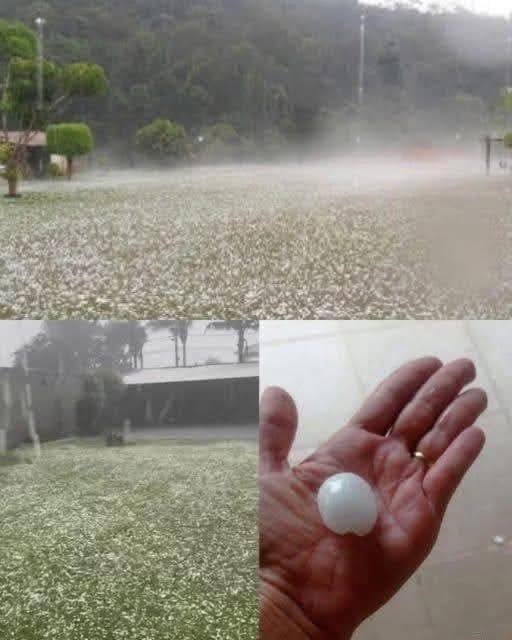
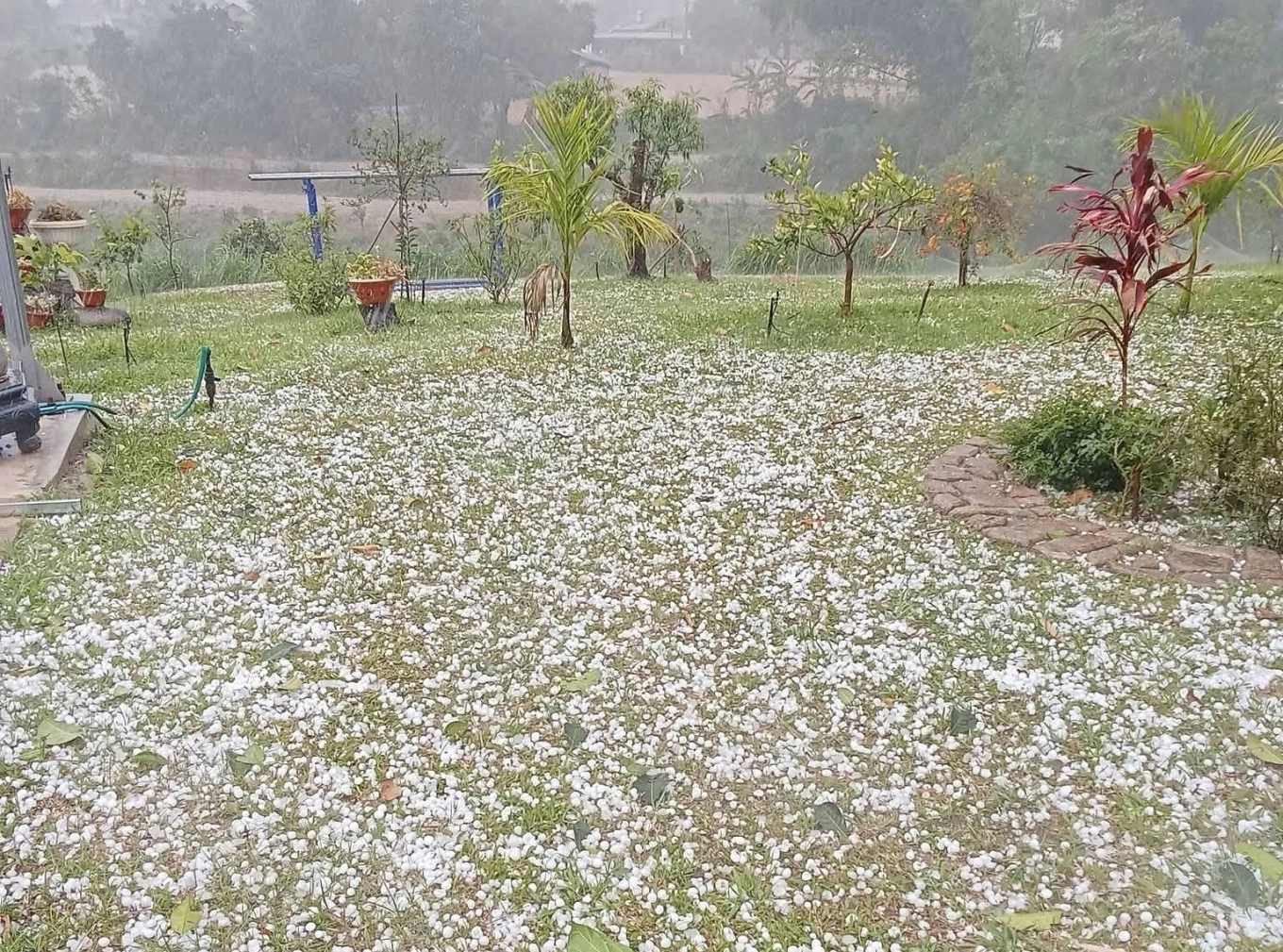
A hailstorm is a type of weather event where balls or pieces of ice, known as hailstones, fall from the sky. Unlike regular rain, hail forms when water droplets are carried upward into very cold areas of a storm cloud, where they freeze.
The process begins inside large storm clouds called cumulonimbus clouds. These clouds can reach high into the atmosphere, where temperatures are much lower. Strong upward-moving air currents, known as updrafts, carry water droplets upward.
As these droplets enter colder parts of the cloud, they freeze into small ice particles. Additional layers of ice may build around them as they move through the cloud. Eventually, when the hailstones become too heavy for the air currents to support, they fall toward the ground.
The size and shape of hailstones can vary greatly. Some are small and round, while others develop unique layered structures depending on their journey inside the cloud.
The Science Behind Changing Weather
Weather is created by the constant movement of energy and moisture through Earth’s atmosphere. The atmosphere is a dynamic system where temperature, pressure, wind, and humidity interact.
Hailstorms usually require specific conditions. Warm, moist air near the surface can provide energy for storm development. Above this, colder air layers create the temperature differences needed for ice formation.
When these conditions combine, thunderstorms can become stronger and more organized. The presence of strong updrafts allows hailstones to remain suspended longer, giving them more time to grow.
Meteorologists study these processes using satellites, radar systems, weather stations, and computer models. These tools help scientists understand storm development and improve forecasting.
Although weather can still surprise us, scientific knowledge allows communities to prepare more effectively.
Why Hailstorms Capture Human Attention
Weather has always fascinated people. Across history, storms have appeared in stories, art, and cultural traditions. They represent the connection between humans and the natural world.
A hailstorm is especially memorable because it creates a dramatic contrast. A peaceful evening can quickly become a moment of awareness as the sky changes and the environment responds.
Many cultures have developed stories and traditions around unusual weather events. Some viewed storms as symbols of change, renewal, or natural power. These interpretations reflect human attempts to understand the world around us.
Modern science offers another perspective by explaining the physical processes behind these events. Together, cultural curiosity and scientific exploration show how deeply weather influences human imagination.
The Importance of Weather Awareness
One of the most valuable lessons from severe weather is the importance of awareness. Understanding local weather patterns helps people make informed decisions.
Weather services provide forecasts and alerts that allow communities to prepare. Simple habits, such as checking forecasts, understanding warning systems, and protecting outdoor belongings, can make a meaningful difference.
Preparation is not about expecting the worst. It is about respecting the power and unpredictability of nature while using available knowledge.
Many communities develop their own experiences with weather. People learn from past events and share information that helps others stay informed.
The Role of Technology in Weather Forecasting
Modern technology has transformed the way we understand storms. In the past, people relied mostly on visual observations and traditional knowledge. Today, scientists use advanced tools to study atmospheric conditions.
Weather satellites provide images of cloud systems from above. Radar technology helps track precipitation and storm movement. Computer models analyze enormous amounts of data to estimate possible weather changes.
These technologies allow meteorologists to identify developing storm patterns earlier than before. Forecasting is not perfect, because weather systems are naturally complex, but continuous research improves accuracy.
The combination of technology and human expertise helps communities respond with greater confidence.
How Communities Respond to Weather Challenges
When unusual weather occurs, community cooperation often becomes important. Neighbors may share information, help one another prepare, and support local recovery efforts.
A weather event is not only about the storm itself. It is also about how people adapt afterward. Communities often learn valuable lessons about planning, communication, and resilience.
Stories from different places show that preparation and cooperation can strengthen connections between people. A shared experience can encourage communities to become more aware of their surroundings.
The ability to adapt is one of humanity’s most important qualities. People have always learned from nature and found ways to respond to changing environments.
:strip_icc()/i.s3.glbimg.com/v1/AUTH_59edd422c0c84a879bd37670ae4f538a/internal_photos/bs/2026/r/M/OwjROfRP6yDch4X4HwjA/g1-2026-05-25t215246.958.jpg)
Hailstorms and Climate Research
Scientists continue to study how weather patterns change over time. Climate research examines long-term trends in temperature, moisture, and atmospheric behavior.
It is important to distinguish between individual weather events and broader climate patterns. A single storm does not explain long-term changes, but collections of observations help researchers understand larger trends.
Researchers use historical weather records, satellite information, and climate models to explore how the atmosphere behaves over many years.
This ongoing research helps improve our understanding of Earth’s systems and supports better planning for the future.
Appreciating the Power of Nature
Weather events remind us that the planet is constantly changing. The atmosphere is not a static environment but a living system with endless movement and interaction.
A hailstorm may begin as a quiet change in the sky, but it reveals the complexity of natural processes happening above us. Each cloud, wind pattern, and drop of moisture plays a role in the larger story of Earth’s weather.
Learning about storms does not need to create fear. Instead, knowledge can create appreciation. Understanding nature allows people to respect it while continuing to explore its mysteries.
Conclusion: Curiosity Connects Us to the Natural World
A calm evening that transforms into an unexpected hailstorm is more than a weather story. It is a reminder of how connected humans are to the environment around us.
Science helps explain how hail forms, why storms develop, and how weather forecasting continues to improve. Human experiences add another layer by showing how people observe, adapt, and learn from the world.
Nature has always inspired curiosity. From watching clouds move across the sky to studying the atmosphere with advanced technology, humans continue searching for answers.
Every storm carries a lesson. It teaches us about the complexity of our planet, the value of preparation, and the importance of staying curious about the natural world we share.
/https://i.s3.glbimg.com/v1/AUTH_59edd422c0c84a879bd37670ae4f538a/internal_photos/bs/2026/R/E/x7SVDkT6y1wgbzSuGFoA/edicao-imagens-g1-17-.png)
Sources
National Oceanic and Atmospheric Administration (NOAA). Educational resources on weather systems, thunderstorms, and atmospheric science.
World Meteorological Organization (WMO). Research and information on global weather and climate processes.
National Weather Service. Public information on severe weather awareness and forecasting.
NASA Earth Science. Satellite observations and research on Earth’s atmosphere.
American Meteorological Society. Educational materials on meteorology and weather phenomena.