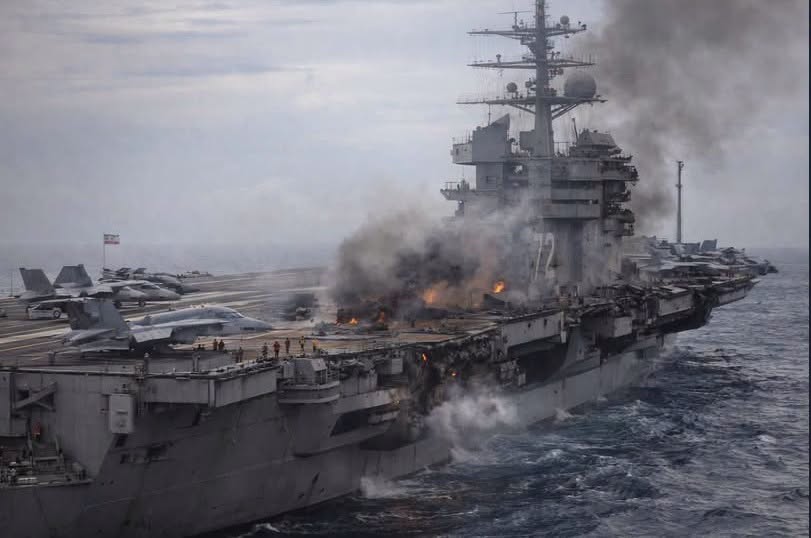
In the modern world, conflicts are no longer shaped only by events happening on the ground or at sea. They are also influenced by information, communication, and the way competing sides present their perspectives to the public.
A recent dispute involving Iran-linked media reports and the United States Navy has highlighted how quickly military claims can spread and how difficult it can be for the public to separate confirmed information from competing narratives.
Reports emerged claiming that a U.S. aircraft carrier operating in the Arabian Sea had been targeted, while American officials rejected the claim and stated that the vessel remained operational. The disagreement created a wave of discussion about naval power, regional security, and the role of information in modern geopolitical situations.
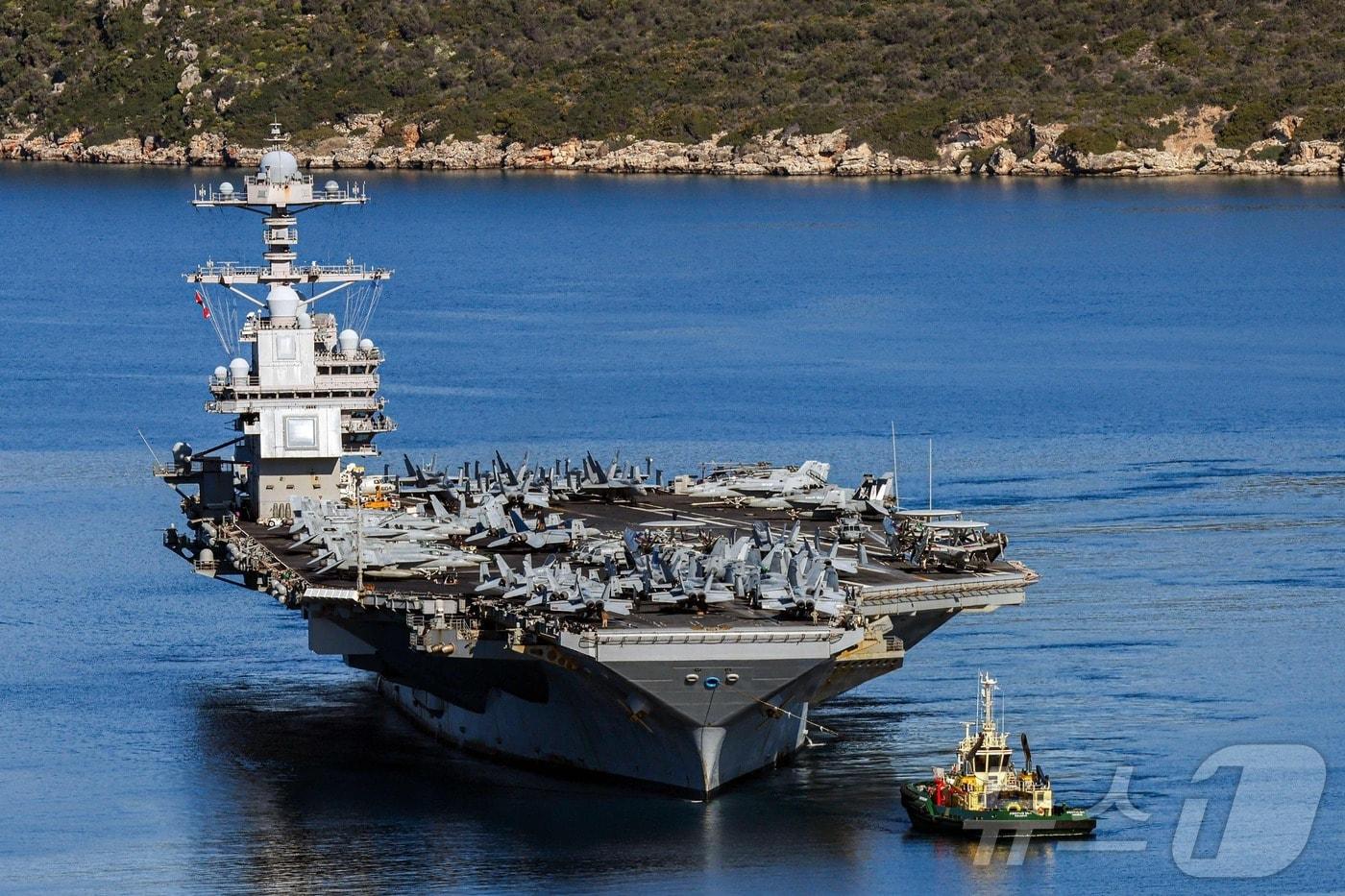
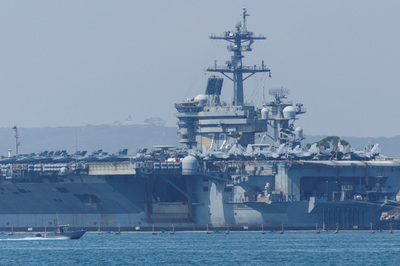
At the center of the discussion is the USS Abraham Lincoln, one of the most recognizable aircraft carriers in the U.S. Navy. Beyond its military function, the ship represents a broader symbol of global influence, strategic presence, and international diplomacy.
The incident serves as a reminder that in an era of instant communication, understanding events requires patience, careful evaluation, and attention to verified information.
The Strategic Importance of Aircraft Carriers
Aircraft carriers are among the most significant assets in modern naval operations. These large ships serve as floating platforms that allow aircraft to operate far from their home bases.
The USS Abraham Lincoln belongs to the Nimitz class, a group of nuclear-powered aircraft carriers designed for long-range operations. These vessels can support a variety of missions, including maritime security, humanitarian assistance, training exercises, and regional presence operations.
Their importance is not only based on their size or technology. Aircraft carriers also serve as diplomatic symbols. Their presence in international waters can communicate commitment, reassurance, or strategic interest.
For decades, major naval powers have used carrier deployments as a way to maintain visibility around the world. Their movements are often closely watched by governments, analysts, and international observers.
Because of this symbolic importance, any report involving a carrier can quickly attract global attention.
Competing Claims and the Challenge of Verification
The reported disagreement between Iran-linked media and U.S. officials demonstrates a common challenge in fast-moving international events: information often arrives before complete verification is possible.
One side may present an account based on its own sources and interpretation, while another side may dispute the same information.
In these situations, facts can take time to establish. Independent confirmation, official statements, satellite imagery, and credible reporting often become important tools for understanding what actually happened.
Modern conflicts frequently include what experts call an “information environment,” where public perception becomes part of the broader competition.
Governments and organizations may release statements, images, or videos to support their versions of events. Audiences must carefully consider the origin, timing, and reliability of these materials.
The ability to analyze information critically has become increasingly important in the digital age.
The Role of Naval Power in the Arabian Sea
The Arabian Sea is a strategically important region connecting major trade routes and energy pathways.
Countries around the region pay close attention to naval movements because the area plays a significant role in global commerce.
The presence of military vessels in international waters can be connected to many factors, including security operations, training activities, diplomatic messages, and regional stability efforts.
The United States has maintained naval interests in the region for many years, while other countries, including Iran, closely monitor foreign military activity near their surrounding waters.
The result is a complicated environment where military presence, political messaging, and economic concerns often overlap.
Why the Strait of Hormuz Matters
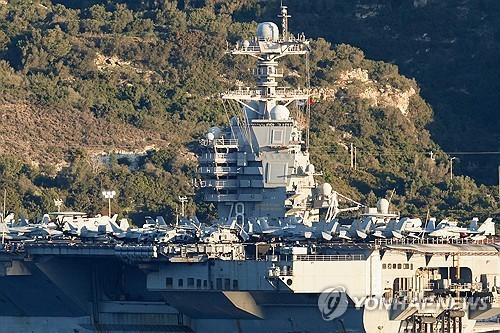
One of the most important geographic locations connected to regional security is the Strait of Hormuz.
This narrow waterway connects the Persian Gulf with the Arabian Sea and is a major route for international energy transportation.
Because of its importance, events in or near this area can affect global markets and international discussions.
Even rumors or unconfirmed reports involving military activity can create uncertainty because businesses, governments, and markets closely watch developments.
The importance of the region means that communication from officials often receives worldwide attention.
The Changing Nature of Modern Conflicts
Traditional military conflicts were often measured by physical movements, territorial changes, or visible confrontations.
Today, conflicts can also involve technology, communication networks, economic pressure, and public messaging.
Information spreads instantly through social media, news platforms, and online communities. This speed creates both opportunities and challenges.
On one hand, people can receive updates quickly. On the other hand, incomplete or inaccurate information can circulate before proper verification.
This makes responsible reporting especially important. Headlines may attract attention, but understanding requires looking at context and evidence.
The Importance of Official Communication
During sensitive international situations, official communication plays a major role.
Defense organizations and governments often release statements to clarify events, reassure the public, and explain their positions.
However, official statements should also be considered within a wider context. Different governments may emphasize different aspects of a situation based on their interests and perspectives.
For this reason, analysts often compare multiple sources before reaching conclusions.
A careful approach helps prevent misunderstanding and supports a more accurate picture of complex events.
Technology and Transparency in Modern Security
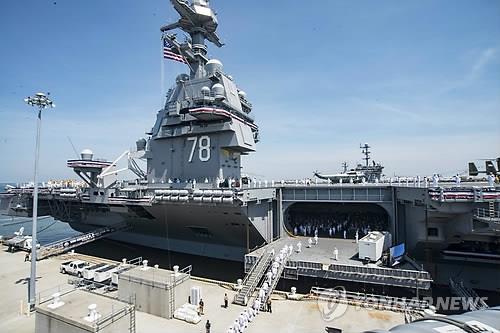
Technology has changed the way the world observes military activity.
Satellite imagery, ship tracking systems, communication networks, and digital records can provide additional information during international events.
These tools have increased transparency in some areas by allowing independent observers to examine movements and timelines.
However, technology does not eliminate uncertainty completely. Data must still be interpreted correctly, and context remains essential.
A single image or statement rarely explains an entire situation by itself.
The Human Side of Geopolitical Events
Behind every military discussion are real people affected by international decisions.
Regional tensions can influence communities through economic uncertainty, travel concerns, and diplomatic challenges.
Many people living far from military centers still feel the impact of global events through news coverage and public discussion.
Understanding international situations requires remembering that they involve more than governments and institutions. They also involve families, workers, and communities trying to navigate an uncertain world.
Lessons From the USS Abraham Lincoln Dispute
The disagreement surrounding the USS Abraham Lincoln highlights several important lessons about modern communication and global affairs.
First, information must be evaluated carefully. Early reports can change as more evidence becomes available.
Second, military events often involve multiple layers, including strategy, diplomacy, economics, and public messaging.
Third, patience is valuable. Waiting for verified information can prevent confusion and misunderstanding.
In a world where updates travel instantly, taking time to understand the bigger picture has become more important than ever.
Conclusion: Looking Beyond the Headlines
The USS Abraham Lincoln dispute is not only about a single aircraft carrier or a single reported event. It reflects a larger reality of the modern world, where military strategy, communication, and public perception are deeply connected.
The ocean has always been a place where nations interact, compete, and cooperate. Today, those interactions are followed by millions of people through digital platforms and global media.
Understanding such events requires curiosity, careful thinking, and a willingness to consider different perspectives.
In the end, the most valuable approach is not simply reacting to the loudest headline, but seeking context, evidence, and a deeper understanding of the forces shaping our world.
Sources
U.S. Department of Defense – Official Defense Information and Statements
U.S. Navy – Aircraft Carrier Information and Operations Resources
International Institute for Strategic Studies (IISS) – Global Security Analysis
Council on Foreign Relations (CFR) – International Affairs Research
United Nations – International Peace and Security Resources