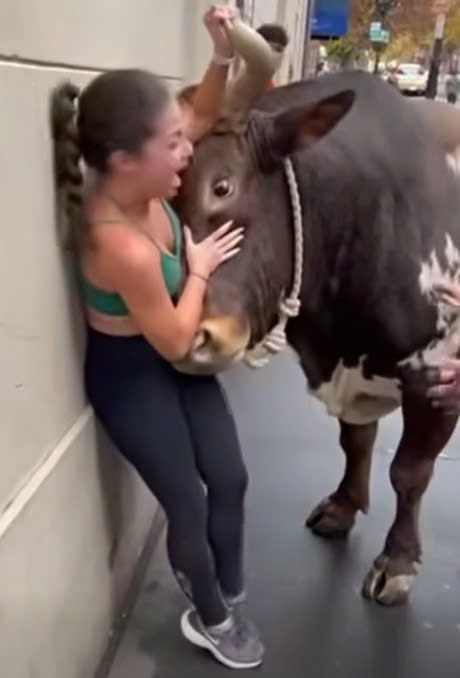
On a peaceful farm surrounded by open fields, a large bull stands calmly in the distance. The animal appears still, observing its surroundings while people nearby go about their daily activities. Moments like this often create a feeling of connection between humans and animals, reminding us of the long relationship we have shared with livestock throughout history.
For generations, animals such as bulls have been part of human communities. They have helped shape agriculture, influenced traditions, and appeared in stories passed down through cultures around the world. Their strength and presence have inspired admiration, respect, and curiosity.
However, close interactions with large animals also require understanding. A bull may appear calm, but like all animals, it communicates through body language and responds to its environment in ways that humans may not always immediately recognize.
The study of animal behavior helps us understand these fascinating creatures. By combining traditional knowledge with modern science, we can appreciate bulls not only as symbols of strength but also as intelligent animals with unique instincts and social behaviors.
The Fascinating World of Bull Behavior
Bulls have played an important role in human history for thousands of years. As members of the cattle family, they have been connected with farming, cultural traditions, and rural lifestyles across many regions.
Their powerful appearance has often made them symbols of determination, stability, and endurance. In different cultures, bulls have represented important values and have appeared in artwork, mythology, and celebrations.
Beyond symbolism, bulls are living animals with their own personalities and behaviors. They respond to their surroundings through movement, sounds, and social interactions.
Understanding these behaviors allows humans to build safer and more respectful relationships with livestock.

Bulls in Mythology and Cultural Traditions
Throughout history, bulls have carried deep cultural meanings. Many ancient societies viewed cattle as valuable animals because they provided important support for communities.
In some traditions, bulls were associated with strength and prosperity. Their connection to farming made them symbols of productivity and the relationship between humans and nature.
Stories about bulls often reflected human admiration for their physical power and presence. These stories were not always scientific descriptions but represented the way people interpreted the natural world around them.
Today, these cultural connections continue through festivals, artwork, and historical traditions. They show how animals have influenced human imagination for centuries.
The Science Behind Bull Behavior
While cultural stories offer interesting perspectives, science provides another way to understand bulls.
Animal behavior researchers study how livestock communicate, interact, and respond to their surroundings. Bulls, like other animals, use a combination of body language, sounds, and movement to express themselves.
Their behavior can be influenced by many factors, including their environment, previous experiences, social relationships, and daily routines.
A calm animal may simply be comfortable with its surroundings, while changes in behavior can indicate curiosity, uncertainty, or a need for space.
Learning to recognize these signals helps people interact with animals more responsibly.
How Animals Communicate Without Words
One of the most fascinating aspects of animal behavior is communication.
Humans often rely on spoken language, but animals communicate through many different methods. A bull may use posture, movement, and sounds to express its feelings or respond to another animal.
For example, changes in body position can provide information about an animal’s mood. Attention to these signals helps observers understand when an animal feels relaxed or when it may need more distance.
Scientists continue to research animal communication because each species has developed unique ways of interacting with the world.
This reminds us that communication exists throughout nature, even when it happens differently from human conversations.

Why Respecting Animal Space Matters
Large animals deserve thoughtful attention because their size and natural abilities are different from those of humans.
When people spend time around livestock, understanding boundaries is important. Animals may become comfortable around familiar environments, but they still respond to unexpected situations.
Respecting space allows animals to remain relaxed and gives people the opportunity to observe them safely.
Farmers and animal professionals often develop strong awareness through experience. They learn to notice small changes and adjust their actions accordingly.
This knowledge is built on patience, observation, and respect rather than fear.
The Connection Between Humans and Livestock
The relationship between humans and livestock is one of the oldest connections in history.
For centuries, cattle have supported communities through agriculture and daily life. People who work with livestock often develop a deep appreciation for animal behavior and individual differences.
Many farmers describe their animals as unique individuals with different habits and personalities. Some may be more curious, while others may prefer a quieter environment.
These relationships demonstrate that understanding animals requires more than simply observing them. It requires attention and care.

Animal Instincts and Modern Research
Animal instincts are natural behaviors that help creatures respond to their environment.
Scientists study instincts to understand how animals make decisions and adapt to changing conditions.
For bulls and other livestock, instincts can influence how they respond to unfamiliar movements, sounds, or situations.
This does not mean animals are unpredictable in every moment. Instead, it shows that their behavior is shaped by a combination of natural tendencies and experiences.
Modern research helps people better understand these patterns and create environments where both humans and animals can interact positively.
The Importance of Learning Animal Body Language
Body language is one of the most useful tools for understanding animals.
Small changes in movement, posture, or attention can provide valuable information. People who regularly work with animals often develop the ability to notice these details.
Learning animal body language encourages patience and awareness. It allows humans to respond thoughtfully instead of making assumptions.
This skill applies not only to bulls but also to many other animals, from pets to wildlife.
The more we understand animal communication, the stronger our connection with nature becomes.
Separating Myths From Scientific Understanding
Stories about powerful animals have existed for centuries. Some portray bulls as mysterious or extraordinary creatures with special qualities.
While these stories are meaningful parts of culture, science helps us view animals through evidence and observation.
The truth is that real animals are already remarkable. Their abilities, behaviors, and adaptations are fascinating without needing exaggeration.
Science does not remove the wonder from nature. Instead, it reveals deeper details about how animals live and interact.
Protecting Animals Through Knowledge
Respect for animals begins with understanding.
When people learn about animal behavior, they become better prepared to interact responsibly. Knowledge encourages appreciation and helps create positive relationships between humans and animals.
Livestock care depends on patience, attention, and responsible practices. These principles benefit both animals and the people who work with them.
The goal is not to create distance between humans and animals, but to build healthier connections based on awareness.
Conclusion: The Endless Curiosity of the Animal World
The story of bulls and other animals is not only about strength. It is about communication, history, culture, and the relationship between humans and the natural world.
Across generations, animals have inspired myths, traditions, and scientific discoveries. They remind us that nature is filled with complexity and beauty.
While cultural stories give animals symbolic meaning, science helps us understand their real behaviors and abilities.
The curiosity that draws people toward animals encourages learning and respect. Every observation, every discovery, and every moment of connection helps us see wildlife and livestock in a deeper way.
The greatest lesson is simple: animals are not just part of our surroundings. They are living beings with their own behaviors, instincts, and stories waiting to be understood.
Sources
-
National Geographic Animal Behavior Resources
https://www.nationalgeographic.com/animals -
Smithsonian National Museum of Natural History
https://naturalhistory.si.edu -
International Union for Conservation of Nature (IUCN)
https://www.iucnredlist.org -
Food and Agriculture Organization of the United Nations (FAO) Animal Production Resources
https://www.fao.org -
Animal Behavior Society
https://animalbehaviorsociety.org