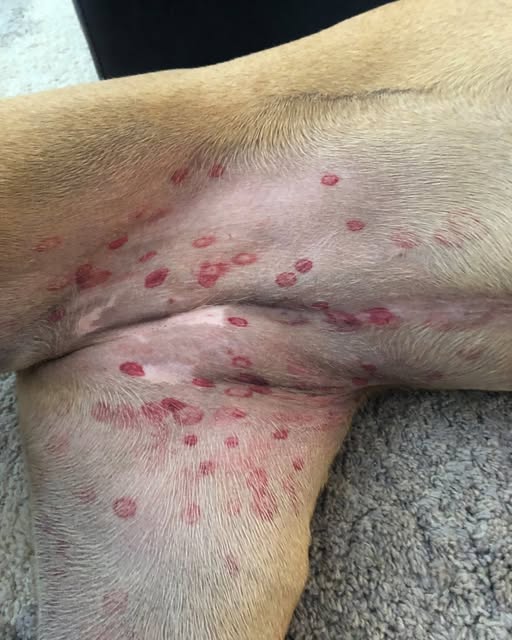
Few things concern pet owners more than noticing an unexpected change in their dog’s appearance. A small mark on the skin, a strange spot, or an unusual pattern can immediately raise questions.
Is it something serious? Does my dog need help? Should I contact a veterinarian?
These reactions are completely natural because dogs are part of many families. Their comfort and well-being matter deeply to the people who care for them.
One common discovery that surprises many dog owners is the appearance of small red circles or marks on a dog’s stomach area. At first glance, these spots may look alarming, but experts explain that in some cases, the cause can be relatively simple.
Outdoor exposure, including contact with certain insects, can sometimes create temporary skin marks that look more concerning than they actually are.
Understanding why these marks appear helps pet owners respond calmly, observe their dogs carefully, and know when professional advice may be needed.
Why Dogs Develop Red Marks on Their Skin
A dog’s skin can react to many different environmental factors.
The belly area is especially noticeable because it often has less fur compared with other parts of the body. This makes changes easier to see.
Some possible reasons for red marks include:
Insect contact
Environmental irritation
Sensitive skin reactions
Minor scratches
Changes in the surrounding environment
Not every red mark means the same thing. A dog’s age, breed, lifestyle, and health history can all influence how their skin responds.
This is why observation is important. A single mark may be temporary, while repeated or changing symptoms may require more attention.

The Role of Outdoor Insects
One explanation discussed by veterinarians is that some dogs develop red spots after spending time outdoors.
Certain flies and other small insects may land on dogs, especially when dogs rest in grassy areas. These interactions can sometimes leave small marks on areas with less fur.
The belly is often exposed when dogs lie down outside, making it one area where these marks may appear.
In many cases, these spots may improve naturally over time. However, pet owners should still monitor their dogs because not every skin change has the same cause.
The important point is understanding that a visible mark does not always indicate a major problem.
Understanding Fly Bites and Dogs
Insects interact with animals in different ways. Some bites or contacts may cause temporary irritation, while others may lead to stronger reactions.
A dog’s response depends on several factors:
The type of insect
The dog’s sensitivity
The location of contact
The dog’s general health
Some dogs may barely react, while others may experience more noticeable irritation.
This variation is normal because every dog is an individual.
Veterinarians often recommend watching for changes in behavior rather than focusing only on appearance.
A dog that continues eating, playing, resting normally, and showing no discomfort may simply need observation.
The Importance of Noticing Your Dog’s Behavior
Skin appearance is only one part of understanding your pet’s health.
Behavior can provide important clues.
Pet owners may want to pay attention to questions such as:
Is the dog scratching constantly?
Does the dog seem uncomfortable?
Are the marks spreading?
Has the dog’s appetite changed?
Is the dog acting differently?
A small skin mark with no other changes may have a different meaning from a mark accompanied by unusual behavior.
Dogs communicate through actions, and paying attention to these signals helps owners make better decisions.

When a Skin Mark May Need Veterinary Advice
Although some red spots are minor, pet owners should not ignore changes that appear unusual or continue over time.
Veterinary guidance may be helpful if:
The marks become larger
The skin appears irritated
The dog repeatedly scratches the area
There are signs of discomfort
The dog’s behavior changes
The spots do not improve
Many different conditions can look similar on the surface. A veterinarian can consider the full situation, including the dog’s history and environment.
Professional advice is especially valuable because early attention can prevent small concerns from becoming larger ones.
Common Misunderstandings About Pet Skin Changes
One challenge for pet owners is that many skin issues can look alike.
A red circle may come from an insect, but similar appearances can also happen for other reasons.
This is why online information should be viewed as general guidance rather than a diagnosis.
Photos and descriptions can provide useful ideas, but they cannot replace a professional examination.
Responsible pet care means combining observation with expert support when needed.

Seasonal Changes and Dogs
Many outdoor-related skin issues are connected to seasonal patterns.
During warmer months, insects become more active, and dogs often spend more time outdoors.
This can increase the chance of encounters with small insects or environmental irritants.
Seasonal awareness helps owners prepare.
Simple habits can include:
Checking pets after outdoor activities
Keeping living areas clean
Following recommended parasite prevention plans
Providing comfortable resting areas
Small routines can make a significant difference in pet care.
The Relationship Between Dogs and Their Environment
Dogs experience the world through their senses. They explore through smell, touch, and movement.
Because of this, their skin and fur interact constantly with the environment around them.
Grass, soil, plants, insects, and weather conditions can all influence a dog’s experience.
This does not mean outdoor activities should be avoided. Exercise and exploration are important parts of a dog’s life.
Instead, awareness helps owners create safer and more comfortable experiences for their pets.
Caring for Your Dog’s Skin Naturally
Healthy skin is supported by overall care.
Important factors include:
A balanced diet
Regular grooming
Clean surroundings
Routine veterinary care
Adequate hydration
Skin health is connected to general wellness.
Rather than focusing only on one visible mark, looking at the whole picture gives a better understanding of a dog’s condition.
The Human-Animal Bond and Responsible Care
Stories about dogs and their health often attract attention because they reflect something deeper: the strong relationship between people and animals.
Pet owners notice small details because they care.
A simple change in a dog’s appearance can lead to concern, but it can also become an opportunity to learn more about animal health.
Good pet care comes from a combination of love, attention, and reliable information.

Conclusion: Knowledge Helps Us Care Better
Seeing unexpected red marks on a dog’s belly can be worrying, but understanding possible causes helps pet owners respond thoughtfully.
Some marks may come from simple environmental factors, including outdoor insects. Others may require closer attention.
The most important lesson is balance.
There is no need to panic over every change, but there is also value in taking unusual signs seriously.
Dogs rely on humans to notice their needs. By observing carefully, learning about common causes, and seeking professional guidance when necessary, owners can provide better care.
Every small moment of attention strengthens the connection between people and their pets.
Sources
American Veterinary Medical Association (AVMA). Pet health, veterinary care, and animal wellness resources.
American Kennel Club (AKC). Dog care, behavior, and health education materials.
Merck Veterinary Manual. Veterinary information on skin conditions and animal health.
Cornell University College of Veterinary Medicine. Educational resources on pet health.
Veterinary Partner. Pet owner guidance on common animal health concerns.