
A Story of Information in a Connected World
Imagine standing in a busy port city where ships from dozens of nations arrive every day. Goods, cultures, ideas, and technologies move across oceans faster than ever before. Yet alongside trade and diplomacy, another invisible force shapes international affairs: information.
For centuries, nations have sought knowledge about the world beyond their borders. From ancient messengers traveling between kingdoms to modern satellite networks orbiting Earth, information has become one of the most valuable resources in global politics.
In recent years, reports about intelligence sharing among nations have drawn renewed attention to how countries cooperate, compete, and pursue their strategic interests. Such reports often spark discussions about alliances, regional influence, security concerns, and the evolving balance of power in international relations.
While headlines may focus on specific events, the broader story is much larger. It is a story about how nations gather information, build partnerships, and navigate an increasingly interconnected world.

Understanding Intelligence Sharing
Intelligence sharing refers to the exchange of information between governments or organizations for strategic, diplomatic, economic, or security purposes.
Throughout history, countries have relied on information networks to better understand international developments. Today, these networks can include satellite imagery, communications analysis, economic data, maritime tracking systems, and other sources of information.
Many nations maintain formal intelligence-sharing agreements with allies. Others cooperate on a case-by-case basis depending on shared interests or regional concerns.
The exchange of information can help governments make informed decisions, respond to emerging challenges, and coordinate policies with partners.
However, intelligence cooperation can also raise questions about geopolitical alignment and long-term strategic objectives.
The Historical Roots of Global Alliances
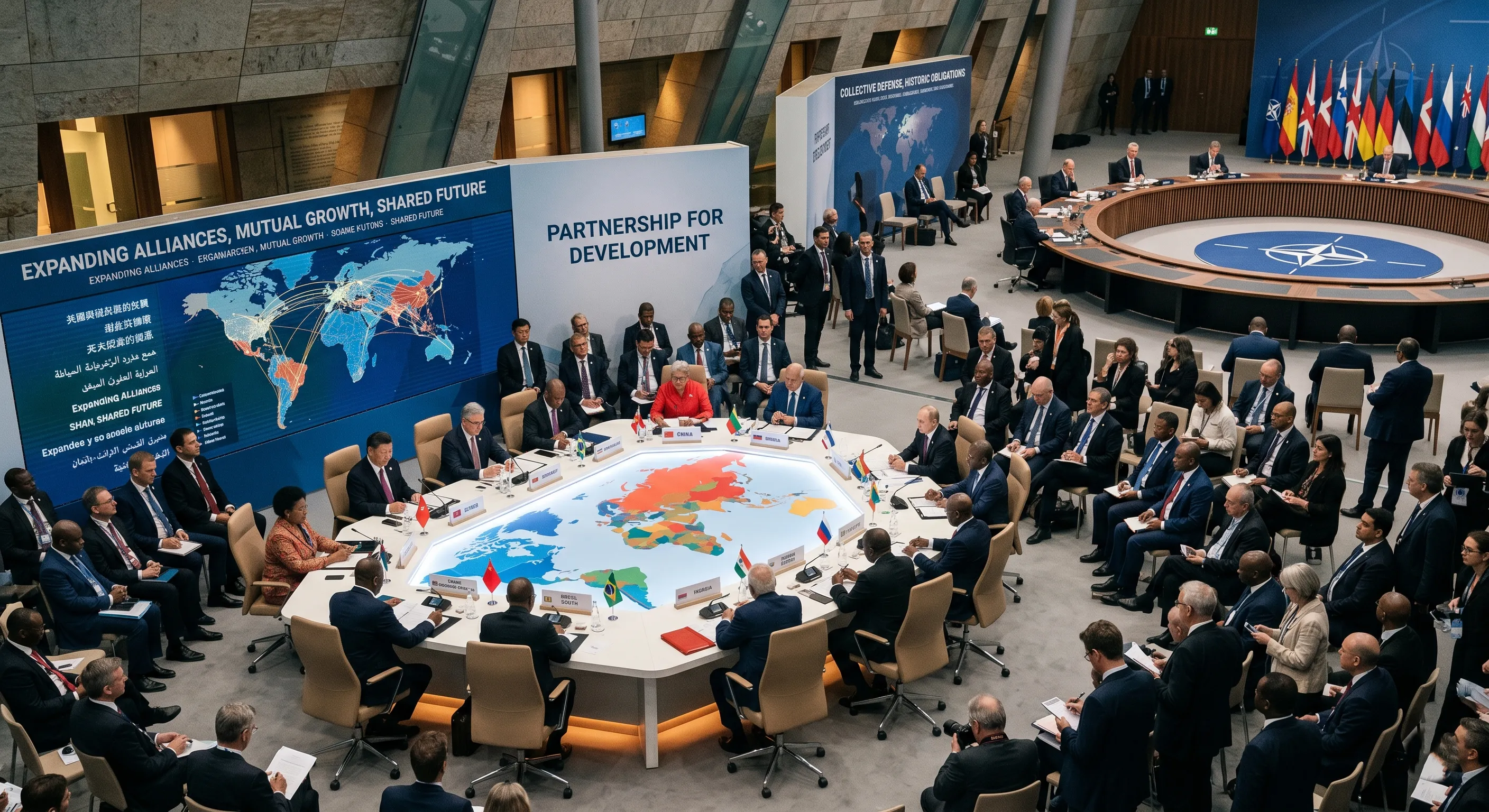
The concept of nations working together is far older than the modern state system.
Ancient civilizations frequently formed partnerships to facilitate trade, maintain regional stability, or pursue mutual interests. Over time, these relationships evolved into formal alliances that shaped world history.
During the twentieth century, alliances became particularly influential. Major international organizations and regional partnerships emerged to address economic development, diplomacy, and collective security.
Today, alliances remain central to international relations. Some are based on shared values and long-standing relationships, while others develop around specific economic or strategic interests.
Understanding these historical foundations helps explain why reports of cooperation between nations often attract significant public attention.
Why Information Matters in Modern Geopolitics
Information has become one of the defining resources of the modern era.
In the past, geography often determined a nation’s influence. Today, access to information, technology, and communication networks plays an equally important role.
Governments use information to assess economic trends, monitor environmental developments, manage transportation systems, and understand regional dynamics.
Advances in technology have dramatically expanded these capabilities. Satellites can track weather patterns, monitor shipping routes, and provide imagery of vast geographic areas.
As a result, information has become a critical component of national decision-making.
This reality explains why intelligence-related reports frequently become major international news stories.

Russia and Iran in Historical Context
Russia and Iran have a long and complex history that spans centuries.
Their relationship has experienced periods of cooperation, competition, and diplomatic engagement. Geography, trade routes, energy resources, and regional developments have all influenced interactions between the two countries.
In recent decades, observers have noted increasing cooperation in areas such as economics, energy, transportation, and regional diplomacy.
Analysts often view these developments through the lens of broader geopolitical shifts occurring across Eurasia and the Middle East.
At the same time, international relationships are rarely simple. Countries frequently cooperate in some areas while maintaining differing perspectives in others.
Understanding this complexity is essential when evaluating reports about diplomatic or strategic partnerships.
The Role of Media in Shaping Public Understanding
When reports emerge about intelligence activities or international cooperation, news organizations play a significant role in informing the public.
Major media outlets rely on official statements, expert analysis, and investigative reporting to provide context and explain developments.
However, information involving intelligence matters is often difficult for the public to independently verify. Many details may remain classified or unavailable for security reasons.
As a result, readers are encouraged to consider multiple sources, examine evidence carefully, and distinguish between confirmed facts and informed speculation.
A balanced approach helps promote a more accurate understanding of complex international issues.
Cultural Perspectives on Strategy and Information
Throughout history, cultures around the world have recognized the importance of knowledge and preparation.
Ancient texts from Asia, Europe, the Middle East, and Africa frequently discuss the value of understanding one’s environment and gathering information before making important decisions.
In literature and folklore, wise leaders are often portrayed as individuals who seek knowledge, listen to advisors, and carefully evaluate available information.
These cultural traditions highlight a universal principle: informed decisions tend to produce better outcomes than decisions based on limited understanding.
Modern intelligence systems can be viewed as an extension of this longstanding human pursuit of knowledge and awareness.

Scientific and Technological Foundations of Intelligence Gathering
While popular culture often portrays intelligence work as mysterious, much of modern information gathering relies on science and technology.
Satellite systems provide detailed images of geographic regions.
Computer networks process enormous volumes of data.
Artificial intelligence assists analysts in identifying patterns and trends.
Advanced sensors monitor environmental conditions, transportation activity, and communication signals.
Scientists, engineers, mathematicians, and technology specialists contribute significantly to these capabilities.
Their work demonstrates how innovation has transformed the way governments and organizations understand global events.
From a scientific perspective, intelligence gathering is largely about collecting, organizing, and analyzing information to support decision-making.
The Importance of Verification
One of the most important principles in both journalism and intelligence analysis is verification.
Information may originate from numerous sources, each with varying levels of reliability. Analysts must evaluate evidence, compare independent reports, and consider alternative explanations before drawing conclusions.
This process is similar to the scientific method, which emphasizes observation, testing, and careful evaluation.
Because international events often involve incomplete information, responsible analysis acknowledges uncertainty where appropriate.
This approach helps reduce misunderstandings and encourages more thoughtful public discussion.
Globalization and the Information Age
The modern world is more connected than at any point in history.
Trade networks span continents.
Communication occurs instantly across borders.
Financial markets react to events in real time.
Technological innovations spread rapidly around the globe.
These developments have created new opportunities for cooperation while also introducing new challenges.
Governments must navigate a landscape where information moves quickly and international events can have far-reaching consequences.
As globalization continues, the importance of information management and international communication is likely to increase.
Public Interest in International Affairs
People have always been curious about how nations interact.
Questions about alliances, diplomacy, trade, and global influence capture public attention because they affect the world in which we live.
Reports involving intelligence activities often attract particular interest because they reveal aspects of international relations that are usually less visible than public diplomacy.
While many details may remain unknown, such reports encourage broader conversations about cooperation, trust, technology, and global governance.
They also remind us that international relations involve complex networks of relationships that extend beyond public headlines.
Looking Ahead: The Future of Global Cooperation
As technology evolves, the nature of international cooperation will continue to change.
Artificial intelligence, advanced communications systems, space-based technologies, and digital infrastructure are creating new opportunities and new questions.
Nations will likely continue seeking partnerships that support their economic, technological, and strategic interests.
At the same time, international organizations and diplomatic institutions will remain important forums for dialogue and collaboration.
The challenge for policymakers will be balancing national priorities with the benefits of international cooperation.
Success will depend on communication, transparency, and a willingness to engage constructively with a diverse range of partners.
Conclusion: Curiosity, Knowledge, and the Human Search for Understanding
Human history is, in many ways, a story about the pursuit of knowledge.
From ancient travelers mapping distant lands to modern scientists studying Earth from space, people have always sought to better understand the world around them.
Reports about intelligence sharing, international partnerships, and geopolitical developments tap into this enduring curiosity. They remind us that information remains one of humanity’s most valuable resources.
While specific events may generate headlines, the larger story is about how societies gather knowledge, interpret evidence, and make decisions in an increasingly interconnected world.
As technology continues to reshape global relationships, our curiosity about international affairs is unlikely to fade. Instead, it will continue driving exploration, analysis, and discussion, helping us better understand the complex world we share.
Sources
-
The Washington Post – International Security and Foreign Affairs Coverage
-
United Nations Official Publications and Reports
-
Council on Foreign Relations (CFR)
-
Brookings Institution Research on International Relations
-
Carnegie Endowment for International Peace
-
RAND Corporation Studies on Geopolitics and Security
-
Encyclopaedia Britannica – International Relations and Diplomacy
-
NATO and International Security Publications
-
International Institute for Strategic Studies (IISS)
-
World Economic Forum Reports on Global Cooperation and Technology