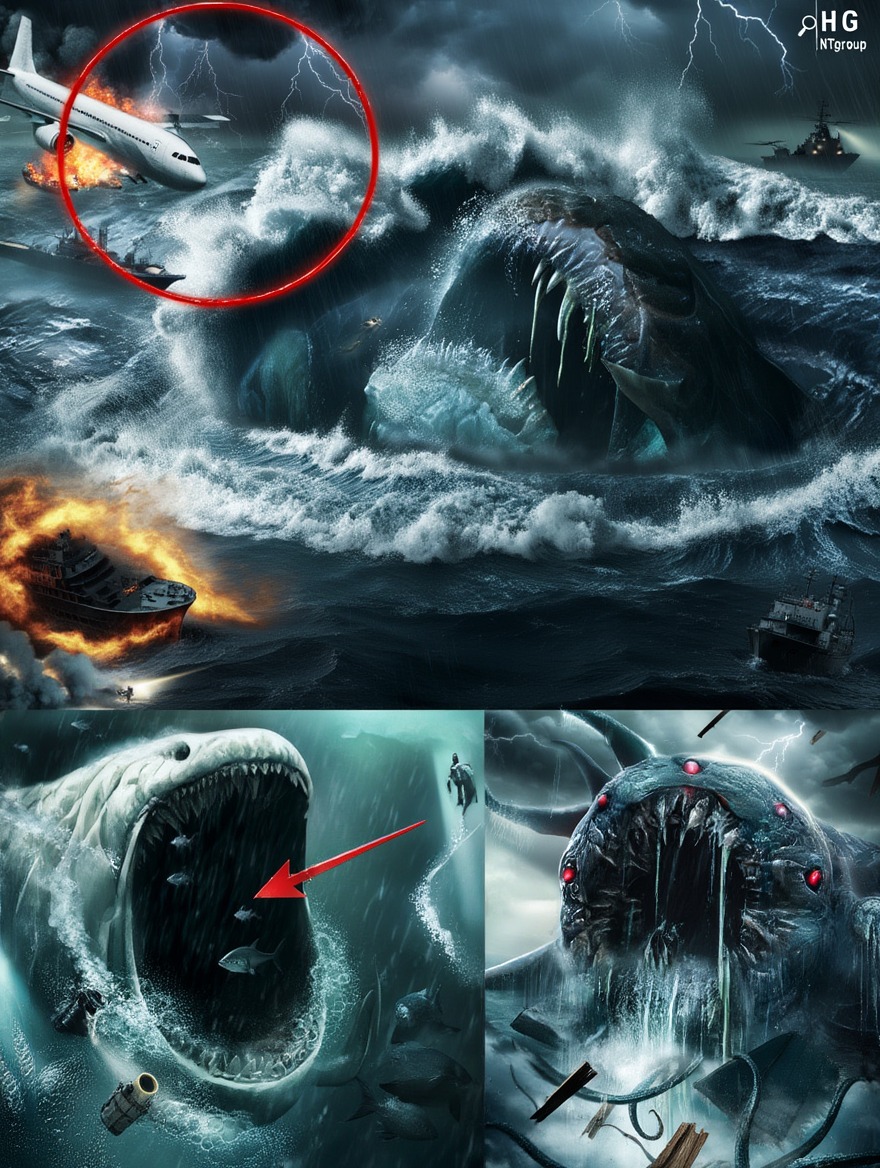
Few places on Earth have captured the public imagination quite like the Bermuda Triangle. For decades, stories about missing ships, vanished aircraft, strange weather, and unexplained events have transformed this section of the Atlantic Ocean into one of the world’s most enduring mysteries.
Books, documentaries, movies, and online discussions have all helped build the legend. Some people view the Bermuda Triangle as a place of unexplained disappearances, while others see it as an example of how myths can grow around real natural dangers.
Despite countless theories involving supernatural forces or hidden secrets, scientists continue to point toward a combination of environmental conditions, human error, and the immense unpredictability of the ocean itself.
Yet even today, fascination with the Bermuda Triangle remains remarkably strong.
Where Is the Bermuda Triangle?
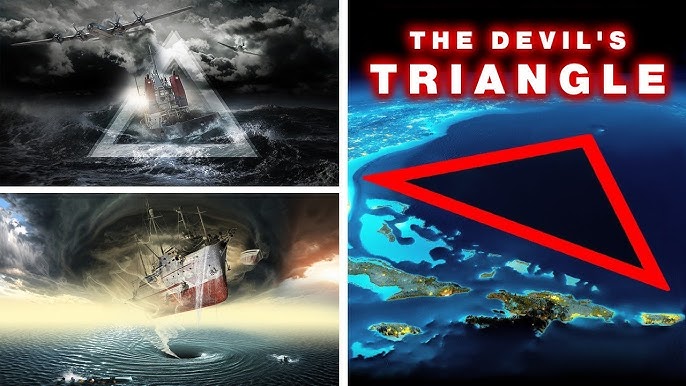
The Bermuda Triangle generally refers to a region in the western Atlantic Ocean roughly bordered by:
Miami
Bermuda
San Juan
Although exact boundaries vary depending on the source, the area covers a heavily traveled section of ocean used by both aircraft and ships for many decades.
Because of its strategic location between North America, the Caribbean, and Atlantic shipping routes, the region experiences enormous amounts of maritime and air traffic every year.
How the Mystery Began
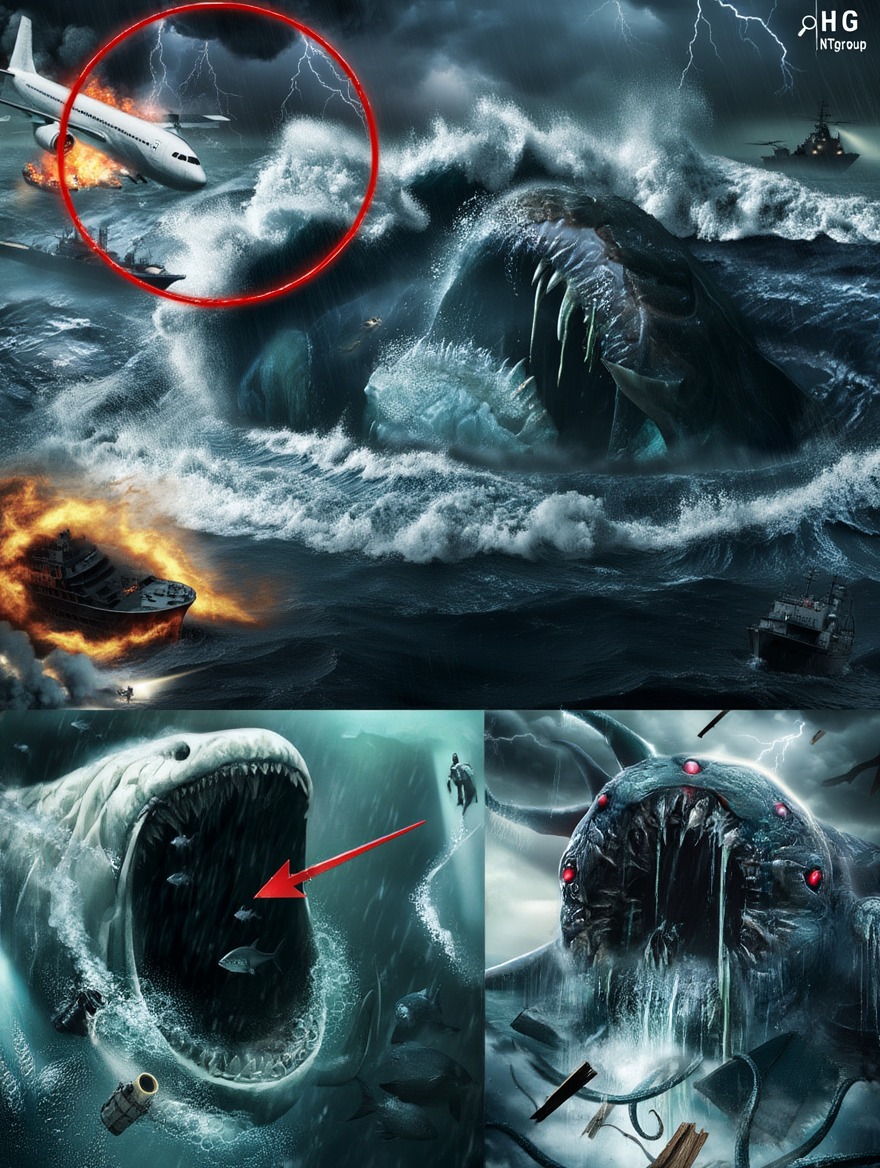
Public fascination with the Bermuda Triangle grew significantly during the mid-20th century after several widely discussed disappearances captured media attention.
Among the most famous cases was Flight 19 disappearance, involving five U.S. Navy aircraft that vanished during a training mission in 1945.
The disappearance fueled speculation because communication difficulties and confusing navigation reports were recorded before contact was lost.
Over time, journalists and authors combined multiple incidents into a larger narrative portraying the region as unusually dangerous or mysterious.
Books and television programs later amplified these stories further, blending documented accidents with dramatic speculation.
The Role of Storms and Ocean Conditions
Scientists studying the Atlantic Ocean emphasize that the Bermuda Triangle contains several natural conditions capable of creating dangerous situations.
The region experiences:
Rapidly changing weather
Strong tropical storms
Hurricanes
Powerful ocean currents
Heavy maritime traffic
Large waves and rough seas
One of the most important environmental factors is the Gulf Stream, a fast-moving ocean current capable of carrying debris and wreckage across long distances quickly.
This makes investigations especially difficult because evidence from accidents may disappear rapidly or become scattered over vast areas.
Weather in the region can also change unexpectedly, creating sudden visibility problems and dangerous navigation conditions for both ships and aircraft.
Why the Ocean Still Holds Secrets
Modern deep-sea exploration has revealed that humanity still knows surprisingly little about large portions of Earth’s oceans.
Researchers continue mapping underwater terrain across the Atlantic, discovering:
Deep trenches
Seamounts
Underwater valleys
Ancient shipwrecks
Complex geological formations
Large areas of the deep ocean remain only partially explored due to the enormous technical challenges involved in underwater research.
Because the seafloor is difficult to access and visibility is limited, many maritime accidents remain difficult to fully reconstruct even decades later.
This lack of complete information naturally leaves room for speculation and mystery.
Shipwrecks Beneath the Atlantic
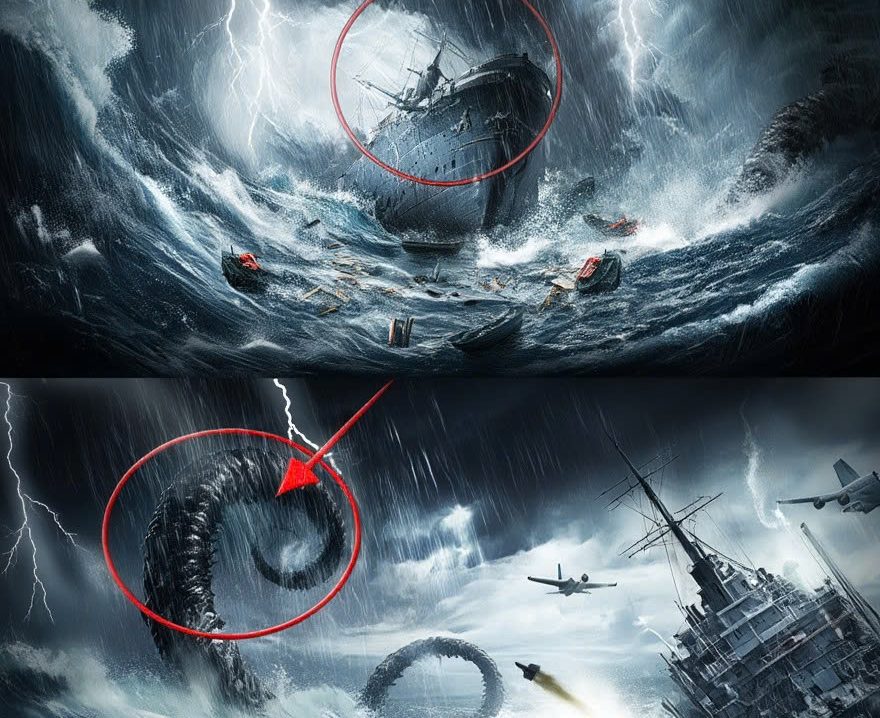
Deep-sea surveys throughout the Atlantic have uncovered numerous historic shipwrecks connected to storms, wartime losses, navigation errors, and mechanical failures.
Some wrecks found near the Bermuda Triangle date back centuries.
These discoveries help researchers better understand historical shipping routes and weather conditions while also reminding people that the Atlantic Ocean has always posed serious risks to travelers.
Importantly, most maritime experts note that the number of incidents reported in the Bermuda Triangle is not necessarily higher than other heavily traveled ocean regions around the world.
However, the dramatic stories attached to the area helped create its legendary reputation.
Theories That Captured Public Imagination
Over the years, the Bermuda Triangle inspired countless speculative theories.
Some popular claims have included:
Hidden civilizations
Magnetic anomalies
Alien activity
Time distortions
Dimensional portals
Supernatural forces
Underwater technology
Despite their popularity in entertainment and internet culture, no verified scientific evidence has confirmed these explanations.
Researchers consistently explain that many disappearances can be understood through combinations of weather conditions, navigational challenges, mechanical problems, and the difficulties involved in ocean rescue operations.
Still, mystery itself often attracts attention more powerfully than ordinary explanations.
Why People Love Mysteries
The enduring popularity of the Bermuda Triangle says as much about human psychology as it does about the ocean.
People are naturally drawn toward unanswered questions because mysteries stimulate imagination and curiosity. Stories involving unexplained events encourage audiences to explore possibilities beyond everyday experience.
The Bermuda Triangle became especially powerful culturally because it combines several emotionally compelling elements:
The vastness of the ocean
Disappearance without clear answers
Dangerous weather
Isolation at sea
Exploration of the unknown
The idea that unexplored frontiers still exist on Earth fascinates many people in an age where much of the world feels digitally mapped and understood.
Media and Popular Culture
Movies, documentaries, novels, and television specials played a major role in turning the Bermuda Triangle into a global cultural phenomenon.
Sensational storytelling often emphasized unexplained disappearances while minimizing ordinary explanations or statistical context.
As a result, generations of viewers grew up associating the region with mystery and danger.
The rise of internet culture later amplified these stories even further, allowing speculation and viral theories to spread rapidly online.
Even today, new social media posts and videos regularly revisit Bermuda Triangle theories, keeping public fascination alive.
Scientific Perspectives on the Bermuda Triangle
Most scientists and maritime experts approach the Bermuda Triangle from a practical perspective.
Key explanations often include:
Human navigation errors
Severe weather conditions
Equipment malfunctions
Ocean currents dispersing wreckage
Heavy traffic increasing accident frequency
Sudden storms reducing visibility
In aviation and maritime studies, investigators emphasize that accidents occurring over open ocean are often harder to solve than incidents on land because physical evidence can disappear quickly.
This uncertainty sometimes creates the impression that events are more mysterious than they actually are.

The Ocean as Earth’s Last Frontier
One reason the Bermuda Triangle continues captivating audiences is because the ocean itself remains one of the least understood environments on Earth.
Scientists estimate that large portions of the deep sea remain unexplored. Every year, researchers continue discovering new marine species, underwater ecosystems, and geological formations.
This ongoing exploration reminds humanity that even in the modern technological era, significant mysteries still exist within our own planet.
In that sense, the Bermuda Triangle symbolizes something larger than individual disappearances. It represents humanity’s continuing fascination with the unknown.
Conclusion
The legend of the Bermuda Triangle has endured for generations because it sits at the intersection of real natural danger and human imagination.
While scientists continue to attribute most incidents in the region to weather, navigation challenges, ocean currents, and heavy traffic, the mystery survives because the ocean itself still feels vast and only partially understood.
Stories of missing ships and aircraft continue capturing public attention not necessarily because supernatural explanations exist, but because unanswered questions naturally inspire curiosity.
In the end, the Bermuda Triangle may reveal less about hidden forces beneath the sea and more about humanity’s timeless desire to explore, explain, and imagine what still lies beyond our understanding.