
In today’s digital world, millions of people spend hours every day looking down at phones, tablets, and laptops. For most, it feels harmless — a normal part of modern life connected to work, entertainment, communication, and education.
But a recent online story describing a young man reportedly struggling with a severe neck condition captured public attention and reignited conversations about posture, screen habits, and long-term musculoskeletal health.
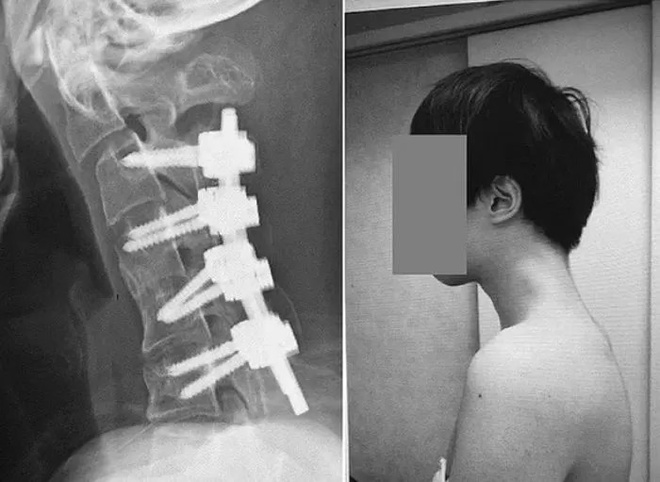
According to the report, a 23-year-old man sought medical treatment after developing extreme weakness in the muscles responsible for supporting his head and neck. The story linked his condition to prolonged poor posture and extensive screen use, describing symptoms associated with a rare condition known as Dropped Head Syndrome.
While experts caution that such severe cases are uncommon and often connected to complex neurological or muscular disorders, the story nevertheless reflects a broader concern increasingly discussed by doctors, physiotherapists, and ergonomics specialists worldwide: the physical impact of long-term device use on posture and spinal health.

Understanding Dropped Head Syndrome
Dropped Head Syndrome is a medical condition characterized by significant weakness in the muscles responsible for keeping the head upright.
People experiencing the condition may struggle to maintain normal head posture because the neck extensor muscles become too weak to support the weight of the head effectively.
Historically, Dropped Head Syndrome has most often been associated with neurological or muscular disorders such as:
Amyotrophic Lateral Sclerosis,
Myasthenia Gravis,
or other rare muscular diseases.
Medical experts emphasize that severe neck weakness is not commonly caused by smartphone use alone. However, chronic poor posture and prolonged muscle strain may contribute to musculoskeletal discomfort, spinal stress, and postural imbalances over time.
The Rise of “Tech Neck” in Modern Life
Although the online story used dramatic language, doctors increasingly recognize a more common issue often referred to as “tech neck” or “text neck.”
This term describes neck pain, stiffness, muscle fatigue, and posture-related discomfort associated with extended periods spent looking downward at digital devices.
When the head tilts forward repeatedly for long periods, additional mechanical stress is placed on the cervical spine and surrounding muscles.
The human head typically weighs around 10 to 12 pounds in a neutral position. As the neck bends forward, the effective strain on the spine increases significantly because of gravitational force and body mechanics.
F=mgF = mgF=mg
Biomechanics researchers explain that sustained forward head posture may contribute to:
muscle tension,
reduced flexibility,
upper back discomfort,
headaches,
and long-term postural strain.
However, experts also stress that the human body is adaptable, and many posture-related symptoms improve through exercise, movement, and ergonomic adjustments.
Why Modern Habits Are Changing Physical Behavior
Technology has transformed how people work, socialize, study, and relax.
Many jobs now involve hours of screen exposure each day, while smartphones allow constant access to information and communication. This shift has dramatically increased the amount of time people spend sitting or maintaining static body positions.
Researchers studying occupational health note that prolonged inactivity and repetitive posture patterns may affect musculoskeletal well-being over time.
Unlike earlier generations whose routines often involved more varied physical movement, modern lifestyles may encourage long periods of stillness combined with downward gaze angles.
The issue is therefore not simply technology itself, but how human bodies interact with technology throughout daily life.

The Psychology of Screen Dependence
The conversation surrounding posture and smartphones is also connected to behavioral psychology.
Digital devices are designed to capture attention through notifications, entertainment, social interaction, and information access. As a result, many people unintentionally remain in physically unhealthy positions for extended periods without noticing discomfort until symptoms worsen.
Experts describe this as a form of “attentional absorption,” where mental engagement reduces awareness of physical strain.
People often continue scrolling, studying, gaming, or working despite early signs of tension or fatigue because the mind prioritizes digital stimulation over bodily awareness.
This disconnect between mental focus and physical posture has become a growing topic in health and wellness discussions.
Early Warning Signs People Should Not Ignore
Doctors and physiotherapists encourage people to pay attention to persistent symptoms involving posture and neck strain.
Common warning signs may include:
frequent neck stiffness,
upper back tension,
reduced mobility,
headaches,
muscle fatigue,
shoulder discomfort,
or persistent pain after device use.
While these symptoms are usually manageable and not associated with severe neurological disease, experts recommend seeking medical evaluation if discomfort becomes chronic or significantly interferes with daily life.
Early intervention often helps prevent minor strain from developing into more serious musculoskeletal problems.
Prevention Through Ergonomics and Movement
One reason posture-related conditions are receiving increased attention is that many preventive strategies are relatively simple and accessible.
Health specialists commonly recommend:
holding devices closer to eye level,
taking regular movement breaks,
maintaining supportive sitting posture,
strengthening neck and upper back muscles,
and reducing long periods of uninterrupted screen use.
Small adjustments repeated consistently over time may significantly reduce physical strain.
Experts also emphasize the importance of physical activity in general. Walking, stretching, resistance training, and mobility exercises help support muscular balance and spinal health.
The human body evolved for movement rather than prolonged stillness.
Why Stories Like This Go Viral
Dramatic health stories often spread rapidly online because they connect to widespread anxieties about modern life and technology.
People recognize themselves in warnings about excessive screen time, posture problems, and digital dependence. As a result, emotionally charged stories about rare or extreme cases may quickly capture attention even when the medical details are more complex than headlines suggest.
Health experts caution against panic or oversimplification. Severe medical conditions usually involve multiple contributing factors, and isolated cases should not automatically be treated as universal outcomes.
At the same time, viral stories can still encourage valuable public conversations about preventive care and body awareness.
The Relationship Between Technology and Human Health
Technology itself is neither entirely harmful nor entirely beneficial. Smartphones and digital devices support education, communication, healthcare, creativity, and social connection across the world.
The challenge lies in learning how to integrate technology into daily life without neglecting physical and mental well-being.
Researchers increasingly advocate for “digital balance,” an approach encouraging mindful technology use combined with movement, rest, and ergonomic awareness.
Rather than rejecting devices entirely, experts suggest developing healthier long-term habits that support both productivity and physical health.
A Reflection on Modern Life and Physical Awareness
The story of the young man struggling with severe neck weakness resonated because it symbolizes a broader tension within modern society.
Human beings are adapting rapidly to digital lifestyles, yet the body still operates according to biological systems shaped over thousands of years of movement and physical interaction with the environment.
In many ways, stories about posture, screen habits, and physical strain remind people to reconnect with basic bodily awareness that can easily disappear during fast-paced digital routines.
Simple actions like standing up, stretching, walking outside, or lifting the head away from a screen may seem small, yet they represent important acts of balance in an increasingly technology-centered world.
Perhaps that is why these stories attract such widespread attention. Beyond the medical details, they reflect a growing awareness that modern convenience must still coexist with care for the human body itself.

Sources
Primary article discussing Dropped Head Syndrome and posture concerns
Mayo Clinic resources on neck pain and posture-related strain
Cleveland Clinic overview of cervical spine and posture health
National Institutes of Health research on posture and musculoskeletal health