Few places on Earth inspire mystery quite like Antarctica. Endless fields of ice, hidden mountain ranges, powerful storms, and isolated research stations create an environment that feels distant from ordinary human experience. For many people, the frozen continent represents one of the last truly unexplored frontiers on the planet.
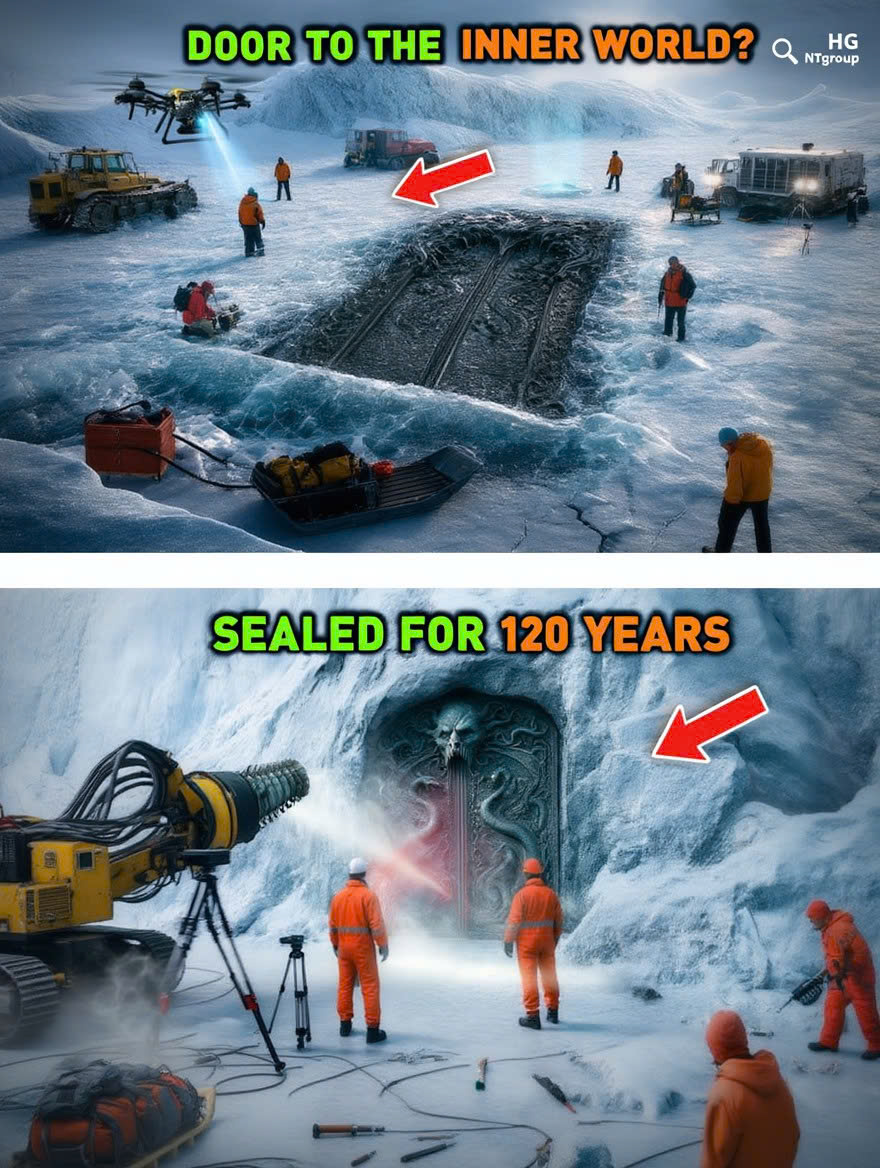
That sense of mystery is exactly why stories about hidden discoveries beneath Antarctic ice spread so rapidly online. Recently, viral claims describing a “sealed doorway” buried deep below the surface sparked global fascination. Social media posts and edited satellite images suggested that radar scans had uncovered an enormous artificial structure hidden beneath the continent — fueling theories involving lost civilizations, secret underground chambers, and classified scientific discoveries.
However, polar researchers and geologists strongly caution against treating such claims as verified fact. While Antarctica does contain remarkable hidden landscapes beneath kilometers of ice, no official scientific organization has confirmed the existence of an artificial doorway or secret facility matching the viral narrative.
The popularity of the story reveals something deeper than the mystery itself. It reflects humanity’s enduring fascination with unexplored places and the emotional power of imagining hidden worlds beneath the surface of the known Earth.
Why Antarctica Feels So Mysterious
Antarctica naturally encourages speculation because so little of the continent is directly accessible to ordinary people. Extreme cold, isolation, and dangerous conditions make exploration difficult, leaving much of the landscape hidden beneath massive ice sheets.
Unlike heavily populated regions filled with roads and cities, Antarctica remains visually empty and largely untouched by permanent human settlement. This absence of familiar landmarks creates a psychological effect that researchers sometimes describe as “environmental mystery.” People tend to project imagination onto places that feel remote, silent, and inaccessible.
The continent also contains genuine scientific mysteries. Beneath the ice, researchers have discovered hidden mountain ranges, ancient rivers, subglacial lakes, and landscapes preserved for millions of years. These real discoveries make fictional theories feel more believable to audiences unfamiliar with polar science.
Because Antarctica already appears otherworldly, even ordinary geological formations can seem extraordinary when viewed through dramatic online storytelling.
The Science Behind Satellite Images and Radar Scans
One reason the “sealed door” theory spread quickly is because it referenced real scientific technology. Researchers do use satellite imaging and radar mapping to study Antarctica’s hidden terrain beneath thick ice layers.
Radar systems can detect changes in surface structure, ice thickness, rock formations, and buried landscapes. These technologies have helped scientists map mountain ranges and lakes hidden far below the frozen surface.
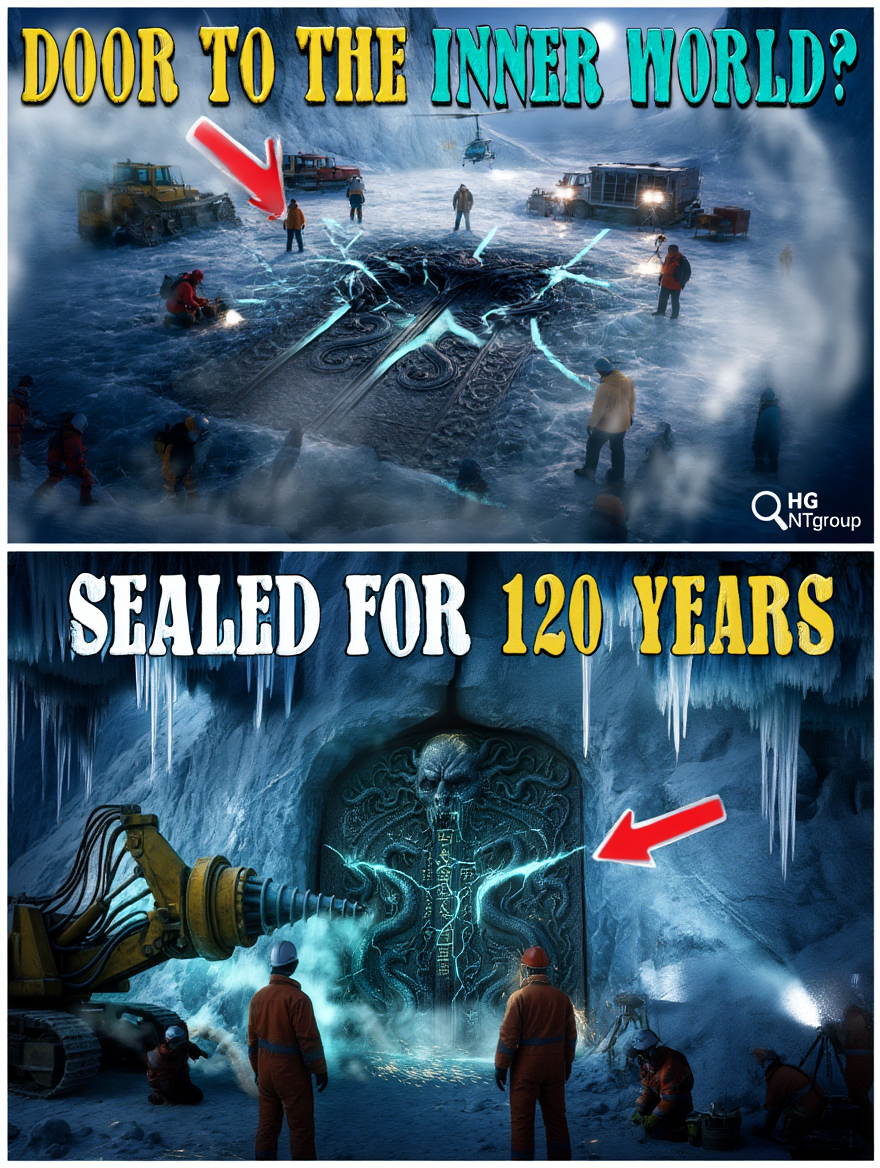
However, experts explain that unusual shapes visible in images do not automatically indicate artificial structures. Ice fractures, shadows, erosion patterns, lighting conditions, and natural geological formations can easily create symmetrical or “door-like” appearances from certain viewing angles.
Human brains are naturally skilled at recognizing patterns, even when those patterns occur randomly in nature. Psychologists refer to this tendency as pareidolia — the phenomenon where people perceive meaningful shapes or structures in ordinary objects, clouds, rock formations, or landscapes.
This same effect helps explain why satellite images sometimes inspire theories about hidden pyramids, lost cities, or mysterious entrances where none actually exist.
How Internet Mystery Culture Shapes Perception
Modern internet culture has transformed mystery storytelling into a global phenomenon. Viral videos, edited images, speculative captions, and dramatic music can quickly turn ordinary scientific imagery into compelling narratives about hidden secrets.
Many Antarctica-related conspiracy theories blend authentic scientific terminology with fictional storytelling techniques. Real radar scans, satellite photographs, and geological studies are often combined with unsupported speculation to create emotionally engaging content.
Researchers warn that artificial intelligence tools and digital image editing have made this process even more convincing. Images can now be enhanced, manipulated, or generated entirely to resemble mysterious structures beneath ice or remote landscapes.
Importantly, the popularity of these stories does not necessarily mean people fully believe them. In many cases, audiences enjoy mystery narratives because they encourage imagination and exploration rather than because they are scientifically verified.
Internet mystery culture functions similarly to modern folklore. These stories spread because they entertain curiosity and transform ordinary uncertainty into emotionally powerful narratives.
Antarctica in Mythology and Popular Culture
Antarctica has long occupied a special place in human imagination. Since the early twentieth century, the continent has inspired novels, films, documentaries, and speculative theories about hidden civilizations or unexplored worlds.
Adventure literature often portrayed Antarctica as the “last unknown continent,” a place where forgotten secrets might still exist beyond the reach of modern civilization. This storytelling tradition continues influencing online mystery culture today.
The continent’s harsh environment also contributes to its mythic reputation. Vast frozen plains, endless darkness during winter months, and isolated research stations naturally evoke feelings of awe and vulnerability.
In fiction, Antarctica frequently serves as a symbolic gateway to hidden knowledge, ancient history, or encounters with the unknown. Stories involving buried structures or mysterious discoveries fit neatly into these long-established narrative traditions.
The “sealed door” theory reflects many of these familiar storytelling patterns. A hidden structure beneath untouched ice represents both physical mystery and symbolic curiosity about what humanity has not yet discovered.
What Scientists Actually Study Beneath Antarctic Ice
While sensational theories dominate online discussions, the real scientific work taking place in Antarctica is already extraordinary.
Researchers study:
Climate history preserved in ancient ice layers
Subglacial lakes hidden beneath kilometers of ice
Microbial ecosystems surviving in extreme conditions
Ice sheet movement and sea-level change
Geological formations beneath the continent
Atmospheric and environmental systems
These studies help scientists better understand Earth’s climate history, environmental change, and the potential for life in extreme environments.
Some subglacial lakes have remained isolated for hundreds of thousands of years, creating conditions unlike almost anywhere else on Earth. For scientists, these hidden ecosystems are fascinating not because they involve secret civilizations, but because they may reveal important insights into biology, climate science, and planetary evolution.
In many ways, the real scientific discoveries beneath Antarctica are already remarkable enough without needing fictional additions.
Why Humans Are Drawn to Hidden Places
Psychologists suggest that mystery stories resonate deeply because humans are naturally curious about the unknown. Hidden chambers, unexplored regions, and secret discoveries appeal to the imagination because they symbolize possibility.
Throughout history, societies created myths about lost cities, hidden kingdoms, and forbidden places. From Atlantis to hidden temples in jungles, these stories reflect a universal desire to believe that the world still contains undiscovered wonders.
Antarctica fits perfectly into this psychological framework because it remains physically distant and difficult to explore. The less familiar a place feels, the easier it becomes for imagination to fill the gaps.
The idea of a “sealed door” beneath ice also carries symbolic meaning. Doors represent transition, secrecy, and revelation in storytelling traditions across cultures. A hidden doorway suggests there may still be truths waiting beyond human understanding.
Even when stories are fictional or exaggerated, they often reveal real emotional desires — curiosity, exploration, wonder, and the hope that mystery still exists in the modern world.
The Importance of Scientific Caution
Scientists studying Antarctica consistently encourage critical thinking when extraordinary claims appear online. Responsible research relies on evidence, peer-reviewed analysis, and verifiable data rather than speculation alone.
Extraordinary discoveries would require extraordinary evidence, particularly when claims involve artificial structures or hidden civilizations. So far, no verified evidence supports the existence of an underground doorway or secret Antarctic facility as described in viral posts.
At the same time, researchers recognize why these stories remain popular. Antarctica genuinely is one of Earth’s most mysterious environments, and public fascination often reflects healthy curiosity about science and exploration.
The challenge lies in separating imaginative storytelling from factual scientific discovery.
Reflection on Mystery and Human Curiosity
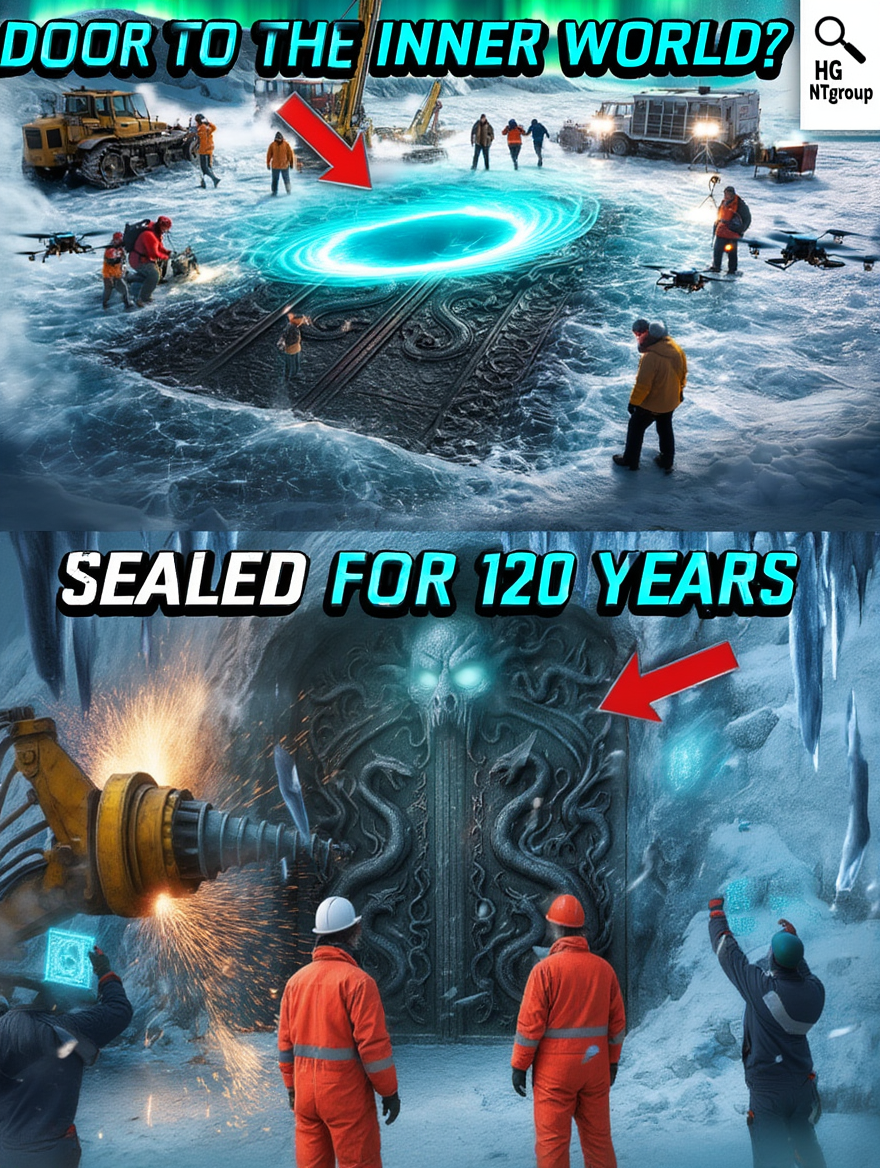
The story of the “sealed Antarctic door” continues spreading online not because it has been scientifically confirmed, but because it taps into something timeless within human nature. People are drawn to hidden places, unanswered questions, and the possibility that unexplored regions still hold secrets waiting to be discovered.
Antarctica, with its frozen silence and hidden landscapes, naturally becomes a canvas for these collective imaginings. Whether viewed as internet mythology, speculative fiction, or modern folklore, such stories remind us how strongly mystery still shapes the human imagination.
Perhaps the greatest fascination comes not from the idea of finding a hidden doorway itself, but from recognizing how much of the world remains beyond ordinary human experience. Even in an age of satellites, artificial intelligence, and global communication, there are still places capable of inspiring awe and uncertainty.
In the end, the enduring power of Antarctic mystery may say less about hidden structures beneath the ice and more about humanity’s endless desire to keep searching beyond the horizon of the known.

Sources
- NASA Earth Observatory
- British Antarctic Survey
- National Geographic
- Scientific American
- United States Antarctic Program