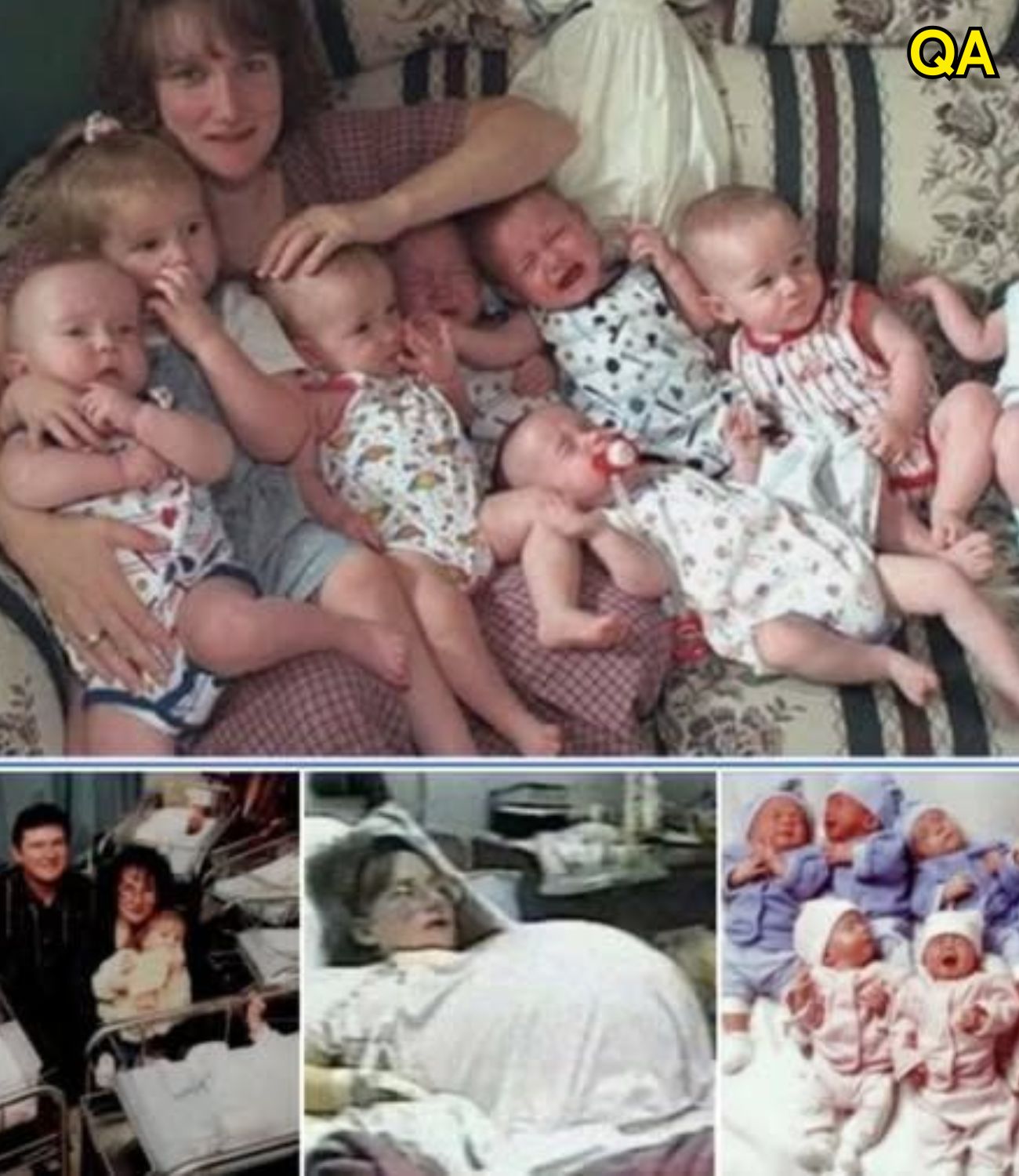
In the late 1990s, a small town in Iowa became the center of global attention. A couple, Kenny McCaughey and Bobbi McCaughey, welcomed seven babies at once, an event that was both rare and deeply inspiring.
The arrival of McCaughey septuplets in 1997 marked a milestone in modern medicine and family life. Born several weeks earlier than expected, their survival was seen as an extraordinary achievement, made possible by advances in neonatal care and careful medical support.
Almost instantly, their story spread across the globe. News outlets, talk shows, and curious audiences followed every update, eager to witness how this unique family would navigate life together.

Life in the Spotlight
As the septuplets reached their first birthday, they appeared on The Oprah Winfrey Show, where their milestone was celebrated with warmth and admiration. Their story also reached the highest levels of public attention, including a meeting with Bill Clinton.
But beyond the cameras and headlines, daily life for the McCaughey family was anything but simple.
Caring for seven infants at the same time required extraordinary organization. Reports at the time noted the family used dozens of diapers and bottles every day. Their routine revolved around feeding schedules, rest, and constant attention, all multiplied by seven.
Support came from many directions. Donations and community assistance helped provide a larger home, transportation, and essential supplies. While this generosity made a difference, the parents remained deeply involved in managing their household, even growing their own food to help sustain the family.
The Science Behind Multiple Births
A Rare Medical Event
From a scientific perspective, the birth of septuplets is extremely uncommon. Advances in reproductive medicine and prenatal care have made it more possible for multiple births to survive and thrive, but such cases still draw attention due to their rarity.
Medical professionals often monitor high-order multiple pregnancies closely, as they come with additional challenges. Early delivery, specialized neonatal care, and long-term support are often part of the journey.
Development and Individual Differences
Even though the septuplets shared the same birthday, their development followed unique paths. This reflects a broader scientific understanding that genetics and environment interact in complex ways.
Two of the siblings, Alexis and Nathan, were diagnosed with cerebral palsy, a condition that can affect movement and coordination. With medical care, therapy, and determination, they adapted and grew in their own ways.
Nathan later underwent a surgical procedure that supported his mobility, eventually learning to move independently without assistive devices. Stories like his highlight how medical intervention and personal resilience can work together over time.

Growing Up Together
A Shared Childhood
Imagine never experiencing a moment of childhood alone. For the McCaughey septuplets, every milestone was shared.
From school days to family outings, they moved through life as a group. This constant companionship created a strong bond, one that many people might find difficult to fully imagine.
Culturally, stories of siblings growing up together often emphasize connection and loyalty. In this case, those themes were magnified sevenfold.
The Transition to Independence
As the siblings reached adulthood, their journey took a new turn. For the first time, they began to explore independence.
Some attended Hannibal-LaGrange University in Missouri, while others chose educational paths closer to home. One sibling pursued service in the military, demonstrating the wide range of directions their lives could take.
This transition reflects an important stage in human development. Psychologists often describe early adulthood as a time of identity formation, where individuals begin to define themselves outside of family structures.
For the septuplets, this process carried an added layer of significance. After years of being seen as a group, they began to be recognized as individuals with distinct goals and talents.

Education, Careers, and Aspirations
Each sibling pursued different interests, showing how diverse paths can emerge even within a shared upbringing.
One explored public relations and media, inspired by years of interacting with public attention. Another focused on education, hoping to work with young children. Others developed interests in technology, including computer systems and cybersecurity.
Their academic journeys highlight a key idea in developmental science: shared environments do not produce identical outcomes. Personal interests, experiences, and opportunities all shape the direction of a person’s life.
Cultural Meaning of Their Story
A Symbol of Possibility
Stories like that of the McCaughey septuplets often take on symbolic meaning. They are seen as examples of what is possible when medical science, community support, and family dedication come together.
In many ways, their story reflects a broader cultural fascination with extraordinary beginnings. Throughout history, rare events have been interpreted as signs of hope, resilience, or even mystery.
Media and Public Perception
The role of media in shaping their story cannot be overlooked. Early coverage focused on the uniqueness of their birth, while later narratives emphasized their growth and individuality.
This shift mirrors a broader trend in storytelling. Audiences are often drawn first to what is unusual, but remain engaged by what is relatable.
As the septuplets grew older, their experiences became less about being “the seven” and more about being seven individuals finding their place in the world.
The Role of Community and Support
Collective Effort
Raising eight children, including an older sibling, required more than just parental effort. It became a community story.
Support from organizations, neighbors, and even strangers played a role in helping the family manage daily life. This highlights the importance of social networks in overcoming challenges.
Long-Term Impact
The assistance provided during the early years had lasting effects. Educational opportunities, stable housing, and access to resources contributed to the siblings’ ability to pursue their goals.
From a sociological perspective, this demonstrates how early support can influence long-term outcomes in meaningful ways.
A Life Beyond the Headlines
Building Their Own Identities
As adults, the septuplets began to move beyond the identity that first made them famous. They formed relationships, pursued careers, and built lives that reflected their individual choices.
Some milestones, such as marriages and the arrival of the next generation in their family, marked new chapters in their story.
These developments remind us that even the most extraordinary beginnings eventually give way to everyday experiences that are deeply human and relatable.
Friendship Within Family
Despite their growing independence, the bond between the siblings remains strong. Descriptions of their relationship often emphasize friendship as much as family.
This balance between closeness and individuality is a theme that resonates across many cultures, reflecting the universal challenge of staying connected while growing apart.

Conclusion: What Their Story Teaches Us
The story of the world’s first surviving septuplets is more than a headline. It is a reflection of science, society, and the enduring strength of human connection.
From a medical perspective, it highlights the progress that makes rare outcomes possible. From a cultural perspective, it shows how stories can inspire and unite people across the world.
But perhaps most importantly, it reminds us that behind every extraordinary event are individuals with their own paths, dreams, and identities.
Human curiosity draws us to stories like this because they challenge our understanding of what is possible. And as we follow these journeys over time, we begin to see not just the extraordinary beginning, but the meaningful lives that follow.
In the end, curiosity leads us to wonder, but understanding allows us to appreciate the full story.
Sources
The New York Times
CNN
Mayo Clinic
National Institutes of Health
BBC