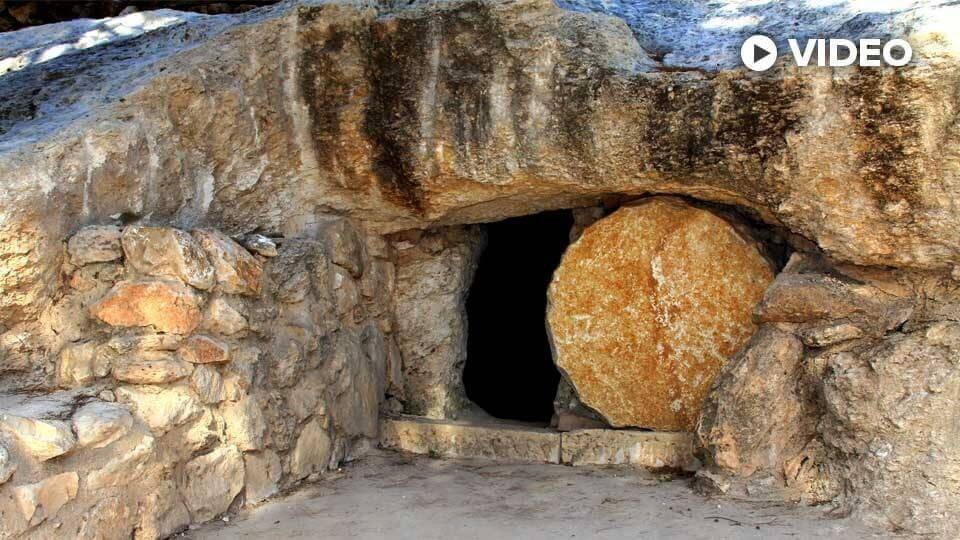
The question of where Jesus Christ was buried has fascinated historians, archaeologists, and theologians for centuries. While the New Testament describes the burial and subsequent empty tomb, it does not provide a precise geographical marker that can be confirmed beyond doubt today. Over time, three प्रमुख sites in Jerusalem have been proposed as the possible burial place: the Talpiot Tomb, the Garden Tomb, and the Church of the Holy Sepulchre.
Modern scholarship approaches this question through a combination of archaeological evidence, historical records, and textual analysis. While absolute certainty remains elusive, a substantial body of credible research helps clarify which site is most consistent with known historical and archaeological data.

The Talpiot Tomb: A Theory Based on Names, Not Context
The Talpiot Tomb, discovered in 1980 in southern Jerusalem, gained international attention after a 2007 documentary titled The Lost Tomb of Jesus, produced by James Cameron. The tomb contained ten ossuaries (bone boxes), several of which bore inscriptions with names such as “Jesus,” “Mary,” and “Joseph.”
At first glance, these names appear significant because they match figures from the New Testament. However, historians emphasize that these were among the most common names in first-century Judea. Statistical studies and epigraphic research indicate that the presence of these names together is not unusual enough to confirm a direct connection to Jesus of Nazareth.
Archaeologists, including those involved in the original excavation, have expressed skepticism about the claims linking the tomb to Jesus. Amos Kloner, one of the lead excavators, stated that there is no credible basis to identify the site as Jesus’ family tomb. Similarly, scholars note that Jesus’ family originated from Galilee, not Jerusalem, and there is little evidence to suggest they owned a rock-cut tomb in the city.
Another issue involves burial practices. According to research in Second Temple Judaism, rock-cut tombs with ossuaries were typically used by wealthier families. Many scholars argue that Jesus’ family, described in historical sources as modest, would not likely have used such a tomb.
DNA testing conducted on some remains has also been cited in support of the theory. However, experts caution that these tests cannot establish familial relationships in a way that confirms the tomb’s identity. Without clear lineage data or corroborating historical records, such conclusions remain speculative.
Overall, the scholarly consensus is that the Talpiot Tomb lacks sufficient contextual and historical evidence to be considered the burial place of Jesus.
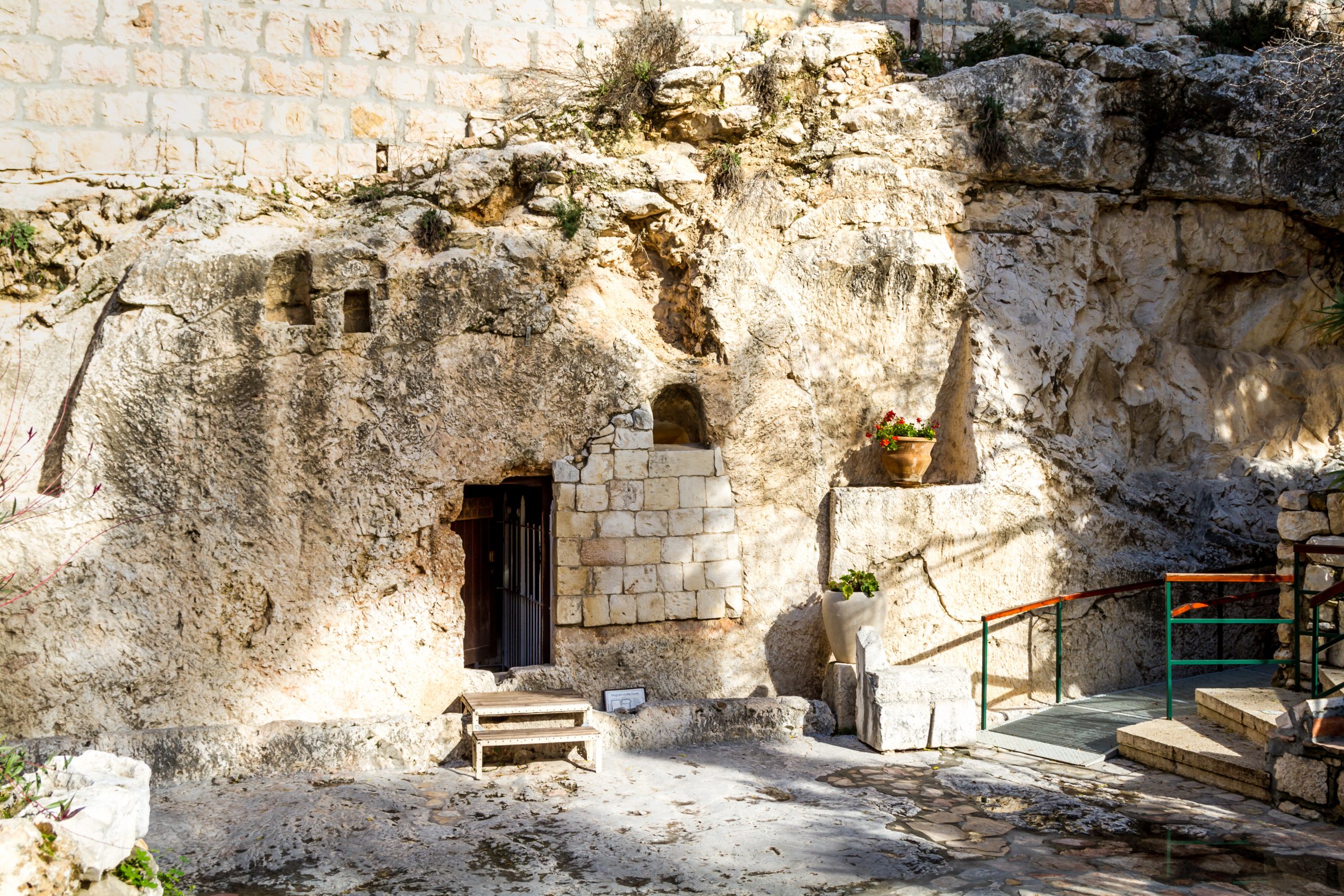
The Garden Tomb: A Popular but Historically Inconsistent Site
The Garden Tomb, identified in the 19th century and associated with Charles Gordon, is located just outside the Old City walls of Jerusalem. It is particularly popular among Protestant Christians due to its peaceful setting and resemblance to the biblical description of a garden burial site.
Despite its appeal, archaeological evidence does not support the Garden Tomb as the burial site of Jesus. Studies conducted by archaeologists, including Gabriel Barkay, have determined that the tomb dates back to the Iron Age (approximately the 7th–8th centuries BCE). This places it several hundred years before the time of Jesus.
This dating is critical because the Gospels describe Jesus being buried in a “new tomb.” A tomb already centuries old would not fit that description. Additionally, the architectural style of the Garden Tomb aligns with earlier burial traditions rather than those of the first century CE.
Scholars also point out the lack of evidence for a first-century cemetery in the immediate area. This further weakens the case for the Garden Tomb as an authentic site.
While the Garden Tomb remains a meaningful place for reflection and pilgrimage, particularly for its symbolic value, it is not considered historically accurate by the majority of archaeologists and historians.

The Church of the Holy Sepulchre: The Strongest Historical Candidate
The most widely supported location for the burial of Jesus is within the Church of the Holy Sepulchre. This site has been venerated since at least the 4th century CE and is supported by both early historical accounts and archaeological findings.
The earliest written testimony comes from Eusebius, who recorded that the Roman Emperor Constantine the Great ordered the construction of a church at the site after identifying it as the location of Jesus’ tomb. According to Eusebius, a pagan temple built by Emperor Hadrian had previously covered the area, and its removal revealed the tomb.
Archaeological research supports this historical narrative. Excavations have shown that the site was originally a limestone quarry that later became a Jewish burial ground during the first century. Importantly, it was located outside the city walls at the time of Jesus, consistent with the Gospel accounts.
In 2016, restoration work inside the church provided further evidence. Researchers temporarily opened the structure known as the edicule, which encloses the tomb. Scientific analysis, including dating of mortar samples using modern techniques, confirmed that parts of the structure date back to the early Christian period, aligning with historical records from the time of Constantine.
Scholars such as John McRay have concluded that while absolute proof is not possible, the Church of the Holy Sepulchre remains the most credible candidate based on the convergence of archaeological data and early written testimony.

Historical Context: Burial Practices in First-Century Judea
Understanding burial customs during the time of Jesus is essential to evaluating these sites. In first-century Judea, tombs were often carved into rock and sealed with stones. The Gospels describe a tomb owned by a wealthy individual, Joseph of Arimathea, which aligns with known burial practices of the period.
The presence of such tombs outside city walls also matches Jewish customs, as burial within city limits was generally avoided. This detail further supports the plausibility of the Holy Sepulchre site, which was outside Jerusalem’s walls at the time.
Additionally, the early and continuous tradition associated with the Church of the Holy Sepulchre distinguishes it from later-identified sites like the Garden Tomb. Historical continuity is a significant factor in archaeological evaluation.
Why Absolute Proof Remains Elusive
Despite strong evidence supporting the Church of the Holy Sepulchre, scholars acknowledge that definitive proof is unlikely. Archaeology can provide context, probability, and supporting data, but it cannot conclusively verify events described in ancient texts.
The passage of time, repeated construction, and historical changes to Jerusalem’s landscape have altered many original features. As a result, researchers rely on a combination of textual sources, material evidence, and historical reasoning rather than direct confirmation.
Conclusion: Evidence Points to One Leading Site
Among the three proposed locations, the weight of credible evidence clearly favors the Church of the Holy Sepulchre as the most likely burial site of Jesus. The Talpiot Tomb lacks contextual and historical support, while the Garden Tomb is archaeologically inconsistent with the time period.
The Church of the Holy Sepulchre, supported by early historical accounts, archaeological findings, and continuous tradition, stands as the strongest candidate. While certainty may remain out of reach, the convergence of evidence provides a compelling case that aligns closely with both history and archaeology.
For historians and researchers, the significance of this question extends beyond location. It reflects the broader effort to understand ancient events through evidence-based inquiry. For many believers, the importance lies not only in the site itself but in the enduring impact of the story associated with it.
As research continues and new technologies emerge, our understanding of ancient Jerusalem and its historical landmarks may deepen further. Until then, the Church of the Holy Sepulchre remains the most credible link to one of history’s most influential figures.