For most of the early 2000s, Paris Hilton was the undisputed queen of celebrity culture. Her face was everywhere — on magazine covers, television screens, and tabloid front pages. She was synonymous with glamour, luxury, and a seemingly carefree lifestyle that millions envied. But behind the designer sunglasses and signature pink aesthetic was a story that almost no one knew — a story of pain, silence, and a childhood she would spend decades trying to process.
Today, at 44, Paris Hilton is no longer just a pop culture icon. She is a businesswoman worth billions, a devoted mother, and one of the most powerful advocates for child welfare reform in the United States. Her journey from misunderstood teenager to global changemaker is one of the most remarkable personal transformations of our time.
A Privileged but Sheltered Upbringing
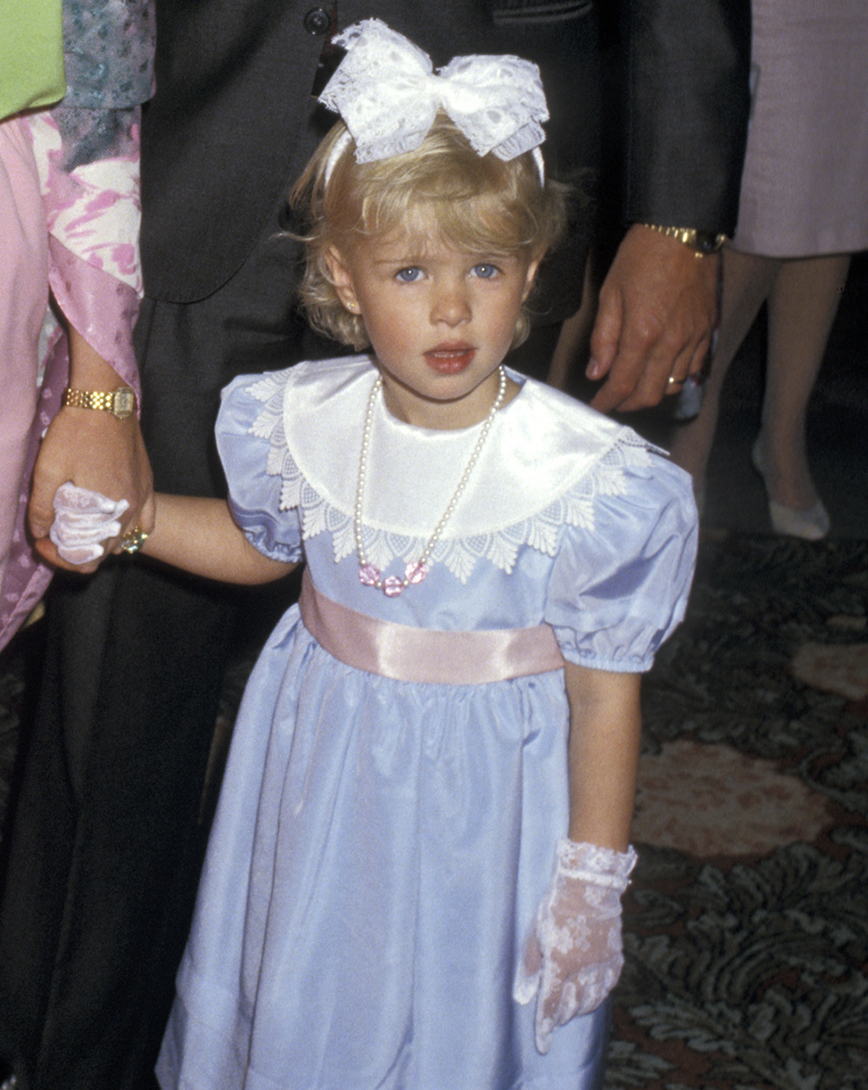
Paris Whitney Hilton was born on February 17, 1981, into one of America’s most recognizable families. Growing up between Beverly Hills, the Hamptons, and a suite at New York City’s legendary Waldorf-Astoria Hotel, her childhood appeared to be the stuff of fairy tales. The great-granddaughter of hotel magnate Conrad Hilton, Paris seemed destined for a life of effortless luxury.
But those who knew her best remember a very different girl. Family members describe a young Paris as “very much a tomboy” who had a deep love for animals and dreamed of becoming a veterinarian. Her mother recalled how she would save money to buy exotic pets — including monkeys, snakes, and goats — and once famously left a snake loose in their Waldorf suite.
Despite her adventurous nature, Paris grew up in a strict, conservative household. She wasn’t allowed to date, wear makeup, attend school dances, or dress the way many of her peers did. Her mother enrolled her in etiquette classes and had plans to formally introduce her as a debutante into society — a world that young Paris found anything but natural or appealing.
A Teenager in Crisis
As she entered her teenage years, Paris began to push back against the rigid boundaries of her upbringing. She skipped school, snuck out at night, and sought the freedom she felt had been denied to her at home. At just 14 years old, she found herself in a deeply inappropriate and harmful situation involving an adult authority figure — something that would leave lasting emotional scars.
Her parents, struggling to understand their daughter’s increasingly rebellious behavior, made a decision that would change the course of her life. They enrolled her in a residential program for troubled youth in Utah — one of many such facilities operating across the United States at the time with little oversight or regulation.
The Program That Changed Everything
What Paris experienced inside that facility, she would not speak about publicly for many years. When she finally did — in a 2020 documentary titled This Is Paris — the details she shared were deeply unsettling.
She described the environment as one of the most traumatic experiences of her life. Students, she said, were subjected to emotional and psychological mistreatment on a daily basis. They were reportedly required to take unidentified medications that left them feeling disoriented and exhausted. Staff members, she alleged, were often harsh and degrading toward the young residents in their care.
“You’re sitting on a chair staring at a wall all day long,” she recalled. “It felt like I was going crazy.”
Perhaps most distressing was the culture of silence that surrounded the facility. When Paris considered speaking out, a staff member reportedly warned her that no one would believe her — that any complaint she made would be dismissed, and her parents would be told she was fabricating stories. Terrified and isolated, she stayed silent.
She carried that silence for two decades.
Twenty Years of Nightmares
The effects of her time at that program followed Paris into adulthood in ways that deeply affected her quality of life. She has openly shared that, for more than 20 years, she suffered from recurring nightmares — sleeping only a few hours each night, reliving the fear and helplessness she felt as a teenager.
“For the past 20 years, I’ve had a recurring nightmare where I’m kidnapped in the middle of the night by two strangers, and locked in a facility,” she revealed in interviews promoting her documentary.
Years later, Paris was also diagnosed with ADHD — a condition that, had it been identified during her childhood, might have changed everything. The characteristics that made her seem “difficult” or “out of control” as a teenager were, in hindsight, symptoms of an undiagnosed neurodevelopmental condition that simply wasn’t well understood at the time.
“My childhood would have been very different if I’d been diagnosed,” she told The Guardian in 2023. “I definitely wouldn’t have been sent away.”
The Persona as a Shield

For years after her traumatic adolescence, Paris did what many survivors do — she buried the pain and built a wall around it. In her case, that wall took the form of one of the most recognizable public personas of the 21st century.
The bubbly, baby-voiced, effortlessly glamorous “Paris Hilton” that the world came to know through The Simple Life and countless magazine spreads was, by her own admission, largely a performance. A character. A carefully constructed version of herself designed to be exactly what the world seemed to want.
“I just kind of created this character,” she explained in an interview. “I continued playing that character because I knew that’s what people wanted… and then it kind of became part of me.”
It was a coping mechanism that served her well professionally — but it also kept the truth buried for a very long time.
Finding Her Voice
When Paris finally decided to tell her story publicly, the response was overwhelming. The documentary This Is Paris reached audiences around the world and sparked a much larger conversation about the so-called “troubled teen industry” — a network of residential programs that, critics argue, has operated for decades with insufficient oversight and accountability.
For Paris, sharing her experience was more than just cathartic. It was a turning point.
“Sharing my story publicly was the most healing experience of my life,” she said.
But she didn’t stop at healing herself. Paris began using her platform to advocate for legislative change, testifying before lawmakers and calling for greater regulation and protection for young people placed in residential treatment programs.
“I cannot go to sleep at night knowing that there are children experiencing the same abuse that I and so many others went through,” she told legislators. “I’m being the hero that I needed when I was a little girl.”
Her advocacy has contributed to real policy conversations across multiple U.S. states, and she continues to be one of the most high-profile voices pushing for accountability in the industry.
A Billion-Dollar Business Empire

While Paris’s activism has redefined her public image, it runs parallel to an extraordinary business success story that deserves recognition in its own right.
Far from the “famous for being famous” label that once followed her everywhere, Paris Hilton has quietly built one of the most impressive personal business empires of any celebrity in history. Her retail business alone has generated over $4 billion in sales across product lines, fragrances, and stores worldwide. Add to that successful technology investments, a thriving DJ career that takes her to some of the world’s most prestigious venues, and ongoing media projects, and the picture that emerges is of a savvy, disciplined entrepreneur.
“I feel proud because I’ve always loved being an innovator — doing things first and setting trends,” she reflected in an interview with Vanity Fair.
Love, Family, and Healing
Perhaps the most personal chapter of Paris’s transformation has been her journey toward family life. In November 2021, she married entrepreneur Carter Reum in a lavish ceremony in Los Angeles — the wedding she had always dreamed of.
The couple welcomed a son, Phoenix, in January 2023, and a daughter in November 2023, both born via surrogacy. Paris has been open about the fact that years of physical and emotional stress connected to her past trauma made a traditional pregnancy difficult, despite two years of trying through IVF.
“My mind and body had never fully healed — and probably never will fully heal — from the trauma I went through as a teenager,” she reflected in her memoir.
But motherhood has also brought unexpected gifts, including a deeper empathy for her own parents. “Even though he’s a baby, I’m already worrying about that one day when he’s a teenager,” she said of her son. “It makes me understand even more why my parents were so protective and so strict.”
A Legacy Rewritten
The story of Paris Hilton is ultimately a story about reinvention — not the superficial kind that celebrities often pursue, but the deep, difficult, and courageous kind that comes from confronting the past and choosing to do something meaningful with it.
She was once the world’s most famous party girl. Today, she is a mother, a mogul, and an advocate for the most vulnerable members of society. She has taken the darkest chapters of her own life and transformed them into fuel for change.
That is a legacy worth far more than any tabloid headline.